
As a PR professional, I consider transparency to be one of the most important principles of my job. As a rule of thumb, I tell myself and my clients that if you wouldn’t want your statement or actions popping up in an Internet search result, then you probably shouldn’t be saying or doing it. We’ve seen what a lack of transparency can do to a brand. Take Toyota’s 2010 PR crisis around the mechanical defects and recalls on its most popular vehicles. While still a well-respected brand with best-selling cars, Toyota took a big hit to its image when executives were slow to respond and hesitant to take full responsibility for the multiple vehicle recalls and federal safety investigations.
Every company is susceptible to a crisis situation and in these instances, I believe practicing the values of openness, communication and accountability are key to instilling confidence back into your brand. But is there such a thing as too much transparency?
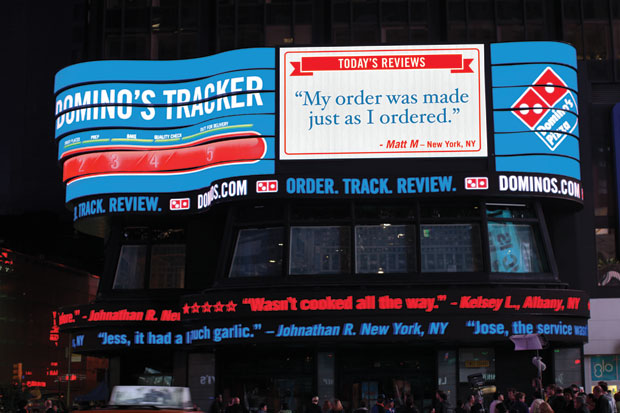
Ever since the infamous 2009 viral video of Domino’s Pizza employees breaking several health codes while preparing customer orders, the company has embarked on an aggressive communication campaign to clean up its reputation. Recently, the company took transparency to another level by unveiling a huge digital billboard in the middle of Times Square that shares customer feedback from those using the Domino’s Pizza tracker app. For better or worse, Domino’s is giving thousands of Manhattan passersby a candid peek at customer comments to show consumers it’s serious about upping its game. While some may think this is a risky move for Domino’s (and it is, in my opinion), the approach has paid off. Same-store sales growth increased 10.4 percent between 2009 and 2010, and during the first quarter of 2011, same-store earnings were up 2.3 percent.
Locally, the Seattle Police Department also recently took a new and aggressive approach to transparency by initiating a 12-hour experiment where it posted all of its emergency calls on Twitter. The goal was to show people a day in the life of the department and how citizens play an integral role in helping Seattle police fight crime. While within a few hours, hundreds of people stopped following the department and scolded it for bad Twitter etiquette (the experiment translated into an average of 40 Twitter messages an hour, for a total of 478 by the end of the day), others praised the department for its transparency and for pushing the envelope with social media.
Whether it’s in response to a crisis, an effort to prevent one, or simply a strategy to increase visibility, social media has provided companies and organizations with the means and motivation to be more transparent. While we may not need (or want) to know every detail about a company or have full access into someone’s daily behavior, the public wants to know that organizations are acting as good citizens, with consumers’ best interests in mind.
I think Domino’s Pizza and the Seattle Police Department should be praised for their creativity and dedication to keeping their customers and constituents informed. What’s your take on transparency? Are companies taking it too far or not far enough? Please share!