
Normally I am not a fan of publicity stunts. Often stunts seem too gimmicky, costly and offensive. And if they’re not well orchestrated they can be a disaster.
Consider Snapple’s attempt to build the world’s largest popsicle. It flooded Union Square in downtown Manhattan and the fire fighters had to be called in to block off the streets.
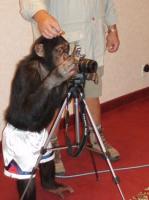
Another example of a stunt gone wrong is when newly launched Yahoo Tech went on the Today Show touting that digital photography is so easy, even a chimp can do it. Katie Couric went up against Codie the chimp who was supposed to take a photo, remove the memory card and print his photo. Nothing worked and it is an example of how risky it is to execute a publicity stunt on live TV. In fact, during the segment Couric said, “So much for Yahoo’s great marketing techniques” and “this was a complete disaster, but it was fun.”
Nonetheless, the publicity stunt clearly has its place. I recently read an article in PRWeek about a start-up company that secured some high-level press by dressing the founder up in a costume to run a marathon.
In case you missed the article, here is the gist of what happened: On April 20, Jason Jacobs, founder of FitnessKeeper, ran the Boston Marathon in an iPhone costume that featured his company’s RunKeeper application on the phone’s screen.
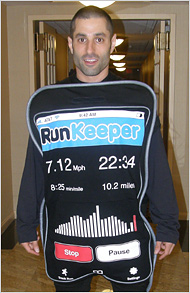
Leading up to the event he and a group of college students leveraged social mediums by posting video and photos of the training activity and costume creation on Facebook, YouTube and the company Web site. They established a Twitter presence and cultivated a fan base.
All of the activity paid off. On April 19, Stephanie Clifford, a reporter covering advertising and marketing for the New York Times media desk, wrote an article titled “An iPhone With Legs Plans to Run” and included a photo of Jason Jacobs in his special marathon suit.
And that was not the only coverage. From our cursory search, it appears that several TV news stations covered the stunt as well as Web sites, such as Phones Review, Into Mobile, and Geek.com.
So why did this work? The stunt was original, creative, relevant to the company’s product, visual and cost-effective. It sparked interest with journalists working for both print and broadcast – they had access to photos, videos and compelling sound bites.
If you have examples of a successful or not so successful stunt, we’d love to hear them. Please share your stories with us!