
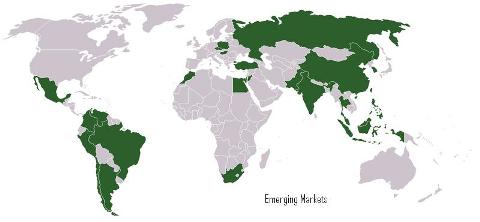
We are in many ways living in unprecedented times. As banks and major companies crumble and the economy worsens, there seem to be increasingly fewer historical examples on which to base our current policies. But as Martin S. Roth and Richard Ettenson point out in a March 23 Wall Street Journal article, there is an often-overlooked model from which businesses can draw invaluable insights: emerging markets.
Volatile currencies and frequent economic downturns are nothing new in emerging markets like Eastern Europe, South Africa and Latin America. As a result, companies in these markets have developed ways to price their products and retain customers. In their article Roth and Ettenson highlight four key strategies companies in established markets can use to “implement bold, creative ideas, outflank rivals and boost their business.”
The resounding theme throughout this article is that in the long run, it is far cheaper to keep existing customers than to lose them during the recession and try to win them back afterward. Below, we’ve summarized Roth and Ettenson’s four strategies to achieve this goal:
1. Get customers to trade up
By rethinking pricing strategies, companies can provide incentives for customers to trade up to premium products in a down economy. Western companies price their goods with the goal of maintaining a high profit margin on both regular and premium products. But when customers are strapped for cash, this strategy often makes premium goods prohibitively expensive.
In contrast, companies in emerging markets accept lower profit margins on premium products. This results in customers recognizing that the brand is offering them more value for their money – so they trade up to premium products, even in tough times.
2. Increase product and service visibility
The temptation for many Western companies during a recession is to allocate scarce marketing resources to advertising in attempt to win new customers, often to the detriment of customer service budgets. This can result in losing existing customers.
In contrast, companies in emerging markets amp up their customer service and focus on making their products more visible and available to customers who already know about them. This often involves improving point of purchase promotions. One manager quoted in the article explains this logic, saying that point of purchase is key “because it’s the only time when your product, your customer and that customer’s wallet are all in the same place.”
3. Rethink what customers value
In emerging markets, companies are routinely forced to update their businesses model to match the market conditions. This flexibility allows companies to cater to the ever-changing needs of their consumers.
Roth and Ettenson cite the example of mobile phones. In the past, Western operators have derived revenue from locking customers into contracts. But as customers have less disposable income, this may no longer be the best model. In emerging markets, operators allow customers to buy just as much service as they need, when they need it. This model allows customers to use their mobile phones without incurring high monthly fees for minutes they may not use.
4. Look at new metrics
Emerging-market companies that excel typically take a very broad view of the market. They monitor data to predict the direction of the market so they know when to switch from one strategy to another. So instead of focusing inward on factors like revenue and churn rate, they monitor macroeconomic measures like inflation, unemployment etc. They then develop possible future market scenarios and craft business strategies for each one. This allows for a nimble response to a volatile economy.
Roth and Ettenson end the article with the simple advice that companies stay optimistic. Western companies should brighten their outlook and realize that tough times provide the opportunity to strengthen their position and financial performance.