
Profanity is always a touchy subject. We’ve all seen examples of explicit and inappropriate remarks in society, but when is it actually considered suitable for writing? I recently read an article on Daily Writing Tips about using profanity in different types of writing, and took the question to my friend and literary agent, Kevan Lyon. Kevan is a founding partner of Marsal Lyon Literary Agency and has more than 20 years of experience in the publishing industry.
After reviewing the article on Daily Writing Tips, What the Hell do you do about Profanity?, as well as discussing the topic with Kevan, I gathered a few main insights, which include:
-
First and foremost, be mindful of the audience. Everyone reacts to profanity in different ways and you must consider how your writing will affect or impact your readers. Profanity, in many ways, has become commonplace in our society within everyday conversation, movies and blogs to name a few places where it appears, so most people will likely be prepared to handle some degree of vulgarity. There will, however, always be traditionalists and critics who scowl at any situation of profanity. In addition, some individuals will avoid sharing content (in hardcopy or on social networks) if it contains profanity. Therefore, be sure to determine who your readers are before you begin writing.
-
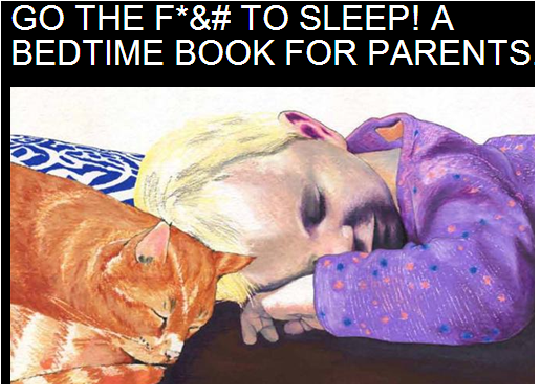
Find examples of profanity in different types of writing and analyze which seem successful and unsuccessful. I have come across a number of blogs, tweets and books that use profanity effectively and often hilariously. Many recent non-fictional publications have come out over the past few years such as Sh*t My Dad Says (developed from a series of tweets), Go the F*&# to Sleep and A**hole’s Guide to Handling Chicks. Such books have received praise as well as criticism, so become well versed with different uses of profanity and the reactions that might arise.
-
Tailor your language depending on the type of writing or genre. For example, profanity might be necessary in fictional writing if you are trying to realistically portray the true voice of a character. As Kevan states, “The key is making it sound ‘real.’ If it sounds forced or contrived, then it just doesn’t work and will stop the reader.” Again, keep your audience in mind as fiction targets different age groups, genders, and the like. In non-fiction, Kevan states that profanity, if used sparingly, can actually be effective at emphasizing a point. She remarks that the key in non-fiction, similar to fiction, is making the narrative voice feel real versus feeling like profanity is being used for its own sake. In terms of journalism and online publications, mainstream companies are unlikely to publish profanity with the fear of losing subscribers and advertisers. The Greenville News recently had a print crisis when the f-word was inadvertently inserted into one of its newspaper articles. This blip shows how strong sentiments tied to profanity can be if it seems out of place. For blogs and other personal online publications, the use of profanity is mainly personal attitude and choice. Keep in mind the previous statements about audience and topic in order to ensure the effective use of profanity. For an example of online writing that uses profanity sparingly and successfully, read a few posts by one of my favorite bloggers, The Man Repeller.
-
Lastly, know when to draw the line. Recognize when a certain word takes the use of profanity too far in writing and becomes excessive. There are different degrees of profanity and be aware of which terms fit appropriately into your writing depending on genre, topic, character and audience. A statement from the article What the Hell do you do About Profanity? provides a closing thought on which to reflect:
Why choose profanity over no profanity? Using profane and obscene words certainly communicates passion, but are you taking the low road, the easy way out, by dropping f-bombs instead of raising eloquent arguments? Are you debasing language, and culture, by pandering to provocation?
How do you normally react to profanity in writing? Have you ever come across successful or unsuccessful uses of profanity?
Katherine Turney