
Steve Hooper seems to have the winning formula. We recently sat down with the CEO and co-founder of the newly opened Kigo Kitchen to discuss his strategy to establish the quick and casual restaurant as a place worth trying.
Hooper’s company is headquartered on Capitol Hill, but last year he was given the opportunity to test his Asian-style, fast and fresh restaurant concept on the Northeastern University campus in Boston. After the success seen in Boston, Hooper developed his concept into what is now known as Kigo Kitchen and targeted the Seattle business crowd in South Lake Union.
Given the menu offerings at Kigo Kitchen, Hooper’s brand marketing strategy is noteworthy—he is not using the word “healthy” to define his product. His reasoning is that “healthy” has a wide variety of definitions depending on a person’s perspective. As Hooper put it, “Some people consider going to McDonald’s one less time in a week [as healthy], whereas for some it is a kale salad with homemade granola.” He lets the customers define healthy as they choose. Nonetheless, because Kigo’s menu—developed by chef and nutritionist Heather Nucifora—includes lots of fresh veggies, it is unlikely that people will find the dishes to be unhealthy.
Initial marketing efforts were straightforward and focused on creating buzz and attention around the site of the new restaurant location. For example, rather than covering the windows during construction, Hooper opted to leave them uncovered, giving the public insight into the restaurant’s progress and driving excitement about its opening.
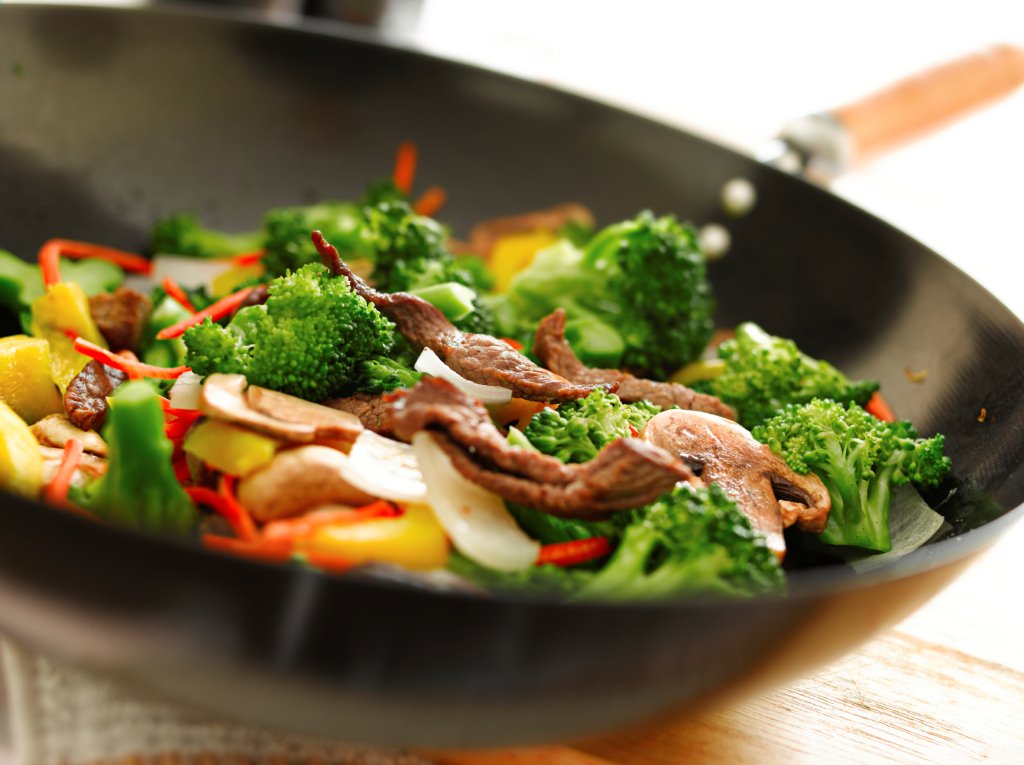
Next, Hooper leveraged connections at Amazon to spread the word about the restaurant to employees through its internal blog. Capitalizing on this large audience was a successful tactic—visit Kigo Kitchen for lunch during the workweek and you’ll see lines out the door and satisfied Amazon workers, among other customers, enjoying wok-fried lunch bowls.
Hooper is also using the power of social media to spread the word. The restaurant currently uses Twitter, Facebook, and Instagram, each of which helps current and potential customers stay informed about Kigo Kitchen.
Behind the idea of Kigo Kitchen are two important, yet different, narratives worthy of sharing: an interesting business story and a culinary story.
The business story surrounds the genesis for Kigo and how Hooper came up with his vision for the restaurant. The idea for Kigo came to Hooper through a business class at Dartmouth. The culinary story surrounds Chef Heather Nucifora and how she developed a menu using fresh ingredients to produce Kigo’s fast yet high-quality Asian food.
Seattle Met and Puget Sound Business Journal both wrote articles focusing on these stories prior to Kigo’s opening.
With two successful locations, what does the future hold for Kigo Kitchen? Hooper hopes to expand his current market even further in two ways. First, he would like to create catering and delivery options for customers without sacrificing or compromising Kigo’s quality and attention to freshness. He would also like to expand Kigo Kitchen by opening more locations in the greater Seattle area. He acknowledged that with each neighborhood in Seattle, and with each city outside of Seattle, Kigo will need to market to slightly different audiences.
Thanks to the enticing graphics created by Creature and the edgy architecture executed by Graham Baba Architects, Hooper is confident that markets outside of the corporate world will also be interested in trying his restaurant. We are excited to see what the future holds for Kigo Kitchen and think discerning diners in and around Seattle will be, too.