
Since the advent of the Internet, news outlets have been looking for innovative ways to monetize their content and cope with readers transitioning to digital news consumption. The rise of digital content coupled with increased social media use has led to a shift in how people consume the news today.
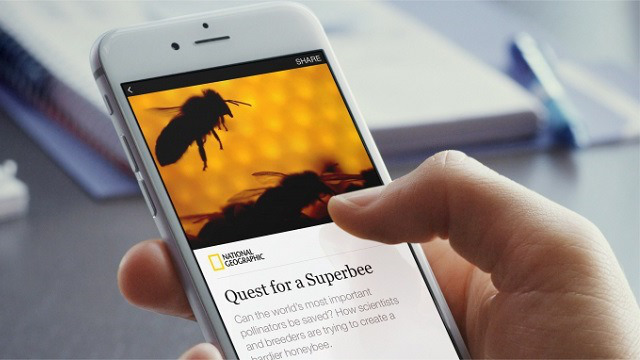
Capitalizing on the changing consumption preferences, Facebook recently announced Instant Articles, a feature that will directly host articles from news publications. Thus far, five American publications and four European outlets have agreed to the deal—these include NBC News, BuzzFeed, National Geographic, The Atlantic, The Times, The Guardian, BBC News, Bild and Spiegel Online.
According to Facebook, Instant Articles was designed “to give publishers control over their stories, brand experience and monetization opportunities.” The new feature will give publishers the ability to track data and traffic through comScore and other analytics tools, a considerable opportunity given the 1.4 billion users Facebook boasts. Instant Articles will also allow readers to view the articles up to ten times faster since they will appear directly in news feeds, as opposed to requiring users to click a link to load a different site—possibly incentivizing users to actually read more articles.
Despite these seemingly robust opportunities, this change has brought about mixed emotions, similar to that of the transition from print to digital. Publishers are wary of losing control of their content and are particularly skeptical of Facebook’s “autonomous” algorithm, which has seen quite a few changes in recent years. However, directly hosting content on social media platforms illustrates a previously untapped resource for news outlets. This is an opportunity for publishers to utilize the platforms to push their content to users who are already on the social media sites.
Social media has become quite a powerful tool. Twitter and Facebook are two of the largest discovery channels, and many people use both as resources for current events. In fact, according to a survey last year by the Pew Research Center, 48 percent of American Internet users accessed political and governmental news on Facebook during the course of a week, nearly the same as those who viewed this news on local television.
Clearly digital content and social media are having a large impact on how we consume news, and while publishers may be wary of Instant Articles and Facebook’s true motives, there’s an opportunity to capitalize on the changing landscape and stay ahead of the curve. I am interested to see how the early adopters fare, what the implications will be for journalists, and if this will change how PR pros interact with the media.