Earlier this month, my colleague Beth Mayer and I had the pleasure of presenting to a marketing class at the University of Washington. Specifically, our presentation focused on owned, earned and paid media – and how to leverage each to support a company’s business objectives.
As a former teacher, I enjoyed dusting off my pedagogical skills and collaborating with Beth to engage undergrads around the topic. From thinking through which examples would resonate (embarrassingly, Kim Kardashian made her way into the deck), to how to describe the benefits of each media type, it was fun for us to take a step back and unpack the role of PR in a company’s marketing mix.
In the professional world, it’s easy to get focused on the day-to-day tasks. But teaching forces you to take a step back. What are the implications of our work? And ultimately, how does it move the needle for companies? As an intellectual and professional exercise, teaching the class led to healthy conversations internally about the role and value of owned, earned and paid media.
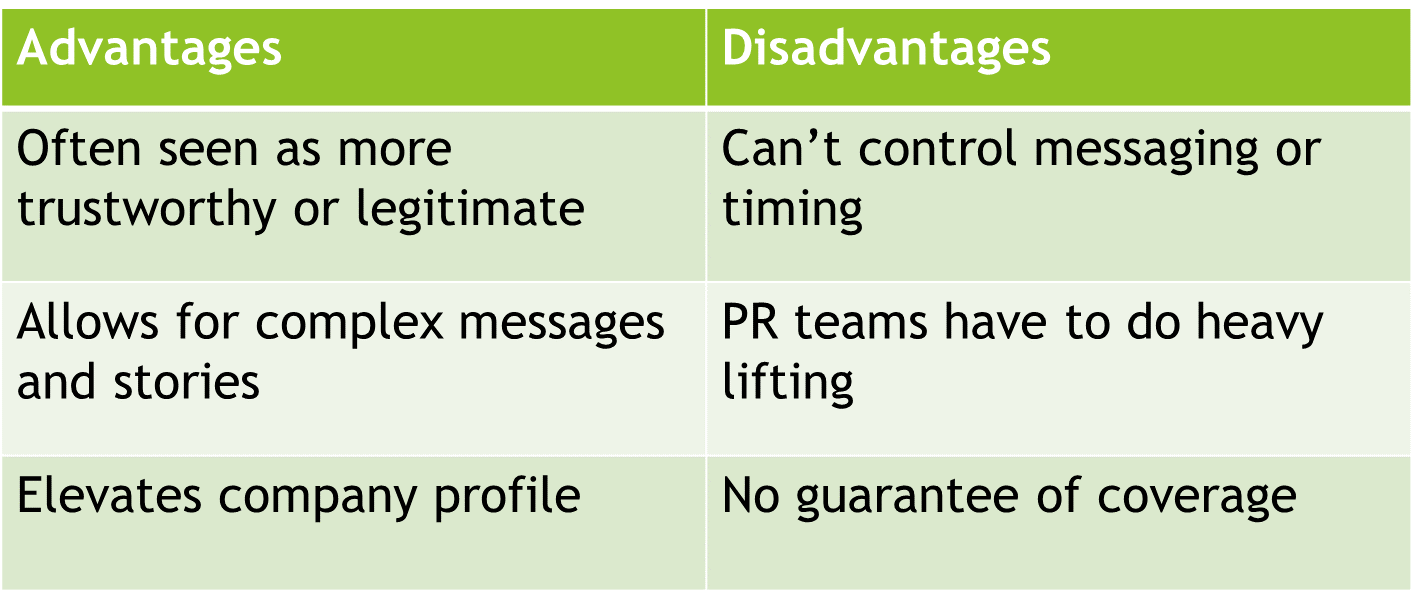
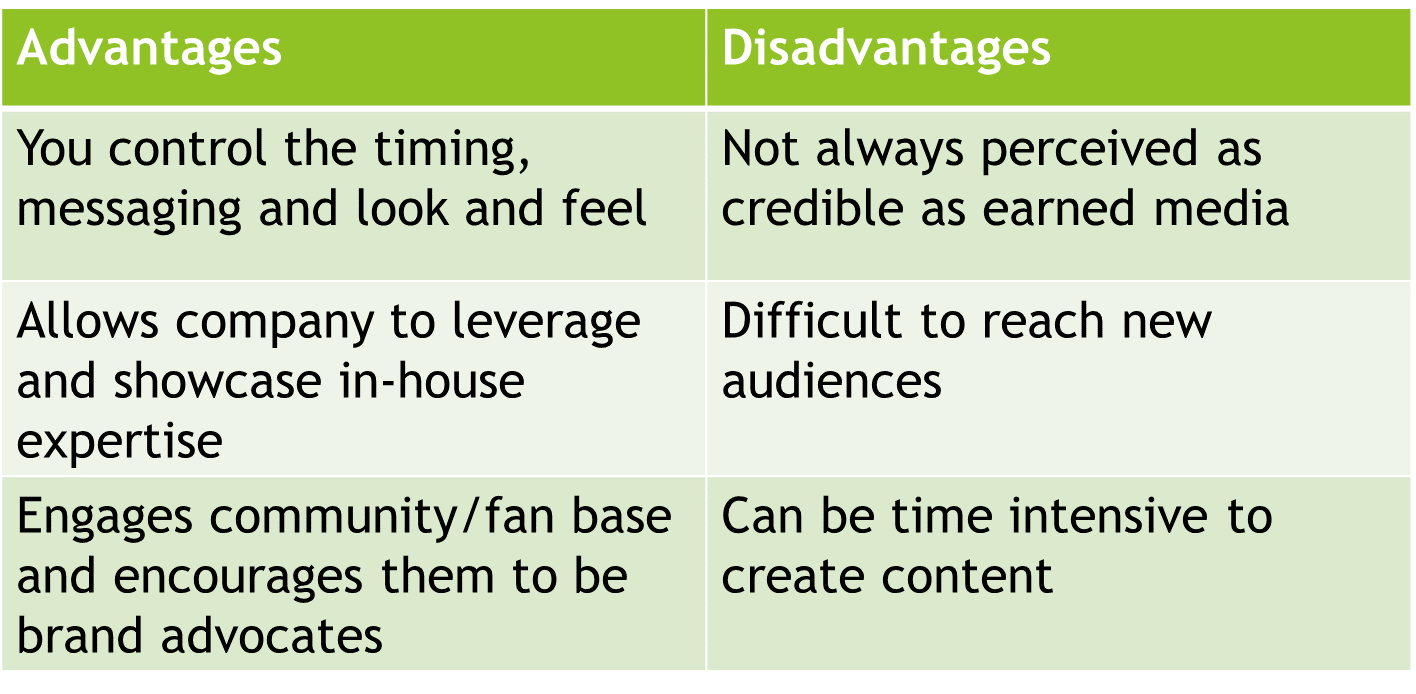
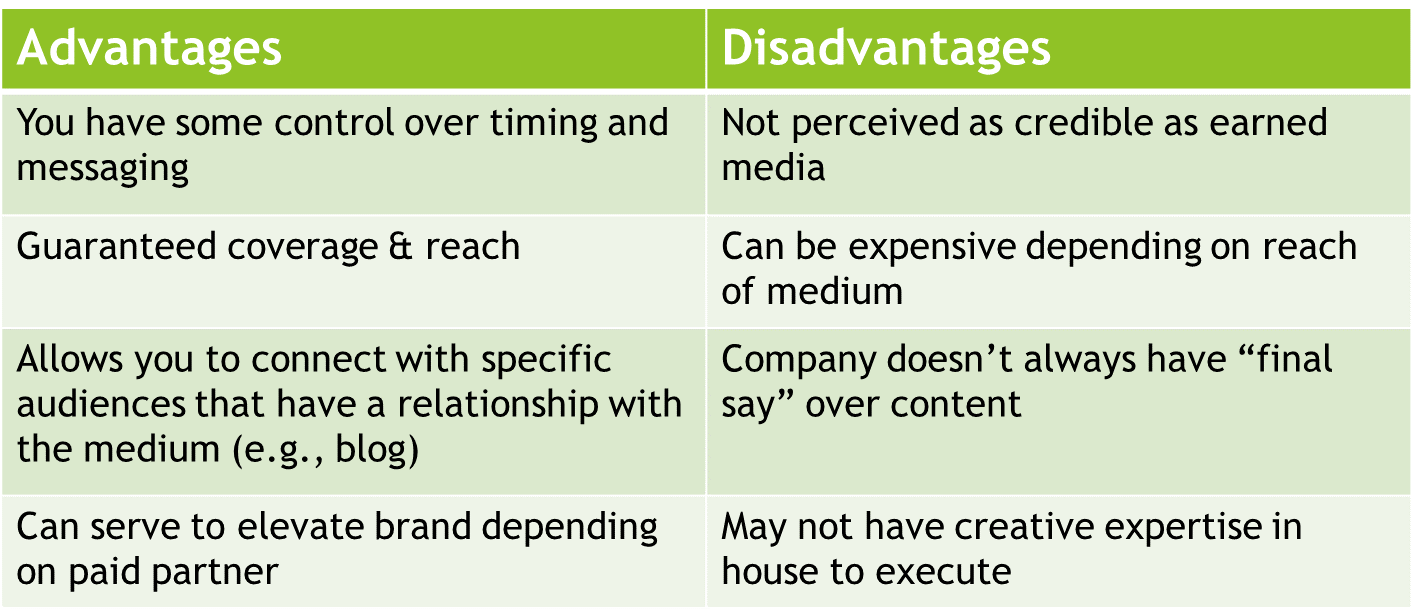
As part of our lesson, we analyzed the disadvantages and advantages of each media type – and how a company may choose to utilize each to achieve its objectives. Here’s a high-level recap of the advantages/disadvantages of each media type. How do you leverage earned, owned and paid media to achieve the right marketing mix for your company?
Earned Media – A Third Party Tells Your Story
Earned media is generally perceived as more credible than the other media types, in that journalists and editors choose to cover the brand and therefore validate its significance. Earned media also allows for more complex stories – consider a story in The New York Times versus a billboard. The former allows for a rich story, with nuances and different viewpoints. However, editorial staffs are spread thin these days, often leaving the heavy lifting to PR teams, who need to find third-party resources to serve as sources within a piece. There’s also no guarantee of coverage. Particularly with broadcast, a story may get bumped in the wake of a severe storm or – especially these days – political news.
Owned Media – You Tell Your Story
Owned media includes blog and social media content, as well as internal communications including company newsletters. The genius of owned media is that you can control it – the timing, look and feel, and content. The rub? To create content that’s of value, it should mirror earned media, leveraging in-house expertise and third-party resources to validate the significance of the story and add credibility to a company’s claims.
Paid Media – You Pay to Promote Your Content
Paid media’s value is determined, in part, by where a company is in its lifecycle. Particularly if a brand is well known, paid media can reinforce key brand messages and reach large audiences, depending on the medium. If a brand isn’t well known, however, it’s important to consider the value of an advertisement that can’t tell the brand’s story or fully explain its value proposition.
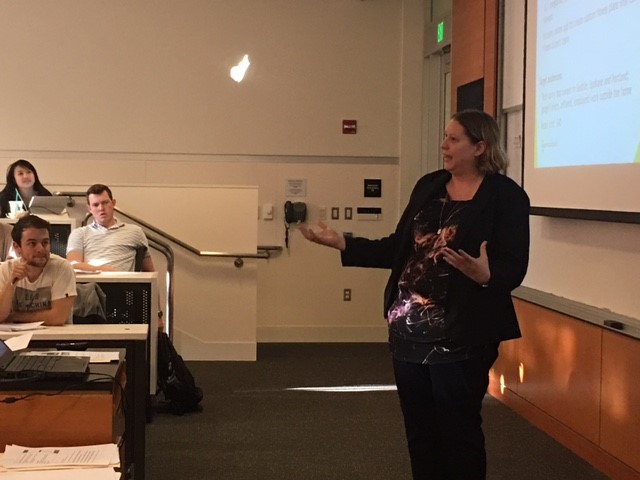
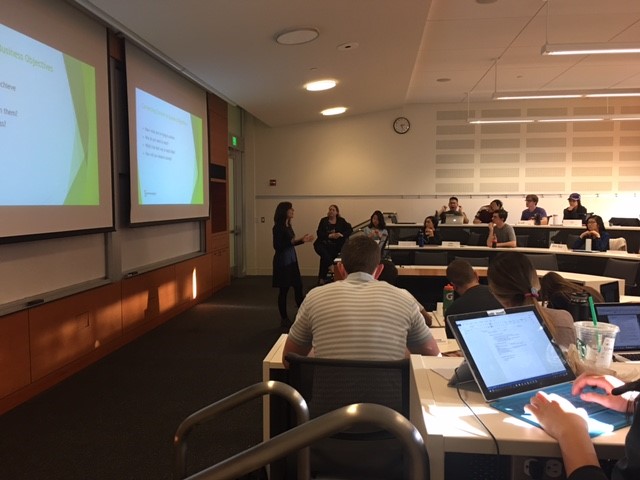
And, in case you’d like to see, here are some pictures of Beth and me in action. It’s heartening to see that the student on the bottom right does appear to be taking notes, not browsing the internet!