
A few weeks ago, the American Red Cross – and its Twitter account, @RedCross – became the target of a number media blog posts and articles. The reason wasn’t another natural disaster response or a direct push for donations (although it did turn into a push for donations later). The attention was due to this rogue tweet that appeared late one evening:
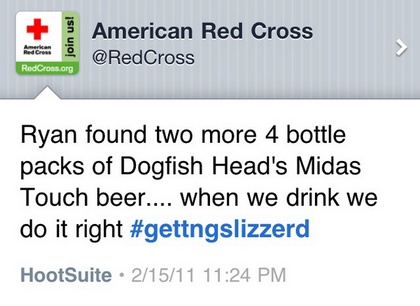
Most people immediately assumed this tweet was not the official viewpoint of the Red Cross, but rather that they were witnessing a simple public error made by one of its employees. Instead of being chastised for allowing such a tweet to happen, the Red Cross was ultimately praised in the articles and posts for the way it rapidly addressed the mistake, using both honesty and humor to diffuse the situation. As James Plafke of GeekoSystem noted, “The Red Cross handled the situation pretty entertainingly–something that doesn’t happen much these days–and released a charming follow-up tweet.”
Those of you who utilize social media on behalf of your company probably already know this: Since social media is run by humans, it is susceptible to human error. It’s just a fact of life, and you can’t always prevent it from happening. The key takeaway from this revelation is simple – be prepared. Many companies have a crisis communication plan for all types of unlikely scenarios that they may have to face, so why not employ one for your social mediums as well?
What the Red Cross did was take the most appropriate action it could: It took ownership of the mistake, embraced it, addressed it quickly and moved on. It’s easy to forget that people follow companies on Twitter and Facebook because they enjoy the feeling of having a personal connection with them. Consumers are looking for genuine human interaction, and they know that mistakes do occur.
Mistakes, however, don’t have to catch you off-guard. Set up a plan and make sure all stakeholders in the social media process are aware of how to handle a situation, should one occur. In the plan, you should outline who will be responsible for deleting or addressing the mistake, set a goal for how fast you will realistically respond, and determine who will speak with media or journalists, if necessary. Once you have thought through this list and agreed on a plan of action, your company and team will be able to handle any situation calmly and methodically.
If you need tips for creating a crisis communication plan, check out our blog post here. We wish you happy planning, and remember it’s always better to be prepared.