
Insights for Leaders Navigating
Visibility, Credibility, and Growth.
From media strategy to reputation management, we explore the trends shaping public perception and share the approaches that drive measurable results for growing brands.
It is always a treat when we get the opportunity to work with a client whose product meshes with our own personal passions.
This spring and summer we had the opportunity to work with Kaidel Sportswear, a Seattle-based sportswear company that designs Pacific Northwest-specific running and biking gear. I am very passionate about running and overall fitness, and growing up in the Pacific Northwest it is great to see the designs that Kaidel has come up with, often including designs from Seattle artists.
Photo courtesy of KaidelDuring a three-month engagement, Communiqué was tasked with helping Kaidel secure product reviews and event sponsorships to maximize exposure in the most efficient way possible. Given the active audience, events and product reviews seemed like ideal venues. This was a challenge for our team, and not our typical bread and butter. But fueled with our team’s passion for fitness and the outdoors, we were able to channel our creativity and exceed our goals essentially by leveraging existing relationships with media and local event producers, as well as reaching out to new contacts.
For the product reviews, we started with research to ensure we were targeting publications that 1) ran apparel-related product reviews and 2) were relevant to Kaidel’s audience. We identified a target list of mainly local publications and websites, and tailored our pitches to each one. Product reviews often require a lot of handholding and, despite initial interest from a particular journalist, we had to follow up frequently to ensure the review would see the light of day.
We also took creative approaches to landing product reviews, including partnering with Northwest Runner on a contest to give away a Kaidel Sportswear running jersey, which drove traffic to the Kaidel website. The contest winner also wrote a review of the jersey for the Northwest Runner website, further helping raise awareness.
We also secured a great review in Rave and Review, a popular family-oriented blog, and worked with the outlet to run a giveaway of a family pack of cycling jerseys. This helped shine the spotlight on Kaidel not only to the blog’s readers, but also to Rave and Review’s nearly 7,000 Twitter followers.
Finally, we took advantage of an opportunity with The Seattle Times’ Marketplace section, a Sunday insert that features new products. We were able to connect with the Kids’ Shop section, which ran a great piece highlighting Kaidel’s kids cycling jerseys.
For events, we reached out to Orswell Events, a local running and triathlon race producer, to explore in-kind sponsorship opportunities and secured a sponsorship at Orswell Events’ Shore Run and Walk, an annual race which draws more than 3,000 participants and volunteers. Kaidel provided shirts for the event’s post-race raffle and, in exchange, Orswell Events included Kaidel in its pre-race participant email, posted the Kaidel Sportswear logo on the event website, promoted Kaidel’s involvement via social media and provided on-site promotions for the company. Involvement in the Shore Run and Walk gave Kaidel exposure to a very targeted and key audience.
Our three-month engagement flew by, but overall we were pleased with the outcome. We secured excellent results (included below) and helped set the groundwork for additional reviews that may come to fruition toward the end of the year.
If you are a runner or biker, we encourage you to check out the Kaidel Sportswear jerseys. And yes, I am practicing what I preach—I bought the Seattle neighborhood running top for myself and my boyfriend and we love them!
Kaidel Sportswear Results
- In-kind sponsorship at Shore Run/Walk, June 9, 2013
- Northwest Runner Magazine, “Kaidel Sportswear Running Shirt Review,” July 2013
- Rave and Review, “Seattle style for the great outdoors from Kaidel Sportswear {family pack review & giveaway ARV$150},” August 8, 2013
- Seattle Times, “Cycle in Style with Local Jersey,” August 11, 2013
Communications professionals (including the Communiqué team) often tout corporate blogs as a way for businesses to create a voice, connect with their audience, drive thought leadership and increase website traffic. While this is all true, corporate blogs can become especially handy when a company has a crisis on its hands – especially if the company is a small to medium business that does not typically draw massive media attention.
When a company like Microsoft or Apple has a crisis on its hands, any statement it publishes on its website will be widely distributed and rehashed in the media. However, when a smaller to medium- sized business is embroiled in a controversy, this might not be the case. And, smaller businesses can still be involved in media crises – whether it be a bout of food poisoning from a franchise of restaurants, a hack of a company’s information, or the behavior of an employee (like the recent twitter controversy between food truck Milk Truck’s employee with Glass Lewis & Co.). Having, and making use of, a corporate blog can be an effective way for smaller to medium businesses to handle crises. Why?
- Blogs provide a platform for an immediate response. Journalists and consumers alike might ask for an official statement if your business’ name is brought into a scandal, and by publishing a blog post you can articulate your perspective, clarify any inaccurate information and explain what you are going to do in response to the situation. And, with your own blog have control when it goes out – you can post it immediately.
- You can share your unfiltered point of view. Your blog presents the opportunity to tell your story, your way, and to get your perspective and point of view across. No, this is not the time to play the blame game – you’ll still want to abide by crisis communications best practices (see “What Not To Do in Crisis Communication,” for more insight). However, you’ll be able to clearly communicate your business’ involvement in the crisis.
- You create authenticity. A blog is a vessel for you to speak to consumers, media, investors and other interested parties. While the blog may have been carefully crafted, it does not have the deflected feeling that an official press release might create. Rather, readers are getting your opinion, emotions and voice, which will come off as a more real reaction, rather than a stiff corporate one.
- Blogs remove the middleman. Rather than interested or affected parties hearing about the crisis from an outside source, they’ll hear directly from you. A lot can be misconstrued in a chain of communication; much better to deliver the news yourself, in the way you want it delivered.
If your business is in the midst of a crisis, or you are simply looking for ways to prepare, consider creating a blog or how you might leverage an existing corporate blog. A blog can be a great way to reach consumers and media alike, and to control the message your company is putting out about an issue at hand.
For more on crisis communications from Communique PR, see:
For more on corporate apologies, see:
- The Art of the Corporate Apology, Forbes
- Best Corporate Apology Ever Posted on Twitter?, AdWeek
- Apple’s Map Fail and More Corporate Apologies, The Daily Beast
- Tim Cook Apologizes for Apple’s Maps, the New York Times: Bits
In the PR industry, we hear a lot about trends. Editors are looking for “trend pieces.” We check what is “trending” on Twitter. How many pitches have you written to capitalize on a trending news topic?
A good story often combines a newsworthy item with a larger trend, showing readers the big picture and the “so what” of why the story matters. So, when a company has a unique, trendy, “big picture” story to tell, it’s worth taking notice. That’s one reason I’ve been impressed with the story of car2go.
Car2go sits at the confluence of two major trends. Many Americans – particularly the millennial generation so coveted by marketers – are buying fewer cars and driving less. The Atlantic (ever fond of trend pieces!) covered the story last year. Simultaneously, more and more people are catching on to the “sharing economy,” which has allowed entrepreneurs to build businesses around the idea of allowing people to derive value from existing assets. Think couch surfing, or if you’re more high-end, Airbnb.
These two trends add up to an environment ripe for companies to disrupt the automotive marketplace. There are a number of entrepreneurs and larger companies doing this in different ways – I’m talking about services like Uber, Sidecar, Lyft and of course, ZipCar. Car2go, though, has an especially interesting story to tell. It is a car-sharing service that gives users a high degree of flexibility by allowing drivers to park cars anywhere within a city’s “zone” (here in Seattle, this means just about anywhere in the urban neighborhoods most frequented by The Atlantic’s carless 20-somethings).
This flexibility further reduces the commitment of car-sharers. Don’t want to worry about bringing your car back from a restaurant? No worries, just park out front and let someone else take the car when they need it. As anyone would expect in 2013, the cars can be located and reserved via a smartphone app using a map interface.
More and more people, particularly young professionals, are moving into urban areas and this means that mass transit options are becoming more and more stressed; Seattle isn’t alone in having a transit system facing dual challenges of increased ridership and budget shortfalls. Young, professional commuters are looking for alternatives, and it’s because of trends like these that I expect to see car2go keep growing.
By giving users the flexibility to park anywhere, minimizing the time required finding a car and eliminating entirely the time needed to return it, car2go has carved out an interesting niche in the car -sharing market. Based on the number of car2go vehicles I’ve seen in Seattle, its business model is catching on. The company says it has about 120,000 users around the world right now, but interestingly, it has been around since 2008 – long before I’d heard the phrase “sharing economy.”
For my part, I’ve relied on car2go to get me to the office in a pinch and to social gatherings on the weekend. A confession, though – it’s not only the convenience that drew me to car2go. As someone who lives in an urban neighborhood and is challenged by parallel parking, car2go’s fleet of diminutive Smart cars lets me park without fear of embarrassment.
Outside of its interesting and timely story that makes the company newsworthy, car2go’s branded vehicles serve as a great marketing tool. If you live near downtown Seattle, you’ve probably seen them in your neighborhood.
Car2go is an excellent example of how a business’ growing popularity can be part of a larger news trend. I’m excited to see where the sharing economy takes us, and where car2go’s story goes next!
You can check out the work of car2go’s social media team, including local promotions, on Twitter @car2goSeattle. The company is also active in U.S. cities from Austin, Texas, to Denver, Colo., to Washington, D.C.
As a PR professional working in an agency environment, I’m fortunate to work with a variety of clients from different industries. Each new client brings an opportunity to learn something – whether it be a new product or a technology I’ve not used before, or even learning about the culture of the targeted audience – and it’s this constant learning curve that keeps me engaged and inspired as a PR practitioner.
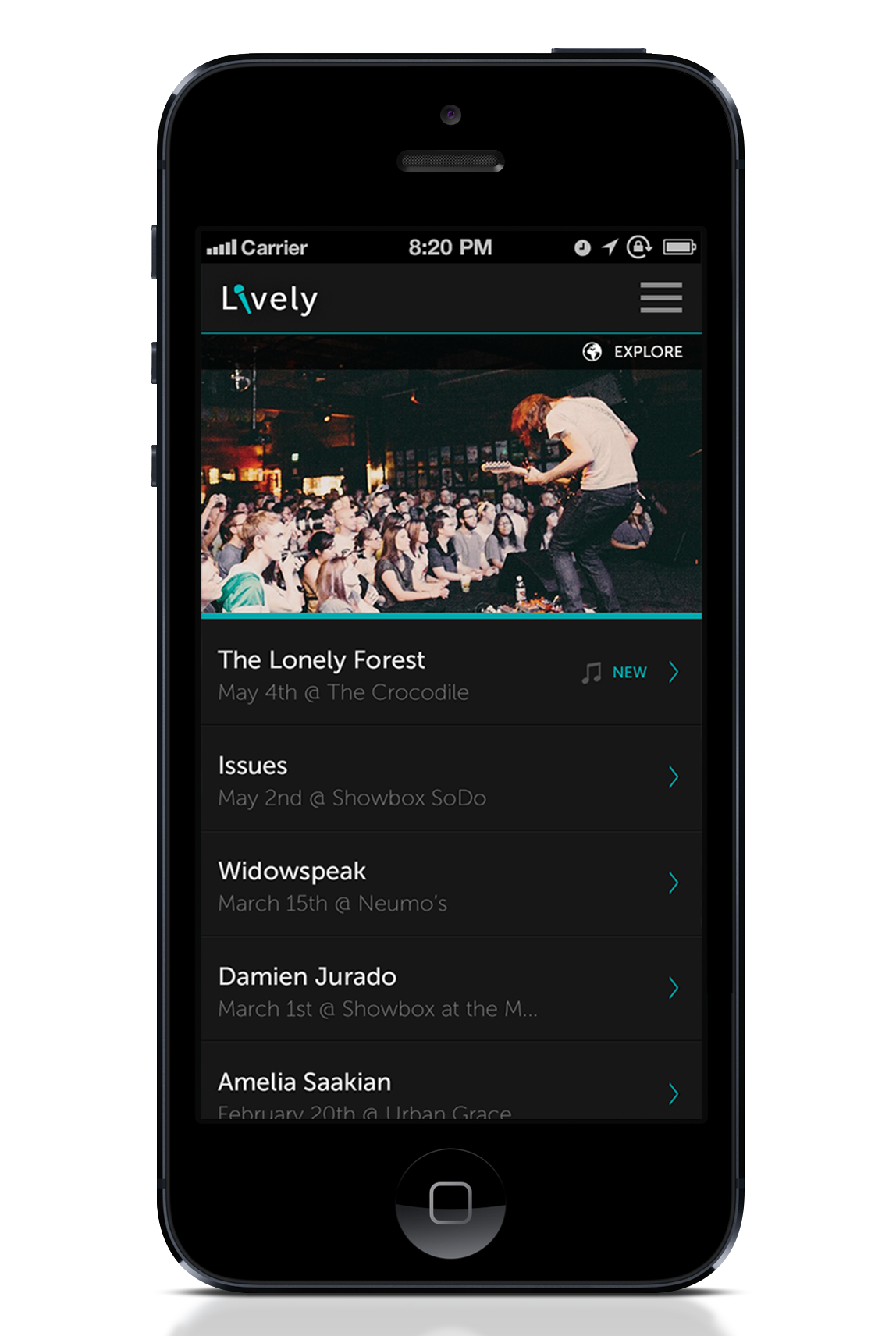
While all new clients offer an opportunity to learn and grow, every once in a while a client comes along that provides inspiration beyond professional growth. That’s why I was thrilled when Seattle startup Lively joined our agency’s roster of clients. Lively is an innovative new mobile app that is poised to radically change the way fans experience live music. The Lively app allows fans to put down their own recording devices and be in the moment by offering high-quality audio and video for download. With a simple click of a button (after downloading the free app) music fans can access their live music memories, share them with friends and in so doing, support the artists that they love.
I should probably explain why this particular client is so exciting to me personally. Music is one of my passions. I grew up in a family that embraced and celebrated music. A modern-day Family Von Trapp of sorts, we sang our way from state to state on long road trips, finding harmony through song and performing as a group for our church congregation. I’m also a former high school band/choir/musical theater geek, an usher at local music venues, and an avid live show attendee (I have a collection of tickets dating back to 1984 to prove it).
As a show goer, I’ll admit to having recorded audio and video during concerts only to be disappointed at playback because my recordings didn’t accurately represent my memory of the experience. The new Lively app promises to replace my amateur-quality recordings with memories that are true to my experience.
While the Lively app feeds my inner music geek, Lively also appeals to me as a client because it offers an opportunity to engage with an audience I relate to and a culture I innately understand. In addition, Lively is a company that is truly ready to engage with a PR partner – here are a few examples:
Solid business goals: Lively knows who they are, who they need to reach and what they want to accomplish. Having these three things firmly in place allows for clarity when planning a strategy for PR.
Proof of concept: Lively has a product that music fans want. They’ve tested the market, proved their concept to investors, and are positioned to make a noticeable impact on the music industry.
Branding: The Lively team has a clear vision about their image and the brand they want to project.
Website: The Lively concept, brand and mission are all clearly defined on the company’s website. It provides high-quality instructional videos and information for each of its target audiences: fans, musicians and the music industry, itself.
Availability: Although Lively is still building its roster of musical artists, the app is available for download on iOS and Android platforms.
Lively has already shown signs of being an excellent client by working with our team in partnership, being willing and able to share pertinent information and relying on our expertise. They understand what a PR campaign can accomplish and they’re aware of the limits. They respect the work that it takes to build relationships and they’re eager to learn more about what we do and how they can help us to be successful on their behalf. All of these things make me excited to delve deeper into the world of Lively and if we’re successful in our efforts, you might just be excited about Lively, too.
For more information about the new Lively mobile app, visit www.getlive.ly or follow them on Facebook at facebook.com/LivelyLLC or on Twitter @LivelyLLC.

Warren Buffett once said, “It takes 20 years to build a reputation and five minutes to ruin it.” In today’s world, a reputation could probably be ruined in far less time than that. As the popularity and usage of social media and review websites grow, it is likely that users will post their experiences with a brand, whether positive or negative. Not only does this give the consumer more power than ever before—this phenomenon gives word of mouth a completely new meaning.
Rather than telling a small group of friends about their experience with a product or service, consumers can share their stories with the world. According to a recent infographic released by Reputation Advocate, 83 percent of consumers believe that it is important to read a user-generated review. In addition to this staggering statistic, 79 percent of consumers say that they trust online reviews, proving their potential to influence a brand’s reputation, sales and overall success.
These statistics emphasize the importance of engaging with customers online in a positive way – your brand’s or product’s online reputation might make or break your business.
Reputation Advocate’s infographic, which was recently featured on PRDaily, provides additional statistics that may help inform your online reviews strategy. A few that I found most interesting include:
- Only 11 percent of consumers say they take no notice of reviews. The majority of consumers take the time to find and read reviews to influence their decision.
- 87 percent of consumers say that a positive review has reinforced their decision to purchase a product. Positive reviews carry a lot of weight and could be a useful tool in selling your brand or product.
- 5 percent of negative reviews are written by people who have never used the product, meaning managing your online reputation is crucial because there is a chance that false reviews could influence your consumers.
View the full infographic below, and learn more about how to manage an online reputation in our post, “Best Practices for Managing an Online Reputation.”
Infographic Courtesy of Reputation AdvocateThe annual Seafair festival is synonymous with summer in Seattle. From the end of June through the first weekend in August, the city is abuzz with sporting events, parades and festivals which celebrate the diverse neighborhoods and ethnic communities across greater Seattle.
Seafair is in my blood. I grew up going to the neighborhood parades and events and I still get a rush when I hear the jets fly through the sky during the annual airshow. Later, after a college internship with Seafair, I was hired on as a full-time employee and enjoyed five fun-filled years as part of the small group of year-round staff. Now, after living a number of years away from Seattle, I’m honored to serve on the board of the Seafair Foundation which oversees the festival’s scholarship programs and community events.
As a 64-year-old civic institution, Seafair is steeped in tradition, but it is also a great example of a seemingly “old school” organization that has embraced social media. I recall being one of the first hundred or so people to like Seafair on Facebook and now they’ve grown to a community of 30,000-plus friends. In addition to their main Facebook page, Seafair also maintains a Facebook page for its sports events, as well as individual pages for the Seafair Torchlight Run and the Seafair Triathlon. Seafair also has an active presence on Twitter, LinkedIn, Google+, Instagram, Pinterest, Tagboard and YouTube.
Seafair did not grow to more than 30,000 Facebook friends overnight; they got there by maintaining their commitment to social media. Here are a few social media best practices that I’ve observed that Seafair does well:
- Share engaging content. A picture is worth a thousand words and almost every Seafair update includes a photo, video or other visual. Who doesn’t love a picture of smiling children?
- Provide timely and relevant information. The dynamic and instantaneous nature of social media often makes it the first place people turn to for the most up-to-date information. Seafair leverages this well to communicate everything from event updates and promotions to information about road and bridge closures.
- Be consistent. In the weeks preceding the festival and at its height, you can count on Seafair to post multiple updates each day. But, even during the off-season, Seafair is good about posting once or twice a week. The cadence at which they share updates is also such that it doesn’t overwhelm your newsfeed.
- Share the love. While the majority of updates are Seafair-related, the organization is also good about sharing relevant content from others.
Social media has also been a great vehicle for recognizing the involvement of the corporate sponsors who support the festival. That’s a great sponsor benefit.
Seafair culminates this weekend with the unlimited hydroplane races and Boeing Air Show on Lake Washington. Will you be there?