
Insights for Leaders Navigating
Visibility, Credibility, and Growth.
From media strategy to reputation management, we explore the trends shaping public perception and share the approaches that drive measurable results for growing brands.

With 2017 just around the corner (it’s hard to believe, I know), marketers and journalists are already predicting trends set to take off in the coming year.
I recently read an article in Forbes highlighting the top 10 marketing predictions for 2017 and found the following predictions to be particularly on point:
- Data scientists will become “the new marketing lieutenants.” Given the rise of data scientists across numerous other fields, from people analytics to banking, it’s no surprise that there’s going to be an increased demand for data scientists in marketing. According to the author, data scientists will be key players in bolstering marketing strategies by ensuring initiatives are evidence-based and data-driven. Marketing will become increasingly programmatic – less an art than a science.
- ROI measurement will become more effective. Measuring the impact of PR and marketing is critical to prove its value, but metrics often establish correlation versus causality. Current metrics feel imprecise, providing an opportunity to iterate and arrive at more accurate measurement. In 2017, measurement will likely tie marketing initiatives to profit, revenue, customer retention and client satisfaction more clearly than in years’ past.
- Content will become increasingly personalized. With the current buzz around the internet of things and connected devices, it’s no surprise that marketing initiatives will become increasingly personalized, with the goal of delivering the right content to the right prospect at the right time. Sensors, edge devices, fitness wearables and more are arming brands with user-specific data that’s ripe for leveraging in marketing initiatives. According to Forbes, “For some businesses, this will mean ensuring touch points are specific and individual. For others, it’s simply streamlining the purchasing process and making it more responsive.”
- AI has arrived. While there’s been talk about AI and its role in marketing for some time, we’ll start to see the business impact of AI and its actualized potential in 2017. “Imagine a chatbot who knows your likes, dislikes, and needs and can guide you on where to eat, how to travel, or where to shop.” The possibilities to use AI to guide consumer behavior are seemingly endless.
- More (and better) video content. With the success of Pokémon Go, virtual reality, augmented reality and video will become increasingly central to brands’ marketing strategies. According to the author, “Social content, reviews, blogs, papers, and eBooks are all still crucial aspects of marketing, but video will be the rage moving forward.”
For more articles on marketing, please take a look at the following posts, if you’d like:
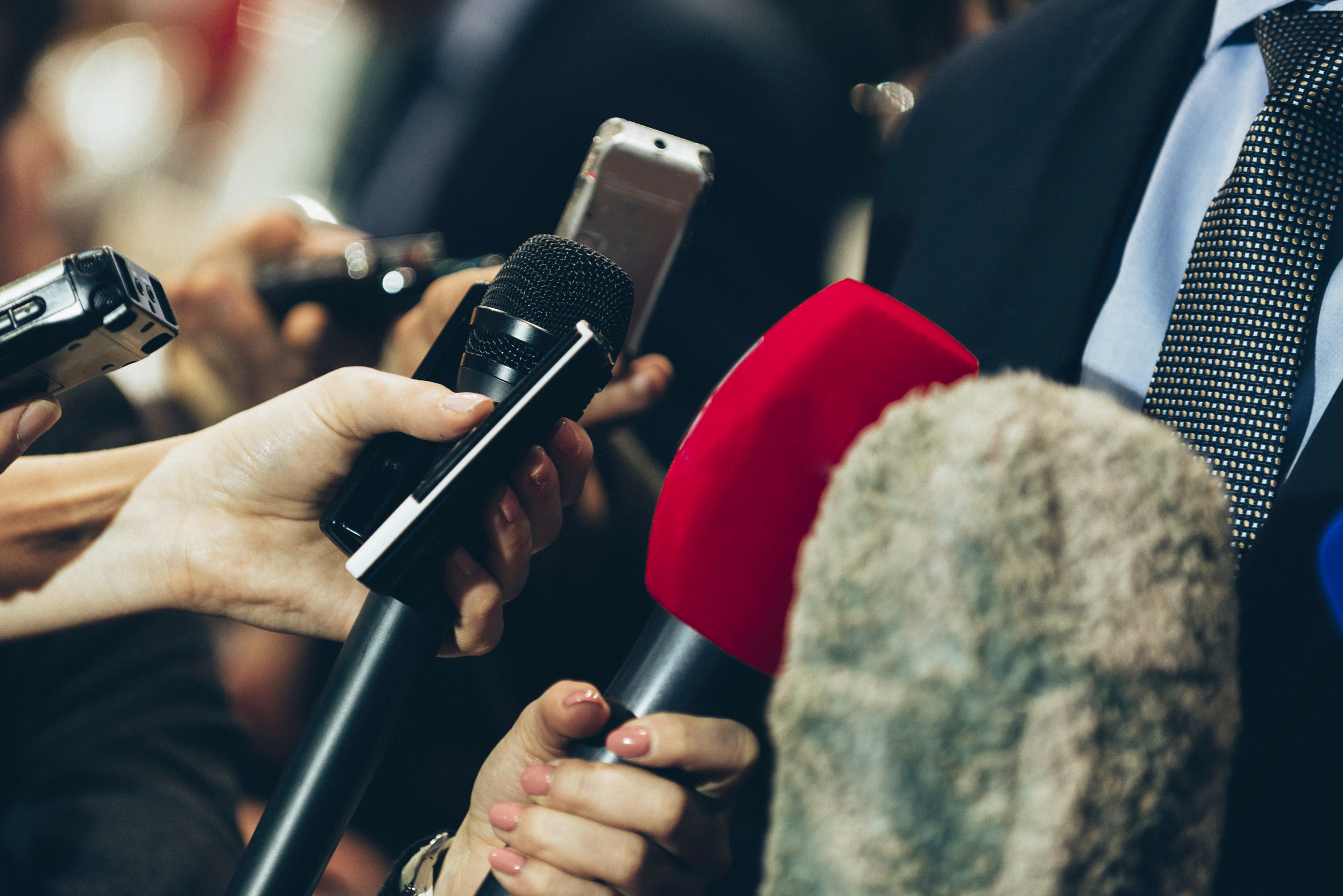
As one of the most contentious and theatrical presidential elections in U.S. history unfolds before our eyes, many citizens are thinking about what it truly means to be a democracy. Equitable, factual media is one of the most significant markers of a democratic society, and for those of us working in the industry, it may be a suitable time to reflect on our part in upholding this ideal.
PR people and journalists in particular have been pitted in a lasting rivalry that has inspired many media professionals to refer to public relations as “the dark side” (in varying degrees of seriousness). Some have even suggested that PR is killing journalism and that the rise of PR is a “threat to democracy” (in all seriousness).
For us to treat this complex debate with the thoughtfulness it deserves, we must first raise clarifications against some common misconceptions:
- The rise of PR has resulted in the decline of journalism
Indeed, the journalism sector has seen a decline in recent years, while the public relations sector has simultaneously grown. Last year, there were 4.8 PR people for every one reporter. However, the two trends are not causally related.
Unfortunately, job availability for reporters is shrinking for a number of reasons. One of the most profound is the decentralization of media. Before the internet era, news was only available through a few major sources, including TV and newspapers. Today, news and content are disseminated across an increasingly massive array of channels, which are all fighting for the attention of readers. People can now find desired information in smartphone apps or blogs, for example, which has subsequently decreased the demand for traditional newsroom journalists.
Additionally, this radical change in media structure has lowered newspaper valuations, forcing newsroom budgets to drop as much as 10 percent in recent years.
- Public relations is the source of media bias
Of course, it is the job of PR professionals to represent their clients in the most positive and diplomatic manner possible. However, the No. 1 source of bias in any story will always be human subjectivity. This can come from anybody – whether accidental or not, PR people and journalists alike are capable of letting their own perspectives and intentions show up in published media.
- Journalists and PR people work together begrudgingly
While the two positions are popularly characterized as a dysfunctional, sometimes adversarial relationship, the truth is that we need each other. Without reporters, PR pros would not be able to do their job of spreading awareness of their clients’ activities. Without PR pros, reporters would be less in tune with the internal news and buzz of the beat they cover. Rather than think of the two as “a broken marriage,” a better description would be that they are two sides of the same coin – roles that are distinct, but cannot exist without each other.
No matter what your stance is on this longstanding discourse, one thing is certain: The decline in journalism is a bad thing for society at large, including and especially PR professionals. The uneven reporter-to-PR ratio means that each individual reporter gets flooded with pitches, on top of their burden of having to produce content like a machine.
This is bad news for PR people because their pitches are significantly less likely to get interest, let alone coverage. There may be a lot of meaningful news that would be valuable to readers, but not enough reporters to cover it all.
Media consumers are negatively affected because what they see might not be an accurate depiction of the big picture. As long as there are significantly fewer journalists than PR people, citizens will only ever be able to see what manages to make it through the tumultuous media relations cycle. Given the mutually dependent relationship of PR and journalism, it’s vital that the two are equally powerful and populated so that they can keep each other accountable.
If we’re thinking about a more democratic media system that upholds truth and reflects reality in the fullest capacity, we need to invest more money and resources in honest journalism.

Jay Greene, of The Wall Street Journal; Nick Wingfield, reporter for The New York Times; and Mary Jo Foley, of ZDNet, made it clear earlier this month during their panel at the Geekwire Summit: Don’t pitch them via social media – they all prefer email. And they are not alone. According to a recent survey conducted by Adobe regarding U.S. white collar workers’ habits and behavior related to personal and work email, email is still the preferred mode of communication over social media.
AdWeek’s Kimberlee Morrison summarized some of the findings in her article, Americans Still Prefer Email to Social Media. Specifically, she shared that “nearly 40 percent of participants preferred communicating by email, while 10 percent preferred instant messages. The enterprise social platforms don’t really seem to be catching on, with only 2 percent of respondents choosing to communicate with their colleagues via social networks.”
Given American workers’ reticence to communicate over social platforms, it’s no surprise that journalists still prefer to be pitched via email. While communication trends may evolve over time, it’s important for PR professionals to consider that the vehicle for our outreach matters and demonstrates an understanding of our audiences’ preferences.
Marketers should also take note: When asked about preferred methods of contact from brands, 49 percent of consumers prefer email – dwarfing other methods such as a brand’s mobile app (9 percent), social media (8 percent), text messages (7 percent), and phone calls (6 percent).
Given these findings, below are some additional resources to help you craft the perfect pitch:
Social-media presence is becoming an increasingly important tool for any business. Social media allows businesses to target specific audiences, have greater control of their messaging, and allows direct interaction with customers. Though there are benefits to any social media platform, when it comes to speed and direct customer interaction Twitter is king.
Up until very recently, Twitter gave you 140 characters, which included any characters a picture, gif or video might take up. This caused increasing frustration among both consumers and businesses using Twitter as it significantly cut down the amount of space you could use for your actual message. Luckily, Twitter has seen the error of its ways and made an update that allows you to send out a tweet with exactly 140 characters and include a visual separately. This is a big step in the right direction as it allows companies greater freedom in terms of the amount of information their tweets can convey.
Even before this update, Twitter was a valuable tool for businesses, so let’s go over some of its biggest and most valuable advantages.
Speed
The biggest advantage of Twitter is its real-time capabilities, and when it comes to real-time, no other social-media platform can compare. It is by far the fastest way to introduce news to your consumers and clients. This could include introducing a new product, announcing a merger, or even doing damage control when something goes awry.
Not only that, but you can have real-time updates on the response to your news as followers tweet back or ask questions. For example, Eagle Alpha used Twitter to track customer reactions to the Apple Watch when it was first released last year, keeping them updated on if the responses were negative or positive in real-time.
Customer Service
Twitter is quickly becoming one of the best social media platforms for customer care. Unfortunately, brands aren’t using this to its full advantage. In a social customer care report put out by Rational Interaction earlier this year, it was stated the 67 percent of Twitter users that have used Twitter to contact brands for customer service issues, more than half never received a response.
Using Twitter to instantly help with customer-care issues will have a huge impact on improving not only your brand image but will give you valuable insight on what your customers’ needs and concerns are regarding your product or services. For example, Spotify uses Twitter to keep tabs on server issues and keep customers informed when server’s crash on wait times until the site is back up and running. This kind of customer interaction can have a big positive impact on customer satisfaction.
Information
Finally, Twitter is a great way to keep up with and track new information coming out within your industry. You can search specific hashtags, follow prominent people that work in the industry, and keep up to date on articles written in media outlets that cover your scope of work. Keeping informed about new trends and research can be the difference between a good company and a great company.
Twitter has a lot of benefits that can be important when growing and maintaining a business. This, paired with a well laid out social media plan, can become a huge asset in helping boost your company to the next level and creating a larger customer base. The new Twitter update is a great excuse for experimenting with the social media platform if you haven’t already, or to brush up on your Twitter skills if you have. Since, as they always say, if a picture is worth a thousand words, then a tweet is worth a thousand words and 140 characters.
The art of storytelling is nothing new. Since the days of cavemen carving hieroglyphics into rocks, humans have been using images, and eventually words, to share their experiences with others. As humans, we all tell stories every day. Whether we’re telling our friends about a crazy snowstorm or raving to our coworkers about a new restaurant, stories are how we make sense of the world.
But in recent years, how we share our stories has changed dramatically. We are no longer limited to sharing our experiences with people we know personally. The rise of social media has given everyday people a platform from which they can share their stories with thousands of people. For example, Kiersten Reich started her blog The Blonde Abroad five years ago to share stories from her world travels. Since then, her blog has garnered 120,000 followers and she now has 271,000 followers on Instagram.
For brands, this means that everyday people often have bigger audiences on social media than they do. Kraft Foods, for example, only has 11,100 followers on Instagram. In the age of social storytelling, how do brands adjust their marketing strategies to ensure their stories are still being heard?
The answer, for many brands, is to let their customers do the talking.
Karen Olsen, VP of marketing for the Seattle Space Needle, sees the rise of social media as an opportunity for the Space Needle’s fans to share its story. To encourage this, she and her team have created experiences that fans will want to share with their followers. On the Space Needle’s observation deck, there is a panoramic camera that allows guests to take extra-wide selfies and time-lapse photos. There is also a virtual version of the Space Needle that guests can take photos with. Offering tools like these gives guests the opportunity to capture their experience in a unique way that they will want to share with their followers.
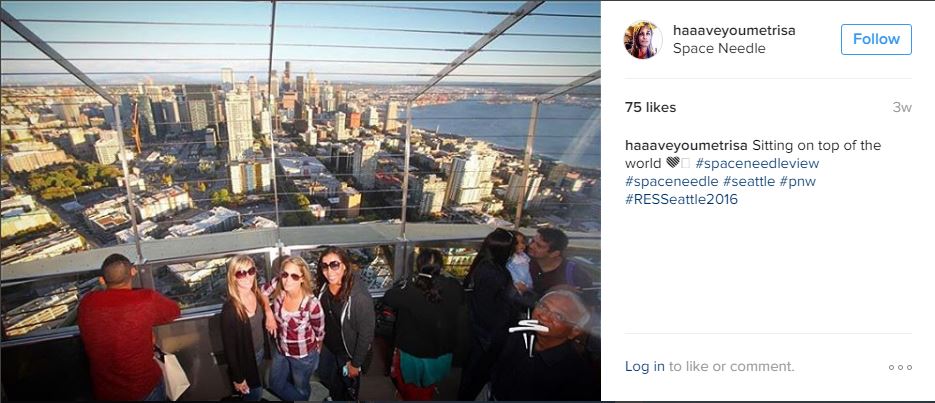
“Today, one of the biggest luxuries is to have an incredible experience,” said Olsen. “People are all about having an experience, capturing it and sharing it on social media.”
Indeed, research has shown that millennials, who make up the nation’s largest living generation, value experiences over owning goods like cars and homes. They want to have an unbelievable experience that they can share with others.
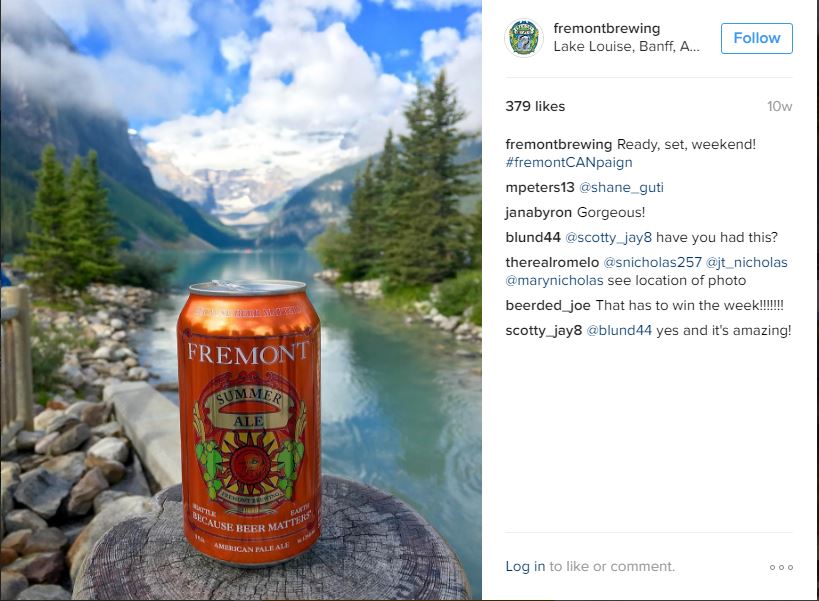
Brands can capitalize on this by creating a shareable experience like Olsen did at the Space Needle, or by inserting themselves into experiences their fans are already having. For example, Fremont Brewing launched a social media campaign encouraging fans to take photos of its brightly colored beer cans in a scenic setting using the hashtag #FremontCANpaign. The campaign inspired hundreds of photos by hikers, skiers, and kayakers who placed a Fremont beer can in the center of their nature shot.
Today, every one of us is sharing stories with an increasingly wide audience. As the way we share stories evolves, marketers’ strategies for promoting their brand must evolve too. Today’s marketers need to give customers the tools to tell their brand’s story rather than telling it themselves.
If, like me, you have lived your entire adult life in the state of Washington, you may not realize that most states do not mail out voter information guides. In fact only seven states mail out these guides, leading to a dearth of information across the electorate. This was something I learned while meeting with Bryan Finney, the founder and president of Democracy Live, the nation’s leading cloud-balloting technology firm in the United States.
Providing Americans with better access to ballots and information was the impetus for Bryan and his team to create LiveBallot, an app and website for voters who want to see and interact with their ballots before Election Day. After witnessing the historic Bush v. Gore election and the infamous “hanging chads,” Bryan was inspired to found Democracy Live with the hopes of modernizing our democracy.
Now, for the first time in American history, people with the LiveBallot app can access a replica of their ballot from their smartphones and tablets. The replica ballot allows voters to see who and what is on their ballot, including down-ballot candidates and initiatives. They can research and select the candidates and initiatives for whom they intend to vote, and can share their replica ballots on social media sites such as Facebook and Twitter.
“Access to ballot information is important because the more informed the electorate, the higher the likelihood is that they will vote,” explains Margaret Groarke, associate professor of government with Manhattan College. “Numerous studies have found that information has a significant impact on voter turnout.”
Furthermore, Groarke finds that when her millennial-generation students have questions, the first place they turn to for answers is their mobile phone.
“It is important that younger people get out and vote, but they should not do so blindly,” adds political strategist Mary Anna Mancuso. “Apps like LiveBallot will make it easier for millennials to learn about candidates and key issues, which is important because millennials make up such a significant portion of the electorate.”
Historically, younger people vote less often than older generations, but Mancuso would like to see more millennials turnout to vote as the results of this election could affect them for the next 20-30 years.
The other nifty feature of the LiveBallot app is the ability to access and learn about special interest groups’ endorsements. For instance, LiveBallot shows me that for Seattle, Wash., the Sierra Club is endorsing Hillary Clinton for president of the United States, and Patty Murray for U.S. senator. Whereas, the NRA is endorsing Donald Trump for President and has not provided endorsements for Washington candidates running for the U.S. senate. With one click, voters can mark their ballots to align with organizations they support.
In discussing this app with many Democrats and Republicans, most seem to agree that better-informed voters lead to a healthier democracy. I hope that you will download and try LiveBallot. It is free, helpful and we would love your feedback on it.
For more information on LiveBallot, please check out these news articles:
Democracy Live launches voting app to view election ballots on smartphones
Democracy Live launches digital replica ballots for voters across the U.S.
Democracy Live Uses Electronic Ballots to Help Governments Reach Voters