
Insights for Leaders Navigating
Visibility, Credibility, and Growth.
From media strategy to reputation management, we explore the trends shaping public perception and share the approaches that drive measurable results for growing brands.

Steve Hooper seems to have the winning formula. We recently sat down with the CEO and co-founder of the newly opened Kigo Kitchen to discuss his strategy to establish the quick and casual restaurant as a place worth trying.
Hooper’s company is headquartered on Capitol Hill, but last year he was given the opportunity to test his Asian-style, fast and fresh restaurant concept on the Northeastern University campus in Boston. After the success seen in Boston, Hooper developed his concept into what is now known as Kigo Kitchen and targeted the Seattle business crowd in South Lake Union.
Given the menu offerings at Kigo Kitchen, Hooper’s brand marketing strategy is noteworthy—he is not using the word “healthy” to define his product. His reasoning is that “healthy” has a wide variety of definitions depending on a person’s perspective. As Hooper put it, “Some people consider going to McDonald’s one less time in a week [as healthy], whereas for some it is a kale salad with homemade granola.” He lets the customers define healthy as they choose. Nonetheless, because Kigo’s menu—developed by chef and nutritionist Heather Nucifora—includes lots of fresh veggies, it is unlikely that people will find the dishes to be unhealthy.
Initial marketing efforts were straightforward and focused on creating buzz and attention around the site of the new restaurant location. For example, rather than covering the windows during construction, Hooper opted to leave them uncovered, giving the public insight into the restaurant’s progress and driving excitement about its opening.
Next, Hooper leveraged connections at Amazon to spread the word about the restaurant to employees through its internal blog. Capitalizing on this large audience was a successful tactic—visit Kigo Kitchen for lunch during the workweek and you’ll see lines out the door and satisfied Amazon workers, among other customers, enjoying wok-fried lunch bowls.
Hooper is also using the power of social media to spread the word. The restaurant currently uses Twitter, Facebook, and Instagram, each of which helps current and potential customers stay informed about Kigo Kitchen.
Behind the idea of Kigo Kitchen are two important, yet different, narratives worthy of sharing: an interesting business story and a culinary story.
The business story surrounds the genesis for Kigo and how Hooper came up with his vision for the restaurant. The idea for Kigo came to Hooper through a business class at Dartmouth. The culinary story surrounds Chef Heather Nucifora and how she developed a menu using fresh ingredients to produce Kigo’s fast yet high-quality Asian food.
Seattle Met and Puget Sound Business Journal both wrote articles focusing on these stories prior to Kigo’s opening.
With two successful locations, what does the future hold for Kigo Kitchen? Hooper hopes to expand his current market even further in two ways. First, he would like to create catering and delivery options for customers without sacrificing or compromising Kigo’s quality and attention to freshness. He would also like to expand Kigo Kitchen by opening more locations in the greater Seattle area. He acknowledged that with each neighborhood in Seattle, and with each city outside of Seattle, Kigo will need to market to slightly different audiences.
Thanks to the enticing graphics created by Creature and the edgy architecture executed by Graham Baba Architects, Hooper is confident that markets outside of the corporate world will also be interested in trying his restaurant. We are excited to see what the future holds for Kigo Kitchen and think discerning diners in and around Seattle will be, too.
Seahawks mania is at an all-time high in Seattle. The city is plastered with the iconic 12th man flags and not a moment goes by when there isn’t something on TV, radio or online about the team’s march to the Super Bowl. And of course, the big story that everyone is talking about is Richard Sherman’s famous post-game interview with Erin Andrews. Much has already been written about the interview so I won’t re-hash what happened. If you missed the interview and the fallout that ensued, you can go here and here for a recap.

Yes he’s brash, but trash talking is part of the game and we would be naïve to think that what Sherman said is the worst that’s been uttered on the field. Although we are big Seahawks fans in the Communiqué PR office, the point of this post is not to defend what he said because we agree that it was unsportsmanlike and slightly tarnished Sunday’s big win. But, I do believe that the heat of the moment and adrenaline can make even the smartest person say not-so-smart things.
As PR practitioners, we’ve all had our own cringe-worthy experiences with spokespeople who have gone off message or said something they shouldn’t have in an interview. Unlike Sherman, the one advantage they had was a PR pro at their side to help them navigate the situation. The events surrounding Sherman’s interview are a reminder of the key actions individuals or companies should take when faced with a PR maelstrom, no matter how big or small:
– Act quickly. Sometimes it takes stepping back from the situation to fully realize the impact, but don’t wait too long. Social media lit up immediately after the interview and within hours, Sherman published an op-ed explaining the background behind his rant.
– Be honest. Be transparent and provide as much information and background as possible. It turns out that Sherman was mic’d up during the game, and the claims he made in his op-ed and subsequent interviews were later substantiated when NFL released the audio.
– Own your actions. Controversies almost always leave victims in their wake and it’s important to own up to your actions. In this case, Sherman apologized to the subject of his rant as well as to his Seattle Seahawks teammates for taking the attention away from the game.
Despite the controversy, look what‘s happened:
– The story dominated social media and the airwaves, with all of the major morning shows, news broadcasts and news outlets still talking days later about the interview and its fallout.
– He landed the cover of Sports Illustrated.
– Within 24 hours of the interview, his Twitter followers more than doubled, growing from 268,000 to 567,000. He’s now closing in on nearly 700,000 followers.
– Sherman jerseys are now among the top 10 best-selling jerseys in the league and he is the only defensive player in the top 10.
– I’m not an advocate of “any PR is good PR,” but Sherman is top of mind, which could prove to be very lucrative for product endorsement deals. As the Los Angeles Times’ David Horsey points out, “Sherman is the most talked-about player and the most sought-after interview subject in the days before the big game. Soon, he will be sought after by commercial sponsors who will make him very rich.” On the same day of his post-game rant, Nike and Beats by Dre released new ads featuring Sherman. Coincidence? Maybe, but as a marketer, you couldn’t ask for better timing.
Like so many others before him who have endured their share of controversy, the public’s memory is short and soon this will be overshadowed by the next big Super Bowl story, like the looming threat of snow and sub-zero weather on game day.
Since the interview on Jan. 19, Richard Sherman has proven that he’s an adept communicator and if we can offer one tip it’s this: move on from this controversy. While interviewers may want to fixate on his rant, he can take control of the interviews and use this platform to articulate other, more positive messages. On a tactical level, we might suggest using the tried-and-true ATM method: address the question, then transition to your message.
GO SEAHAWKS!
Last week I had the opportunity to connect for lunch with Amy Bohutinsky, chief marketing officer for Zillow. Amy has a big job. She is responsible for all marketing and communications for Zillow including branding, public relations, mobile and social media marketing, email, business development and advertising. She is also one of Zillow’s earliest employees and was instrumental in the company’s initial public offering (IPO).
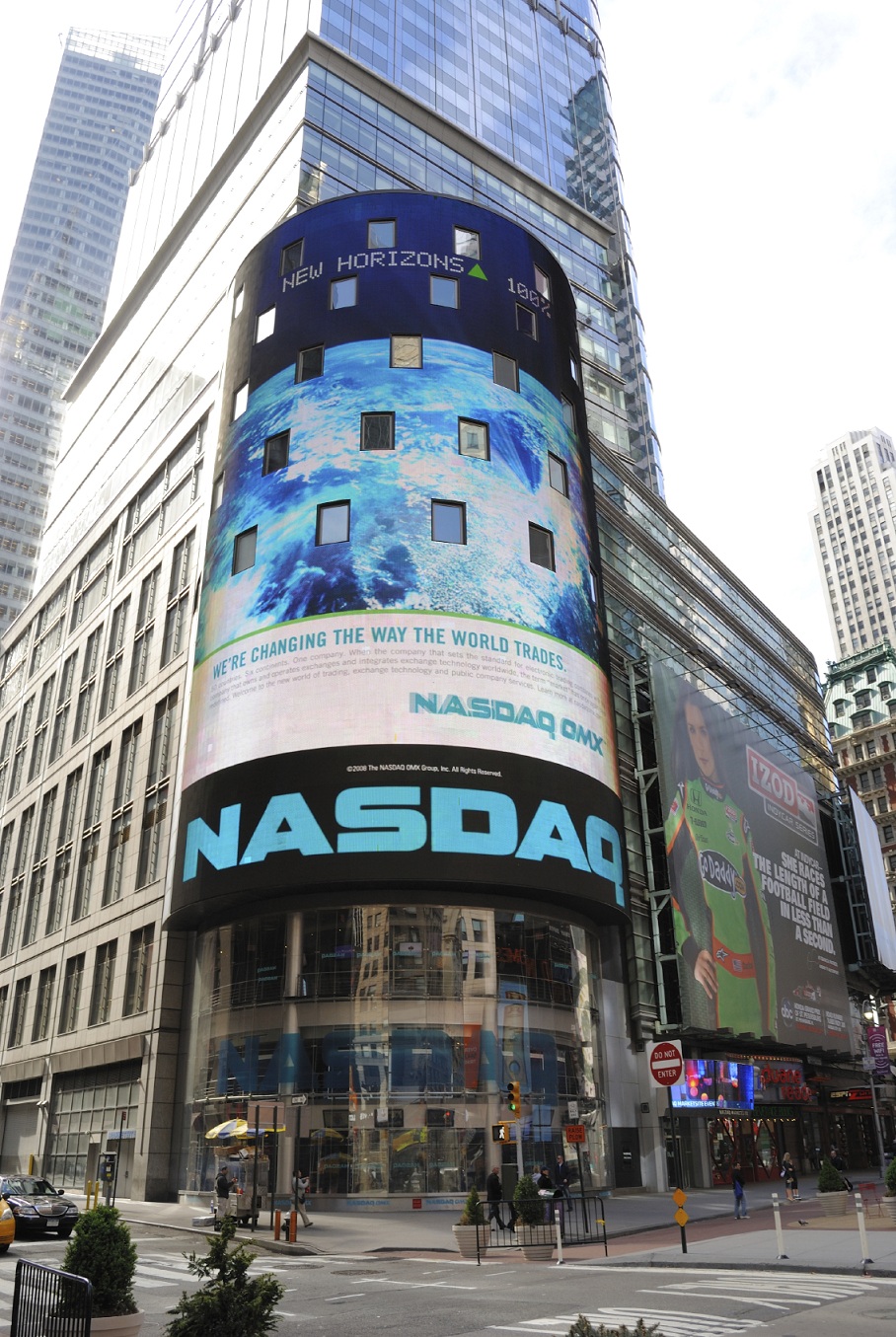
Zillow made its debut on the NASDAQ on July 20, 2011. The IPO stock price was $20 per share. Today it trades at approximately $85 per share.
The impetus for my lunch with Amy was to get her take on lessons learned from the Zillow IPO for one of our clients whose company is considering this option. She generously shared her experience with me and agreed to let me recap it on our blog. Here are several of her suggestions:
1) Well before an IPO filing, work to raise the profile of the CEO with the financial press. In Zillow’s case, Amy and her team worked to do this for Spencer Rascoff so that the minute the S-1 became public, people knew him. For the IPO to be successful, Amy feels it is essential that companies lay this groundwork.
2) Determine what the IPO means and how to preserve the company culture after the IPO. The IPO provides the means to accomplish goals. It is not the end goal. The management team at Zillow spent a considerable amount of time thinking about the significance of the IPO as it pertained to the long-term business objectives of the company, and strategized accordingly.
3) Communicate with employees. Once you are clear on the objectives for the IPO, make sure you communicate thoroughly with employees so they understand the vision and significance of this step. Amy also recommends providing them with guidance around what they can and can’t share with their personal networks and via social media regarding the IPO.
4) Negotiate with the stock exchanges. In keeping with its long-term objectives, Zillow decided to forgo some of the traditional celebratory maneuvers that companies do on the day of their IPO. Since Zillow expected significant attention on opening day, Amy negotiated with NASDAQ to take advantage of IPO-day opportunities later, when the visibility would make more of an impact. For instance, she chose not to have Zillow heavily featured on the NASDAQ’s high-tech electronic displays the day of the IPO, but instead leveraged this benefit when Zillow held an industry event in Times Square. The result was that attendees at Zillow’s event could look out the window and see the company prominently featured on multiple high-profile electronic displays.
5) Remember that the images from the day you go public will live on forever. NASDAQ often showers the company making its public debut with confetti. Zillow executives said “no” to NASDAQ’s confetti machine because they felt it sent the wrong message to investors and employees. Amy and the Zillow team did not want so much focus on the IPO that they would lose sight that it was simply a stepping stone to a larger vision.
I know these tips are ones that I will refer back to in the months and years to come. I also look forward to seeing Zillow continue to grow and am grateful for Amy’s time and willingness to share her insight.
What were the news stories in 2013 that stuck with you? In the world of business, at least, they were probably stories on tech, according to a new infographic from Dow Jones. To mark the end of 2013, Dow Jones released data on the year’s “most talked about companies.” Tech giants Google and Apple led the pack—by far.
According to Dow Jones’ data, Google received more than 123,000 media mentions between January and November last year, an increase of nearly 10,000 over 2012. Apple was not far behind, receiving just over 120,000 media mentions—a decrease of about 40,000 from 2012. And just behind those two is Microsoft, with more than 80,000 media mentions.
Just how visible was the tech industry in the press? Dow Jones listed 10 public companies in this dataset and the four technology companies included (Google, Apple, Microsoft and IBM) accounted for more than 50 percent of all media mentions. Google and Apple alone accounted for more than a third.
What drove all of this coverage? Helpfully, Dow Jones’ infographic includes highlights of press coverage topics during each company’s busiest months. For tech companies, major product announcements generated tremendous coverage in 2013. Remember all the way back in May, when Google announced its new Moto X smartphone? The company received more than 13,000 media mentions in that month alone—its biggest month of coverage for the year.
In September, Apple—king of the product unveiling—announced two new iPhone models and the rollout of its mobile operating system iOS 7. With more than 15,000 media mentions as a result, Apple had the busiest month of any company included in this set.
When Microsoft announced Windows 8.1 in June, its media mentions peaked for the year at more than 9,500. Microsoft’s second busiest month, September, included the announcement of CEO Steve Ballmer’s retirement. That same month, Microsoft also publicly acknowledged its purchase of Nokia’s Devices and Services business.
It was particularly interesting to me that new product announcements continue to be one of the largest drivers of press coverage for the tech industry. No doubt this is why Apple puts considerable resources behind product unveilings, and (as we discussed previously) why Amazon strategically timed its announcement of delivery drones just prior to Cyber Monday: to leverage press coverage into sales at key moments in the year.
As you’re polishing communications strategies for 2014, it might be helpful to spend a few minutes reflecting on the stories that dominated headlines last year. Will consumer technology topics continue to lead the way for business press in 2014? What can tech companies large and small learn from Apple’s and Google’s press rollouts? How can you leverage spikes in positive press into sales?
Dow Jones’ data shows that technology continued to be a favorite topic for press in 2013. It’s an exciting time to be working in technology communications and all of us at Communiqué PR are excited for what 2014 will bring!
The end of one year and the beginning of a new year is always an invigorating time for me. I enjoy reflecting on the successes and accomplishments of the past, while focusing on new goals and objectives for the coming year. This year is no different, although as 2014 marks 10 years since the founding of Communiqué PR, I anticipate that during the coming year we will take time to reflect on the years since the beginning of our business and contemplate those to come! Before we do so, however, I’d like to recap some of the highlights of 2013.
Throughout 2013 we worked with Kymeta to build awareness of its groundbreaking technology and the accomplishment of key milestones in the company’s growth, including its partnership with Inmarsat to launch a game-changing business aviation broadband solution; partnership with O3b Networks to develop a flat panel satellite antenna for ultra-fast, affordable broadband; securing additional investment of $50 Million; and successful demonstration of the first-ever transmit and receive capability with a metamaterials-based antenna. During the year we secured more than 130 articles on behalf of Kymeta.
2013 was an exciting year for mobile data and analytics provider Mobidia, as its app, My Data Manager, continued to rapidly grow in number of users. Our work with Mobidia in 2013 focused on driving awareness of data voluntarily provided by My Data Manager’s users. To this end, in 2013, we distributed seven releases focused on data from Mobidia, including most recently a release about mobile shopping on Black Friday. Leveraging both formal releases and proactive pitching, we secured articles featuring Mobidia’s data in numerous publications, including Forbes, The Wall Street Journal, Internet Retailer and The New York Times. We also pursued a few byline articles to build on this exposure and establish thought leadership, securing placements in App Developer Magazine and WIRED.
We began working with commercial real estate developer Schnitzer West in 2013 and helped the firm with several announcements and press meetings throughout the year, including the closing of two significant real-estate transactions totaling nearly $500 million. Most recently, in December the company announced the purchase of a prime site in downtown Bellevue, where the firm will build a 16-story office building. For more information, check out the coverage that appeared in The Daily Journal of Commerce, Puget Sound Business Journal or The Seattle Times.
In December, we joined PR Network, a global collective of PR agencies based across Europe, Africa, America, Asia Pacific and Australasia. Communiqué PR is PRN’s exclusive U.S. partner. We are thrilled to be a part of this organization and are looking forward to participating in the PR Network board meeting in Stuttgart, Germany in late January 2014.
After working with Smartsheet in November 2012 to announce a new round of funding, we took Smartsheet on the road in early 2013 to introduce the company and its highly-acclaimed work productivity tool to a new set of business- and product-focused journalists. Between press tours on the East and West Coasts, Communiqué booked more than 15 in-person and phone briefings with publications such as The Washington Post, The Wall Street Journal, TIME and Bloomberg BusinessWeek. The briefings went far in helping Smartsheet build relationships and get on the radar of some very noteworthy publications, many of which published great articles about the company, including Bloomberg BusinessWeek, Forbes, NetworkWorld and CITEworld. Throughout the year, we also drove coverage for a number of Smartsheet initiatives, including the launch of its mobile apps and the introduction of new product updates, and found great success with pursuing contributed content. In the last quarter of 2013, Communiqué landed five contributed articles on Smartsheet’s behalf with another four articles likely to be published in 2014.
In May we began working with Twisted Pair Solutions, an exciting Seattle-based company delivering solutions for smarter push-to-talk. We helped grow attention for its game-changing voice communications software in markets ranging from public safety to utilities to the oil and gas industry. Our team helped Twisted Pair turn customer success stories into media coverage by developing in-depth case studies, and helped grow its share of voice by placing contributed articles from company leadership in publications that reach its potential customers. Since May, we have distributed four press releases, written six case studies and lined up more than 25 pieces of press coverage in key sales markets for Twisted Pair.
In addition to helping our clients achieve their business objectives, our team continued to share its perspective, expertise and thought leadership through regular posts to the Communiqué PR blog. During the year, many of our team’s blog posts were picked up by industry media outlets and we saw a steady increase of traffic to our firm’s website. The most popular posts published during the year were “‘Nacho’ Best Move: Lessons From Taco Bell’s Taco-Licking Disaster,” “How the CEO of Abercrombie & Fitch Failed: Takeaway PR Lessons” and “Applying the Five Competitive Forces that Shape Strategy to PR.”
We also took time to get together for some fun throughout the year with a chocolate tasting at Chocolopolis, several happy hours and afternoon breaks at Molly Moon’s, participating in The World’s Largest Waterfight as part of team Smartsheet, a team pumpkin carving, the Rwanda Girls Initiative fundraiser, the Seafair Foundation’s “Jam with the Jets” fundraiser breakfast, the GeekWire Gala and our own holiday party at Teatro ZinZanni:
For PR pros, the rise of social media has led to new opportunities, strategies and—for many—questions. How can PR pros use social media to reach journalists? Should you use it to pitch reporters? What does it take to be successful?
Media-database powerhouse Cision recently published a fascinating infographic, redistributed via PR Daily, revealing the results of its 2013 Social Journalism Study. For the report, Cision asked more than 3,000 journalists worldwide the question: How have your impressions of social media and PR changed in the last year? The answers shed light on how journalists engage social media in their work and the nature of their current relationship with PR.
For instance, journalists disclosed that they overwhelmingly still prefer to be contacted by email (83 percent) rather than by phone (33 percent) or social media (25 percent). Thirty-one percent held a negative view of the effect of social media on journalism, and 20 percent even agreed with the statement: “Social media will lead to the death of professional journalism.”
However, the findings strongly held that journalists do in fact use social media in their work. The majority (55 percent) use it at their job for 1–2 hours per day on average. In particular, 79 percent of journalists use microblogs (such as Twitter) for work in a typical week, and more than half (53 percent) have more than 500 followers on their preferred social media site.
For the most part, journalists also expressed that they would like PR pros to engage with them more through social media than they currently do. This lends to the conclusion that the outlook is generally optimistic for the ongoing relationship between journalists and PR pros in the age of social media.
Check out the full infographic for more intriguing insights:

Compliments of Cision, you can also download the full 2013 Social Journalism Study here.