
Insights for Leaders Navigating
Visibility, Credibility, and Growth.
From media strategy to reputation management, we explore the trends shaping public perception and share the approaches that drive measurable results for growing brands.
Amanda Knox was just a name I’d see periodically in the news. I knew this woman had been convicted of killing her British roommate while studying abroad in Italy. But then, an appeal of her conviction was raised and I started to pay attention. Something had changed – and whatever it was had grabbed my attention.
It turns out that this PR professional was won over by another PR team’s stellar campaign to showcase Amanda as an innocent, wrongly convicted woman. While one recent blog post noted that the media played a role in Knox’s conviction, it’s safe to say that due to this massive PR campaign, the media also contributed to the overturning of her conviction.
So what PR elements did the campaign implement so well?
Overcoming the She-Devil Reputation: Throughout the initial trial, Amanda was portrayed as the “angel-faced killer with ice cold eyes.” To combat this, a website was developed to show Amanda as a wholesome, kind-loving person, religious person. Without directly saying “she didn’t do it,” the site paints the picture that it would impossible for such a person to commit this heinous crime.
Character Testimonials: The website also contained character testimonials that challenge the perceptions painted by the Italian authorities. The PR team took it further and asked some of Amanda’s college friends to give interviews to testify about her character. This grass-roots approach was important because it reshaped the perception about Amanda and drew attention to the alleged framing that took place. This consistent messaging – in the forms of letters written on Amanda’s behalf, interviews with media and word-of-mouth in social circles – not only reinforce Amanda’s wholesome character, but also contributed toward raising of funds to cover the costly legal battle.
Myth Busting: The “evidence” on which the Italian prosecution based its claims contained serious flaws. The PR team painstakingly developed a thorough timeline and documented challenges to the claims, showcasing Amanda’s innocence. Media love drama and are attracted to in-depth analysis that builds the drama. They also love facts that help develop a full story. The campaign provided the tools to help media continue the drama of a “wrongly convicted American girl taking on the Italians.”
Reinforce Italy’s Reputation for Corrupt Government: According to the Heritage Foundation’s Index of Economic Freedom, corruption in Italy is a significant issue. This is a reputation that has been around for generations – long before “The Godfather” drew attention to an Italian crime family. The campaign addressed the prosecution’s intentional misleading of the press, the public and the court, which ultimately cast doubt on the prosecutor’s case.
Not all public perception battles turn out so well. (Read our previous blog on Illinois Gov. Rod Blagojevich and his failed approach to controlling the message.)
While the question of Amanda’s innocence may be discussed for years to come (as her conviction was overturned due to doubt about the DNA evidence), in the American court of public opinion she’s been exonerated.
What was your initial opinion about Amanda and this case, and did it change as this PR campaign moved forward?
Joni Kirk
I’ll admit it. When I drive the kids’ carpool or overhear interactions during “play dates,” there are times I feel conflicted. One child makes a subtle statement or comment that seems to take aim at another child’s perceived weakness. It is these subtle jabs that I struggle with – do I jump in or let the children figure it out on their own? If it were a blatant physical attack the course of action would be clear. However, sneaky mental shots can be extremely detrimental. I want my kids to be able to identify the behavior so they can avoid doing it themselves, avoid being hurt by it and learn how to respond without stooping to the same level.
As a business person I sometimes see these same behaviors when interacting with others. I recognize that learning to work effectively with a wide range of people is important for success. Likewise it is valuable to learn how to handle those mental jabs effectively without taking it personally or derailing you from your objectives. Given this, I am routinely looking for ways to improve how I respond to snarky comments and how to better counsel others when faced with challenging situations or individuals.
Recently a colleague referred me to a couple of books she read during a university course on conflict communications. One of those books was Nasty People: How to Stop Being Hurt by Them without Stooping to Their Level. While the title is definitely provocative, the reality is we have all run across someone at one time or another who was nasty or rude. Perhaps you walked away feeling badly about yourself or your management abilities. This book offers guidance for dealing with people that are “invalidators” – people “who feed on your self-esteem, mental anguish, and unhappiness.”
The book helped me put specific behaviors I observed in perspective and provided tips for how to deal with future situations more effectively. The examples in the book also helped me identify aspects of my own behavior that may be perceived as ineffective, or worse, nasty. One basic but helpful reminder from the book is, “when you criticize someone or point out a mistake or misdeed, are you doing it for that person’s own good or to hurt?” Ultimately we can only control our own behavior and how we choose to react. When faced with a conflict or someone that is rude or snarky, the author recommends that you try to understand the person’s intent as well as your own. This will help you determine how you choose to react, or not.
As for my kids and their interactions with their friends, I’m learning to let them manage those relationships, while also trying to help them identify how they feel during those situations, understand the other person’s underlying interests and intent so hopefully they too can avoid being hurt by invalidators they encounter and not become an invalidator themselves.
Did you know that approximately one in every 15,000 children is born with dwarfism, also known as skeletal dysplasia? And that 80 percent of those children have average-height parents? Neither did I.
To raise awareness around this condition and to change perceptions of those individuals with dwarfism, Seattle Children’s, Little People of America’s (LPA) Puget Sound chapter and Caffe Ladro launched the “Stand Tall for Little People” campaign on Sept. 30, 2011, to kick off National Dwarfism Awareness Month. October was first declared as National Dwarfism Awareness Month in 2012 by the LPA, a national non-profit organization that provides support for people with dwarfism.
Through Communiqué PR’s ongoing work with Seattle Children’s, we learned more about this condition, which takes place when bones are not able to grow to average length. Recognized as one of the leading institutions in the Pacific Northwest and nation, Seattle Children’s, Skeletal Dysplasia Clinic provides world-class, comprehensive care for people of all ages – children and adults – diagnosed with skeletal dysplasia and other rare bone conditions.
As an active LPA partner and supporter, Seattle Children’s and LPA of Puget Sound approached Caffe Ladro to participate in the Stand Tall for Little People campaign and create the signature campaign cups. Throughout the month of October, Caffe Ladro will shrink its distinctive “tall man” logo on its cups at all 13 Puget Sound locations to represent and raise awareness for our community members with dwarfism.

Communiqué PR’s scope of work included working with all three organizations to develop key press materials and coordinate a media event to help raise awareness around the campaign and educate the broader Seattle-area community about people with skeletal dysplasia.
As a result of our efforts, the Stand Tall for Little People campaign was featured in local media outlets including Q13 Fox, SeattlePI.com, The Fremocentrist, Seattle Pulp and Patch.com.
While working with Julie Matsuoka, president of LPA’s Puget Sound chapter, on the development of this campaign, we learned a lot about what to do and not to do when meeting an individual with dwarfism, and how certain language is offensive to individuals with dwarfism. She reminded us that these individuals are just like everyone else and are capable of doing anything an average height person can do.
It was an honor to have the opportunity to support Seattle Children’s Skeletal Dysplasia Clinic, LPA and Caffe Ladro on the launch of this campaign. We hope the campaign continues to be a success throughout the month, and that it will continue to have impact on perceptions in the years ahead.
Most people have a problem with change and I am no exception. So when I logged into Facebook a few weeks ago, I was sent into a panic as once again another change was made to my trusty social networking site. As I scanned over my newsfeed, post after post was complaining about the new interface. As I tried to re-learn how to navigate Facebook with its new layout to make sure I was getting the most current and relevant information on my friends and family, I wondered why people get so upset about change, why is it necessary and could communication have improved consumer reception of the changes?
Why don’t we like change? Perhaps it’s because change requires us to re-learn an already formed behavior.
I came across an interesting blog post on ZDnet’s iGeneration blog called, “Why do Facebook users hate change?” that helps to shed some light on why this new change was upsetting for many users. Previously, users could intuitively navigate their profile, news feed and friends’ profiles. But with this most recent change, information might not be in the place they once found it or as accessible as it once was.
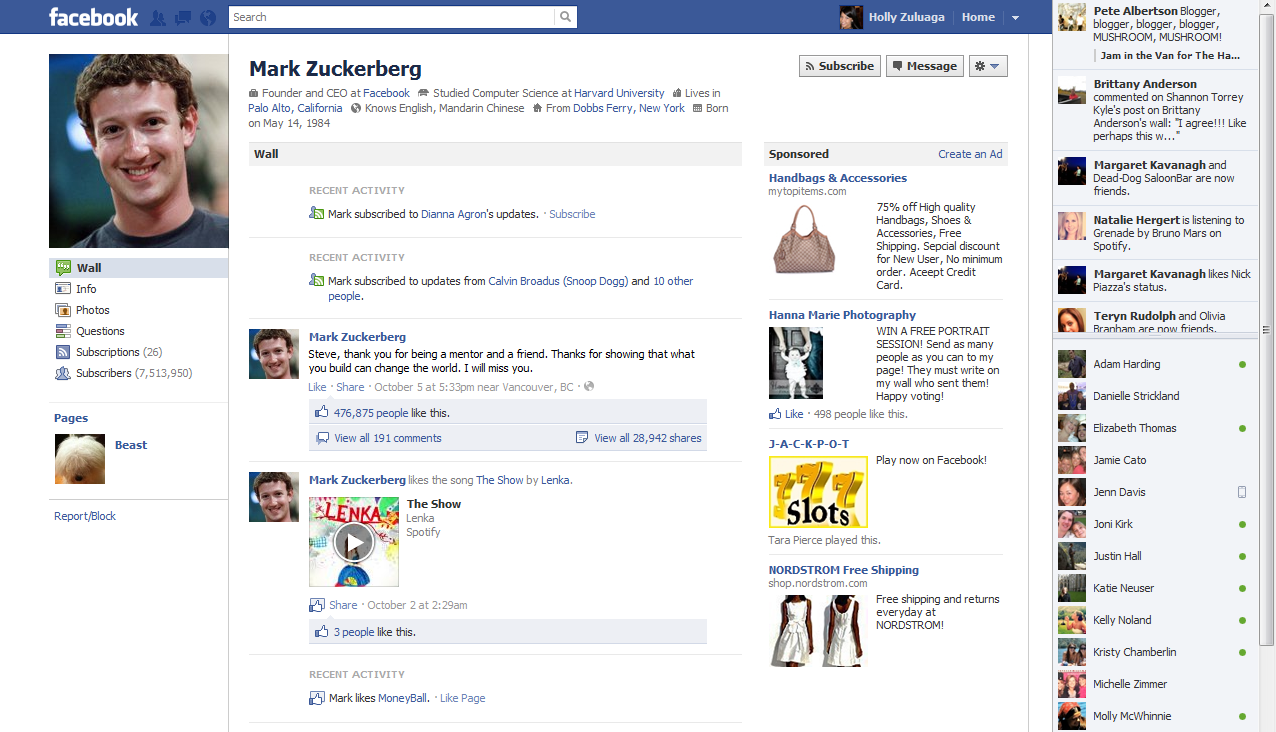
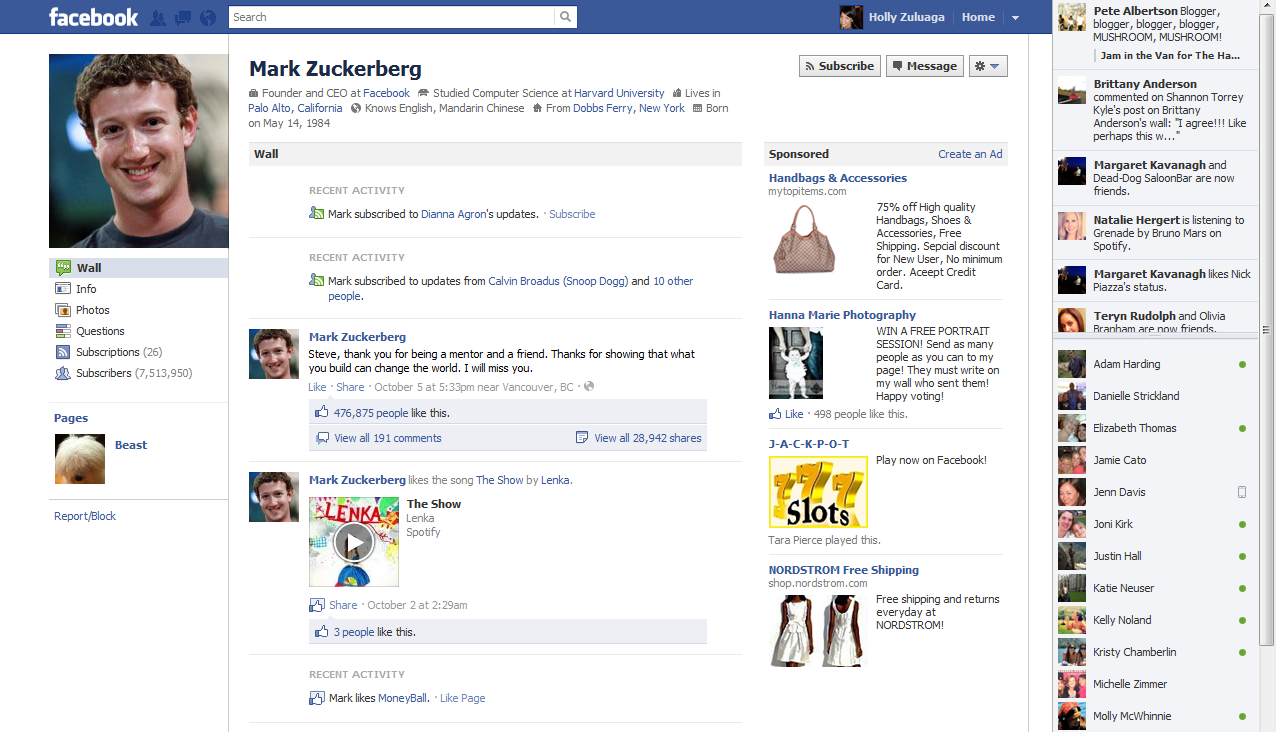
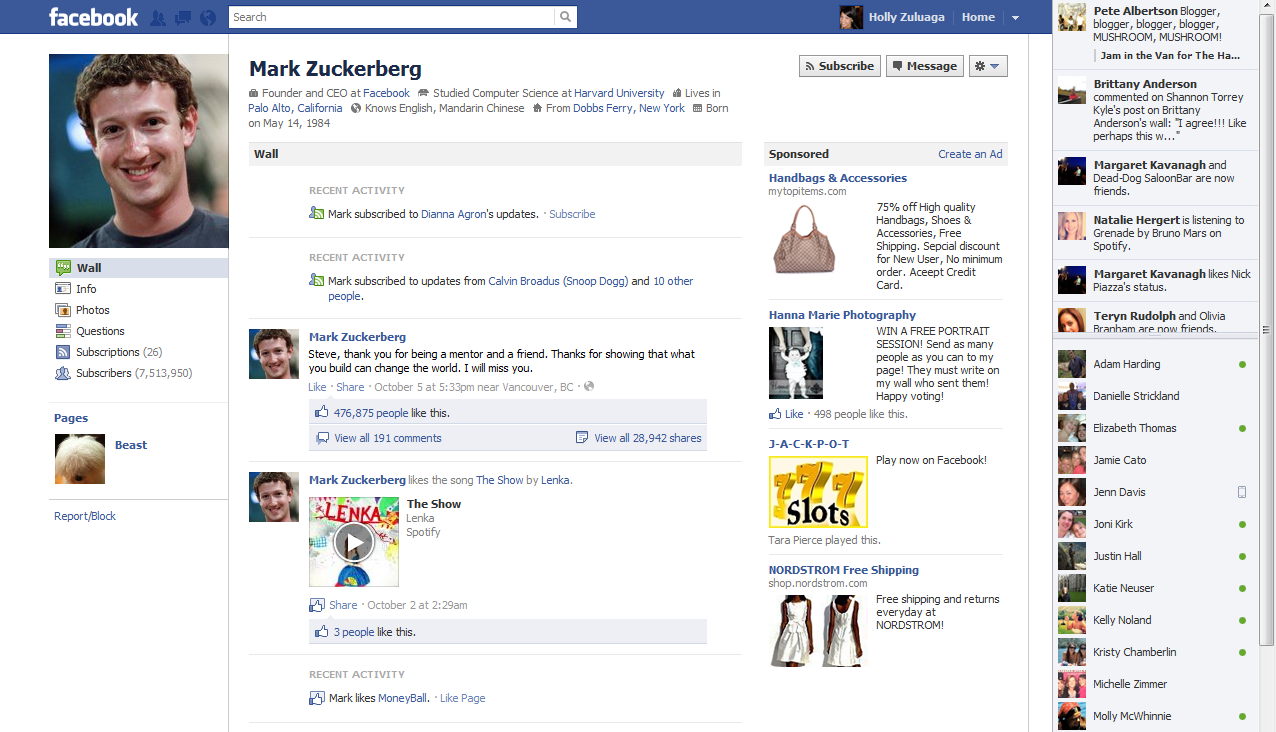
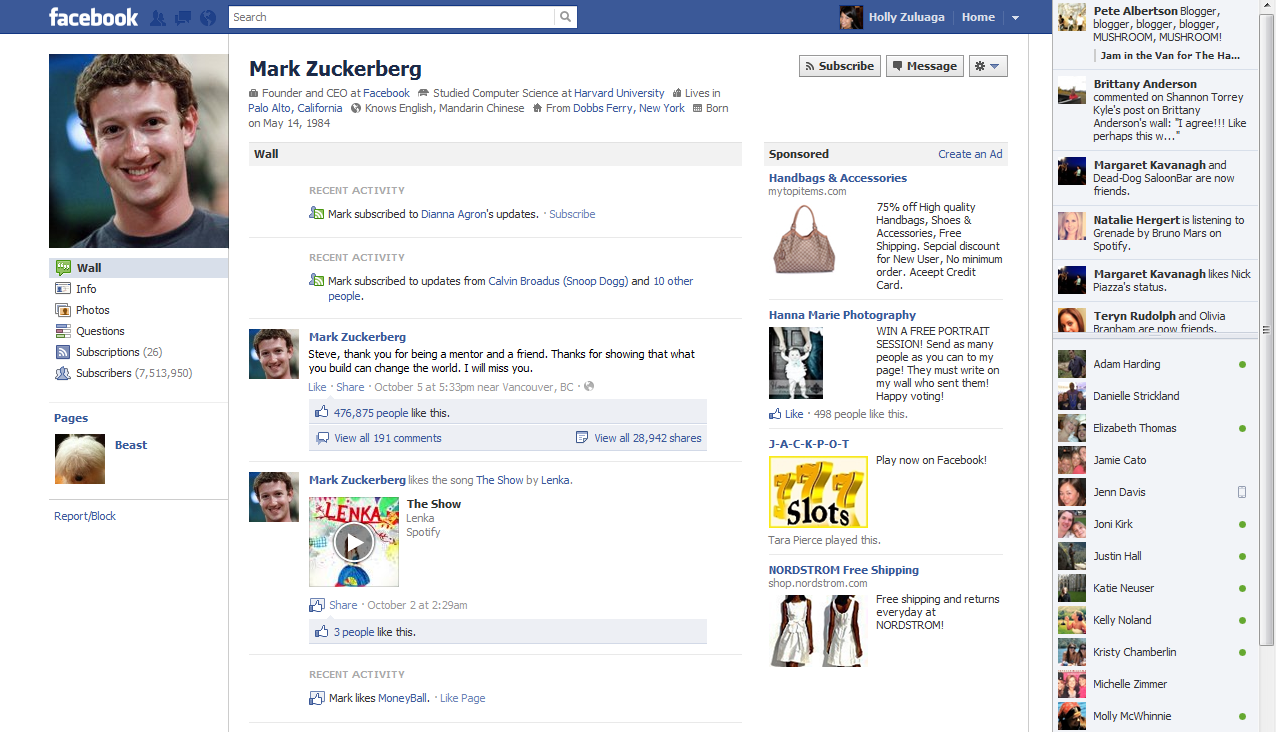
The blog also looks at why Facebook needs to change. As much as people don’t like change, people also don’t like a stale product that never evolves. Because of this, Facebook needs to keep up with other social networking sites. As the blog noted, “Facebook needs to be seen as progressive; otherwise it could be demonised or fall into the trap of ‘being the next MySpace’.”
So how should a company communicate change when it is inevitable? First, communicating change is most effective when it is highlighted before the change takes place. Making a formal statement or sending information prior to the change taking place helps prepare customers for the transition and creates transparency. Additionally, make sure to have effective messaging in place. For more information on the importance of messaging, read our previous blog post, “Netflix’s Launch of Qwikster: A Good Reminder for Developing Effective Messaging.” Finally, provide a reason and offer helpful hints to aid in the transition. Customers or employees are more likely to respond well if they feel informed about the underlying reason for the change; it helps to understand the decision.
While change in many cases is inevitable, change does not have to upset customers. Change can be positive when strategically positioned and effectively communicated. This helps to build loyalty among customers, clients and employees.
I’m checked in at Starbucks, video chatting with my uncle in England, scanning pictures from this week’s Seahawks game and rescuing dogs from Hurricane Irene all at the same time from my Facebook account. What’s next, Facebook – foot rubs? While Facebook may not be coming out with foot rubs anytime soon, one thing that recently caught my attention was an application, or “app,” called Causes.
Causes (www.causes.com) is a social media platform used to increase awareness, gain support, and raise money for thousands of nonprofit organizations and specific issues around the world. The San Francisco-based company that launched Causes currently has 150 million users of its app and has raised more than $35 million since it initiated its website in 2007. The website provides an interactive interface from which nonprofits, activists, and philanthropic citizens can promote or support various causes around the world. By being on Causes, nonprofits and other groups can gain more visibility and donations than ever before.
Over the past four years, Causes has harnessed the power of social media to leverage greater support for its participating organizations and user-created issues. As stated on the Causes website, each cause includes “features for communications, such as bulletins and a media board, as well as the ability to feature current fundraising and advocacy campaigns.” In addition, each organization has the ability to send emails, create campaigns and share content over the web with a huge number of members.
Like many strategic online programs and applications, Causes has linked its website with Facebook by allowing users to create, join and broadcast a number of causes by using their own personal Facebook accounts. This connection has fueled an unparalleled level of success for fundraising and awareness for nonprofit organizations hosted on Causes’ website.
If a nonprofit has a good representation on Facebook or another social media outlet, it will most likely experience some degree of success with Causes. The first step to be successful on this platform is to initially have a wide range of supporters and connections. Once a cause is created, the organization or group can promote various fundraising projects to target the specific issues they want to tackle.
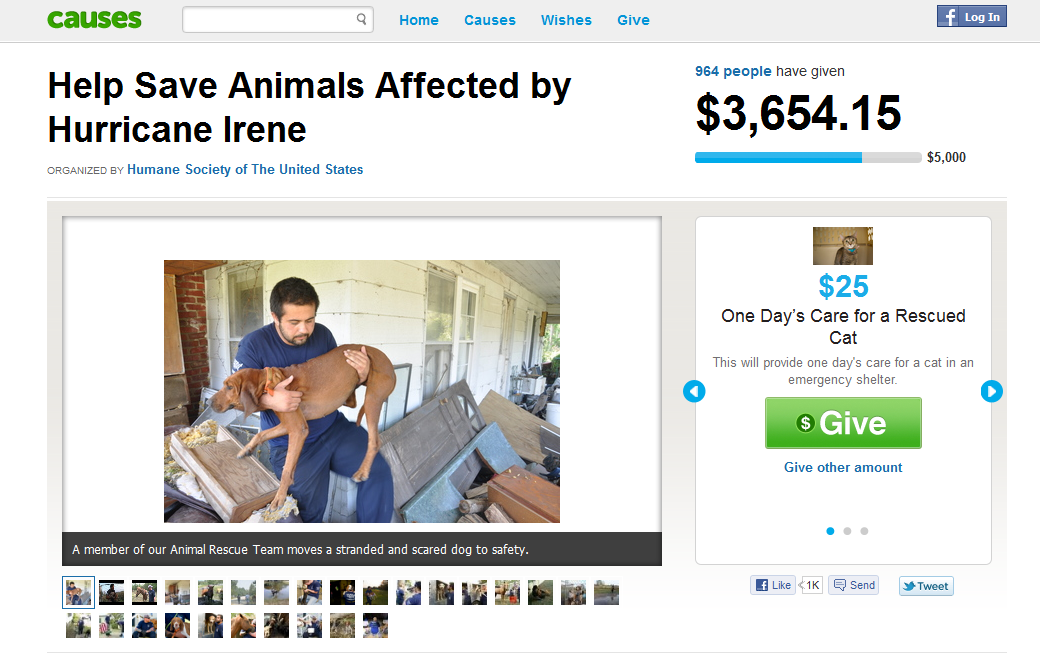
The Humane Society, for example, currently has a project titled “Help Save Animals Affected by Hurricane Irene.” This is one of many projects the Humane Society has created on its Causes’ main page. Each project allows organizations to specify the purpose, goal, timeline, dollar amount, and overall impact users will have if they participate or donate. For a detailed guide on how to fundraise successfully for an issue or organization, take a look at the suggestions on Causes’ website.
In addition, Causes provides general steps for getting started on its website as well as tools to recruit supporters. These tips include 1) how to a start cause; 2) build a group of supporters; 3) promote a cause and 4) begin fundraising.
The website has a number of other resources that answer specific questions and concerns when starting with Causes for the first time. You can find just about everything you need to know to start and be successful with Causes by visiting its resource webpage.
In today’s world, the fight to gain support and recognition for a specific issue or nonprofit organization can be truly a tough one, especially given the current economic climate. It is crucial, therefore, for nonprofits and other issue-specific organizations to capitalize on the publicity tools social media has to offer. By doing so, such organizations avoid falling under the radar and can work toward accomplishing their missions as well as spreading their messages more extensively and effectively.
It is also important to remember that Causes is not the only social media app that can be used for fundraising. Follow the lead of many successful nonprofit and issue awareness organizations by leveraging a number of social media tools and outlets for driving awareness and support, as well as adhering to a strategic, multidimensional approach.
One last thing to keep in mind is that social media practices are changing rapidly, so the more up-to-date, savvy and creative you are with social media, the more successful you will be with whatever type of project you chose to tackle.
Katherine Turney
Last Friday, Colleen Moffitt and I had the opportunity to speak to the members of the Spokane MarCom Association about the importance of strategic public relations. The journey to Spokane was one we will never forget. We began our descent into the city only to have our landing aborted, turning us back to Seattle due to thick fog. Once back to SeaTac, we picked up our luggage and began the long drive. What we hoped would be a three-hour trip by plane, turned into 12 hours of travel.
Nonetheless, the journey was worth it. There were about 110 people in the audience, which comprised students, recent graduates, PR managers with nonprofits and corporations and agency PR practitioners. We spoke about taking a strategic approach to PR, why and how to do it, and reviewed each of the principles in our book, Strategic Public Relations: 10 Principles to Harness the Power of PR.
Our intention was to provide the attendees with some practical ideas and suggestions so that they could more fully leverage PR for their organizations.
When we got to Principle 5, which is “Develop a Strategic PR Plan,” we asked for a show of hands for the number of people who had developed and were using a plan to guide their activities. Approximately four people raised their hands. We then went on to explain that if there was just one point that we wanted them to take away from the session, it was an understanding of the importance of having a PR plan.
Colleen and I are huge proponents of the PR plan, because it ensures that everyone is moving in the same direction, helps you articulate business problems in a thoughtful manner, lets you showcase your creativity, and allows you to be proactive versus reactive. It also lets you move forward to build consensus, as well as gain approval of budgets and programs.
After reviewing the reasons to develop a plan, we then reviewed the eight key elements of a plan and the type of information that goes into to each section. For instance, in the situation-analysis section of a plan, you might want to do a SWOT analysis.
This was just a fraction of the content of our presentation. If you’d like a full copy of the PowerPoint with our speaking notes, please feel free to email me at [email protected]. However, for a more comprehensive perspective on each of the principles, our book Strategic Public Relations is going to be a much better resource for you.
Finally, as I reflect on our trip, I want to thank Sally Mildren, president-elect and programming chair with the Spokane Regional MarCom Association for helping us prepare for our discussion. She provided us with insightful counsel on the information that would be relevant to the members of the organization. Our only regret is that we did not make it to Spokane in time for dinner with her on Thursday evening!