
Insights for Leaders Navigating
Visibility, Credibility, and Growth.
From media strategy to reputation management, we explore the trends shaping public perception and share the approaches that drive measurable results for growing brands.
Measuring the impact and results of a media relations campaign is critical to the long-term success of an organization. Evaluating a campaign provides valuable insight that can help an organization evolve by answering questions such as:
-
Were the strategies executed successful?
-
Were our marketing and PR dollars used wisely?
-
Did we meet our objectives?
To help answer these questions, many organizations take a multifaceted approach – relying on a variety of measurement tools and strategies to capture results.
Verizon’s launch of FiOS TV, an Internet, telephone and TV service, is a great example of how an organization can take a multifaceted approach to measuring media relations. The company enlisted a variety of tools to measure the resulting coverage and determine the tone, geographic distribution and customer perceptions of FiOS TV.
According to a recent PR Week article about Verizon’s measurement efforts, the company also evaluates the coverage its competition receives as well as its share of voice – the percentage an organization possesses in a particular niche, market or target audience. Editor Tonya Garcia says, “Mixing the quantitative and the qualitative, the company is watching to make sure the messaging surrounding its FiOS TV product is reaching the media and, in the end, potential customers.”
Tonya also mentions, “The media measurement effort at Verizon is a mixture of hi-tech text mining (Dow Jones Insight) and low-tech human analysis (surveys). It is executed down to a local level to ensure that each media relations dollar is spent wisely.”
Verizon’s measurement efforts have revealed media relations success for the company as media hits for FiOS TV spiked on the day of the launch, and showed a 70 percent share of voice during the month of the launch.
Measurement strategies similar to what Verizon used for the launch of FiOS TV are discussed in Strategic Public Relations, 10 Principles to Harness the Power of PR. Authors Colleen Moffitt and Jennifer Gehrt explain, “Although there’s no single perfect measurement, using a variety of methods can give your organization a good idea about the effectiveness of your PR programs.”
A few of the PR measurement strategies Colleen and Jennifer recommend include:
-
Ad Value Equivalency – This compares the cost- effectiveness of PR with that of advertising.
-
Return on Impressions – The number of people who potentially read an article and the cost of reaching them.
-
Return on Media Impact – Demonstrates the impact of your PR campaign on sales of your company’s product or service.
-
Return on Influencers – Measures the effect of a PR campaign on customers’ perceptions of your company, product, or service.
Taking a multifaceted approach to measuring results can provide organizations with the valuable information they need to make smart business decisions that help a company achieve its business and communications goals.
Eric Rabe, senior vice president of media relations for Verizon, told PRWeek, “I don’t think, in this day and age, you can do the PR without looking very seriously at the measurement. Business is demanding more accountability.”
To learn more about measuring results, contact [email protected] or click here to purchase “Strategic Public Relations, 10 Principles to Harness the Power of PR.”
We are in many ways living in unprecedented times. As banks and major companies crumble and the economy worsens, there seem to be increasingly fewer historical examples on which to base our current policies. But as Martin S. Roth and Richard Ettenson point out in a March 23 Wall Street Journal article, there is an often-overlooked model from which businesses can draw invaluable insights: emerging markets.
Volatile currencies and frequent economic downturns are nothing new in emerging markets like Eastern Europe, South Africa and Latin America. As a result, companies in these markets have developed ways to price their products and retain customers. In their article Roth and Ettenson highlight four key strategies companies in established markets can use to “implement bold, creative ideas, outflank rivals and boost their business.”
The resounding theme throughout this article is that in the long run, it is far cheaper to keep existing customers than to lose them during the recession and try to win them back afterward. Below, we’ve summarized Roth and Ettenson’s four strategies to achieve this goal:
1. Get customers to trade up
By rethinking pricing strategies, companies can provide incentives for customers to trade up to premium products in a down economy. Western companies price their goods with the goal of maintaining a high profit margin on both regular and premium products. But when customers are strapped for cash, this strategy often makes premium goods prohibitively expensive.
In contrast, companies in emerging markets accept lower profit margins on premium products. This results in customers recognizing that the brand is offering them more value for their money – so they trade up to premium products, even in tough times.
2. Increase product and service visibility
The temptation for many Western companies during a recession is to allocate scarce marketing resources to advertising in attempt to win new customers, often to the detriment of customer service budgets. This can result in losing existing customers.
In contrast, companies in emerging markets amp up their customer service and focus on making their products more visible and available to customers who already know about them. This often involves improving point of purchase promotions. One manager quoted in the article explains this logic, saying that point of purchase is key “because it’s the only time when your product, your customer and that customer’s wallet are all in the same place.”
3. Rethink what customers value
In emerging markets, companies are routinely forced to update their businesses model to match the market conditions. This flexibility allows companies to cater to the ever-changing needs of their consumers.
Roth and Ettenson cite the example of mobile phones. In the past, Western operators have derived revenue from locking customers into contracts. But as customers have less disposable income, this may no longer be the best model. In emerging markets, operators allow customers to buy just as much service as they need, when they need it. This model allows customers to use their mobile phones without incurring high monthly fees for minutes they may not use.
4. Look at new metrics
Emerging-market companies that excel typically take a very broad view of the market. They monitor data to predict the direction of the market so they know when to switch from one strategy to another. So instead of focusing inward on factors like revenue and churn rate, they monitor macroeconomic measures like inflation, unemployment etc. They then develop possible future market scenarios and craft business strategies for each one. This allows for a nimble response to a volatile economy.

Roth and Ettenson end the article with the simple advice that companies stay optimistic. Western companies should brighten their outlook and realize that tough times provide the opportunity to strengthen their position and financial performance.
Recently I had an opportunity to catch up with Dustin Hubbard, founder and CEO of Paperspine, about his online book rental service. As you can imagine with the economic downturn, it is an interesting time for his 16-month-old start-up business.
While many businesses have felt the ill effects of the recession, he has seen no slowdown in the demand for Paperspine’s services. In fact, the recession seems to be creating additional need for the online book rental service.
“Paperspine’s book rental model provides families with an extremely cost effective way to enjoy reading,” explains Hubbard. “New books are expensive. According to industry experts, many paperback books are priced between $10 to $20 a book. For just $9.95 to $24.95 a month for Paperspine services, a family can enjoy anywhere from two to five books at a time. When they’re finished reading the books, they simply mail them back to us using a pre-paid postage mailer.”
Paperspine allows people to do a lot of reading at a low cost – and can be a good alternative to going to the library, especially since so many of them are seeing tremendous increase in use due to the recession.
Hubbard continues “The shipping of books is free and the books can be returned whenever a person wants without the risk of late fees. Furthermore, Paperspine offers people a vast selection of books – there are more the 200,000 titles to choose – all from the comfort of your computer.”
According to Paula Laurita, coordinator of public services with the Athens-Limestone Public Library, the volume of people using the Athens-Limestone library is continuing to increase each month.
“We’ve have seen an increase of 118 percent in adults attending library programs from the last fiscal year,” explains Laurita. “All types of materials have seen an increase in circulation. Demand for books has increased, especially in the category of young adult books. For example, I have seven copies of “Twilight” and there are many, many more requests for the books.” Given this some people can expect to wait many months before they’ll receive it.
Melissa Liton, account director with Communiqué PR, adds, “As a long time library lover who recently has been frustrated with not being able to get the books I want, I’m definitely going to check out Paperspine’s service.”
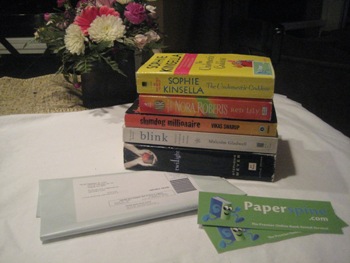
Recently I have noticed that many journalists are writing about ways to cut expenses during this economically challenging time. People want to reduce their families’ costs without giving up their favorite activities, and as libraries become more tapped, it provides Dustin Hubbard and his team with a good opportunity to get the word out about Paperspine.
There are numerous factors to think about when pitching a story to a journalist, corresponding with them via e-mail or even speaking with them during interviews.
Some of us have learned this the hard way, and some of us will learn from other’s mistakes. There are a number of journalists who have publicly blacklisted individual PR professionals, and in some cases, entire agencies because they either failed to do their research before reaching out to the journalist or offended them in some way.
While public relations and journalism are in many respects co-dependent, it’s important to remember a journalist’s job is to write compelling stories for their readers – their job isn’t to create opportunities for companies to get out their marketing messages. To avoid the PR blacklist keep these tips in mind.
Avoid phrases that could be offensive to the journalist. Saying things like “you can report on this”, “thank you for writing about my company” or this could be a good “editorial opportunity” can set a journalist’s teeth on edge. Oftentimes, we don’t think that such phrases could be offensive, but as many journalists will tell you, phrases like “editorial opportunity” are disturbing because they undermine the journalist’s job, which is to write stories for their readers.
When pitching a story, think like a reader. Ask yourself, is this something I would read? If your answer is no, it is very unlikely that the journalist will respond to your pitch. Often, journalists will ask, “How will this story benefit my readers?” You should always be prepared to illustrate the significance of the story you’re proposing and the relevance to a particular audience.
Do your research. One of the quickest ways to land on the PR blacklist is to continually pitch stories to the wrong journalists. It’s critical to know what a particular journalist writes about and tailor your story to them. An easy way to do this is to go onto the publication’s Web site and read through their most recent articles. Another great way to research what they’ve written about is to search for their name in Google News. This can also be an effective way to learn a journalist’s hot buttons. For example, maybe a particular wireless writer hates the iPhone and has written several negative pieces about the device. You can use this knowledge to position your pitch in a way that will pique their interest despite their opinion.
Short and simple. The purpose of a pitch is to capture the journalist’s attention. They receive hundreds upon hundreds of e-mails each day. They don’t have the time to read through a two-page essay about why they should care about your company or why they should include your client’s product in an article. It’s important to keep your pitches concise and get to the crux of the story you are proposing. If a journalist wants more information or has questions, they’ll ask. Remember to stick to the key points that will convince them to write.
While these tips will help you build rapport with a journalist and possibly secure a much coveted interview, it’s important to remember what you say in your e-mail or during an interview can also hurt your relationship with the journalists.
Make sure to tailor your pitch for a journalist and avoid words that you don’t think will resonate well with them. And if you do happen to hit a nerve accidentally, your best bet is to apologize and learn from the mistake.
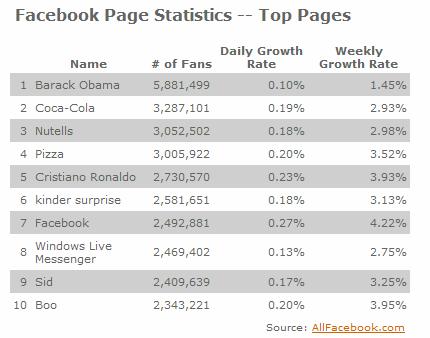
Companies looking to leverage the power of Facebook to attract the masses may want to take a lesson from Coca-Cola fans Dusty Sorg and Michael Jedrzejewski. With a fan base of 3.3 million users, Sorg and Jedrzejewski’s Coca-Cola Facebook fan page is one of the most popular pages on Facebook – second to Barack Obama (see Facebook page statistics).

Creating the page was not planned. Sorg and Jedrzejewski simply could not find a Facebook fan page focused on Coca-Cola that appeared legitimate. Deciding to take matters into their own hands, they created a new fan page and posted a high-resolution digital image of a Coke can. It was not long before the page attracted Coca-Cola fans and eventually captured the attention of Coca-Cola executives who wanted to know more about Sorg and Jedrzejewski’s approach. What about their page made it so attractive for fans?
Coca-Cola was also interested in speaking with Sorg and Jedrzejewski about the future of the page and how the company could assist in page operations to comply with Facebook’s recent policy updates.
The company took an engaging approach, inviting Sorg and Jedrzejewski to visit the Coca-Cola headquarters in Atlanta. While there, the two toured the World of Coke museum and had the opportunity to meet with executives to discuss the popularity of the Facebook page.
While Coca-Cola is still not sure why Sorg and Jedrzejewski’s page is so successful, they suspect it had to do with the high-resolution Coke can picture included on the page and the influential friends of Sorg and Jedrzejewski (although they could not confirm this).
From a PR perspective, Sorg and Jedrzejewski’s Facebook page teaches companies that happy customers can be your biggest advocate in social mediums such as Facebook.
Several of Communiqué PR’s clients have also engaged in social mediums as a way to gain advocates. Big Canvas, a creative developer of social media applications and creativity tools for the iPhone and iPod Touch, actively posts application reviews posted on the iTunes App Store to the company’s blog. Posting customer reviews in a company blog can help demonstrate the benefits of your organization’s product or service to new visitors to your site. Another example is Big Fish Games, the world’s leading online destination for games and interactive entertainment. The company actively maintains a Facebook page for fans, highlighting new games for users to enjoy and download.
Most recently, Communiqué created a new Facebook page for Strategic Public Relations: 10 Principles to Harness the Power of PR, a new book co-authored by Communiqué’s own Jennifer Gehrt and Colleen Moffitt. The page provides fans with information about upcoming events related to the book and links back to Communiqué PR’s blog. In addition, fans of the book have the opportunity to post reviews and comments – creating an open forum to discuss topics outlined in the book.
These are just a few ways organizations can become more involved with social mediums to gain advocates. Perhaps Reporter Nicholas Carlson said it best in his article in the Silicon Valley Insider, stating, “The takeaway for us is that Coke got somewhere by realizing it couldn’t control its brand. The customers own the brand, not the brand-makers.”
The news that insurance giant AIG will pay $165 million in bonuses to employees has not been warmly received. At a time when millions have lost their jobs and the recession worsens, the nation is outraged that taxpayer money is being spent on multi-million dollar bonuses for the very people who some believe largely contributed the recession.


While there is no shortage of articles weighing in on the news with opinions as to whether the executives should be paid, one aspect of the story that has received considerably less ink is that of PR.
President Obama’s public condemnation of AIG’s actions certainly tops the list of the worst possible PR scenarios for a public company like AIG (although Obama’s condemnation was a smart PR move for his administration). But has the company done a good job responding to the backlash?
At the very least, AIG should be commended for being upfront and transparent about the situation. The company has not tried to hide the fact that it is paying bonuses and has issued public statements. But we believe AIG has made a grave mistake in being too defensive and not proactively acknowledging the concerns of the public.
As a general rule, the best course of action during a crisis such as this is to:
Organize a crisis communication team
Be as transparent as possible
Acknowledge the situation and learn from mistakes
AIG already appears to have organized a communication team, but the defensive messaging they chose has proven to be ineffective and does not reinforce their commitment to solving the problem. By taking a defensive position from the get-go, AIG has branded itself as morally reprehensible in the eyes of many Americans, an identity that could take years to shake.
Edward M. Liddy, AIG’s chief executive officer, recently said the bonuses are necessary to attract and retain the best talent. And in a separate statement, AIG spokesperson Mark Harr said that, “We understand the Attorney General’s concerns.” While both of these statements may be true, they do not thoroughly address the concerns of the American taxpayers.
Most importantly, AIG should learn from their mistake by developing a plan to respond to crises and avoid escalation like this. Now that 80 percent of the company is owned by the government, it has a responsibility to both its employees and the American taxpayers that pay its salaries. For the sake of its business, we believe now is the time for AIG to acknowledge and respond to the concerns of American people.
So while the company can take steps to remedy the situation now by apologizing and increasing transparency, it must come to terms with the fact that in the context of rising unemployment and a global recession, the negative press will probably continue for months to come.
For more information about how to plan for and handle a PR crisis, see our blog here.