
Last week, Facebook quietly announced in a blog post that it has updated its policies around “click-bait” links. According to the post, click-baiting refers to links “with a headline that encourages people to click to see more, without telling them much information about what they will see.” We’ve all seen these—you’re scrolling down your news feed and come across a link with a giant photo and ambiguous caption: “You’ll never GUESS what this celeb did… Click through to see!” These types of in-your-face links often receive a lot of clicks but are not always the most valuable, suppressing content that viewers actually want to read and share.
Facebook has therefore decided (reasonably so) to improve the quality of stories appearing on the news feed and reduce the number of spammy, irrelevant posts. The network has set new criteria for deciding which posts will be featured on the feed, now judging stories based on how valuable they are to readers. This comes down to two main factors, including 1) how much time readers spend away from Facebook viewing a particular post (i.e., longer time spent reading = more enjoyable post); and 2) how often users share and discuss a particular story with friends compared to how many clicks it receives (i.e., high number of clicks but few “likes” or comments = not valuable).
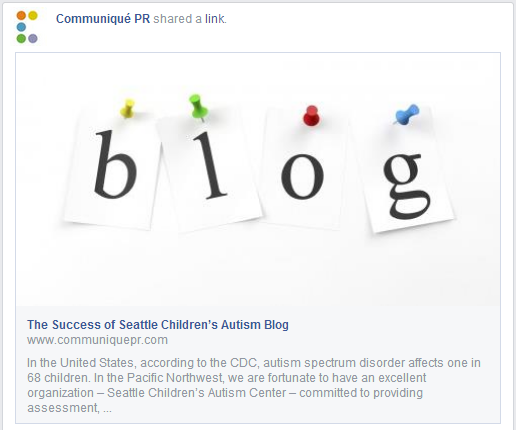
In addition, the network announced it will show more links that are posted in the “link format,” which happens when you paste in a link as you’re drafting a post, rather than just including the URL in the caption that appears above the photo. The link format shows additional details that help readers decide if they want to view a post—such as the story headline and first sentence in addition to the caption.
Here’s an example in link format from our own Communiqué PR page, which includes a photo, the actual headline and first few lines of text:
For PR pros and companies publishing stories and news to their feeds, these updates have the potential to affect content click-through and distribution rates. With the demise of click-baiting, here are a few ways to ensure your posts will still be featured on Facebook:
- Post valuable, share-worthy content. This should be a no-brainer anyway for PR pros, and is also the easiest way to ensure your stories will be picked up on the news feed. By nature, stories that are compelling and valuable will pass the new criteria and have the best chance of being featured. Now is the time to refine your content-creation strategy and put extra-careful thought into what you post.
- Be straightforward. Honesty is always the best policy and that especially applies here. Don’t deceive viewers with misleading, teaser captions to links. Instead, be honest about the content and include the actual headline or context, then leave it up to the reader to decide whether it’s worth viewing. Think your post won’t receive enough clicks on its own without a click-bait headline? Re-read no. 1 above and re-think your methods.
- Use the link format. This is easy enough—when sharing posts, simply paste in the link while drafting the post, rather than including the URL as part of the photo caption. This is a smart move even if Facebook didn’t force you to do it—the company has found that these types of posts receive twice as many clicks compared to links embedded in photo captions.
At day’s end, not much has changed—readers still want valuable content and it’s your job to give it to them. The new Facebook rules just add that bit of extra pressure to deliver awesome, engaging posts—which you’re doing anyway, right?