
Insights for Leaders Navigating
Visibility, Credibility, and Growth.
From media strategy to reputation management, we explore the trends shaping public perception and share the approaches that drive measurable results for growing brands.
We all know that attitude can have a big impact on performance. Many of us learn this lesson as children. Just think of the illustrated children’s book, “The Little Engine That Could,” which delivers a message of the value of optimism and hard work.

Oftentimes you know you should feel optimistic, but instead you feel burned out, beaten down, stressed or pressured. This is when it can be tempting to quit or make excuses. However, neither option is helpful, so what should you do?
Fortunately, there are steps you can take to regain your perspective and footing.
Practice self-awareness. What messages are you telling yourself about the situation? Know your own feelings, motives and desires and be aware that these feelings often affect your behavior. Consider how a positive attitude about a project affects your communication with team members or your willingness to take action.
Reframe negative feelings. If you’re feeling pessimistic about something, take a step back and ask yourself, “How is my negativity serving me?” By asking yourself this, you might be able to reboot and reframe your feelings in a positive manner. For instance, maybe you are in a meeting and catch yourself thinking, “None of my ideas are any good.” When you pause to consider if this inner talk is helpful, you force yourself to analyze your thoughts. Perhaps you will realize you are over-generalizing and taking an extreme stance with all-or-nothing thinking. In addition, you are shutting down your own creativity. This type of thinking does not serve you well. It is much better to keep an open mind and support yourself by considering how some of your ideas might work.
Avoid making excuses. Look out for statements like “It’s too difficult,” “The media climate is challenging,” or “I don’t have enough information.” Know that excuses are a form of resistance. When you make an excuse, you are resisting accountability.
Focus on the things you can control. For a daunting task, start off by making a list of all the actions you can take. Analyze and prioritize that list and consider how you can excel at the activities within your control. For instance, I cannot control whether an editor will publish an article that I write. However, I can come up with a compelling story idea, brainstorm proof points and infuse my article with interesting statistics and anecdotes. Focusing on these things will increase the probability the editor will accept my article – ultimately allowing me to achieve success.
J.P. Pawliw-Fry, a training and performance expert and coach, told HR Magazine, “When we are too attached to an outcome, we tighten up. We lose the ability to execute. Rather than outcome, keep people focused on the ‘integrity of inputs’ – the things they can control. This makes them feel more confident and increases their chances of delivering a good performance.”
Finally, remember you need to manage your stress because often emotions are infectious. Leaders’ and individuals’ emotions can spread to teams, affecting their attitudes and performance as a whole.
For more on this topic, check out:
Seven Signs You’re Not As Self-Aware as You Think

Building credibility for your company can be a daunting task. Whether you’re a start-up as the underdog in an industry or a well-known household brand dominating the market, managing your reputation, building relationships and upholding authority in your space is a never-ending venture.
Luckily, for companies of all sizes, there are many ways to build credibility and raise awareness of your company’s impact in its space. One way in particular is through attending and speaking at industry shows and events. Pursuing and securing speaking engagements at tradeshows of any size is an excellent way to build executive thought leadership among your competitors in the space, current customers and potential clients.
In addition to having the opportunity to speak positively about your company, announce new product offerings and share forecasts on the industry at large, attending events provides the invaluable opportunity for networking. This chance to connect with fellow speakers and attendees holds the probability to increase lead generation for your company and allows you to build personal connections with other prominent movers and shakers.
To no surprise, incorporating speaking engagements into your marketing mix is also a chief PR opportunity. Dedicating the time to research reporters who will attend the event and reach out to schedule in-person meetings and invite them to your presentation will keep your company’s profile top of mind and at the front of the industry. Building media relationships through face-to-face meetings is extremely beneficial. Being able to sit down with a reporter can create long-term, mutually beneficial relationships quicker than from a phone interview.
Although there are countless benefits to attending events and pursuing speaking engagements, there are also challenges – challenges I’ve seen present themselves through the elements of “company timing” and the “vetting process.”
Completing applications is time intensive and, although an earned opportunity, carving out the time to answer thoughtful and strategic answers is no doubt costly. It is important for companies to assess their timing and decide if now is the appropriate and strategic time for their company to be attending events. For many start-ups, it can be too early, however, no situation is identical and you will want to focus a close lens on your priorities and objectives to determine when is right for you.
With the green light to concentrate on speaking engagements, the biggest challenge can be in the vetting process. There are hundreds of events available for every industry and product offering imaginable. Diving headfirst into the countless themes and speaking tracks can be overwhelming. Creating a clear and consistent vetting process for determining if an event’s speaking opportunity is right for your company will not only cut time in the application process, but it will also help ensure your time at the show is meaningful and beneficial to your business and communication objectives.
Below are several sample questions I’ve created to help vet awards and determine if a speaking opportunity is an appropriate fit. I have found these questions most helpful when visiting the event’s website and speaking to event representatives to uncover information not available online. I hope they help you in your next event and speaking research endeavor. Feel free to share any additional questions in the comments section below!
- How many individuals typically attend the conference?
- What are the attendees’ functional responsibilities? (Sales/advertising, MTKG, purchasers, etc.)
- What level are attendees? (Entry, coordinators, VPs, C-level)
- What types of companies/brands have attended in the past? B2B or B2C?
- What is the conference theme?
- What type of speaking opportunities exist? Are they panel or stand-alone opportunities? Is there an opportunity to lead a workshop?
- Are the speaking opportunities paid? If they are pay-to-play, what is the cost?
- Can vendors speak at the event?
- How many speakers does the event select?
- What are the desired speaking opportunity topics?
- What is the criteria for selecting speakers?
- What is the nomination process? (Online form, email submission, video, interview, etc.)
- What is the deadline for speaker submissions/nominations?
- Is there a specific format for speakers to follow when developing their presentation? (Length of talk, content, presentation layout, etc.)

Recently I had the opportunity to present to a group of undergraduate marketing students at the University of Washington. When the idea was first brought to me, I was thrilled and couldn’t wait to get in front of the class. However, as the event got closer, I felt self-doubt start to creep in and anxiety soon replaced that previous sense of excitement.
This led me to check out Amy Cuddy’s book, Presence: Bringing Your Boldest Self to Your Biggest Challenges. Cuddy is a Harvard psychologist and is perhaps best known for her 2012 TED talk about body language, which has been viewed over 37 million times. Cuddy asserts that body language has the power to affect not only how others perceive and see us, but also how we perceive and see ourselves.
Rather than relying on the mindset of “fake it ‘til you make it,” Cuddy’s research points to “fake it ‘til you believe it.” In short, if you stand with a confident posture (think of Usain Bolt or Wonder Woman, for example) it has the potential to alter your brain chemistry and actually make you feel more powerful or confident in a challenging situation.
In the interest of full disclosure, the science of power posing has come under fire recently. In September, Dana Carney – who co-authored the 2010 study behind power poses with Cuddy – dismissed Cuddy’s research. Carney stated on her website: “As evidence has come in over these past 2+ years, my views have updated to reflect the evidence. As such, I do not believe that ‘power pose’ effects are real.”
Despite the controversy underway within the psychological and scientific community, I can say that Cuddy’s premise about body language and its ability to influence self-perception worked for me personally. I went into the presentation convincing myself that I would be confident and articulate, and by all accounts, it seems to have worked.
Looking more broadly, the takeaways from “Presence” and Cuddy’s TED talk are noteworthy for PR professionals at all stages in their careers, as well as media spokespeople and public speakers. Whether you call it “power posing,” “executive presence,” or “command skills,” being warm and relatable (i.e., trustworthy) to an audience and successfully engaging with them (i.e., being credible and respectable) is one of the most important traits in our profession. In an article about the publication of “Presence,” Business Insider noted that people tend to quickly judge others when they first meet them based on two questions:
- Can I trust this person?
- Can I respect this person?
Ideally, you want to do both, and body language is a part of shaping those perceptions (both externally and internally).
As a client-centric business, it’s important for PR professionals to convey and earn trust and respect to and with our clients, to the media, and to our peers. We’re often called upon to train media executives for public speaking and on-camera media interviews, where body language is a critical factor in helping to build a rapport, establish credibility, and communicate key messaging.
Whether you’re looking to impress during a job interview, secure a round of venture capital, earn trust after a new promotion, or shine in a presentation to undergrads, having a presence that elicits trust and respect will determine whether you sink or swim. Just as we recommend being intentional about messaging, think clearly about what tone and demeanor you want to communicate.
Do you agree or disagree with Cuddy’s findings around power posing?
If you’d like to read another take on “Presence,” I encourage you to check out my colleague Jennifer Gehrt’s blog post here, where she discusses power dynamics and the different types of power leaders need to develop and refine throughout their career.

Offense sells tickets, but defense wins championships – at least, according to a now proverbial expression backed by the likes of ESPN. I must admit my knowledge of/interest in sports is about that of a grumpy cat’s, but I can still appreciate the value of this message and how it applies to other professions.
IT Specialist Greg Bell seemed to feel the same way in his recent piece for Harvard Business Review in which he posited that the best cybersecurity strategy focuses on a plan to mitigate damage, rather than pursue the “futile attempt” of trying to prevent anything bad from happening at all. I would argue that this sentiment extends from sports and cybersecurity all the way to public relations, and found the following points of Bell’s article particularly compelling:
- Ensure every person on the team knows their role
As Bell points out, cybersecurity strategy is too often relegated solely to the IT department, when the most sensible and secure approach is to educate every single employee on best cybersecurity practices. Similarly, PR professionals should not be the only ones involved when disaster strikes. Indeed, the PR team leads the defense effort, but the client must also bear critical knowledge and responsibilities. In times of crisis, appropriate executives from the client organization should be armed with things like spokesperson training and a key messaging framework to handle the response. Many times, a company executive will serve as the face of crisis response over an actual PR person.
- Align with your clients and maintain visibility
The author recounted the experience of a CSO who had invested a large amount of time and money in a complete overhaul of his company’s cybersecurity approach. What the CSO didn’t know at the time is that the company was planning on changing its data strategy, likely rendering his work useless in a few years.
As PR practitioners, this issue of visibility (or lack thereof) is something we can be all too familiar with. Naturally, there’s always going to be information that organizations keep on a need-to-know basis. But when a company faces reputational challenges, the PR team needs any and all relevant insight in order to devise the most successful crisis management plan. In these situations, PR people should respectfully ask their client to give them as much information as possible so as to achieve the best outcome.
- Prepare for the worst
That data breaches are unavoidable is at the crux of Bell’s argument. Likewise, PR people should plan as if a public company fiasco is inevitable. Of course, no professional wants a crisis for their company or client, but to dismiss the likelihood of one would be terribly foolish, especially in this internet era when companies are subject to more exposure and public scrutiny than ever.
As our media ecosystem becomes increasingly fast-paced and interconnected, many industry commentators are championing a proactive PR approach, making it easy for reactive PR to fall by the wayside. For the record, I agree that proactive methods are the most effective use of a PR team’s time and resources. But we must remember that this same connectedness is what makes company scandals more likely – a prime example being the expert damage control Skittles recently employed after their product was used in xenophobic political messaging on Twitter.
Proactive PR inspires customer loyalty, but successful reactive PR is what cements public respect. In other words, a strategy that balances both offense and defense will help your PR team rise up into a league of its own.
For more commentary on defensive PR strategies and crisis communications, please feel free to read our analysis of Samsung’s recent PR debacle or our suggestions for reputation management via Twitter. Thanks for reading.
Ever wonder what the best day of the week is to pitch media or if you’re pitching at the best time of day? Whether you’re just starting out in PR or you’re a seasoned professional, chances are you’ve found yourself asking the same questions and wishing for a bit more insight. Fortunately for us, Business Wire recently released its annual “Media Blueprint” report, with media survey results for 2016. Based on a survey of more than 600 members of the media from more than 40 countries, the report analyzes trends that surfaced among particular media groups and includes best practices for working with journalists. The survey even went so far as to classify media into subsets based on years of experience, beat categories and outlet types.
Read on to find out my five most surprising takeaways from the report with links to helpful resources:
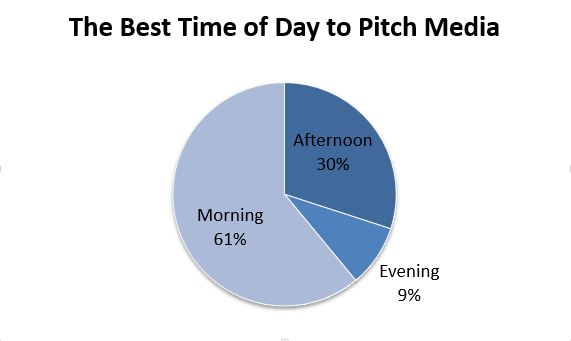
- Early birds get the worm and the reporter’s attention. According to Business Wire, 61 percent of journalists prefer to receive pitches in the morning. However, afternoon pitches are more popular with 42 percent of media newcomers (less than 5 years of experience) and Gen Z respondents. Recommended read: How to Successfully Pitch Via Email
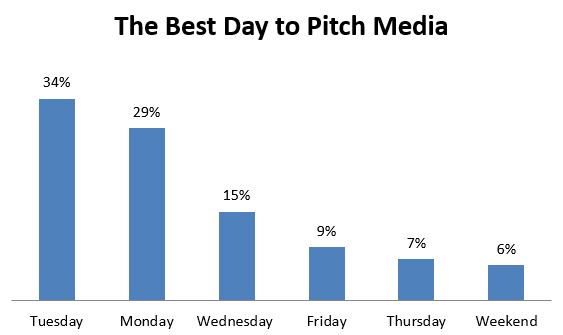
- Tuesday trumps Monday for the best day of the week to pitch media at 34 percent. A couple of things surprised me about this result. First, I didn’t expect such a large number of reporters to be so enthusiastic about receiving pitches on a Monday, but the beginning of the work week also earned top marks from media groups such as local/national (44 percent), Millennials (42 percent), newswire (42 percent), TV (42 percent), and newspaper (37 percent). I was also caught off guard that media cited Friday as a better day to send a pitch than Thursday, so if anyone took the survey and would care to explain that to me, please feel free to leave a comment below. Recommended read: Timing is Everything: When to Send a Press Release
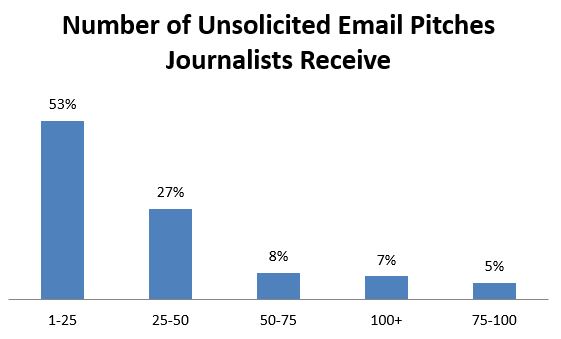
- Another day, another overflowing inbox. Journalists have no shortage of emails to sort through, with 47 percent reporting they receive more than 25 emails a day. Broadcast journalists reported the highest number of unsolicited pitches each day with 53 percent receiving 1-25 a day and 16 percent with more than 100 daily. Recommended read: The Art of the Pitch
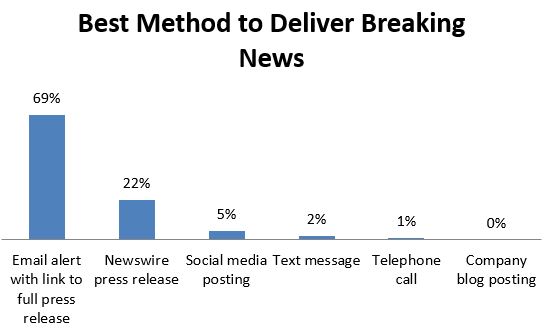
- Hold off on that funeral for the press release. One of the more heated debates in PR is whether the traditional press release still serves as a relevant tool to journalists or is a relic of the past. Detractors may want to hold their tongues as a whopping 91 percent of media listed receiving a press release as their preferred method for receiving breaking news from an organization. Telephone calls received only 1 percent, with company blog posts showing no signs of making any headway with media as a source for news with zero percent. Recommended read: Writing the Winning Press Release
- Six mistakes to avoid with media. Finally, when you’re attempting to build relationships with key reporters, it always helps to start off on the right foot. By spending a few minutes reading their recent articles and scrolling through their Twitter feed, you can avoid committing what 73 percent of journalists named as their biggest pet peeve – not knowing their beat. Other common grievances included cold calling, sending a pitch with typos and not having a press release. Recommended read: Why Slow PR is Crucial for Building and Maintaining Relationships with Journalists
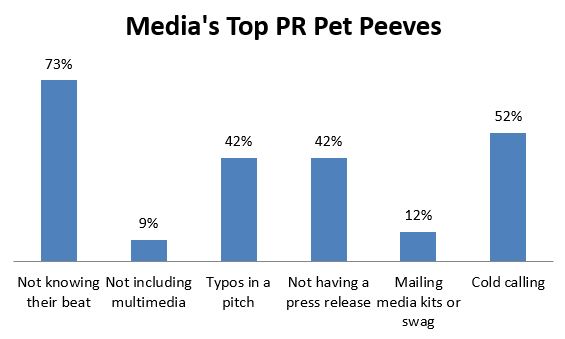
Business Wire’s full survey results can be found here.

Veterans Day honors and thanks all the military personnel who have risked their lives in the service of protecting the United States. The day is marked by parades and community events throughout the country, and many places fly the flag at half-staff in remembrance and support of those who lost their lives on behalf of the country. Officially observed every Nov. 11, the holiday marks an important day in history – the 1918 armistice between Germany and the Allied nations and the end of the First World War.
According to the U.S. Census Bureau, there were 18.8 million civilian veterans in the United States last year. As this population begins to age, it is crucial to start planning for senior care, and more importantly, to understand what resources are available to ensure that veterans can live in a high-quality assisted living facility without struggling to pay for basic care costs.
In honor of Veterans Day, VeteranAid.org, a free A&A Pension resource and forum, and A Place for Mom, the nation’s largest senior living referral service, teamed up to raise awareness of a little-known benefit pension that helps vets pay for senior care costs.
The Veterans Aid & Attendance Pension
The Veterans Aid and Attendance (A&A) Pension is an allowance for veterans and their spouses to help pay for senior living and home care. The benefit provides financial support to lower income veterans and their spouses who require another person’s aid with daily living activities such as medication management and meal or care support. Both in-home care and senior housing are covered by the A&A Pension, which can provide up to $1,788 per month to a veteran, $1,149 per month to a surviving spouse, $2,120 per month to a couple, or $1,406 per month to a veteran with a sick spouse.
To qualify for the A&A Pension, a veteran (and his or her spouse, if applicable) must have $80,000 or less in total assets, excluding one home and one vehicle. Additionally, the veteran must have been discharged honorably and have served 90 consecutive days, at least one of which was during an approved period of war.
As it stands, the Department of Veterans Affairs (VA) only looks at a veteran’s current income, assets and expenses at the time of application. However, under newly proposed eligibility requirements, which are anticipated to be implemented in 2017, the VA will likely examine the past three years of an applicant’s financial history to determine eligibility for the pension.
Raising Awareness
APFM helps more than 200,000 families find the right senior care solution each year. Approximately 40 percent of these families come from a military background, and it is estimated that more than 70 percent are not aware of the A&A Pension. It’s anticipated that the proposed changes to the pension are anticipated to affect some qualifying veterans and prospective applicants as it will require additional financial thresholds to be eligible, potentially disqualifying candidates who were previously entitled to the benefit.
To help inform vets about the pension, VeteranAid.org and APFM created the “VA Benefits & Long-Term Care” eBook, which is now available for download. They also embarked on a media outreach campaign to raise awareness about the pension, garnering a slew of original coverage from media outlets across the country:
- The Senior List: Are You Eligible for the Veterans Aid and Attendance Pension? Proposed Amendments Could Make it Harder to Apply
- Long-Term Living Magazine: A Place For Mom joins effort to promote veterans’ LTC resources
- The Daily Ardmoreite: Changes will potentially affect many veterans’ ability to access special pension benefits
- Alamogordo Daily News: Veterans A & A Pension to undergo changes in 2017
- Courville Communities News: How to Honor Senior Veterans on Veterans Day
- The Daily American: Little-known veteran aid program could be changing
- McKnight’s Senior Living: Veterans A&A pension eligibility requirements expected to change
- HomeCare Magazine: Changes Coming to Veterans’ Care Pension Program
- KGAN-TV Cedar Rapids: Veterans miss out on little known benefit program
Communiqué PR is proud to support APFM and VeteranAid.org in their efforts to help the vet community find affordable care and are hopeful many families will learn about and benefit from the pension as a result of our efforts.
###