
Insights for Leaders Navigating
Visibility, Credibility, and Growth.
From media strategy to reputation management, we explore the trends shaping public perception and share the approaches that drive measurable results for growing brands.
With the closure of Seattle’s Alaskan Way Viaduct, there has been a lot of attention on the progress of Bertha, the tunnel-boring machine carving out the new State Route 99 tunnel to replace it.

Given all this focus on Bertha, I began thinking about the pros and cons of naming tunnel-boring machines. Apparently, it is a common practice for construction workers to name tunneling machines after women. According to an article in the LA Times, “Naming digging equipment after women is a tradition that dates to the 1500s, they say, when miners prayed to St. Barbara to keep them safe underground.”
Today, to come up with names for these machines, many cities hold naming contests. For instance, officials with the Washington State Department of Transportation, the Los Angeles County transportation, and the city of Toronto all recently have held contests or our holding contests to name tunnel-boring equipment.
According to the WSDOT website, “Bertha’s name was chosen as part of a contest for kindergarten through 12th-grade students. Proposed names had to be female and have significance to Washington state heritage, life, nature, transportation or engineering.” A panel of officials made the final selection – Bertha – after Bertha Knight Landes, Seattle’s only female mayor and the first woman to lead a major American city. (She served as mayor of Seattle from 1926 – 1928).
So what are the pros and cons of naming tunnel-boring machines? I thought it would be interesting to consider these from a marketing and public relations perspective.
By naming a tunnel-boring machine, there is a humanization of the machine and the project. It can make a mundane equipment purchase seem more exciting to name it. In addition, if you allow the public to help come up with a name, it raises awareness for the project. Finally, a name makes it easier for everyone to talk about the project. In Seattle, for better or for worse, Bertha is synonymous with the Highway 99 project.
But there can be a downside of naming equipment. The biggest risk is if the project has delays or problems, the name takes on a significant amount of negative connotations. For instance, in Seattle many people are not happy about Bertha. The project is significantly behind schedule, it is the reason for the closure of the viaduct, and it has resulted in sinking ground. Just mention Bertha at a party and Seattleites will likely have a story about how the construction on the tunnel has adversely effected them. You will probably spend the next 10 to 15 minutes hearing about traffic jams and longer commutes.
Finally, some people believe that the names can create confusion. The Seattle Times recently reported that Sound Transit decided to forgo using names (Brenda and Pamela) for its tunneling machines. Spokespeople for Sound Transit stated that they were not naming their machines because they did not want people to confuse their project with Bertha. Instead, they will refer to their equipment as tunnel-boring machine 1 and tunnel-boring machine 2.
What are your thoughts? Was it a positive thing or a negative thing to name the tunnel-boring machine Bertha? I think if the tradition of naming machines continues it would be wonderful to see the tradition updated to include male or animal names.
Savvy marketing teams understand the value of conferences and tradeshows by having the entire process down to a science. Activities like negotiating optimal booth placement, having eye-catching signage with demo stations, and promoting a giveaway to capture leads are fundamental, but massive shows like the Consumer Electronic Show (CES) and the National Association of Broadcasters (NAB) Show require something a bit different to get people’s attention.
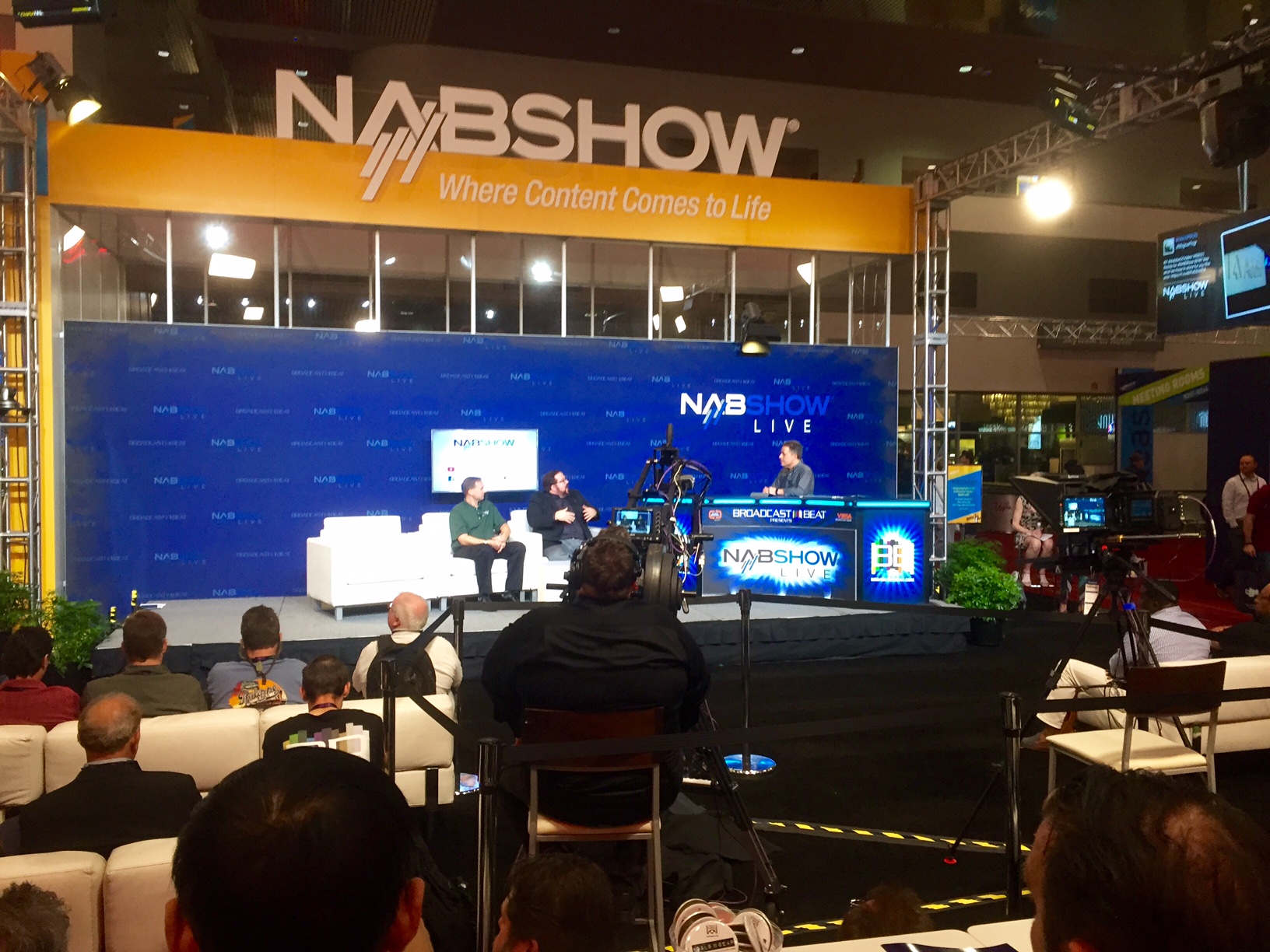
Last month, I traveled with client EMC to the NAB Show in Las Vegas to provide media relations support surrounding the conference. While I’ve attended numerous conferences throughout my career, this was my first NAB and I was taken back by the scale of this event – the convention center floor was packed with companies from around the world showcasing technologies and innovations in broadcast, media and entertainment. The show floor had over a million square feet of exhibit space, and I was on sensory overload.
One entire pavilion was dedicated to video drones and aerial robotics, while another focused on advanced advertising technologies for broadcasters, and yet another on virtual and augmented reality. There was something for everyone but the noise-to-signal ratio was off the charts since everyone was battling for each other’s attention.
During my breaks, I wandered around the show floor to better assess how companies like EMC, Sony, Adobe, Microsoft and BlackMagic Design approached the conference. I noticed a major trend, that successful companies maximized exposure by leveraging their booth presence as a venue for content delivery – hosting live sessions, trainings and workshops across a variety of topics. Some provided customer case studies and partner panels while others hosted live demonstrations from leading directors and special effects professionals for feature films like Star Wars: The Force Awakens and Avatar.
Compelling content stole the show. Through the approach of leading with content, attendees were drawn into the conversation and, in many cases, people spilled over into the walkways, attracting others who wanted to see what all the hubbub was about. The conversation was no longer just about broadcast technology products and software but how movie studios and creatives used tech in compelling ways for audiences around the globe. Needless to say, my feet ached after day one.
Here are some tips and recommendations for creating compelling content at conferences and trade shows:
- Know Your Audience – The NAB show was filled with people who love broadcast, movies and entertainment. Beyond 4K, green screens and drones, people wanted to better understand the evolution of media formats, the future of on-premise and cloud-based workflows, as well as the gadgets that streamline shoots and post-production. People were on the search for new, groundbreaking techniques to create more compelling content and to collaborate across geographical boundaries. Cater your session topics around things that people care about and you will be rewarded.
- Be Creative and Different – EMC did a successful job generating buzz around its content sessions by having something eye-catching and different – professional magician Scott Tokar who helped draw crowds into the booth. This individual performed incredible magic tricks that engaged participants and afterward, ushered them into a seating area for the next partner or technology session. This worked wonders and made for an unexpected and memorable experience.
- Amplify Your Messages – Nothing is more impactful than having others share your message. EMC also worked to create a social media campaign with hashtag #emc4media. After each session concluded, the master of ceremonies asked if people were interested in winning a 4K GoPro and selfie-stick by taking a photo of themselves and adding the hashtag. This helped drive EMC’s presence around the conference and captured the attention of online audiences.
- Incorporate Varied Content – Think about the thought-leadership topics you would like to include throughout your session content. Does it reach different audiences like customers, partners and creatives? How can you balance content to match the cadence of news flowing out of the show floor to drive maximum impact?
- Consider Session Timing – Be sure to check out schedules for the on-stage presentations so that the larger-scale sessions don’t compete with your content. This is sometimes difficult to achieve but do your best based on the announced schedules for other companies.
- Leverage News in Meaningful Ways – If your company is making a significant announcement like a new customer or product feature, be sure to leverage parallel content sessions to capitalize on this news at the show. For example, if a new partnership is announced in the morning, host a mini presentation with that partner later in the day and invite media to attend. This will help solidify messaging and provide an opportunity for press to interview multiple participants.
NAB 2016 had over 103,000 registered attendees and featured 1,874 companies. With a show this massive, it is difficult to get a brand’s message heard and imperative that companies lead with content to drive brand awareness, booth foot traffic and sales.
This conference was a great success and here’s to seeing you at NAB 2017. Just remember to wear comfortable shoes. Your feet will thank you.
Last week Communiqué PR hosted a brown bag with Laurie Myer, the founder and owner of Myer Communications. Laurie is an expert in strategic communications and discovers new, creative ways to deliver results for her clients. At these brown bags, Communiqué PR has the opportunity to ask questions and learn more about how professionals in our field are evolving public relations strategies. One topic Laurie touched on that especially intrigued me is the challenge for many companies to generate and distribute content that is creative, compelling, consistent, all done in a way that will produce meaningful results.
Laurie mentioned one way for public relations firms to stay competitive is to focus on content creation across a multitude of channels and departments. For example, we are all familiar with blog posts, e-newsletters, website articles, case studies and e-books. But what new and exciting content distribution formats are available to reach and engage target audiences like never done before? In addition, how can we decipher which formats are appropriate for our clients’ industries to produce meaningful results that meet their communication and business objectives? Lastly, how can companies build customer communities through these new platforms?
The article in Content Marketing Institute, 8 Ways to Take a Fresh Approach to Content Formats answered my questions above and opened my eyes to some of the nontraditional platforms companies are beginning to utilize in order to increase audience engagement and reach. Below is a breakdown of the eight formats discussed in this article along with some powerful examples.
- Infographics: Although commonly used, infographics present a way to distribute content that is visually appealing for quick comprehension by breaking down concepts in a straightforward manner. One of our clients, Fierce Inc., released compelling survey results through creating an infographic. Not only does this illustrate study findings, it presents an opportunity for journalists and companies to quickly reference the data in third-party reports and articles.
- SlideShare Decks: SlideShare is a way to visually stimulate one’s audience and share content in smaller quantities that are easy to digest. SlideShare is owned by LinkedIn and has captured the attention of 70 million marketers. Here is a beginner’s guide to creating a SlideShare deck, with great tips and best practices to build a compelling presentation.
- Quizzes: Made extremely popular by BuzzFeed, quizzes have increased customer engagement, website traffic and according to HubSpot, is the number one way to generate leads.
- Live Streaming: Sharing content in the form of real-time video presents an exciting way to broadcast marketing content with instantaneous results. Marketers have visibility into the number of viewers, the number of likes and number of shares a video receives. Facebook, with the help of client Cape Productions, recently introduced Live Steaming capabilities, opening the door to opportunities for marketing, journalism and creative content sharing, to name a few.
- Video Storytelling: This includes sharing recent projects and company results in a video story takes your audience through the entire journey. It familiarizes viewers with your approach, strategy and results, all in a way that is engaging and entertaining. Video storytelling is very often utilized in advertising campaigns, Target and Coca Cola are two examples of companies who have excelled in digital storytelling.
- Instructographics: Very similar to infographics, instructographics break down material, but in a step-by-step, how-to format. Providing instructions helps your audience solve problems in a creative and manageable way. Not only will you have a happy viewer, you will become a trusted source of guidance and a resource for that person moving forward. B2C shared a great post on the difference between infographics, instructographics and data visualizations.
- Gamification: Distributing content in a game is a fun way to increase engagement through bringing a level of competition to traditional advertising, recruiting, marketing and goal tracking practices. ClickBlog created a list of their top 25 favorite examples of gamification in business.
- Podcasts: Although not a new concept, a large buzz is generated from podcasts given their ability to tell stories in an entertaining and easily consumable way. Companies can create vocal recordings that engage and take target audiences on the journey of a project, or even as simple as a spoken, systematic guide for solving business problems.
The above eight are only a few ways companies have started to increase their creative content marketing efforts to share and raise awareness around their brand and key messages. Other new and innovative platforms include hosting virtual conferences, developing mobile apps and many more!
Deciding which format to leverage your content to achieve the most meaningful results varies depending on the industry and needs of both the company and their target audiences. Lastly, the rate and cadence at which content is developed and disseminated needs to be consistent in order to be a powerful and credible resource for your audience.
I hope that this post has sparked inspiration around new ways to create and distribute content, feel free to share your techniques as well!
With social media becoming an increasingly effective PR and marketing tool, incorporating social media into a company’s business plan is no longer an option, but a necessity. Social media is an excellent way to provide information and have conversations with customers. It is a convenient medium to share what is happening with your company, exciting material, and news articles to your customers.

Following are four social media platforms that your business should be leveraging for PR and marketing purposes:
Twitter: With only 140 characters, Twitter is best used for delivering short and simple messages. Think of it as an elevator pitch – you only get a quick burst to engage your followers and entice them to spend more time looking through your feed or website. One particularly beneficial attribute that Twitter offers is convenience. The platform makes it easy for customers to get their simple questions answered in real-time, without the hassle of sending an email or calling into your company. People use Twitter as a way to stay up-to-date with their friends, sports teams, news and companies they find interesting. As a business you are able to share your status, a promotional deal, or a hashtag, to keep your customers caught up with what is happening with your business. If you are lucky, your post might just be the next viral trend!
Facebook: With the ability to share videos, pictures, links and messages without the character limits of Twitter, Facebook is a more versatile form of social media. Because Facebook is multifunctional it makes it easy to keep customers in the loop on upcoming events and company news articles. Facebook is becoming a more visual platform of social media, which has been extremely beneficial for some companies. For example, Buzzfeed’s “Tasty” Facebook page, which only posts videos, has gained over 52 million followers in less than a year. This is only one example of how adaptable Facebook can be for companies.
Instagram: In order to share a message on Instagram you must post a video or image, making it one of the more visual and eye-catching forms of social media. The picture you post can be behind-the-scenes, hinting at an upcoming project or a funny picture that relates to your company and your customers. Use an image to capture users’ attention about exciting new content, an interesting article, poll, competition or accomplishment, and link to more information on the post in the bio. This brings more traffic onto your Instagram page which will hopefully result in more followers and possibly even new customers.
Snapchat: Despite being one of the newer forms of social media, Snapchat has the potential to be one of the most rewarding, especially when trying to reach millennials. Through Snapchat, employees can share photos of the inner workings of their office, giving customers an exciting behind-the-scenes look. There is also an opportunity to hint at upcoming projects, share events, or even just casually interact with your followers. One of the unique qualities that Snapchat brings is the ability to be casual and show a company’s personality. This allows the follower to connect with the company on a more personal note. However, Snapchat is not the best social media platform for all companies; it is most beneficial for companies that are trying to reach the millennial generation.
Understanding your audience and which form of social media best suits your company may be difficult, however, once you find a rhythm, your company will begin to see the benefits of utilizing the platforms. Social media is an excellent way to keep your business top of mind among your target audiences and keep them engaged with your brand. It is also a great way to stay in touch with your customers by being able to answer questions and assist in addressing any concerns they may have. Social media should be incorporated into all companies’ PR and communications efforts because it offers additional exposure, attracts new customers, and engages consumers.
PR and advertising are both important in a company’s overall marketing mix, but the two play entirely different roles. On a number of occasions, I have had to explain to people what PR is, what PR professionals do, and how PR differs from advertising. To put it simply: PR is earned media and advertising is paid media.

With advertising, a brand has complete control to share whatever message it wants through a guaranteed, paid media placement. With PR, people work with third party sources, such as journalists, analysts, bloggers and influencers in order to secure earned media placements. In the case of PR, these third party sources write their articles or reports based on the information they gather from a variety of sources; coverage of your company are not guaranteed the way they are with advertising, but rather earned by effectively positioning and promoting your company to the media.
It is important to note that journalists need to write objective, impartial stories. They need to balance a variety of sources, viewpoints and perspectives in order to develop a provoking and credible piece. Therefore, it might not be that a journalist did not want to write about your company, but that the information was not compelling enough to include, or there were too many additional points to include in the article. Because articles in the media must adhere to editorial standards of fair and impartial reporting, it is often argued that an earned media placement (an article written by a reporter) lends more credibility to a brand than a paid advertisement could (since advertising content and messaging is written and controlled by the company paying for it).
Building Credibility
PR can also be a more subtle, non-invasive way to communicate a brand’s message when compared to disruptive banner or popup ads. A brand can communicate whatever message it wants with an advertisement, but with PR, we share brands’ messages with the media with the goal that they will include the brand (and its messaging) in an article. Why is an article more valuable than an advertisement in this context? It all comes down to trust and credibility. According to Content Marketing Institute, more than 70 percent of consumers say they prefer to learn about a product or service through editorial content rather than traditional advertising.
Audiences tend to be more receptive to messages from third parties, such as journalists they trust, than when messages come from the brand itself, such as advertisements. In terms of building trust and credibility with an audience, PR can be more effective than an advertisement, because someone your audience trusts is telling your story for you, making the message more trustworthy, and credible.
Meeting Your Business Objectives
Another key difference between PR and advertising is that PR professionals focus on supporting a company’s overarching strategic business objectives. PR focuses on long-term, bigger goals for a company, such as bringing a product to market, positioning the company for an IPO, increasing market share, and the like. Advertising, on the other hand, focuses more on short-term goals, such as increasing sales and prompting immediate action. PR and advertising both help in building awareness for brands, but the path they take, and the goals and objectives that guide them are completely different. PR can potentially be a more cost-effective marketing strategy when compared to advertising, because it can increase the perceived value of a company with third party-validated content, as well as support the bigger picture and strategic business objectives for a company.
Following is a modified chart, originally developed by PR agency owner and Forbes columnist Robert Wynne, to include differences between public relations and advertising that I felt were most important to understand:
|
Public Relations |
Advertising |
| Earned media | Paid media |
| Third party validation; credibility | Self-promotional |
| Non-invasive editorial placement | Disruptive advertising placement |
| Less/no control of content; media in control | Complete control of content |
| Helps build relationships | Helps promote something |
| Focuses on long-term business objectives | Focuses on short-term sales objectives |
| No guarantee for coverage; uses persuasion | Guaranteed coverage |
| A story only runs once | Ads runs as often as you can pay for them |
Which Comes First? Suggested Best Practice
Building awareness and credibility first through PR is a good best practice to consider. PR can typically do this more effectively than advertising can, because it can provide more information through storytelling about a product, company or person with earned media placements. This first step is critical to the success of advertisements down the road.
For example, if you saw a billboard along a highway of an unknown toothpaste brand promoting its teeth whitening solution, next to a Crest billboard promoting its teeth whitening solution, which ad would resonate most with you? Probably the Crest billboard because Crest is an established, trusted toothpaste brand. If you can build trust and awareness with your target audiences first, your future ads will have a stronger impact and be more effective in terms of prompting an action.
So, can you now tell the difference between PR and advertising?
Beginning in March 2016, Communiqué PR began a partnership with A Place for Mom (APFM) to support PR efforts around a series of research findings, tools, and quarterly reports in development by the senior living referral service. The data-focused program centers on providing information about national and regional senior living trends to consumers, using state-of-the-art statistical methods and APFM’s massive database of senior housing referrals so families can better prepare for senior living. This includes senior-focused information on the housing market, senior living costs, multi-cultural considerations, and LGBT issues within senior communities. We were excited and grateful to provide strategic PR guidance for the program and understood it presents an excellent opportunity to drive media attention for APFM’s services.
As a bit of background, APFM is America’s largest senior living referral service, with more than 400 senior living advisors providing resources and personalized assistance in finding senior living options. APFM works with a nationwide network of more than 17,000 providers to help families find options based on a loved one’s stated needs, preferences and budget. This may include independent senior housing, home care, residential care homes, assisted living communities and specialized Alzheimer’s memory care.
National Senior Cost Index
As the first part of the quarterly data series, APFM released new findings from its National Senior Living Cost Index highlighting costs for three primary senior living categories in the U.S.: Independent Living, Assisted Living and Memory Care. The data indicates a 2.7 percent increase in annual costs in the U.S. across the three primary senior living categories. This means seniors are paying $99 more per month toward senior living compared to 2014, with people living in southern states ($125/month) and western states ($90/month) facing the greatest increase in growth (4 percent and 2.7 percent, respectively).
With that said, it’s important to note that although the median cost of senior living is on the rise, it is still well below the median growth rate of the national housing market from 2014 to 2015 (7 percent). The data also indicate that seniors are waiting longer to move into senior living, and people aged 84 or older making the transition increased by 3 percent between 2013 and 2015. This fact creates higher acuity needs once seniors make the move, resulting in greater general spending by the consumer.
Planning Tool
One unique and helpful finding unveiled along with the National Senior Living Cost Index is APFM’s new, interactive senior living planning tool. Hosted on APFM’s website, the new tool allows families to map and rank senior living costs by county, state and region, as well as to see year-over-year and multi-year trends in senior living costs. There are no other such planning tools available to consumers, making it a truly one-of-a-kind resource to help people and families plan for senior care.
The data used in the planning tool and Senior Living Cost Index is based on actual rent and care charges collected from referred family move-ins to APFM partners. National and regional median costs and growth estimates are based on communities with at least one move-in for a given care type two years in a row. City, metro and state estimates are based on an econometric model of inflation-adjusted move-in charges (in 2015 dollars) during 2014 and 2015. Estimates in zip codes with few move-ins borrow information about costs from other zip codes with either similar median household income or geographic proximity.
Media Interest
Communiqué understood the news value of APFM’s National Senior Living Cost Index findings – journalists love hard numbers and data to validate what they are reporting. The findings also appealed to a wide audience and anyone residing in the U.S. could view the trends and results as helpful and interesting.
As a first step to prepare for media outreach, Communiqué meticulously audited recent coverage around senior care to understand what outlets and reporters cover the topic. This included researching national, regional and local media, as well as the major trade publications associated with senior care. Based on the findings, CPR identified “beat” reporters whose main job is to cover senior-related news and others who sometimes cover related senior topics and still represent good targets for media outreach.
Because the National Senior Living Cost Index story is only the first of four in the quarterly series, Communiqué recognized that many of the reporters identified would also be strong targets for the rest of the PR program. We knew building relationships with these reporters would prove critical in garnering ongoing media coverage throughout the year. This inspired the idea of sending personalized notes and care packages to key targets to let them know about the upcoming data series and ensure that APFM is top-of-mind if they are ever in need of an expert source for an article.
This tactic, along with a well-crafted pitch and a coordinated media outreach campaign, resulted in some incredible coverage for APFM. National, regional, local and trade media all covered the story, reaching millions of people and families with valuable information for them to consider when thinking about senior care. A few of the highlights include coverage from:
- The Next Avenue
- Forbes
- Philadelphia Business Journal
- Long-Term Living Magazine
- Senior Housing News
- McKnight’s Senior Living
- HealthLine
Communiqué congratulates APFM for their commitment to providing valuable resources to help people plan for senior living and embarking on a yearlong journey to provide insights into issues impacting senior communities.
###