
Insights for Leaders Navigating
Visibility, Credibility, and Growth.
From media strategy to reputation management, we explore the trends shaping public perception and share the approaches that drive measurable results for growing brands.
Some companies take blogging to new heights. One of them is Alaska Airlines. It launched its blog (https://blog.alaskaair.com) in June 2014 and in two years the blog has published more than 230 stories that people are actually reading. Halley Knigge, who signed on with Alaska Airlines in January 2014, runs the blog.
Knigge, a former newspaper and digital reporter, leverages many of the key principles she learned reporting in her work for the Alaska Airlines blog. Her essential skills include newsgathering, interviewing, writing and creating stories, and production
1. What was it like to be in Cordova, Alaska, to cover the opening of the Copper River salmon season for Alaska Airlines’ blog?
Cordova was amazing. During the past two years, I supported the Copper River salmon season opening from Seattle. But having the opportunity this year to travel to south-central Alaska and meet the fishermen and the larger community there, to see firsthand how Alaska Airlines helps them get their prized salmon to market, was an outstanding experience. People in Alaska really support one another. The relationship between Alaska Airlines and the communities we serve in the state of Alaska is different than in the Lower 48. Only three cities in Alaska are connected by road, so many times [our planes] are bringing the groceries and the mail. People really rely on Alaska Airlines. One other thing that I love about Cordova – and other places in Alaska – is that people live by the principle “leave no man behind.” As an example, en route to Cordova from a trip to the Copper River delta, our car got a flat tire and one of the locals stopped to help us. He would not leave until he helped us fix it and made sure we were safely on our way.
2. Can you talk about the value of developing and maintaining the Alaska Airlines’ blog? How has it helped the airline?
The blog has helped us in some significant ways. It allows us to tell great stories about our company and our amazing employees who go “above and beyond” to make the travel experience better for our customers. We also fly to some fascinating destinations like Barrow, Alaska, the northernmost city in the U.S., so we love to tell the stories about the unique places we fly to – ones that often no other airlines serve. Finally, and perhaps most importantly, we use the blog to share critical information during storms or other times of irregular operations. For instance, in September 2014, when the category 3 Hurricane Odile slammed into Mexico, we were able to use our blog to communicate and share information about the situation in the cities of Los Cabos, Mazatlán, and Loreto, which was a huge help to many people in both Mexico and the U.S. We also wrote about Operation Ayuda (“help” in Spanish), which was Alaska Airlines’ humanitarian campaign to assist our customers and their families during this very difficult time.
3. What does your blog’s editorial calendar look like? How do you plan and secure content for the blog?
We plan our editorial content on a month-by-month basis and make sure the themes for stories align with our marketing priorities and goals. When we plan stories, we work to ensure they will be valuable when we publish them and stand the test of time. Content needs to be evergreen, meaning it is relevant both today and three to five years from now. For instance, we did a story about how to make air travel easier for children with autism. This story was timely for the blog because of an event we held in Boise, Idaho, where we invited parents and children with autism to “practice the airport.” The topic is still relevant today because we included practical travel tips in the article. This ensures it will be valuable for families and caregivers traveling with children with autism for many years to come.
4. What makes a good blog story for Alaska Air?
Day-of travel tips really resonate with our readers. People always want to know how to travel with less hassle and stress. The other popular topics are the in-depth destination stories. People like to know what they should see that is off the beaten path. They often want to discover something new when they travel. Stories where we can offer expertise that is unique or authentic really resonate with our readers.
5. What are two stories that you are most proud of publishing? And what made them special?
I loved the series Robert Reid wrote about his trip to China earlier this year, starting with A Walk Around Suzhou, China’s Historic Heart. Robert’s writing is beautiful and his pieces helped us educate our readers about Alaska Airlines Mileage Plan partners. His stories were part of an ongoing series that pairs some of my favorite writers with our international airline partners. Our international partners are important and allow our customers to fly to more than 800 destinations worldwide. Many people don’t know this. I am also proud of a recent series we launched featuring our new uniform designer Luly Yang. Luly will be providing fashion-related travel tips for our customers, and who better to share them than an internationally known fashion designer? Our first story, “Flying with Luly: How to pack a wedding dress,” featured videos and step-by-step instructions for packing different styles of wedding dresses. I love this because while it is a very specific, niche piece of content it will be vitally interesting to a very specific group of people: brides traveling to a far-away wedding.
6. How do you measure success for the Alaska Airlines blog?
I look at three things when I judge whether a post resonated with our audience: views (were people interested enough to click into it?), time spent on page (did most people actually read it?) and engagement (if people read it, were they engaged enough to share it with their friends or leave a comment?). These three metrics work together to give me key insights that help me plan future stories, and of all three, I place the least weight on views. One post may get 40,000 views, while another gets just 5,000, but depending on the other metrics I may deem them both a success. For example, the post about making travel easier for children on the autism spectrum is at the lower end of that view range, but had an average time spent on page of more than four minutes and an engagement rate of more than 50 percent. That tells me that we created a piece of content that was uniquely valuable to a very specific, highly engaged audience, and at the end of the day were able to help make travel easier for some of our customers. So far in 2016, we’ve averaged more than four minutes per story (weighted for views) each month. To me, that is a success.
7. How do you think the communications landscape will continue to change?
Blogging and content creation will continue to be important for companies. The communications landscape is changing, but there will always be an opportunity to apply the skills from traditional journalism to tell authentic and credible stories that help people. This is one of the things that I love about my job. The skills I learned as a reporter I can apply to telling Alaska Airlines’ story.
Video may have killed the radio star, but it has reincarnated as a podcast host. Podcasts are essentially radio that appeals to listeners’ niche interests and enthusiasms and is free from the constraints of a network programming clock. This type of oral storytelling has quickly gained popularity: The percentage of Americans who have listened to a podcast in the past month has more than doubled since 2008, from 9 percent to 21 percent.

The podcast’s rise in popularity is mainly attributed to advances in technology: The rapid growth of smartphone use and the trend toward connected cars with the ability to play smartphone audio make listening incredibly easy. In addition, podcasts are easy to consume while taking the subway, running on the treadmill, cooking, or doing a myriad of other activities that benefit from background entertainment.
Many think podcasting will continue to grow, which presents an enormous opportunity for brands to reach their target audiences through a new platform. Following below are several ways that PR professionals can leverage podcasting to raise awareness for their clients.
Pitch an Interview to Existing Podcasts
Most podcast hosts need experts to interview for their show just like traditional journalists do. But given that every podcast has a unique format and focuses on its own niche subject, be sure to do your homework before pitching – listen to a few episodes and check out their website to ensure the podcast aligns with your client’s area of expertise. Also, make sure the podcasts regularly features guests, because not all podcasts do.
Before pitching, it’s also important to consider whether your spokesperson performs well on radio. Participating in an interview for a podcast or radio show is much different than doing an interview for a written story. Your spokesperson must be able to articulate messages succinctly and speak with a clear, dynamic voice. If your spokesperson has never done a radio or podcast interview before, you may want to provide media training.
Pitch a Story Idea to Existing Podcasts
In addition to pitching spokespeople as subject matter experts, you can also pitch a story idea that a podcast host may be interested in covering. This Week in Tech and Daily Tech News Show both cover trending tech news, so if your tech client has news to share these podcasts may be interested in covering it. When pitching the story, be sure to offer accompanying sound effects that will bring the story to life. For example, Serial includes the automated recording announcing a call from inmate Adnan Syed in most episodes.
Become a Podcaster
If your client is enthusiastic about podcasting, you may want to suggest helping them produce their own show. Podcasts are relatively simple and cheap to produce, and if you garner a loyal audience it could be a very effective way to build awareness about your client and bring personality to their brand. But before jumping into the world of podcasting, make sure your client can commit to dedicating a few hours weekly, bi-weekly or however often you decide to air an episode. Also, be sure to choose a subject that your client is passionate about so they don’t run out of interesting commentary after the first few episodes.
Whether podcasts are here to stay or simply a passing trend is yet to be determined, but in the meantime hopefully these tips help you take advantage of this popular platform.

In the time I have been at Communiqué PR, I have realized that I can apply many of the lessons I have learned from golf to public relations. Both golf and PR have landscapes that are constantly changing, however, are full of opportunities. Opportunities that through precise execution and careful planning (or practice), can achieve great results.
I am new to PR, but having played golf for 15 years, I am finding that my experience with the sport is helping me navigate the world of PR. Whether you are standing on the tee box or sending out a pitch, there are similarities in the approach. Although the equipment might be different, both benefit from these four approaches:
Break down your goals
The most obvious goal in golf is to lower your score; however, this is easier said than done. Rather than looking at it as 18 holes, it is more effective to break down your goals into achievable specific goals, like getting your approach shots within 15 feet of the flagstick or taking fewer shots on all the greens. In PR, one way that you can break down a goal is to focus on building a relationship with certain reporters or outlets over time. When working in PR, you always want amazing results for your clients and it is helpful to indentify smaller achievable goals that will lead to the overall success and great results that you are working toward.
One hole at a time
When you play a round of golf, remember to play one hole at a time. Do not mourn your previous hole or warily anticipate the next hole; you must simply focus on the hole that you are playing as if it is the only hole on the course. This mindset is helpful in PR. Rather than thinking about previous wins or losses, it is best to focus on the current pitch. Do not be discouraged if a journalist was not interested in the last pitch you sent them. Take a step back, analyze the elements of your new pitch, and focus on the new story or information you are sharing. Keeping a fresh focus and positive outlook will benefit your work and the outcome.
Keep score (in the back of your head)
In golf, focusing on your score can be a bad thing. It is often best just to focus on playing your best golf rather than focusing on the numbers. When you focus too much on your score, suddenly you are miss-hitting your shots and positioning yourself to play worse than you would have if you had not been keeping a constant minute-to-minute tally.
Similarly in PR, you can keep score of how many articles have been published or how many media or analysts briefings your client has had, but overall you need to just focus on the quality of the work you are doing and how it helps them reach their business goals. It may not mean securing 40 articles; it may mean building one really strong media relationship. Keeping tally just for the sake of having good numbers is not nearly as important as having meaningful results.
Know proper etiquette
Whether you are playing golf for a university or playing with your buddies on a Saturday morning, you are not the only player on the course. There is important golf etiquette to follow. It is important to know the rules. Including not talking while others are hitting or not walking through someone’s putting line. Golf is more enjoyable for all the players on the course when everyone knows the common courtesies and golf etiquette. When you practice PR, there are common courtesies, as well, including respecting journalist’s feedback and schedule, and respecting client’s objectives. And PR etiquette is something we learn from being part of a top-notch PR firm like Communiqué PR.

2015 was a record-breaking year for worldwide deal making, with $4.7 trillion in announced mergers and acquisitions (M&A), according to data from Thomson Reuters. This figure is up 42 percent from 2014, and beats the previous record of $4.4 trillion set in 2007.
This explosion of activity and deal value is due in large part to mega-deals—deals that are over $5 billion, such as Pfizer’s $191.6 billion offer for Allergan PLC—which account for 51 percent of the overall M&A value in 2015. However, plenty of mid-size companies in sectors including healthcare, technology, consumer products, and retail made deals to consolidate to become more competitive in 2015.
As a firm providing PR counsel to growing technology companies, the team at Communiqué PR has assisted numerous clients through M&A transitions, with at least one client per year being acquired, on average. Keeping with the 2015 trend, we saw an increase in client acquisitions last year, with former clients Volometrix and Mobidia being acquired by Microsoft and AppAnnie, respectively. And, as each of our clients have entered into M&A deals, we have had the opportunity to witness first-hand the excitement, anticipation and frankly, the anxiety that such a situation can bring to a workforce.
Employee Development Programs are Critical During M&A Transitions
According to America’s Job Exchange, the merging of company cultures can have a negative impact on employees, which can lead to a lack of motivation or the loss of top talent who may feel uncertain about their future role in the company. For instance, employees may be concerned about whether their job is becoming redundant and if they may be facing a layoff. Or perhaps they might wonder if they will have to relocate, or whether they will receive the same benefits package with the new company. Increasingly, employees going through this transition want to know whether the new company is invested in their individual long-term success and professional advancement.
As PR professionals, our team frequently helps clients develop communications plans with messaging developed specifically to help address the concerns of employees during a merger, however, ensuring that companies retain their top talent during a transition requires having a well thought-out employee development plan.
According to Sherry Tiao at Chronus, a provider of talent and career development software for enterprise-scale organizations, employee development programs often give employees goals to work toward and visibility into their potential career path. This increased perspective helps employees feel engaged and invested in their jobs and their company’s mission. In addition, an employee’s motivation is important to a company’s success, as disengaged employees can have a significant impact on productivity. According to a Gallup report cited by Tiao, estimates show that actively disengaged employees cost U.S. businesses between $450-$550 billion each year in productivity.
As M&A deals become more and more common, businesses aiming to retain the best talent and ensure a more seamless transition will need to invest time and resources into communications and development plans that help prepare employees for culture shifts and ensure individual motivation. Fortunately, business leaders seeking advice in this area can access a wealth of valuable resources online and from experts in career development, such as Chronus, which offers award-winning technology solutions and best practices used by organizations including Comcast, Coca-Cola, Kaiser Permanente and others to employer mentoring, coaching, and other training and development initiatives.
For insights and examples on how to establish and successfully manage an effective employee development program for your enterprise or merging company, check out Chronus’ published case studies and blog posts. For insights into developing effective messaging, internal communications plans, or for more about how Communiqué PR has helped clients facing M&A transitions, visit the Communiqué PR blog.
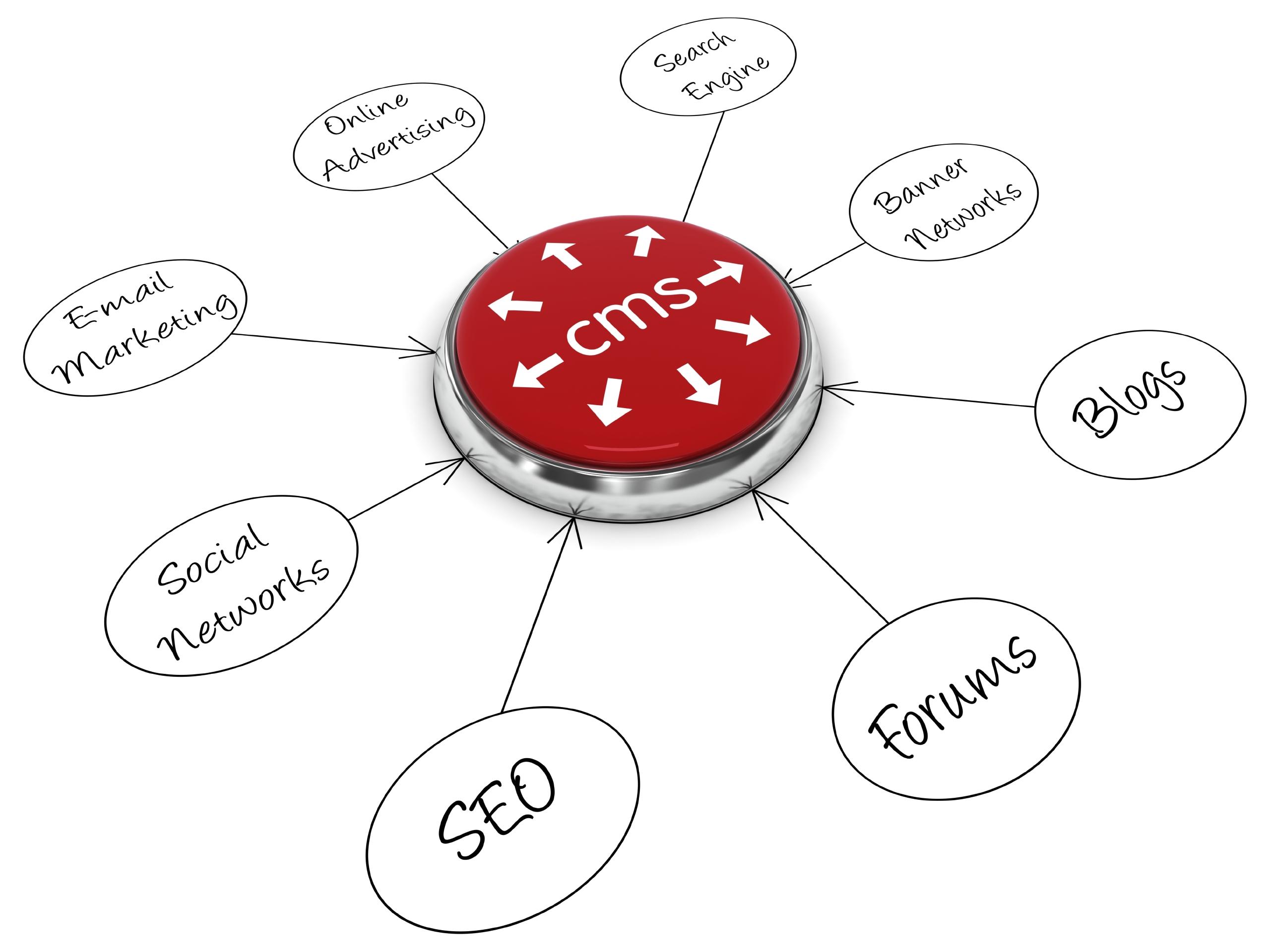
After writing my last blog post, “Considerations to Stay Competitive in Creative Content Marketing,” I learned just how overwhelming analyzing and distinguishing which method of the vast number of available content marketing platforms to utilize can be. The decision of selecting the platform or platforms needs to be thoughtful and requires critical thinking around which method will drive meaningful results and derive results that will ultimately satisfy a company’s business and communication objectives.
CMS, or content management systems, is an intriguing topic. TechTarget defines CMS as a “system used to manage the content of a website,” offering that “the features of a CMS system vary, but most include Web-based publishing, format management, revision control, and indexing, search, and retrieval.”
My mind was swamped with a laundry list of questions. First, how should marketing teams approach such a long list of content management platforms? In what way can companies organize the procedures for content creation and distribution? What are the best CMS programs out there for my business and industry? Are these “best” programs easy to manage and practical for my projects and content? Lastly, what best practices should a company implement in order to get the most from these programs?
After doing some research, I pulled together a list of the four CMS programs that repeatedly occurred throughout my searches. The first two are best suited for website development and the third and fourth programs expand on the sectors of digital publishing and digital asset management (DAM). Below I have outlined these programs with some suggested practices for employing.
- WordPress. Top ranked on nearly every article I researched, WordPress enables companies to create websites, blogs and mobile applications. An extremely helpful article, on wpmudev breaks down the best practices for managing WordPress in order to successfully engage with your target audience and maintain a level of organization around marketing content. As the Communique employee who assists in managing our company blog, I give WordPress double thumbs up. Not only is it easy to navigate, the features allow for great ease in organization and managing scheduling.
- Joomla! Similar to WordPress, Joomla! is often used in website development and enables companies to easily manage user accounts, media, content, article copy, menus and overall design. IT World released an article interviewing Mitch Pirtle, the co-founder of Joomla! where he shares eight tips and best practices from the developers of Joomla!
- WebDAM. Aside from helping companies manage their in-bound marketing efforts and increasing brand impact, WedDAM has an extremely helpful “Resource” section on their website that provides companies with guided direction and powerful examples in digital asset management, brand management, and even shares creative inspiration to exploit WebDAM’s full potential.
- WoodWing. The tagline says it all: “Create. Manage. Publish.” WoodWing’s software functions as a multichannel publishing system, a digital asset management guide, provides support in digital content production and supports brand management. The solution helps companies produce and organize content for websites, mobile apps, social media channels and more.
These programs not only help marketing teams streamline the publishing processes, they aid with the production of content. Implementing these CMS solutions reduces the cost and time required for developing creative content. Depending on the marketing platforms and strategies selected for sharing creative content, these four and many other content management systems will come to the rescue in assuring that all creative content marketing efforts are smooth and implemented most efficiently.
Huge shout out to these informative articles for the inspiration and providing me with a crash course on CMS: 10 Most Popular Content Management Systems Online, Top Content Management Software (CMS), Content management systems: A business buyer’s guide and Top 10 Most Usable Content Management Systems.
Earlier this month Instagram traded its classic brown camera logo – an icon recognized worldwide—for an updated sunburst design. While users, design professionals, and others in the industry had their fair share of opinions and mixed reviews, Instagram made a bold, and needed, change, embracing the dynamic social media landscape and evolving its branding accordingly.
The updated logo and, more importantly, the logic for doing so, was clearly communicated via Instagram’s blog, its Twitter, a Medium post by Instagram’s head of design Ian Spalter, and, obviously, an Instagram post. The social media platform that so many have come to love carefully weighed this decision and highlighted its process for arriving at the new brand look in a video—used across the various mediums mentioned above.
In addition, Spatler highlighted an important point in his Medium post, asserting that “brands, logos and products develop deep connections and associations with people, so you don’t just want to change them for the sake of novelty. But the Instagram icon and design was beginning to feel, well … not reflective of the community, and we thought we could make it better.”
I think it’s important to take a moment to reflect on other leading brands that have undergone similar logo refreshes. Nintendo, Starbucks, Apple, McDonalds, Google and Coca-Cola, to name a few, have all evolved their company branding. The Instagram team felt that the logo needed to reflect how vibrant and diverse the platform’s users and content has become, and this was a decision that was not simply arrived at overnight.
Beginning last year, the team thoughtfully determined which elements would be incorporated into its new look, asking Instagram employees to draw the old icon from memory in five seconds. The most recalled elements were the rainbow, lens, and viewfinder, which were fused into the new design. Instagram’s sister apps – Layout, Boomerang and Hyperlapse – also incorporated similar looks and feels in order to create uniformity within the suite. In addition, the app’s user interface was updated to a simple black and white layout that, according to Spatler’s blog, helps users’ photos and videos “shine.”
As an industry evolves and a company matures, changes are inevitable, particularly in the fast-paced social media landscape. Complacent companies are rarely successful, as new innovative ones will take their place. The successful companies are those that continue to reflect on strategy and adjust according to changes in the marketplace, and Instagram did just that.
While I’m not a huge fan of the updated logo, I am a proponent of and appreciate Instagram’s evolution. Further, the communications around Instagram’s new look and, more importantly, the thought process for doing so and how the new icon was arrived at, were well executed. Here’s to a new Instagram era!