
Insights for Leaders Navigating
Visibility, Credibility, and Growth.
From media strategy to reputation management, we explore the trends shaping public perception and share the approaches that drive measurable results for growing brands.
I often wonder if the founding fathers of photography ever envisioned that imagery would be adopted on such a massive scale as it is in media today. Images are no longer reserved for use by marketers in product packaging and advertising campaigns or for use by the top-tier media outlets. Today, both still images and video surround us across all forms of media – print, online, even on our mobile devices. And not only do images and videos have the power to engage and entertain us, but they also educate and influence us as consumers.
For each of our client’s announcements or events, we strive to provide the media with images that capture the essence of the news. For example, with the recent launch of Bookbyte’s Guaranteed Buyback, we were able to provide journalists with a comparison grid illustrating the cost savings achieved through their program as well as a video explaining how the program works. The video and comparative graph complemented the press announcement and added value for our media partners who are often looking for dynamic content to distinguish their outlet from others and attract readers.
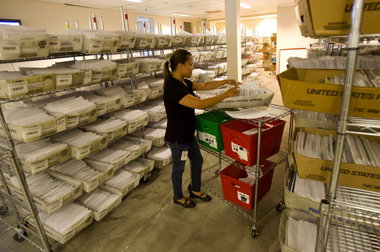
If images are not readily available, suggest a few compelling ideas that the media outlet can capture if they bring their own staff photographer. When securing a company profile story on Earth Class Mail to The Oregonian, we encouraged the reporter to bring a staff photographer to capture images of how the company sorts, scans and stores mail so letters can be viewed online by clients (see images below).

Broadcast typically require more visuals than online or print media outlets. In the instances when we are pitching a story to the TV news team, we identify the components of the story can be illustrated as ‘images’ to create a compelling broadcast segment.
In September 2010, Bookbyte launched a digital learning pilot with Oregon’s Salem-Keizer school district to provide an enhanced learning experience in the K-12 classroom. To bring this story to life, we approached a reporter with Portland’s NBC affiliate, KGW-TV and not only offered her interviews with Bookbyte’s Andres Montgomery and the school’s faculty members, but also the opportunity to film students in the classroom using the Apple iPads as part of the pilot program. This visual element was a critical piece to secure the story for Bookbyte and for KGW-TV to create a compelling and informative segment for their viewers.
When preparing to announce your next product or initiative, think about the visuals you can provide to convey your message and illustrate your brand. When doing so, it is important to remember the 4 Cs:
- Characteristics (mood, tone);
- Content (objects, topic);
- Connotations (associations, meanings); and
- Context (story, happening).
Then ask yourself what emotional response do you want people to have when they see your imagery. If your imagery is simple and direct, while engaging at the same time, it will effectively communicate your message and create an impression of your brand in a matter of seconds.
As my colleague Holly Zuluaga pointed out in her recent blog post, “Mastering the Nine Second Sound Bite,” it has become increasingly difficult to capture people’s attention in today’s rapidly moving society. If we now only have a matter of seconds to convey our message whether it is through print, online or on air, it is no wonder why imagery is used as frequently as it is today. It is a powerful form of communication that transcends any language and culture and as the old adage goes, “a picture is worth a thousand words.”
The other day I was listening to KUOW and heard a story about how social media is impacting donations to charities. Given our work with a variety of nonprofits and my past writing on the topic, I quickly reached over to turn up the volume on my radio. (My past blog posts include “Tools for Fundraising” published on Sept. 15, 2010 and “Social Media and Fundraising” published on June 4, 2010.)
According to the story, social media is having a big impact on how people are giving to charities. Marketplace Money Reporters Tess Bigeland and Jennifer Collins explained that, “last year social media accounted for more than $2 billion in donations,” and it is now changing the way nonprofits operate. This was not a surprise to me as several of our nonprofit clients have successfully and cost effectively secured donations by leveraging social media platforms such as Facebook and Twitter. However, I did enjoy learning more about the specific campaigns that nonprofit organizations like The Salvation Army and ShelterBox USA are using to raise money.
The Salvation Army, for instance, has recruited virtual bell ringers. In addition to their holiday tradition of volunteers standing in front of department stores asking people to donate change, they now have a group of people asking for donations via Facebook and Twitter. This seemed really clever to me as people are increasingly spending more time online and it allows them to reach a new demographic.
I am not going to rehash the details of the entire story here. However, if you’re interested in this topic, I would encourage you to listen to the story, which appears to have originally aired on Dec. 31, 2010. This story just might give you some ideas for your next fundraising campaign.

Many companies choose industry tradeshows as the platform from which to launch new products and services, and to make significant announcements. Tradeshows are a good forum because they typically bring together key influencers, media, analysts and customers all under one roof. But what happens when a company wants to debut a new product at a tradeshow and they aren’t the biggest or most highly regarded in the market. How do they break through the noise?
First, take a few minutes to seriously consider the timing of your announcement. If there will be large companies or market leaders present at the event – ones that may be swirling in rampant media rumor and speculation – maybe an opening-day announcement isn’t the best course of action. To avoid the abundance of announcements that normally occur on opening day of a tradeshow, some companies will opt for a pre-show or day-two announcement instead.
Planning, as we’ve discussed in previous posts, is a key part of this equation. A good plan will go a long way in helping companies break through the media clutter and buzz. To begin, carefully examine your objectives for the show. Do you want to drive awareness of your product? Reconnect with media? Engage with customers? By clearly defining your objectives, you can better shape and design the appropriate execution strategy at the show.
Next, make sure that your key messages are clearly defined and that those messages are consistent across all collateral for the show, including press releases, FAQ documents, presentations, media takeaways and any verbal discussions or presentations in which your team participates.
Determine your strategy. Maybe it’s a traditional block-and-tackle PR approach with a press release and media briefings. Perhaps you can host a sneak-peek event or analyst dinner, provide product demos or conduct an onsite reviewer’s workshop. The track you follow should convey your information in a compelling way that provides a win-win situation for both your company and your key influencers. You and your company should also look for creative ways to partner with conference organizers. Consider investigating opportunities to work together to build a custom mobile application, if that’s your company’s forte, that is designed specifically for the conference. This partnership approach can help raise the company’s profile, drive buzz and generate goodwill with event sponsors.
Finally, implement a social media component to your plan. Many media members are savvy when it comes to Twitter, Facebook, YouTube and other sites, so don’t forsake these mediums in your strategy. Social media is also a great place to alert and connect with customers who may be causally paying attention to news coming from the show. Make sure to tweet and post any announcements you make, monitor related conversations and respond to people – general consumers and media – if they ask any questions. Even consider making a video of your announcement featuring your spokesperson providing an overview or demo, and post the links on your respective social media sites.
If you’re planning an announcement at any of the big upcoming shows such as Mobile World Congress or CTIA Wireless, we wish you the best of luck! Tradeshow preparation is a lot of hard work, but the payoff is almost always worth the effort.
Time is precious. We are a society driven by deadlines and fast paced schedules, so it’s no wonder capturing people’s attention is a difficult task.
Communiqué PR recently tweeted about a NPR story titled, “The Incredible Shrinking Sound Bite.” The article explores the history behind the length of sound bites in the media. Today the average sound bite is just nine seconds! But according to NPR that wasn’t always the case. Back in 1968 the average sound bite was 43 seconds. Since then the time allotted for individuals to speak has shrunk considerably. Spokespeople, like politicians, have learned to adapt.
NPR’s story offers tips from political speakers that I believe are helpful for anyone providing an interview. Consider the following:
- Strong Words: Nine seconds may seem like an unreasonable amount of time to get your point across, but consider what purpose your sound bite serves. The average length of a TV news story is a minute and thirty seconds. With only a minute and thirty seconds to tell a compelling story, word choice is key. A sound bite is used to add feeling, emotion, opinion or perspective to the story. Pick out the strongest words or phrase possible to convey your key message. You want to make sure that it will resonate, but also be short, sweet and to the point. For example, during President Obama’s recent speech in Tucson for the shooting victims’ memorial, he said, “It’s important for us to pause for a moment and make sure that we are talking with each other in a way that heals, not a way that wounds.” This sound bite is approximately nine seconds and is quite powerful. The message is clear; the words are descriptive and invoke reflection. Analogies can also be powerful and useful in communicating information in a concise manner. Consider the following sound bite included in an NPR story about online job search sites,”We are kind of like eHarmony, but for jobs.” Rob McGovern founder Jobfox.
- Infuse Energy: Listeners respond well to passion and energy in one’s voice. Delivery is just as important as the words spoken. A speaker with a monotone voice risks losing an audience and will likely get cut from the final story. A spokesperson can ensure their delivery is compelling through preparation. Be confident in your message, speak clearly, breath, avoid “ums” and “ahs” and vary the tone and pitch in your voice. Thinking before speaking helps to create passion in your voice.
- Know Your Message: Knowing the message you want to deliver ahead of time is important. This will provide you with a foundation to refer back to. For a company spokesperson, this means knowing how to translate that message into short succinct sound bites.
The bottom line is it will never seem like you have enough time to say everything you would like to say. However, by following these tips you are more likely to be heard.
At Communiqué PR, we often have the opportunity to work with clients who are in the early stages of establishing their company in the marketplace. In today’s competitive environment, launching a new business and capturing customer mindshare is no easy feat. Especially considering when “the rise of business startups reached their highest level in 14 years in 2009 despite the recession and record unemployment,” according to the findings in the Kauffman Index of Entrepreneurial Activity issued in May 2010. Given this, what are the key components to launching a solid brand that will break through the competition, capture the attention and loyalty of your customers and ultimately drive revenue?
The Wall Street Journal recently featured a story with answers to this exact question provided by five members of the Young Entrepreneur Council. Each member provided strong tips and suggestions on how to leverage social media to build brand awareness, creating a long-term strategy and a brand name that will connect with your customers. However, it was the tip provided by Tina Wells, founder of Buzz Marketing Group that is the cornerstone of developing a solid brand: “Understand your customers and focus on creating messages that make an impact.”
When developing key messaging for your brand, it is critical to understand who your customers are and what motivates and resonates with them. As Tina suggested, “begin with research – both qualitative and quantitative.” Also, identify what your company’s mission and values are, its strengths and weaknesses and even personality. You have most likely already identified who your competitors are, but what are they communicating and how does it differ from what you provide?
When we begin working with a new or emerging company, our team first asks “what are the key messages?” If our client is not able to articulate them or suggests their current messaging needs to be re-developed, we often recommend conducting a messaging workshop to help them come up with the right language to wow their market. To do this, we engage in meaningful discussions with key executives, as well as conduct extensive industry and customer research to identify all of necessary proof points. Once complete, we synthesize our findings to create a powerful positioning statement, effective supporting messages and a story arc.
Positioning statements should be concise, powerful and persuasive statements that enable customers to immediately identify a company’s offering, benefits and value. First impressions are everything, so it is important to make every word count. Your supporting key messaging will include proof points or facts that will prove your brand’s value to a customer and distinguish it from a competitor.
What is your company’s positioning statement and key messages? Does it effectively communicate your company’s value while also differentiating you from your competitors? Does it resonate with your customers? Are your own employees able to succinctly articulate your brand’s attributes? If your messaging is not effective, understand the reasons why and redefine your key messaging to incorporate those findings.
Let’s take for example, Apple, Inc. When the company decided several years ago to give their logo a more modern look, it not only prompted the business to change its name from “Apple Computers” to “Apple, Inc.,” but also redefine its key messaging to illustrate the company’s imagination, innovation and design. Today, the messages are not only conveyed throughout their media relations efforts and marketing communications, but are also demonstrated in their retail stores and employees.
Once you have a complete messaging framework in place, your brand can be consistently positioned across all channels of communication whether through your marketing materials, public relations efforts or social media. Also, it is important to ensure all of your employees are familiar with the new messaging. They are your first brand advocates and their word of mouth will be that much more powerful if they are able to clearly communicate your brand effectively.
With the launch of the Oprah Winfrey Network (OWN) last week, the Wall Street Journal reported that more than one million viewers tuned in for its first prime-time show airings. According to the article, more women between the ages of 25 and 54 “were watching OWN than were watching all but two other cable networks –ESPN and USA.” In the long term, the hope of Ms. Winfrey and Discovery Communications, Inc., co-owners in the OWN venture, is that Oprah’s reputation will help convert the nearly seven million loyal fans of “The Oprah Winfrey Show” into regular patrons of OWN.
For public relations and marketing professionals, those are some exciting numbers. The demographic of women between 25 and 54 has been a key market for many company and product groups. Most consumer marketing plans would be remiss if they neglected a strategy to reach Oprah’s fan base, otherwise known as the “mommy blogger” segment, as it is a coveted demographic and one that fits neatly into the above mentioned age range.
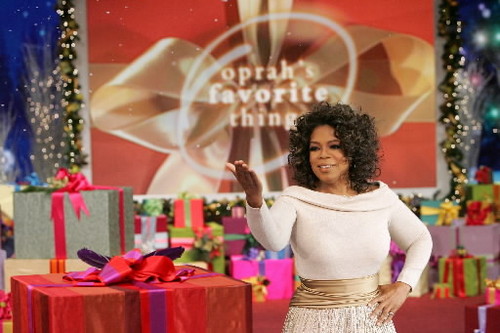
“A favorable mention from Oprah can make a big difference in awareness, reputation, and sales for products, services, causes – and even political races,” according to the Puget Sound Business Journal. For this reason, most companies are willing to put up a fight to achieve a product placement or mention on the show. However, historically, Oprah’s original talk show was next to impossible to land a product placement or mention on. In fact, several people have documented and written books about their struggles, failures and successes in this realm. Two such books are “How to Get Booked on Oprah, in O Magazine, and on Oprah’s Favorite Things” and “How to Get Booked on Oprah.”
So how will public relations and marketing plans shift with the arrival of OWN, a potential new way to reach that key consumer demographic? OWN features several shows that will be great targets for consumer products, including “Anna and Kristina’s Grocery Bag,” “Master Class,” “Cristina Ferrare’s Big Bowl of Love” and “The Gayle King Show.”
Despite the uptick in the number of potential shows on which to place a product, I wouldn’t expect the level of difficulty in getting that placement to reduce. As Oprah’s personal and professional influence continues to grow at an exponential rate, so will the amount of companies who target her network. This goes for public relations as well. Now that nearly every consumer product out there is represented by public relations professionals, it’s reasonable to expect that many will be pitching their stories to OWN’s producers. If you do decide to target OWN, we recommend ensuring you have a strong broadcast story to tell, one that is relevant to the audience of the show you are targeting.
Have any of you successfully placed a product on Oprah’s talk show? Will you be taking aim at any of the new programs on OWN? We’d love to hear your stories.