
Insights for Leaders Navigating
Visibility, Credibility, and Growth.
From media strategy to reputation management, we explore the trends shaping public perception and share the approaches that drive measurable results for growing brands.
A few weeks ago I read an article on TechCrunch surrounding a new stealth company called Hipster and how it has managed to gain significant traction without even unveiling what the company does. As a PR firm we work with a variety of companies in various stages, including stealth mode, so I was intrigued to learn how Hipster has created such a splash without revealing any information.
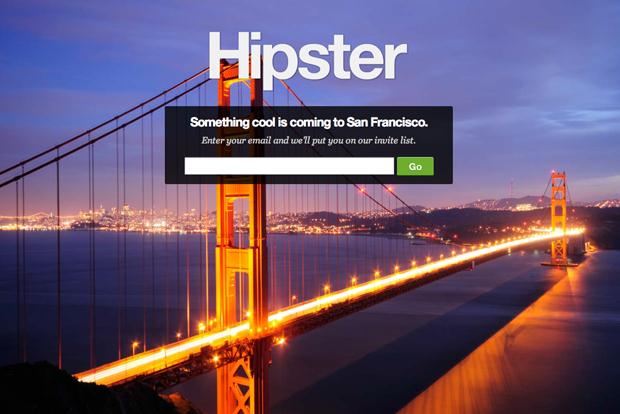
According to TechCrunch reporter Alexia Tsotsis, Hipster, which is rumored to be a location-based Q&A site akin to Yelp or Quora, has secured “more than 14,000 people [that] have already signed up with little information about the site’s purpose, the first 10K in two days after it launched its sign up landing page.” In addition, the company has received coverage in publications such as the Washington Post, Portfolio.com and Hipster Runoff, and rumors are swirling over a potential purchase from Groupon.
That’s pretty impressive for a stealth company. What makes Hipster different from the thousands of soon-to-be-launched companies in the U.S.? In an email to TechCrunch, Hipster’s CEO Doug Ludlow said, “the service has tapped into some sort of startup zeitgeist.” He adds, “The fact that despite not knowing what we do, people are talking about Hipster being something great for their city means that a lot of people really WANT something that will help them connect with their community.”
So, how did Hipster do it? They took a unique, creative approach to launching a stealth company, which has proven to be extremely effective in building buzz. Hipster tied the name of the company, which is synonymous with ‘being in the know,’ with a vague landing page to help create mystery surrounding the product. Clearly this intrigued people enough to sign up for an unknown service.
Savvy startups are thinking beyond traditional press releases and embargoed media briefings, and leveraging social media to build buzz and increase Facebook fans and Twitter followers ahead of an official launch. That in turn can help build the business (i.e. signups, feedback from beta users, website traffic, etc.).
We often counsel our clients in taking a tiered approach when it comes to launches – pre, official and post. We outline the objectives and goals for each tier and then build a strategy and timeline that map to these goals.
I admit out of sheer curiosity I signed up for Hipster. Regardless of whether I use the service or not, the buzz surrounding the company is driving people to take action. It will be interesting to see how Hipster fares, and if they can live up to expectations, once it cuts the ribbon.
There are frequent conversations about how communication has changed with the adoption of the Internet and more specifically social media. We have published several posts on our blog on topics related to these changes including Mastering the Nine Second Sound Bite and Staying Ahead of the New-Media Curve. And while it is true the landscape has changed, communicators can still gather valuable lessons from the past – prior to the digital revolution.
It is fascinating to look back at the communications that spurred broad and significant changes. Last month, in conjunction with the birthday of Dr. Martin Luther King, Jr. and a new book from speech writer, Clarence Jones, we were reminded of how galvanizing King’s 1963 “I Have a Dream” speech was for the civil rights movement. In celebration of its 50th anniversary, media also recently revisited John F. Kennedy’s momentous state of the union speech from 1961, which inspired many of that generation to consider public service.
While these were momentous speeches in the more recent history of the United States, now one can easily access and read more historical speeches and letters from all of the past U.S. presidents and learn from these seasoned communicators. One of our clients, Bookbyte, recently published a digital collection of speeches and letters from U.S. presidents.
This new eBook, Words of the Presidents: Speeches and Letters from 1776 to 2011, captures the most important, powerful and fascinating statements from the pens and podiums of the United States presidents since the country was first founded. From the unforgettable to the obscure, Words of the Presidents reflects on the historically and socially significant moments in American history including Gettysburg and Berlin to the Monroe Doctrine and the military-industrial complex.
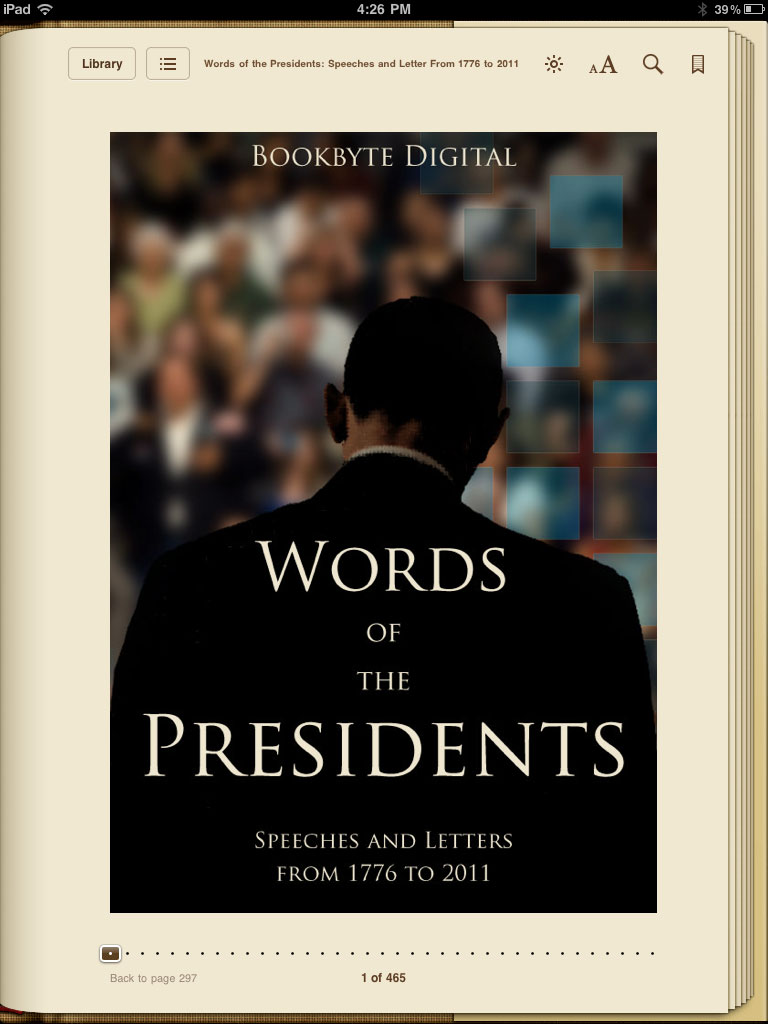
As a dynamic collection of works, new content will be added to future editions of Words of the Presidents, which will be available as free updates to readers who have previously downloaded the eBook. The eBook is now available via Apple’s iBooks, Amazon’s Kindle Store and Barnes and Noble’s Nook Store for $1.99. Although it will be available for free during President’s Day weekend, Fri., Feb. 18 through Mon., Feb. 21, 2011, via iBooks.
With the upcoming President’s Day weekend, Words of the Presidents is a great example of fusing the past with the future. Our reading and communication behaviors may have evolved with technology; however, there are still important lessons that can be found in our history.
Social media is so prevalent in our society that it’s easy to take for granted the fact that different platforms may have different audiences. For example, your followers on Twitter probably don’t know you as well personally as say your Facebook friends. Similarly, LinkedIn is traditionally the place for professional interaction rather than sharing personal information.

As marketers, knowing your audience and targeting them appropriately goes a long way in building proper consumer relationships. It is even more important when a brand or company desires to branch out and reach new target audiences.
Take for example the major league sports of baseball and hockey. Both are trying to capture the hearts and minds of younger audiences with the goal of creating fans for life. The National Hockey League (NHL) has embraced the younger generation who spend hours upon hours a day watching videos, and recognizes that video sharing sites, YouTube in particular, as one of the main platforms to connect with this demographic. The NHL regularly posts video highlights and other game clips on YouTube, and allows fans to comment, share and post videos of their own game experiences as well.
On the other extreme is Major League Baseball (MLB). Lately, the MLB has been under quite a bit of fire over their seemingly archaic policy on video sharing sites. You will not find any video highlights or fan submissions on YouTube, as MLB regularly patrols and requests the videos to be taken down. They do maintain a sparse YouTube channel, which only includes a handful of videos that are predominately team commercials. The MLB claims this is to protect their revenue stream and drive consumers to their paid services such as MLB.tv. Unfortunately, the only thing the MLB has done in this situation is frustrate the next generation of potential season ticket holders.
While the MLB is within their legal means, it would probably serve them well to pay attention to their target audience. Take Old Spice. Remember their ingenious “Old Spice Man” social media video campaign? A company that was once deemed “my father’s brand” was able to generate buzz and excitement among a younger audience simply because they connected with those consumers via a medium that was most popular among their demographic.
When it comes to social media and choosing the right platform for promoting your product or service, we would recommend first identifying where your target consumers are and examining how they engage within that network. Also, go into the entire process with an open mind. A medium you once deemed not appropriate may, in reality, be the perfect platform now.
Have you utilized any new social media platforms that turned out to be exactly the right fit for your audience? Share your experiences in the comments below.
A headline can make or break a news story. The ultimate goal is to grab a reader’s attention – the catchier and more thought provoking the better – but, it is still essential that the headline embodies the underlying theme of the story.
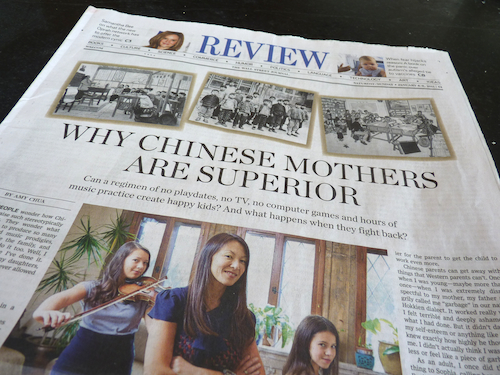
A good example of this is the headline of a recent article published in The Wall Street Journal. The headline, “Why Chinese Mothers Are Superior,” alone has caused a great deal of controversy.
The article, written by Amy Chua, is an excerpt from her new book, “Battle Hymn of the Tiger Mother.” It discusses the differences between Chinese and Western parenting styles, and suggests that Chinese mothers raise highly intelligent children because they refuse to give up and, culturally, are not concerned with their children’s self-esteem.
You can imagine the reaction from reader’s scanning that morning’s headlines. The Seattle Times wrote an article a week later reporting that the article in The Wall Street Journal had generated more than 5,000 comments, and the author had received death threats. The headline got people reading, but some felt mislead. Chua told the Seattle Times, “If she has one regret, she said, it is that the Journal excerpt, and particularly the headline, did not reflect the full arc of her story.”
Keep in mind, journalists do not usually choose their own headlines. Journalists can suggest a headline, but it is ultimately up to the copy editor to make that decision at most news organizations.
Media has the ability to shape perceptions and headlines play an important role. A good headline should be active, short, simple and relate to the underlying theme. The Wall Street Journal headline was provocative, but caused a great deal of anger. It is a fine line. With the growth in available content, headlines carry an unprecedented burden. You have seconds to capture someone’s attention and stand out from the pack. Here are some good provocative headlines to strive for:
- “Budweiser: The Beer of Climate Change Deniers?” This headline recently appeared in The Huffington Post for an article that talks about Anheuser-Busch and its platform of environmental stewardship. The clever headline is interesting, yet stays true to the theme of the article.
- “Twitter’s Suitors Talk in Billions.” This headline recently appeared on the Wall Street Journal’s website and it is easy to gauge what the article will be about without clicking through to the full text. A clever and unusual word like “suitor” used to describe a financial backer catches the reader’s eye.
- “Mac App Store: Developer Godsend or Evil Empire?” This provocative headline recently appeared in The Register. Communiqué PR coordinated an interview with the journalist on behalf of our client, the Omni Group, who was included in the article. The headline is compelling and reflected both sides of popular thought surrounding the soon-to-be-released App Store. This article was re-tweeted and reposted all over the Web, in large part because of the headline.
At Communiqué PR, when we are preparing to conduct media outreach on behalf of our clients, we first envision the headlines we would like to achieve and think through the compelling elements the journalist will need in order to craft the story and make them readily available. This is an effective visualization technique that makes sure the most compelling information rises to the top. Because in a world flooded with information, a five word headline can have a huge impact.
Securing media coverage is one of the most direct ways to measure success in PR, but placing a compelling story in the right publication is no easy feat. PR professionals must manage their clients’ goals and target a specific audience, while also identifying key elements that may make a newsworthy story.
At Communiqué PR, we have written extensively about the story arc and its essential role in crafting a compelling story. However, after developing a story arc, we as PR professionals must translate that into viable story ideas that will spark media interest. There are certain and very specific questions that the media use to judge the news value of a story. Below are some of the ones we ask as we consider developing a media pitch.
- What is the “today value”? First and foremost the story needs to have “today value.” Why should a reporter write about this today? Is it timely or relevant to their readers? No matter what you are pitching, make sure you can frame it in a way that demands urgency. For example, if you are working to secure coverage surrounding a new summer program for kids, most news agencies would not find this timely during the winter months. However, by providing figures that show the savings in planning summer activities ahead of time, you make the story relevant for today’s readers or viewers. Another option is to provide a preview to a select group of journalists. This gives them incentive to cover the story.
- Why do I care? This is a question that my former news director would constantly ask journalists during meetings. As PR professionals it is essential we answer the very same question. Journalists are looking for stories that impact the viewer. It is critical that you can identify why this journalist should care and who the story impacts. For example, is the new product saving customers or companies money? Is it creating more jobs? Is it disruptive to an established industry? Why should a journalist develop this story?
- What elements can you offer? Providing journalists with the essential elements to create a meaningful story is key. Anticipate this question and have the elements lined up. Interviews are one of the most important elements to a story and providing a compelling spokesperson or a third-party interview is beneficial. Also, offer additional visual opportunities. Providing photos, b-roll, and facts or figures that can be displayed on graphics can all help illustrate for the journalist what they have to work with.
- How is this new? Journalists want a story that is new, innovative or different. Not only is this part of their fiber as journalists, a fresh new story can help drive eyes to their publication’s website and drive buzz on social media platforms such as Twitter. A good story has a new angle and it is helpful if you can create that for the journalist.
A good story is timely, impacts a large audience, contains compelling sound bites or quotes, and resonates with viewers or readers. As you work to develop a pitch, it can help to put yourself in the shoes of the journalist. If you have the right elements and can provide compelling answers to these questions you are more likely to spark interest and develop a meaningful relationship with the journalist. Not only can this help to secure coverage in target publications, it can set your clients’ goals in motion.
While America waited for the Green Bay Packers and Pittsburgh Steelers to kick off on Sunday afternoon for Super Bowl XLV, millions of viewers had already previewed some of the ads that were set to air during the game. Each year, the hype and buzz of the commercials shown during the Super Bowl often garner just as much media attention as the two football teams who headline the premier sporting event. And Super Bowl XLV was no exception.
What has changed in recent years, however, is the advertiser’s strategy in leveraging social media to drive greater awareness and hype of their advertisements before, during and after the game. Take for example Volkswagen’s ‘Darth Vader’ commercial, which the company and its agency openly leaked on YouTube on February 2, 2011 generating more than eight million hits before the commercial aired on national TV Sunday during the Super Bowl.
USA Today Business Reporter Laura Petrecca commented on Monday’s edition of The Today Show that placing this ad on YouTube “was a stroke of advertising genius.” By placing this video on YouTube in advance, Volkswagen created the initial buzz that prompted people at Super Bowl parties to say, “Hey, hey, don’t talk now, watch this ad because it’s getting a lot of buzz, and you’re going to pay attention.”
Still, some companies question if they will see a strong return on their investment of a reported $3 million for a :30 television ad to air during the Super Bowl. Groupon was one of this year’s new entrants to the Super Bowl advertising mix who recently blogged about its internal debate if television ads are worth the money. Groupon’s blogger Andrew stated in his post on Sun., Feb. 6 that the company has depended mostly on word-of-mouth marketing and paid search advertising, but because many people still hadn’t heard of Groupon, they decided to “invade the rest of the world with a proper Super Bowl commercial.”
Unfortunately, Groupon’s ‘spoof’ commercials, which mocked the company and celebrity-endorsed public service announcements, were considered to be in poor taste among many Super Bowl viewers and the backlash has been quickly spreading through social media networking sites and blogs all over the Web. It is uncertain what impact the public’s disdain will have on the company in the long-term. However, Groupon has acted quickly on a communications strategy utilizing social media to respond to the negative backlash and reemphasize the campaign’s focus of “supporting their partnerships with many hallmark community organizations, for whom we’re raising money at SaveTheMoney.org.”
Even if you don’t have $3 million to spend on a Super Bowl ad, what can you take away from these examples?
It is important to remember that social media is another critical tool in the PR toolbox for companies, a subject we have previously discussed in our blog. Social media has forever changed the way that information is being accessed, shared and processed. Whether a campaign is designed to launch as a television commercial, a print advertisement or as a true social media campaign, it has the capability of spreading like wildfire either positively or negatively to millions of people in a matter of minutes, if not seconds.
As PR professionals, we are always looking at how these mediums can help amplify a client’s message to journalist and consumers. Regardless of the channel, the most important rule is to be open and transparent with your audiences when it comes to starting the discussion or influencing the debate, much like what Volkswagen and Groupon have done with their recent Super Bowl ad campaigns.