Insights for Leaders Navigating
Visibility, Credibility, and Growth.
From media strategy to reputation management, we explore the trends shaping public perception and share the approaches that drive measurable results for growing brands.
Earlier this month, I participated in the PR+MKTG Camp Seattle organized by Dan Greenfield. The event was well attended with a wonderful mix of marketing and PR leaders from the Seattle area, including Rob Brooks, PEMCO; Brad Nelson, Starbucks; Amy Bohutinsky, Zillow; and Greg Shaw, Bill & Melinda Gates Foundation, as well as many others.
The PR+MKTG Camp format encourages interactive discussions. Attendees were divided into four groups called cabins. The cabins met to discuss a particular topic, led by two facilitators. After the breakout discussions, the cabins all came together and the facilitators shared the key takeaways from their specific cabin.
The discussions during the breaks were as interesting and informative as the official sessions. Below is a recap of the key takeaways from the sessions and discussions I attended.
Key takeaways:
- Social media is a tool that should be tied to specific objectives and integrated with other communication activities. Similar to a company Web site, engaging in social media is quickly becoming an expected marketing tool and may be used to serve multiple objectives within an organization. To that end, ownership of social media within an organization is not uniform. However, most attendees seemed to agree – success executing social media requires C-level support.
- Internal communication is critical. As individuals are engaging in social media, and the lines between personal and professional are increasingly blurred, companies are wise to ensure everyone within an organization understands the company’s business and communication objectives. By sharing information broadly within an organization, companies such as Zillow, are empowering their employees to become effective, informal spokespersons.
- Communicators are still hungry for case studies that clearly articulate how social media demonstrated measureable results and contributed to ROI. Many questions from attendees centered on what tools are best for measuring social media activities. While there are a growing number of tools focused on measuring everything from engagement, influence and reach, consensus proved there is no silver bullet. The facilitators all agreed it is important to first determine what you want to measure then identify the right tool to track that metric.
While the information was not revolutionary, it was valuable to hear from other PR and marketing leaders on how they are addressing the common challenges of integrating social media into an organization’s strategic activities.
For additional perspective from other PR+MKTG Camp participants check out the event blog.
I was recently watching TV and stumbled across a CNBC segment called, “Business Model: Inside the Sports Illustrated Swimsuit issue.” Given the state of the publishing world, I was immediately intrigued. If you have a minute and are interested in the future of magazine publishing, I would encourage you to watch the segment. You can find it online here.
In the event you don’t have time to watch the full segment, which is 45 minutes, consider the following:
- The Sports Illustrated Swimsuit Issue is huge business for the magazine and its publisher. It is one of the most successful franchises in existence today.
- The magazine sells more than a million copies on the newsstand every year. The swimsuit issue costs $2 more than the regular issue and has a much longer shelf life from February through May because it contains features not news articles.
- Throughout its history, the franchise has made more than $1 billion for its parent company, Time Inc.
- As a model or product designer, if you are featured in the magazine you’re very likely to be “catapulted to success.” Placement in the magazine is a “type of advertising that money cannot buy.”
The swimsuit focused issue of the magazine came into existence in the winter of 1964. It was seen as way to boost readership in the winter months between football and baseball. They were looking for a way to generate some additional revenue and in the quest to drive readership, came up with the idea of the swimsuit edition. In 1997, the swimsuit edition became a stand-alone issue just featuring models.
Integrated marketing is now a big part of the issue and new revenue streams for the magazine. According to CNBC, “In 2010, integrated marketing has meant a 15 percent increase in ad revenue across the franchise.” Here are some of the campaigns and licensing agreements that are generating additional revenue for Time Inc.
- Special campaigns like “Direct Daniella.com” – This was a marketing campaign that Taco Bell and Sports Illustrated (SI) ran in 2008.
- There are special SI videos available.
- There is an iPhone application for sale.
- They are engaging consumer promotions, such as Miller Lite’s contest where consumers can vote for their favorite model of all time; or campaigns that offer consumers the chance to party with the models in Las Vegas.
Today, according to an executive with Time Inc., “Sixty percent of the revenue comes from print; 30 percent comes from Web, video and mobile technology; and 10 percent comes from event or experiential marketing.”
Clearly, other magazines and content providers can learn from the success of Sports Illustrated with its special issue.
For those of you who know me, I am sure you can appreciate my excitement when I learned there was an opportunity to attend a breakfast talk with the new Seattle Seahawks Coach, Pete Carroll. As a college football fan I have long been enamored with the strength of the USC football program, as well as Carroll’s impressive use of social media, which I blogged about last fall (well before I knew he was coming to Seattle).
So it was with a fair amount of enthusiasm that I headed to the Fairmont Hotel to hear Carroll’s advice to Seattle’s business community. Carroll is a very good communicator – he engaged the audience right from the get-go by using his humor, asking us questions and sharing his perspective in a straightforward approachable manner. He was interviewed by the Puget Sound Business Journal’s publisher Emory Thomas and then took questions from the audience.
Here is my take on his comments.
- Have a philosophy and make sure everyone understands it. For instance, your philosophy might be to do everything you do better than the competition. If so, then everyone on your team (or in your organization) needs to understand it. It needs to be instilled in your culture and ingrained in your DNA.
- Drive is essential. As Carroll looks for the right athletes and coaches on his team, he wants highly motivated, driven types of people. He spoke about recruiting players who “want to be something special.” He explained this is often so innate that they almost have a “chip on their shoulder.” Athletic prowess (height/strength) is important, but so is how an athlete uses those gifts.
- Help me help you. As a leader, Carroll wants his people to know he is there to help them achieve their dreams and maximize their potential. To help his players stay grounded, Carroll also believes it is important to “be a beacon” and be an example. (As an aside Carroll also shared that the Seahawks now have their own yoga coach).
- Act as a team. One person cannot carry the entire load. Great quarterbacking requires effort and support from many people – not one individual.
- Focus on what you can control. Don’t give your power away by focusing on things you have no control over. Stay on your side of the field and take your game to the competition – make them react to you. If you’re thinking about your opponent’s backhand, you are not going to achieve your maximum potential in that moment.
I found his presentation inspiring and extremely relevant to the business world and am eager to read his forthcoming book “Win Forever: Live, Work and Play Like a Champion.” I am going to see if I can get an advance copy to review it on our Web site. Stay tuned.
Blogs touch tens of millions of people in the U.S. and this number continues to grow daily. In fact, according to an eMarketer report from 2009, approximately 96.6 million U.S. Internet users read a blog at least once a month, representing 48.5 percent of the Internet population. The same report predicts by 2013, this number will grow to 128.2 million, or 58 percent of all U.S. users.
Additionally, the frequency of blog updates is growing at a rapid pace. By 2013, nearly 37.6 percent of U.S. Internet users who have a blog are expected to update their blogs at least monthly.
Clearly, blogs are here to stay and will continue to be a great tool to establish thought leadership, provide relevant news, and highlight reviews of products and services. If you currently have a blog, it’s important to engage with your audience to build a strong following in order to be perceived as an expert and leader in your field.
However, if you are a novice blogger or have not yet developed a blog for your business, it will become increasingly important to leverage this medium in order to emerge as an influencer. If you’re still weary about the impact of corporate blogs and engaging with consumers online, consider this:
- Razor Fish survey of digitally connected customers found that 97 percent say their online experience influenced their purchasing decisions.
Once you’ve created a blog, you should think about how you can garner conversations with your key audience. In other words, how are you going to encourage your followers to comment and provide feedback to your content?
As many you bloggers may know, it is often difficult to get people to comment on each blog post. Here are a few tips on how to spark conversations and reach your key audience:
- Choose compelling topics. It’s no surprise the more interesting your topic, the more readers and conversations you’ll garner. Choose topics that are relevant to your audience and provides value. We recently wrote about Help A Reporter Out (HARO) on the Communiqué PR blog. This blog post garnered significant interest from readers because HARO is highly relevant to our audiences.
Another blogger who is good at driving conversation through blog comments is Angie Cox. She chooses topics such as “Fashion at the 2010 Academy Awards,” “The Power in your Wardrobe,” and “How to Wear Denim Shirts,” which have a wide appeal to people interested in fashion; and because of this, she drives lots of conversation on her site.
- Ask your readers questions and solicit their feedback. By asking questions, you are more likely to spark up meaningful conversations. Some bloggers suggest including a question in the heading. In general, you should make sure your heading is enticing and encourages people to visit your blog. While your blog may have an obvious comment section, sometimes people just need the extra encouragement.
- Respond to comments in a timely manner and interact with your readers. When a reader leaves a comment, it is important to reply back. In December 2009, Dr. Elaine Young of Champlain College commented on our blog post titled “Teaching the Facebook Generation.” Melissa, the author of the blog post, responded quickly to Elaine’s comment and began relationship building with her.
- Make it easy to leave a comment. If your comment section is hard to find or difficult to navigate, your reader is less likely to post a comment.
We hope you find these four tips helpful. We welcome any additional tips or insight on this topic. We are always looking to build followers and meaningful relationships with our key audience.
As businesses and organizations realize the power of strategic public relations, they are increasingly seeking the help of a PR agency or contractor. We thought it would be good to share our perspective on what to look for when selecting a PR partner.
Below, we have compiled a list of things to keep in mind when going through the process of selecting a firm. Consider the following:
1) Determine your objectives and clearly outline them to prospective PR partners. It’s important to be well-grounded and clear about your business and communication objectives, goals, target audience, timeline, budget and how you will measure success. With the proper information, prospective agencies will be able to come up with meaningful proposals that align with your expectations for your consideration.
2) Request a scope of work that is realistic and within your budget. To ensure that a project yields the desired results, it’s important to disclose your PR budget whenever possible. This will allow your potential PR partner to develop a plan that maps to your organization’s communication goals and resources.
3) People and chemistry matter. Get to know the agency and team that will be working with you. Take the time to meet or talk with the people who will work on your account. This will enable you to get a better feel for the team members’ personalities, their work ethic and if they will be a good match. Robert Dilenschneider, author of “The AMA Handbook of Public Relations,” explains, “After all, you are likely to be working with this team for a long time, and it will be more fun, not to mention effective, if you like and respect one another.”
4) Check references. Don’t be afraid to ask for agency references and actually call them. Heather Logrippo, of Expose Yourself Public Relations in Boston shares her experience, “PR agencies are sometimes referred to as ‘slick salespeople’ — the results don’t match the promises made when firms are trying to win the business. You can tell the true value of a company and the results they drive by speaking with their current clients.”
5) Share the outcome. Let the PR firm know in a timely manner whether you are hiring them or not. Agencies typically put a lot of unbillable time and effort into developing a PR proposal and presentation specific to a prospect’s unique goals, market opportunity and competitive landscape. Be respectful and take the time to inform the agencies competing for your business of your final decision. Even if you are not hiring a particular firm, the people who put time and energy into a response deserve the courtesy of knowing the outcome — and maybe even the rationale for it.
Please check out our book “Strategic Public Relations: 10 Principles to Harness the Power of PR” for more information about how to select your PR team. Jennifer Gehrt and Colleen Moffitt have devoted an entire chapter to the topic.
Clearly it takes time to interview agencies and solicit proposals, but selecting the right partner is likely to be critical to your company’s ongoing success.
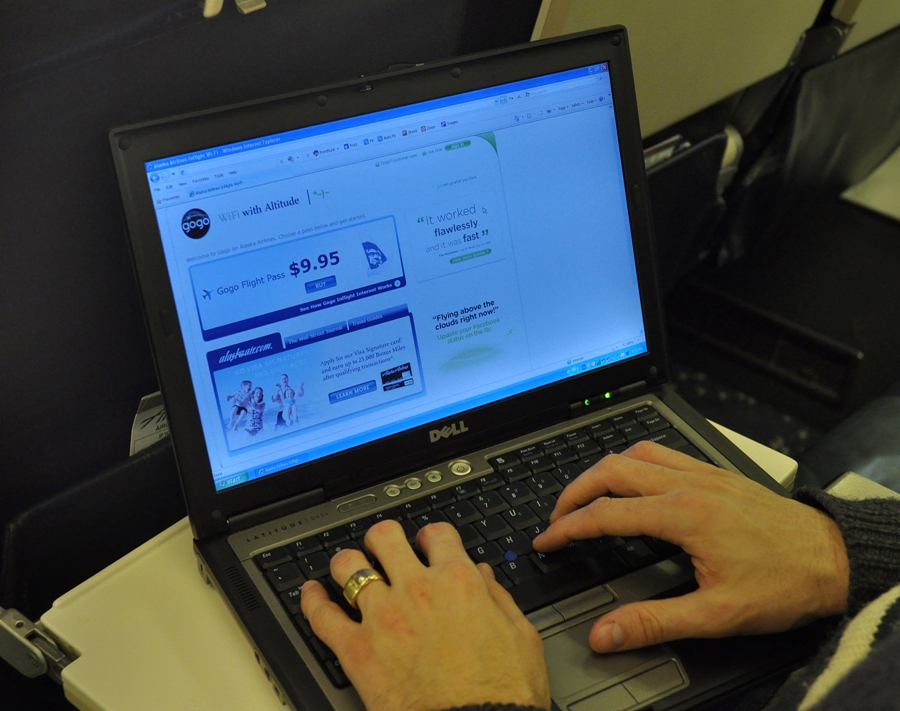
I admit it – I can’t stand the thought of not being connected. Whether it’s e-mail, the Internet or checking social networking platforms, such as Facebook or Twitter, I find it hard to be unplugged. The growing popularity of smartphone devices coupled with Wi-Fi hotspots and mobile WiMAX is only proliferating our “always-connected” culture. So it’s no surprise that airlines are looking toward inflight Wi-Fi offerings to help passengers stay connected while they travel.
Over the past couple of years, several airlines have begun offering inflight Wi-Fi services as a way to build customer loyalty and create additional revenue opportunities. Communiqué PR has been working closely with Alaska Airlines to help build buzz around its inflight Internet initiative. Last spring, we helped the airline launch a trial of its inflight Wi-Fi service which garnered some excellent results with local and national media as well as technology and aviation vertical publications.
On Wed., Feb. 24 the airline announced it would partner with Aircell to offer its Gogo Inflight Internet service on all of Alaska’s aircraft. With Gogo Inflight Internet, Alaska’s passengers will be able to browse the Web; access online music, games, podcasts and webcasts; send and receive e-mail; and connect to virtual private networks (VPN) while flying.
In order to drive awareness around this news, we recommended developing press materials with succinct messages and conducting targeted outreach to national, travel, aviation and technology media and bloggers as well as local media in Alaska’s key markets along the West Coast.
Communiqué partnered with Alaska Airlines and Aircell to conduct joint outreach to national, travel, aviation and technology media and bloggers. Specifically, we were responsible for reaching out to technology media and bloggers to help spark interest in the news. Overall, the launch was a huge success with coverage from Associated Press (which garnered more than 60 picks ups in outlets such as USA Today and MSNBC), Aviation Week, Boarding Area, PC World and Anchorage Daily News to name a few.
As a result of our outreach, we were able to secure coverage in Puget Sound Business Journal, Wireless Week, FierceBroadband Wireless and Informationweek.
The news was also widely tweeted about on Twitter by key media and analysts who cover Alaska Airlines as well as the airlines’ customers.