
Insights for Leaders Navigating
Visibility, Credibility, and Growth.
From media strategy to reputation management, we explore the trends shaping public perception and share the approaches that drive measurable results for growing brands.
Recently, a French hacker known as the “Hacker Croll” broke into Twitter CEO Evan William’s e-mail account and uncovered confidential documents containing information about Twitter’s business plans as well as user accounts and passwords. Since then, a controversy has unfolded over Michael Arrington’s announcement that he would publish some of the documents he received including an e-mail about a pitch for a Twitter-related reality TV show on TechCrunch, a Weblog dedicated to profiling and reviewing new Internet products and companies.

On July 16, Arrington made good on his promise and published an article by Eric Schonfeld entitled, “Twitter’s Internal Strategy Laid Bare: To be “The Pulse of the Planet.” While many criticize Arrington’s decision to publish this confidential information, some according to Ian Paul with PC World speculate, “this entire affair may have been a PR stunt concocted by TechCrunch and Twitter to raise the microblog’s brand.”
In an interview with VentureBeat, Arrington reveals TechCrunch engaged in a dialogue with its readers to decide which documents to publish and corresponded with Twitter to give them a heads up. However, he notes approximately 80 percent of his readers disagreed with his decision.
It is no surprise that conversations surrounding this controversy have spread like wildfire in the blogosphere:
“I think that this helps Twitter get to the next level. Why? Because it brings us deep inside Twitter where we see what they are thinking. It humanizes Twitter. It opens up Twitter in a way that Facebook simply won’t be able to respond to.” – Robert Scoble
“It shows them [Twitter] to be very deliberate and thoughtful about a lot of things, that’s for sure.” – Bill Kinney
“This came up in our discussion, this might actually help Twitter. This is the first time everyone’s pretty much siding with them and giving Twitter sympathy.” – David Spinks
Whether or not this was a pre-meditated act to gain publicity for Twitter, journalists are discussing the ethical issues behind this event. While some believe it was unethical for TechCrunch to publish confidential information, others believe readers deserve this kind of access.
What do you think? Was it wrong for TechCrunch to publish this information? If this was a PR stunt, do you think it was successful or deceitful? We would love to hear your thoughts.
New York City Mayor Michael Bloomberg recently unveiled a plan to help get the media industry back on its feet. Known for being the media capital of the world, the city’s strategy includes eight plans that focus on innovation, research, retraining and new technology.

According to an article in Ad Age, the strategy includes the following:
Forming a New York City Media Lab for media companies, universities and others to collaborate on research, share findings and provide a physical center for networking, lectures and workshops.
Issuing tax-exempt bonds to help companies buy new manufacturing, research or production facilities; retrofit existing buildings for high-tech servers; or make big information technology purchases.
Starting a Media and Tech Fellowship program meant to encourage start-ups and innovation. The program manager, whom the city plans to choose by October, will pick about 20 recipients a year to receive training, mentoring and support services.
Helping start-ups and small tech firms do business with the city. The plan calls for encouraging companies and start-ups to team up on bids for city IT contracts, hosting forums on the city’s procurement process and connecting big contractors with small potential sub-contractors.
Hosting an annual software competition called NYC Big Apps seeking digital applications that use city data.
Starting a center for media freelancers in lower Manhattan. The city plans to outfit a 5,000-square-foot space with work stations and services such as contract editing, news feeds and conference space. The center will provide space for 50 freelancers as well as 1,850 part-time and drop-in workers.
Creating a training program to help people find opportunities in new media. The program, called JumpStart New Media, will include a training “boot camp” and 10-week unpaid “apprenticeships” with new media companies. The first class will include about 50 participants.
Recruiting across Asia, the Middle East, Silicon Valley and greater Boston for businesses to locate in New York.
It’s encouraging to see such an aggressive plan from the city of New York. The economic climate will surely pass, but the shifting media landscape will no doubt continue. While it’s too early to tell if this plan will give the industry the jump start it needs, I believe out-of-the-box strategies such as these are a positive move in order to find a formula that works for this evolving industry.
Transparency is an issue that continues to arise as social mediums and online communications gain momentum. Social media provides companies with a great opportunity to represent their brands and interact and build relationships with key influencers and consumers. However, if a company fails to be completely transparent in its online communications, the result can be devastating to its reputation and tarnish key relationships.
A great example of how crucial transparency can be to an organization and a brand can be found in a recent incident involving De’Longhi, a leading producer of small kitchen and comfort appliances.
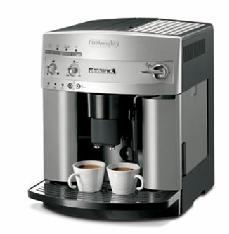
A communications manager for De’Longhi posted a positive review of two of the company’s high-end espresso machines on Amazon.com. Looking for a new espresso maker, Blogger Russ Taylor conducted research online and while doing so, realized that the Amazon.com review was actually written by an employee in the PR department of De’Longhi. Publications including Consumerist and the Wall Street Journal‘s The Wallet blog wrote articles highlighting the inappropriateness of the review and had negative ramifications for both De’Longhi and Amazon.
Being transparent in all forms of communications, whether it’s a blog post, product review, or Twitter account, is paramount to the success of an organization’s communications efforts. Transparency enables a company or a brand to lay the foundation to build thoughtful and engaging relationships with their customers. It also allows companies to instill trust and loyalty with key audiences.
As a rule of thumb, company and PR representatives should do the following:
Provide full and clear disclosure of who you are and which company you are representing at all times.
Never fake a positive review of your company’s product or service. Inevitably, it will come back to you and create unnecessary negative publicity.
If you’re posting or having a discussion about a company, product or service and was paid or hired to do so, inform your audience of the situation to avoid backlash.
As print and digital communications continues to converge with social media platforms, it’s important for companies and PR professionals to abide by ethical business practices and identify the company they are representing to avoid situations such as the one with De’Longhi.
Yesterday, our client Digonex, a provider of real-time, automated, dynamic pricing technology was featured on National Public Radio’s (NPR) Morning Edition in a story on the impact dynamic pricing technology can have on the digital music industry. The piece coincides Digonex’s partnership announcement with The Orchard, an entertainment solutions provider focused on building and monetizing audiences for its clients.

Reporter Laura Sydell reports, “What Digonex is doing is what economists like University of Southern California professor Joseph Nunes call “dynamic pricing. Nunes says economists and retailers have been trying to nail this for years.” “We know on hot days people drink more, so if a supermarket could rush out and change the price of their soda very quickly, they would,” says Nunes.”
Unlike variable pricing models, meaning there are more than one set of prices available for a service or product which digital music retailers such as Apple are using, dynamic pricing models allow pricing to adjust up or down based upon consumer demand. This enables music labels, retailers and other organizations to offer prices that are market-driven, and consumer and seller friendly. Digonex believes that dynamic pricing models will reduce the cost of items such as albums and singles which will increase the value for consumers, and empower them to explore and discover new products they might not have otherwise.
While sophisticated pricing models are still a relatively new concept to the market, the impact that dynamic pricing can have on selling and purchasing behaviors is significant and can provide a win-win solution for retailers and consumers. Dynamic pricing is already becoming prevalent in many industries including e-commerce, ticketing, and digital media.
A recent article on PR and start-ups in the Silicon Valley by Claire Cain Miller of the New York Times, reminds PR professionals that the media landscape continues to evolve and the role PR plays is crucial to helping clients navigate these new waters.
Cain Miller recounts a recent brainstorming session she attended with publicist Brooke Hammerling with Brew Media Relations and her client, entrepreneur Erin McKean, to discuss launch plans for a new Web site called Wordnik, an online dictionary. Cain Miller describes the setting of the business meeting as investors and key stakeholders of the new Web site discuss PR plans surrounding the launch:
- Planning a press tour for the launch, Hammerling suggests briefing influential technology bloggers from sites including TechCrunch.com, All Things Digital and GigaOM.com. However, Roger McNamee, a tech investor who is backing Wordnik, disagrees with Brook’s plans arguing that bloggers are “cynical”.
- Given Roger’s contempt towards bloggers they decide Hammerling would “whisper in the ears” of Silicon Valley’s who’s who, in hopes they will pass the word along to their colleagues and other influentials in the technology space via social mediums like Twitter.”
While Wordnik sparked attention with reporters from publications such as USA Today and The Wall Street Journal, the company missed out on a key opportunity to build relationships with influential bloggers who could have played an important role in promoting the new start-up. Technology blogs like TechCrunch, All Things Digital and GigaOM often have very large readerships, break important technology news and highlight up and coming companies that are influencing emerging industry trends.
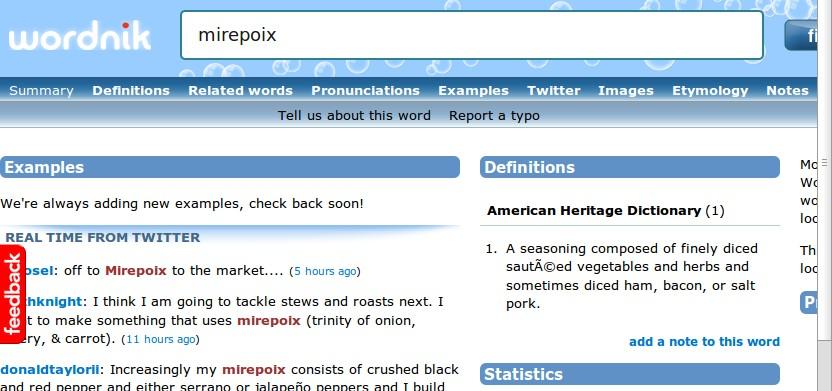
The launch of Wordnik clearly illustrates the importance of social media; but it also illustrates the pivotal role PR professionals can play in executing a successful PR campaign. As you or your company work to develop a strategic PR campaign consider the following:
Clearly outline your objectives. It is important to have a clear understanding of your company’s (or client’s) business objectives and align your PR strategies with these goals. Strategically aligning PR strategies with business objectives can give a company the biggest bang for its buck and significantly impact a company’s business including expanding its customer base, increasing revenue and enhancing the perceived value of the company.
Educate your clients and provide strategic counsel. In the case of Wordnik, the launch may have been more successful had Hammerling educated McNamee and the executive team on why she believed it would be important to reach out to influential tech bloggers for the launch. If there’s disagreement about a specific strategy in the PR plan, it’s important to understand your client’s interests and rationale. As Bruce Patton, cofounder of the Harvard Negotiation Project and coauthor of the best-selling book Getting to Yes articulated in the book, Strategic Public Relations, “…share what is valid about that person’s perspective and where and why you differ. In general don’t just explain your solution, but also how you got there”
Don’t ignore social media and other emerging technologies. Wordnik experienced moderate success with social media. On the evening that it went live, approximately 1.43 million people saw tweets about the launch and in the week following the launch more than 40,000 people visited the Web site. While traditional PR tools such as press releases, pitches and exclusives can be effective vehicles to disseminate news, it’s important to leverage emerging mediums such as social networks and blogs.
To learn more about developing strategic PR campaigns, send us an e-mail at [email protected].
On Monday, July 6, Dave Carroll, a musician from the band Maxwell Bros, posted a YouTube music video complaining about the poor customer service he received from United Airlines regarding a broken Taylor guitar. The guitar (worth about $3,500) was damaged on a flight to Nebraska more than a year ago. The video immediately generated broad awareness and after only five days, with more than 2.5 million views, created a craze on Twitter and throughout the blogosphere. It also caught the attention of traditional media including CNN, ABC News and Los Angeles Times. The airline has since responded to Carroll’s complaint by contacting him personally, donating $3,500 to a charity of his choice and incorporating his catchy video into their customer service training program.

While United Airlines is focused on learning from this experience, the potential for substantial damage to its reputation and brand is clear. For those executives who have been skeptical of social media and its power, the “United Breaks Guitars” video provides an illustrative example. Social media is changing how consumers and brands interact and companies need to be ready to respond.
The rising popularity of social media already has many companies reevaluating their PR strategies to include this new medium. Established brands need to prepare for the potential shot across the bow that may damage their valuable reputation.
“It’s clear that the communications landscape is changing. As more and more organizations rely on social mediums, such as Twitter, Facebook and YouTube as a business tool, it’s critical for companies to incorporate strategies to manage their reputation vis-‡-vis these social networking platforms,” said Jack Creighton, strategic director at Madrona Venture Group and former CEO of UAL Corporation (United Airlines). “Policy-setting, strategic planning and education around the adoption and use of social media is important in managing reputational risk and should be integrated with established, more traditional forms of communication.”
So what can we learn from United Airlines’ crisis?
Evaluate your brand’s need for a response. In the case of Carroll, the large magnitude of views and comments was enough to elicit a public statement and response from United. It is important to gauge the credibility of the complaint and determine whether a response is warranted. Not all complaints warrant a response. Companies should develop or update their processes regarding customer complaints with consideration for this new medium.
Determine what changes, if any, need to be made internally. United Airlines acknowledged Carroll’s poor customer service experience and released a statement saying, “His video is excellent, and we plan to use it internally as a unique learning and training opportunity to ensure that all our customers receive better service….This should have been fixed much sooner.” By doing this, United Airlines demonstrated its honesty about the situation and willingness to improve. The company also articulated that the experience would be used to change its customer service processes. It is important to communicate what changes are taking place. Without letting the public know what action is being taken, the perception may be that the complaint has not been heard or that United did not care.
Remain positive, even under attack. United first publicly responded to Carroll by tweeting, “This has struck a chord w/ us and we’ve contacted him (Carroll) directly to make it right.” United never deflected blame. Instead, they set a positive tone and mirrored the level of humor conveyed in Carroll’s video.
It is critical to be clear in the messages you want customers to hear. In the case of a false accusation, it is important to make a clear statement and determine any underlying interests. As Kathleen Fearn-Banks notes in her book, Crisis Communications, “In a crisis, the public perceives truth to be whatever public opinion says. An organization in crisis must prove to its publics that the prevailing negative opinion is not factual.” By sending a clear, positive message brands will be able to better positioned to recover from a social media attack.
Respond by utilizing the social mediums that have been following the crisis. This is an area where United could have improved. United publicized its response through a number of tweets on its Twitter account (@UnitedAirlines) and an interview with the Los Angeles Times but the company did not post a YouTube video response. Ultimately, the United response did not garner significant attention.
In a recent Computerworld article, Bart Perkins writes, “Dave Carroll knows how to take full advantage of the power of social media. United doesn’t, and the cost is a PR nightmare.” Bart goes on to suggest United would have been wise to have created their own YouTube video response.
While it is likely this customer service disaster will pass for United Airlines, it is certain that more companies will face similar situations as more consumers leverage social media to voice complaints and perceived injustices. Companies need to develop PR strategies to prepare for these challenging situations so they can avoid significant damage to their reputation.