
Insights for Leaders Navigating
Visibility, Credibility, and Growth.
From media strategy to reputation management, we explore the trends shaping public perception and share the approaches that drive measurable results for growing brands.

Last month, Spaceflight Industries, a next-generation space company dedicated to democratizing access to space and one of our clients at Communiqué PR, announced it secured $18 million of Series B financing led by technology growth investor Mithril Capital Management, in a round that is expected to raise up to $25 million. This was Mithril’s first investment in a commercial space company and in addition to leading the round, Mithril reinforced its commitment to Spaceflight’s mission by placing its co-founder and managing general partner, Ajay Royan, on the company’s board of directors.
This round of financing, which was joined by previous investors in Spaceflight Industries, including RRE Venture Capital, Vulcan Capital and Razor’s Edge Ventures, will help the company execute on strategic initiatives, including the acquisition of OpenWhere, Inc., a Virginia-based company that will further enhance and execute on the geospatial data platform for satellite imagery promised by BlackSky, a business line under the Spaceflight umbrella. Initially launched in 2015, BlackSky plans to deploy a constellation of 60 imaging satellites to orbit the earth and provide near real-time images of the planet to customers at a price unmatched in the industry.
Communiqué PR understood that this funding and acquisition news was significant not only to Spaceflight Industries, but also to the broader commercial space and geospatial industry, as well as to business and investment press. As such, we believed there would be strong interest in the news and developed a strategy to inform the industry and drive awareness of Spaceflight’s accomplishments toward its goal of democratizing access to space.
Our approach involved developing a targeted press list focused on journalists covering business deals, investments and the commercial space and geospatial industries. We also worked closely with Spaceflight Industries to finalize a press release and with Mithril’s PR manager to capitalize on the firm’s relationships with select media. Finally, we offered the news under embargo to targeted media in order to ensure accuracy and drive coverage to hit around the official distribution date. Speaking of which, we scheduled the news to cross the wire on the first day of the NewSpace conference, an industry event that was being held for the first time in Seattle on June 21, to drive additional buzz about the company with attendees, including press.
We are pleased to say that we have secured 28 articles around the news thus far, with additional articles about Spaceflight Industries and its mission still pending. Here are some highlights of the coverage secured thus far:
- TechCrunch—Spaceflight Industries just raised $25 million, led by Mithril, 6/21/16
- Fortune—Term Sheet — Tuesday, June 21, 6/21/16
- VC News Daily—Spaceflight Industries Lands $18M, 6/21/16
- The Seattle Times—Spaceflight Industries raises $18M to launch satellites, 6/21/16
- GeekWire—Spaceflight raises $18 million and acquires OpenWhere to build satellite data portal, 6/21/16
- Xconomy—Spaceflight Industries Raises $18M, Acquires OpenWhere, 6/21/16
- Puget Sound Business Journal—Spaceflight Industries gets $18M in Series B funding, plans Series C, 6/21/16
- Via Satellite—Spaceflight Industries Closes Financing Round, Acquires OpenWhere, 6/21/16
- PE Hub Network—Spaceflight Industries raises $18 mln, 6/21/16
- Fin SMES—Space Company Spaceflight Industries Secures $18M in Series B Financing, 6/21/16
- Parabolic Arc—Spaceflight Industries Closes $25 Million Financing Round, 6/21/16
- Space Ref—Spaceflight Industries Closes $25 Million Financing Round Led by Mithril, 6/21/16
- Northwest Innovation—Spaceflight Industries Secures $18M, 6/21/16
- Satellite Finance—Spaceflight buys analytics firm OpenWhere to expedite imagery business, 6/21/16
- Potomac Tech Wire Newsletter—Spaceflight Industries Acquires Herndon-Based OpenWhere, 6/21/16 (behind firewall)
- New Space Watch—Spaceflight Industries Closes $25 Million Financing Round Led by Mithril, 6/21/16 (behind firewall)
- SpaceNews—Spaceflight Industries raises $18 million to acquire software company, 6/22/16
- Space Daily—Spaceflight Industries closes $25M financing round led by Mithril, 6/24/16
- GovConWire—Spaceflight Industries Buys OpenWhere in Satellite Imaging Market Push, 6/24/16
In addition to Spaceflight Industries’ funding news, the company’s launch business, Spaceflight Services, announced a successful launch later the same day. During a party hosted by Spaceflight Industries for NewSpace conference attendees, Spaceflight displayed live-stream video of the launch of an Indian Polar Satellite Launch Vehicle (PSLV) carrying a payload brokered by Spaceflight comprised of 12 Dove satellites owned by Planet. Once the launch was confirmed a success, we hit send and shared the news with a tailored list of target press and garnered nine articles in key industry publications including SpaceNews, Spaceflight Now, Via Satellite and SatNews, among others.
Communiqué PR congratulates Spaceflight Industries for these milestones and we look forward to supporting and celebrating the company’s continued growth and innovation. To find out more about how Spaceflight is shaking up the space industry, please visit www.spaceflight.com.
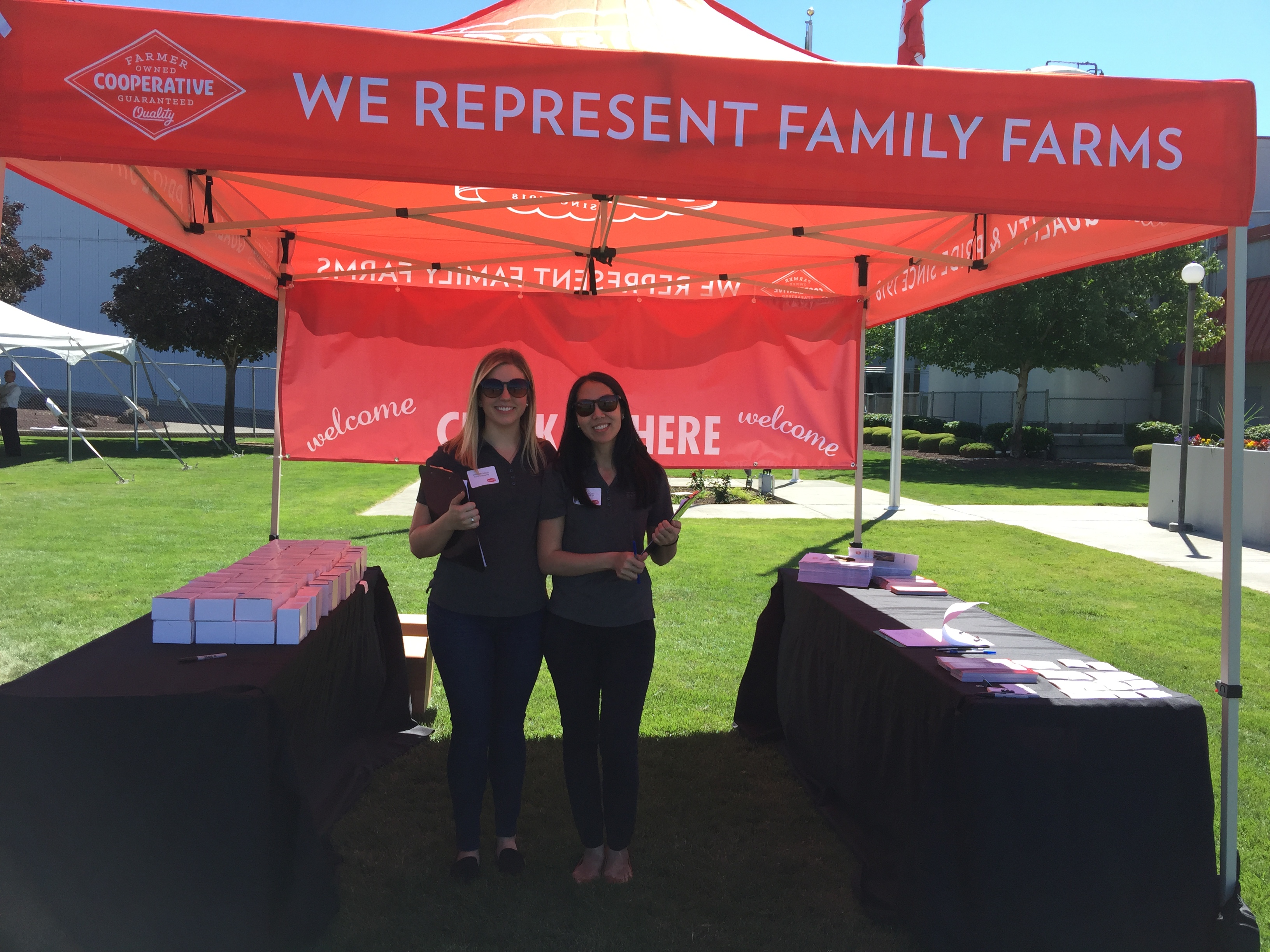
On Wednesday, June 22, I started the drive from Sunnyside, Washington, back to Seattle feeling giddy and relieved. After three months of working with Darigold to plan and execute its Sunnyside plant expansion celebration for 400 guests, the event was over and it was a success.
Whether your guest list is for 4 people or 400, planning an event can be a formidable challenge. There are hundreds of details to manage, which also means there are hundreds of possibilities for your best laid plans to be disrupted. Here are five lessons I took away from my experience to ensure your next big event goes smoothly.
1) Encourage oversharing.
Working with busy time-strapped executives has trained me to keep the number of emails I send (and their content) to a minimum. However, event planning is the exception to that rule. Oversharing is key to ensuring everyone is on the same page to achieve the team’s vision. A few of the tactics we implemented were creating a master document clearly outlining essential details and each person’s roles and responsibilities, hosting weekly calls and developing a contact sheet.
2) Resist the urge to do everything yourself.
When you’re immersed in a project, you can convince yourself it’s simpler to power through rather than delegating to someone else. The truth is, the sooner you realize you need help, the better off you’ll be. Make a list of all the activities that need to be completed and be honest about which jobs are necessary for you to manage. For the remaining tasks, identify team members with the bandwidth and skillset who can assist you. When delegating, set deadlines and deliverables to ensure you’re not creating more work for yourself.
3) Make it easy for media to say yes.
Journalists receive invitations to openings, launch parties and press conferences daily and their schedules fill up quickly. If securing media for your event is a priority, I recommend sending invitations as early as possible, preferably at least one to two months in advance. For the actual invite, remember you’re competing with every other organization that wants media at their event that day. The more assets and visual opportunities you can offer in your pitch increases your likelihood of receiving a positive response to your RSVP. For example, in addition to offering on-camera interviews with executives, we arranged a private tour of the facility for media. To accommodate their schedules, we also provided media with the option of an abbreviated tour route. This approach allowed us to host media from broadcast stations KIMA and KNDO/KNDU.
4) It’s okay to be a bit of a worrywart.
No one ever wants to be accused of being a Negative Nancy, but it can actually be a plus when planning an event. By anticipating the worst case scenarios (within reason, of course), you can problem solve and communicate backup plans to your team well ahead of time. This can include renting a tent for inclement weather, having blank name tags for last minute attendees, building in extra time on the schedule and hiring security.
5) Keep calm and carry on.
As I mentioned earlier, no matter how thorough your plan is, something unexpected can still pop up. Even if it seems as though everything is going wrong, do your best to avoid letting it show outwardly. Chances are, if you start panicking so will everyone around you. Remain calm and act quickly, and you should be able to maneuver yourself out of almost any situation.
While planning an event can be stressful and at times, exhausting, the satisfaction and pride from a job well done make it all worth it. The last piece of event planning wisdom I’ll leave with you is from Sunnyside’s plant technical manager and cheese master Tom Rouleau who reminded me that above all; make sure to have enough food for everyone.
(Special thanks to Bear Trade Show, Cliff’s Septic Tank Service, Country Gentleman, Frost Me Sweet, and Roy’s Audio Visual for your services!)
In case you missed it, here’s some great coverage of the Darigold event:
Darigold unveils multi-million dollar plant expansion
Darigold plant in Sunnyside celebrates expansion


Deloitte Digital announced on July 15 that it would be rebranding for the first time in 13 years. The term rebranding comes with a lot of mixed reviews. Over the last ten years there have been a variety of horror stories surrounding companies attempting to ‘modernize’ their image and the disasters that resulted. But, there have also been quite a few success stories- where companies have completely changed their image and turned impressive profits.
So what should Deloitte, or any company considering rebranding, keep in mind to ensure that modernizing their brand ends in success instead of failure?
1. Do not rebrand just for the sake of rebranding
Companies should only rebrand if there is a need for it. Rebranding simply because ‘it has been awhile’ can come back to bite you and have a devastating effect on customer brand loyalty.
PepsiCo ran into this problem in 2010, when it rebranded its Tropicana orange juice. They ditched the straw-in-orange container design most Americans have known and loved since childhood for a sleeker, more modernized look. Needless to say, it did not go over well. Sales dropped by 20 percent before PepsiCo reconsidered and brought back the original logo.
However, if your company is not reaching the appropriate target markets anymore, or has become a brand of the past, a revamp can do wonders for bringing the company into a new light.
For decades, Old Spice was considered ‘your grandfather’s deodorant’, but in 2010 Old Spice launched an ad campaign starring former NFL player Isaiah Mustafa with the opening line “Look at your man, now back to me.” Old Spice was able to reposition their products in the market after the ad went viral and the grandfather connotation was forgotten, spiking sales by 11 percent in 12 months.
2. Brand identity is important
This is especially important for well-known brands. As a marketing or PR professional, you have to understand how your company is perceived by consumers. If your company is well-established in its market and known for reliability, changing a timeless logo or other prominent parts of the brand can cause a huge customer upset
Take Gap, for example. In 2010, Gap was part of one of the fastest branding turnarounds, and disasters, of all time. They launched a new logo that was supposed to be the start of a companywide reinvention. The logo was so hated by the public that they reverted back to the original design just six days later and stopped the company rebranding until further notice. The strong relationship between the Gap logo and Gap’s overall brand identity was overlooked when planning for the rebranding.
What Gap could have done is rebranded without changing the logo by focusing on changing the way the company is viewed. Repositioning a company is often more effective for established brands than changing prominent logos.
Avis Car Rental provides a striking example. After years of being second to Hertz, in 1962 Avis decided to try a new direction, and in a stroke of genius, rebranded the entire company under the slogan “When you’re only No. 2, you try harder. Or else.” Changing their slogan and positioning their company as humble and hardworking caused the market-share gap between Avis and Hertz to go from 61-29 to 49-36 and tripled revenue.
3. Do not rebrand the company as something it is not
Attempting to pull the wool over consumers eyes and convince them that your company’s values are different than they are will, first, probably will not work, and second, will cause a lot of negative feedback.
BP made this exact mistake. In 2000, BP changed its logo of 70 years to the current Helios logo it has today. The logo was supposed to be a reflection of BP’s green initiative. The problem is that BP is an oil drilling company, and there is nothing green about drilling for oil. It did not help that ten years later BP was responsible for the largest marine oil spill in history, which prompted Greenpeace to start Beyond the Logo, a competition that challenged artists to create a BP logo that ‘truly reflected the company’.
In contrast, reminding consumers of what your brand values can have a positive impact. If public perception of your company has strayed from the company’s ideals, then rebranding can be as simple as trying to return the brand to its original message.
Burberry provides a good example of this. As a luxury brand that is world renowned, it ran into an image problem when their signature tan, black and red plaid became affiliated with British gangs. To fight this issue, Burberry simply reminded consumers that they were, in fact, a luxury brand by revamping their old designs in a sleek and stylish way and enlisting the help of well-known celebrities for their ad campaigns. Sales skyrocketed and the rumors of gang affiliation completely disappeared once the rebranding campaign was complete
Rebranding can have a huge impact on a company, positive or negative. Keeping the tips above in mind can help make the transition easier, though there is never a guarantee rebranding will go over well. Deloitte’s rebranding campaign will be something to watch over the next few weeks as they have decided to implement their changes slowly. Whether or not it is a success, only time will tell.
Check out our other posts on building a trusted brand and increasing brand awareness.

As my time at Communiqué PR winds down—I recently made the bittersweet decision to leave Seattle and head home to California—I’ve given pause for thought, reflecting on my time at the firm. For nearly three years, I’ve worked alongside the brilliant bunch at Communiqué, beginning as an intern and transitioning to an AAE and then AE role. During this time I’ve experienced the full gamut of boutique agency life—working with a variety of clients, in industries ranging from tech to marketing to power conversion solutions, on an array of PR and communications projects. There has been a myriad of lessons along the way, but a few meaningful ones stand out, including:
Embrace Change & Be Flexible – No day looks the same in PR. Client announcements and pitches, inbound media requests and new business proposals, among others, keep you on your toes constantly. Therefore it’s crucial to be flexible and nimble as client and internal requests come your way.
Additionally, as the digital landscape continues to evolve and, as a result, how news is consumed changes, communications strategies will need to evolve alongside it. This further proves the paramount benefit of an agile PR professional.
Do the Research & Ask Questions – Though it may seem obvious, coming (over) prepared will go miles for building relationships internally and externally. Come prepared by doing your research well in advance of meetings and, while in the meeting, ask questions and listen. Having the right information will help inform plans, pitches, bylines, etc.
This also applies to day-to-day PR activities. Do the research to ensure your clients are prepared for media briefings, research appropriate media contacts, and ask questions internally to ensure alignment on project expectations. This list goes on, but doing your homework will ensure you not only get the job done, but that it gets done well.
Cultivate Relationships – A crucial element of PR is building and maintaining relationships with clients, media and coworkers. Taking the time to build meaningful relationships, though, will take a PR career to the next level.
As mentioned above, taking the time to listen to client needs and goals will not only enhance communications strategies, but will also enrich the partnership. This approach also transfers to journalists and analysts relations. Carefully research coverage areas, inquire about topics of interest and take the time to target outreach accordingly and the results will follow. Finally, tap internal sources and utilize the unique background of coworkers to take client work to the next level.
Think Long-Term – Take time to understand the client’s business and communications goals and then map a PR plan to match that. Build this strategy into all activities and take the time to accurately frame clients’ stories with the media. Coverage just for coverage’s sake is not a sustainable strategy, nor will it necessarily portray the right messages to the appropriate audience. Think creatively to position clients in a unique light with media, which will ultimately create a value-add experience for journalists, readers and clients alike.
In summary, PR is about consistently delivering a brand’s messages across the appropriate mediums. However, the key is to do so while also remaining nimble, asking the right questions and doing the appropriate prep work, building thoughtful relationships, and thinking strategically.
These four takeaways only begin to graze the surface of the lessons learned during my time at Communiqué. I was fortunate to be surrounded by a supportive and creative team, offering a truly unparalleled experience. I’m beyond thankful for the opportunities I was presented with at Communiqué PR and am looking forward to seeing the phenomenal results the firm executes next.


Increasingly, organizations of all sizes are leveraging webinars to establish thought leadership, foster lead generation, and interact with their target audiences. The Content Marketing Institute found that 60 percent of marketers are using webinars as part of their content marketing programs. Further, a survey by the research firm Demand Metric, together with Vidyard, found that 74 percent of B2B marketers reported that video converts better than other content types.
Webinars can complement and amplify marketing and sales campaigns – they offer several opportunities to connect with prospects and customers, and the engagement period during a webinar is significantly longer than other types of content. Contrary to the popularity of “bite-sized” content that can be quickly and easily consumed, average live webinar viewing times are on the rise – holding at 56 minutes (up from 38 minutes in 2010) according to ON24’s 2015 “Webinar Benchmarks Report.” When was the last time you spent 56 minutes reading an email newsletter or a direct-mail flyer?
What makes webinars so compelling?
Webinars enable multiple touch-points with prospects. Email or print campaigns leading up to a webinar can span several weeks, encouraging and reminding viewers to register and participate. Thank-you notes and follow-up inquiries are also essential to a webinar’s success, and that too can span several weeks following the webcast. By giving a company several opportunities to connect with and engage their target audience, the likelihood of conversion can be much higher than a “once and done” type of interaction.
Webinars are interactive. A good webinar should offer something more than a talking head reciting a PowerPoint presentation. Get participants active and involved! Webinars offer a level of interactivity that other marketing channels lack. By incorporating real-time feedback and interaction – through polls, surveys, question-and-answer periods and more – content can be tailored on the fly, thereby ensuring that participants are (and remain) engaged with the material and the presenter.
Additionally, webinar participants should be encouraged to share their experiences and feedback through social channels such as Twitter, Facebook, LinkedIn and more. Assign a hashtag to the webinar that is shared before, during and after the event – this can both foster a sense of community among participants, and encouragement for others to view the content on-demand.
Webinars provide valuable insight on leads. Another key benefit of webinars is that they allow organizations to gather information about interested attendees (i.e., prospects) through an online registration page. This can provide valuable details such as contact information, demographic details such as titles and/or roles, and level of familiarity with the company and its products.
Consider the layout and content of your registration’s landing page and factor in the target audiences for the event. An overly sales-focused landing page can be off-putting to attendees, who may not join for fear of aggressive follow-up. In general, keep landing pages simple, informative and concise – include a few bullets about the takeaways attendees can expect, some background about the presenter(s) and a form to capture registration details.
What type of webinar should I consider?
Thought leadership-focused webinars focus around an industry trend or market driver, and offer perspective and guidance for attendees interested in that area. These types of events shouldn’t be vendor-centric sales pitches – they’re designed to share expertise and educate audiences, thereby establishing the presenter as a credible, go-to source on the topic. Consider having a panel discussion involving different perspectives by inviting an industry analyst, a customer or partner, or an editor of a well-respected publication to moderate the discussion. This approach also elevates the event beyond a standard vendor sales pitch.
Product-specific webinarsfocus on product updates and highlight new features and upgrades; these are often tailored more toward an established customer base. Product webinars have the potential to be more overtly sales-oriented, as they typically require viewers to either be an established customer or have some previous engagement with the product or company.
There’s also an opportunity to do pre-recorded webinars offering product demos or answers to frequently asked questions, which offer the convenience of on-demand viewing, but lack the real-time interaction of a live event.
Measure your results
Companies can gauge the a webinar’s success in several ways, such as number of registered attendees, number of actual participants in the session, level of engagement throughout the webinar through polls, calls to action, etc., and number of archived views following the webinar. ReadyTalk notes that the average webinar attendance rate is 40-50 percent of registered attendants.
While they’re not exactly a brand-new channel for marketing and sales teams, webinars do offer some attractive advantages for educating and engaging with target audiences. Done correctly, they provide a compelling piece of promotable content with a long shelf-life and potential to influence sales decisions.
Is your organization using webinars to engage with its prospects and customers? What type of results have you seen? We’d love to hear about your experience in the comments section – let us know!

The NPR podcast Hidden Brain uses science and storytelling to answer curious people’s questions and better understand the world. With the tagline, “A conversation about life’s unseen patterns,” the program host and science correspondent, Shankar Vedantam, strives to deliver insights that his audience can apply to their day-to-day lives. In the recent episode, The Power And Problem Of Grit, Vedantam interviews Angela Duckworth, psychologist at the University of Pennsylvania, to understand grit and share how this personality trait can both hinder and help individuals in achieving greatness. This episode changed my perspective on the meaning of grit, and on the concept of deliberate practice to achieve goals.
Duckworth defines grit as the combination of passion and perseverance to achieve long-term goals. In this podcast, she examines “What makes extraordinary people successful?” Through her research, she found the personality trait “grit” plays a major role in an individual’s ability to achieve success. In fact, grit is a bigger predictor of success than sheer talent, genius or luck.
Even though natural talent or ability plays a role in a person’s success, it is usually in combination with hard work, practice and perseverance. However, others often do not see this hard work, practice and perseverance, and often attribute success to pure luck.
Starting at an early age, individuals receive pressure from families, peers, teachers and coaches to achieve success and grit can help them. Duckworth researched spelling bee winners and analyzed how participants trained. She discovered the act of “deliberate practice” would predict a student’s success in the final competition. Based on the research of K. Anders Ericsson, Duckworth describes deliberate practice as an intensive exercise that requires maximum effort and provides the least enjoyment, but is completed with the intention to master the skill. Additionally, having and exhibiting grit best predicted how much deliberate practice one could achieve.
Duckworth strives to cultivate grit in her own children by establishing the “hard thing rule.” This rule requires that each family member choose an extracurricular activity that requires deliberate practice. Once the activity is completed or they give it up, they must have another “hard thing” planned.
This immediately reminded me of goal setting at Communiqué PR. During our annual review cycle, each employee establishes three goals to help his/her professional growth. Achieving these goals requires the art of deliberate practice and honing in on a weakness in order to transform it into a strength.
The concept of deliberate practice is one that colors driven people’s lives. In business, the amount of passion, hard work and hours an individual is willing to put into completing a presentation, report or proposal will correlate with how successful they are or how far they are able to advance in their career. For example, spending two hours verses three hours on an article, doing the extra research to make a press list more targeted, and spending an additional moment to personalize a pitch are few instances where PR professionals can flex their grit muscle and take an additional step toward achieving their goals.
So where does grit come from? And how can professionals exemplify grit in business? Below I have outlined the four psychological aspects Duckworth has seen in gritty individuals.
- Interests. Gritty individuals know their interests. Once you know your passion, you’re able to invest the time needed to achieve greatness.
- Capacity to do deliberate practice. Individuals with grit know the intensity required of deliberate practice and are able to withstand the struggle enough to make it into a habit. This aspect distinguishes good employees from great ones and hard workers from the truly dedicated. The ability to continue past the point of enjoyment on a project can be difficult but necessary in order to exceed expectations.
- Sense of purpose. This is the ability to look beyond one’s self for the betterment of others. A sense of purpose can provide an individual with the motivation to practice or work when it is no longer easy or enjoyable.
- Hope. At the intersection of motivation or optimism, this is the ability to keep going, even when the chance of success seems lost or slim. At a career standstill, or during a time of turnover or loss, keeping an eye on the silver lining and the ultimate goal helps gritty employees accomplish their goals.
Another example of how PR professionals can apply grit to business is by incorporating the same training practices as the spelling bee winners. Take preparation for a new business meeting, for example. Preparing is time consuming and can be difficult. It requires research, the development of a presentation and rehearsal of the presentation in order to be prepared. By taking these steps, we know we are more likely to secure additional business and develop new client relationships.
These four aspects relate to the second half of the podcast, the problem with grit. Individuals who possess high levels of grit may not do the rational thing because their grit compels them to keep going, even in the face of mounting obstacles. It is in situations like these where individuals must make strategic choices and understand when it is time to quit. Duckworth shares that often the difference between bad grit and stubbornness is not clear until after the result. Through applying grit and putting deliberate practice into action, individuals can reach greatness and achieve excellence.
Are you gritty?