
Insights for Leaders Navigating
Visibility, Credibility, and Growth.
From media strategy to reputation management, we explore the trends shaping public perception and share the approaches that drive measurable results for growing brands.

2015 has thus far been a pretty tough year for broadcasting companies. First, NBC took a major hit to its credibility when Nightly News anchor Brian Williams was found to be less than completely honest in his storytelling. Now, PBS, the independent and publicly funded network that many Americans look to for educational and unbiased programming, is at the center of its own media firestorm. If this recent story has somehow not been on your radar, here’s a quick recap:
Earlier this month, Britain’s Daily Mail published a story, using leaked Sony Corp. emails posted by WikiLeaks that reveals that Ben Affleck sought to have his slave-owner ancestry censored from the PBS series “Finding Your Roots.” The host of the popular show, esteemed Harvard professor Henry Louis Gates Jr., sought the advice of his friend, Sony CEO Michael Lynton, via a now public email exchange and in the end, the segment around Affleck’s slaver ancestor was edited out of the episode’s final cut.
News of this celebrity-requested censorship case has created a barrage of media backlash, with harsh criticism directed at Affleck, Gates and PBS. While Affleck was responsible for asking that the story not air, the bulk of the criticism has been directed at Gates for acquiescing to Affleck’s request, even though his emails with Lynton make it clear that he was fully aware doing so “would be a violation of PBS rules.”
In fact, even PBS Ombudsman, Michael Getler, has been critical of both Gates and PBS, posting a column on the issue in which he refers to how the emails between Gates and Lynton “make clear that Gates understood the serious journalistic and credibility issues at stake.” He goes on to say that PBS was “asleep at the switch when this broke,” and that the institution “deserves all the articles and TV reports,” for responding with “a statement that said essentially nothing and very quickly looked pathetic, as if they were hiding something.”
Last week, Affleck posted a response to the outrage on his Facebook page. He doesn’t apologize for his actions, reminds the readers that the show was not a news program, and explains that his request to shelve that part of his family story was because it would be embarrassing. I imagine it would have been a lot less embarrassing if he had simply let the Gates and the show’s producers deliver the episode without his creative collaboration.
This story offers so many interesting lessons for PR professionals helping to build and protect the brands we represent. For now, I’d like to highlight just two key takeaways:
Trust Your Gut
Gates’ emails highlight that the academic was clearly conflicted by the situation. He knew that if he accommodated Affleck’s request to censor the show and it became public, it would compromise the program’s integrity. His gut was telling him what he should do and if he had listened, he wouldn’t be facing criticism and further investigation. Instead, he opted to appease the Academy Award winner and thus has jeopardized his personal brand, as well as that of PBS.
Know Your Audience
Had Affleck taken time to consider his audience, he would have known that he could trust them with the truth of his family’s heritage. Our nation carries the shame of more than two hundred years of abuse and oppression caused by a system of slavery. This is not a burden Affleck carries alone and rather than hiding the truth, he could have used his story as an opportunity to begin an honest and productive dialogue from the outset.
History has shown us that the American public loves giving second chances, especially to celebrities. Given this, the backlash against Affleck will lesson over time. I wonder, however, if forgiveness will come swiftly to Gates, whose reputation is built less on his celebrity status as host of a PBS show than on his academic contributions focusing on African American studies. What do you think?

Like many people working in the PR industry, I am always looking for ways to achieve a more efficient and organized workflow. Currently I use Smartsheet, Wunderlist and Talkwalker, among other tools. These have proven to be great resources, all of which I utilize on a daily basis—Smartsheet as a project management tool to collaborate with colleagues, Wunderlist to send myself reminders and keep my to-do list organized, and Talkwalker alerts to stay up-to-date on clients, competitors and industry trends.
In the pursuit of some additions to add to my toolbox, I recently stumbled upon a Cision webinar, Tool School: PR Success In 2015, hosted by Kellye Crane, founder of Solo PR PRO. Kellye had a long list of ideas in a range of categories, including productivity, social media and collaboration. She cautioned, though, that before taking the time to invest time, energy and sometimes money into implementing a new tool, make sure it is the right fit and will actually be beneficial to your workflow. With that in mind, below is my short list of tools I am most excited to try:
Productivity
- Evernote— This powerful app allows you to collect articles, photos, or capture handwritten notes, all of which are searchable through the app. Kellye mentioned this could be particularly useful for business cards. Simply take a picture of the card and Evernote will allow you to save and search text through all images saved to the app.
- Pocket— Found something you want to read, but don’t have the time to right now? Pocket allows you to save articles or videos for future reference, so you can read or watch them when it is convenient for you.
- Newsle— Networking is a crucial element of any professionals’ career. Newsle assists by notifying you when a friend or colleague publishes a blog or article, allowing you to stay up-to-date and presenting an opportunity to nurture the relationship by reaching out regarding the blog or article.
- Mention— Similar to Google Alerts and Talkwalker, Mention allows you to monitor the web for topics, clients or competitors. Because all of the tools don’t necessarily catch the same articles, signing up for a few or all of the web-monitoring tools will maximize results.
Visuals
- FreeDigitalPhotos.net— Visuals help bring a story to life, but stock photos can be pricey. This site offers a range of free stock photos.
- Swipe—Web-powered slideshows offer a flexible solution to presentations. Swipe offers the ability to create, edit, view and present on any device, allowing greater flexibility and collaboration.
- Piktochart and Infogr.am— These free apps allow you to create DIY infographics. Piktochart and Infogr.am offer a range of templates, presenting an easy way to bring your data to life with a visual.
I am thrilled that I stumbled across this webinar and am looking forward to testing out these tools. What resources do you find most valuable for improving workflow and/or staying organized?
For more productivity and PR tools, see a post from last December on our blog: Helpful Apps & Resources for PR Pros.
Dan Price, co-founder and CEO of Gravity Payments, recently announced that the minimum wage salary for the company would be raised to $70,000. The payment processing company made the drastic and unprecedented announcement on April 14, and it continues to garner coverage and remain a conversation topic over a week later.
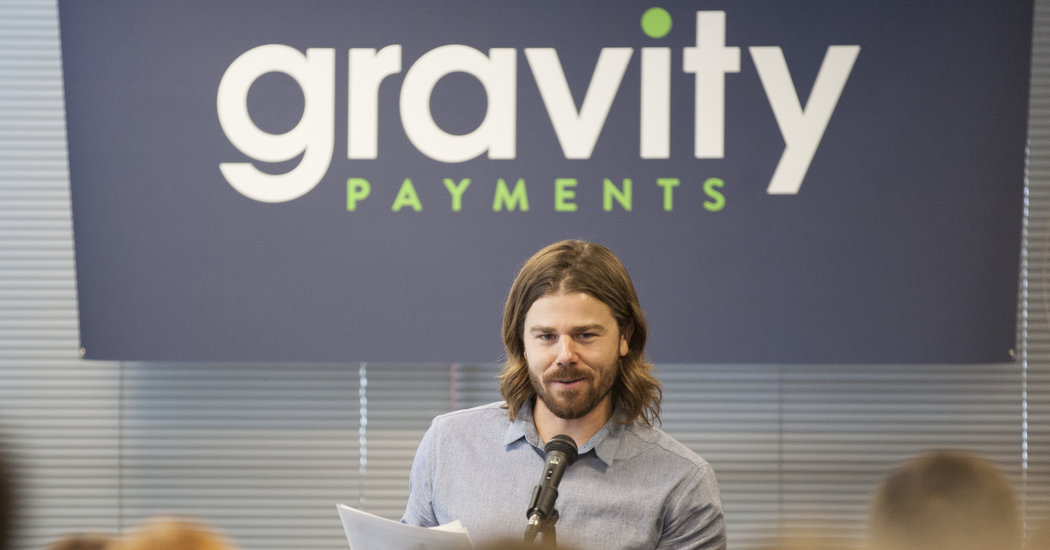
We commend Dan on his revolutionary idea and the bold choice to execute it, as well as congratulate him and his PR team on an amazingly successful announcement! Dan and his team secured an exceptionally large amount of coverage in top-tier business publications, not only in the U.S. but internationally as well.
Given the unconventional nature of Gravity Payments’ new minimum wage program, a big splash would be expected and there’s no doubt it required a lot of work to identify the right media and coordinate the volume of interview requests and briefings the announcement generated. Below are three reasons why we believe this announcement was so effective:
- It was innovative: Companies often want to promote the positive cultures they’ve fostered to attract talent, however, it is difficult to convince business press that culture is newsworthy. Gravity Payments found a way to break through by announcing a program that was groundbreaking and sparked a discussion about companies’ approaches to wages. Not only that, but people are now curious to see if Gravity Payments can sustain this new minimum wage policy and the long term effects it will have on the company. This interest in Gravity Payments will likely provide them with “follow-up” editorial opportunities in the future.
- It was timely: The announcement broke at a time when employee engagement, employee happiness, wage discrimination, wage gap and raising costs of living were all prominent national stories and trends in the news. In fact, Price announced the program just as Seattle’s increased minimum wage was set to take effect. By announcing a program that addresses all of these topics, Gravity Payments made it easy to insert themselves into the conversation. Also, in one of the article covering the news, Dan mentions, that a friend of his was experiencing the pressures of increased cost of living was part of his inspiration, making this mission even more relatable.
- It was well-executed: Gravity Payments knew that this program would be a great opportunity to not only present Gravity as a forward thinking organization that values their employees and their well-being, but also promote the name of the company and Dan. Clearly there was coordination with the media before the official announcement, given that the Today Show interviewed Dan in New York the day after it became public news and King 5 was there filming Dan making the announcement to the employees. They did exactly what they needed to do garner a wide range or broadcast and editorial coverage in a variety of outlets.
It’s great when positive and life-changing programs get the coverage they deserve. It will be interesting to see how Gravity Payment’s bold move influences other companies and industries. We’d like to congratulate Dan and his team on their success thus far and wish them the best of luck in the future!
You’ll find some of Gravity Payment’s coverage linked throughout the article; below are a few more:
- CEO describes the moment when he decided to raise his company’s minimum wage to $70,000 a year—Business Insider, April 22
- $70,000 promise brings flood of new clients and job applicants—CNN Money, April 20
- Praise and Skepticism as One Executive Sets Minimum Wage to $70,000 a Year—The New York Times, April 19
- The CEO who increased the minimum salary at his company to $70,000 is highlighting an important point about money and happiness—Business Insider, April 18
- Dan Price Takes Bite Out of Minimum-Wage Pay Gap—The Wall Street Journal, April 16
- If you’re a CEO, it pays to share your wealth. This Seattle boss did—The Guardian, April 16
- Gravity Payments’ Wage Boost Is A Game-Changer For Brands—Forbes, April 16
- CEO Slashes $1 Million Salary To Give Lowest-Paid Workers A Raise—The Huffington Post, April 14
- This company is setting its minimum wage at $70,000—Fortune, April 14
- Seattle Business Owner Raises His Workers’ Minimum Pay to $70,000—NBC News, April 14
For the past seven years, we have had the pleasure of working with Attachmate, one of the world’s most established software brands. Attachmate’s business is rooted in providing technologies that help companies extend their investments in mainframes and other host data systems. While terms like “terminal emulation,” “DMSII” and “DoD PKI” were new to us when we first started with Attachmate, they quickly became part of our regular vocabulary.

With a 30+ year history in the software industry, the company counts among its customers 69% of the Fortune Global 500, including the top financial institutions, airlines and healthcare organizations. Anytime you use an ATM or make an airline reservation, chances are a mainframe and Attachmate’s products are working behind the scenes.
When we began our engagement with Attachmate our initial PR objectives were to help increase visibility and drive awareness for the company with its existing customers, develop new and existing relationships with research analysts, and establish thought leadership. As enterprise trends like BYOD have evolved and gained traction, along the way we’ve also had the opportunity to help Attachmate introduce new mobile and cloud technologies.
Recently, Micro Focus and The Attachmate Group (Attachmate’s parent company) announced the completion of their merger and their plans to combine the various product lines under one Micro Focus portfolio. As we wind down our engagement with Attachmate, we thought it would be a great time to recap the strategies we employed to help Attachmate meet its objectives and the results we’ve garnered over the past seven years:
Media Relations: Using a combination of company news, proactive trend pitches and newsjacking, Communiqué secured hundreds of articles in publications including Computerworld, eWeek, InformationWeek, Network World, IBM Systems Magazine, IT Jungle, Database Trends and Applications, and SD Times.
Contributed Content: Communiqué worked with Attachmate’s executives and product managers to develop and place more than 30 bylines in outlets including VentureBeat, Mobile Enterprise, Data Center Journal, WIRED Innovation Insights and z/Journal. The bylines covered a broad range of topics affecting enterprises and IT – from the impact of shadow IT, to technology gaps that prevent workers from achieving true mobile productivity. In addition, Communiqué drafted numerous blog posts on behalf of the product team and established syndication arrangements for Attachmate’s blogs with Business2Community and SYS-CON Media.
Analyst Relations: Industry analysts can have a huge influence on IT purchasing decisions and one of Attachmate’s key objectives was to stay top of mind with influencers at the major research firms. To accomplish this we built an analyst relations program that included regular briefings with key analysts and quarterly emails to ensure they were updated regularly in between formal briefings. We also ensured that analysts were pre-briefed ahead of major product and strategy announcements to secure them as references for our broader media relations efforts.
Social Media: Communiqué worked closely with Attachmate to develop its social media strategy and to establish its social media pages. Communiqué also served as Attachmate’s day-to-day social media manager, driving engagement with its followers across Twitter, Facebook, LinkedIn and Google+. Attachmate’s social media presence and engagement have grown steadily with an average year-over-year growth in followers of 42%.
We look forward to hearing more about the combined Attachmate/Micro Focus company and wish all the best to the team!
For additional insight into our work for Attachmate, please check out these other posts:
Attachmate Secures Window 7 Logo
Managed File Transfer: A Growing Concern for CIOs and CTOs
Attachmate Unveils Verastream Host Integrator 6.6
Launching a Product in a New Market
Establishing Thought Leadership in Vertical Markets
Attachmate Receives Prestigious Common Use Processing Systems Certification
Attachmate Extends Leadership Position with Launch of Reflection 2011 R3

As an intern at Communiqué PR, I have had many opportunities to expand my knowledge of the industry. I recently learned of an intriguing communications tactic known as “newsjacking.” For those who are unfamiliar with the term (much as I was), newsjacking refers to when you capitalize on a trending news topic—by using humor or by inserting your company’s point of view into the dialogue—in hopes of increasing awareness of your brand.
In the past, we have successfully carried out newsjacking by monitoring print and online stories, then pitching follow-up stories in accordance. The rise of social media has further transformed the newsjacking process and significantly impacts the speed at which a brand can respond to breaking news. Social media therefore becomes an important tool in the arsenal as it presents a valuable opportunity to respond quickly and add one’s voice to the dialogue.
However, while newsjacking offers big benefits for brands, the process also takes a significant amount of time and resources. Key steps such as monitoring social media and influential reporters, reading their coverage, and staying up to date on what competitors are saying and doing are necessary to ensure newsjacking is going to be worth your effort.
I recently came across a PR Week article, “Is Social Media Newsjacking Worth the ROI and the Time for Brands?,” in which two experts share separate opinions on the topic. Just as consumers purchase products and services for the benefits they will reap, businesses are also concerned with seeing a positive return on their investments. It is important to evaluate whether or not your business should participate in newsjacking because it means much more than a tweet or Facebook post, requiring a large investment in both time and labor costs. As you question whether to newsjack or not, it’s vital to evaluate two key points: the relevance of the story and ensuring timeliness.
Newsjacking has shown to be most successful when you add value to the situation at hand by offering a brand’s relevant perspective or information. It is human nature to pay attention to things that interest us and click away the clutter. By just adding a trending hashtag to your tweet, you are only becoming part of the spam stream. Success is when the news is no longer only talking about the original story, but also about what you and your brand are saying about it.
In terms of timing, social media opens up a whole new world of opportunity for unexpected and spontaneous activity. Newsjacking is undoubtedly going to provide you with a higher ROI if you jump on the news before it fully unfolds. To be effective, you must make a connection with the story before everyone else does—you must act in real-time. Timeliness can also apply to planning for what there is to come—look ahead to coming months to see if there are any approaching opportunities in which you can effectively insert your brand.
So, is newsjacking worth it? In my opinion, yes, but as demonstrated above, only when it’s done in good fashion. To be successful, you must have a compelling tie between your brand and the news story. It is also a good idea to stray away from poking fun at controversial subjects. Many big brands, such as Kenneth Cole, have experienced backlash by attempting to be edgy with their newsjacking.
On the contrary, Oreo saw an opportunity during the 2013 Super Bowl blackout and jumped on it. Within minutes, Oreo tweeted out content that earned it 525 million media impressions, becoming one of the most successful newsjacks to date. Whatever your strategy, the key is to be fully aware of how the favorites or shares on social media will not only entertain consumers, but also benefit your organization and move the needle.
For more on newsjacking, see our blog on Mastering the Art of Newsjacking.
Revel Systems, is a San Francisco-based retail tech company that is (excuse the pun) “Revel-utionizing” the retail industry by transforming old school, clunky cash registers into sleek, sophisticated and secure point of sale (POS) systems for merchants worldwide.

Revel Systems is an award-winning leader in iPad POS systems for restaurants, retail outlets and grocery stores; it’s currently used in thousands of enterprise locations including Goodwill, Dairy Queen, Smoothie King, Sonos, Belkin, Griffin, Popeyes Louisiana Kitchen and more. The Revel POS system offers a feature-rich POS solution with integrated payroll, inventory tracking, and advanced business analytics for both enterprise and small business customers.
One of our main objectives when we started working with Revel Systems was to elevate the executive profile of its co-founder and CEO Lisa Falzone. Following Revel’s $100M funding late last year (read our case study and results for that announcement here), the CPR team continued its high octane push for Revel in 2015 with a multi-faceted approach to building relationships for Lisa with top journalists and influencers.
Below are some high-level strategies for building an executive’s profile within target audiences, based on our experience with Revel:
1.) Build and nurture relationships with key press and influencers – create a platform for the executive as an expert resource. At the forefront of our efforts was aggressive proactive outreach to business press, where we offered 1:1 briefings with Lisa to discuss her momentum in building the next billion dollar business from the ground up, all while maintaining majority share of the company with co-founder Chris Ciabarra. Pitches for Lisa centered on her success and drive as a visionary entrepreneur. The team stayed nimble and creative in our pitch angles; we even leveraged Lisa’s history as a competitive swimmer at Stanford to draw parallels between competitive sports and running a business – securing two bylines as a result. Briefings were secured with publications including Bizwomen, Inc., Fortune, the San Francisco Business Times and Upstart Business Journal, as well as a byline on the Women 2.0 blog.
2.) Showcase product innovation, executive leadership and industry momentum through awards and lists/rankings. We also began researching and submitting for relevant industry, product and executive awards for Lisa and Revel Systems. Since the kickoff of our awards program just two months ago, Lisa has been selected as a semifinalist in Northern California for EY Entrepreneur Of The Year® Award and a “Reinventor” in Upstart Magazine’s Upstart 100. We have it on good authority that there are more wins coming for Lisa and Revel in the weeks and months ahead – stay tuned!
3.) Raise executive visibility and demonstrate thought leadership through speaker placement at industry events/conferences. Securing Lisa as a speaker at business and entrepreneurial-focused conferences made up the third component of our executive visibility campaign. We identified conferences ranging from invite-only executive conferences to widely-attended industry trade shows and pitched Lisa to present on topics including the future of commerce/payments and entrepreneurism. Again, while we can’t disclose anything publically yet, there’s word that Lisa will be hitting the stages of several key events coming soon.
A list of the coverage specific to building Lisa’s executive profile is below – REVEL UP!
- AZ Tech Beat—Lisa Falzone, CEO and co-founder Revel Systems, on why expand to AZ—January 21, 2015
- Bizwomen—3 lessons on the ‘people side’ of running a tech startup — from Revel Systems CEO Lisa Falzone—February 13, 2015
- Bizwomen—Revel Systems CEO Lisa Falzone on getting big and going public—February 18, 2015
- Bizwomen – My big break: 9 top executives weigh in on the moments that made their careers – April 3, 2015
- Coderfactory—Top 10 Women influencers in Tech to watch in 2015—January 21, 2015
- Entrepreneur – What Competitive Sports Taught Me About Running a Business – March 12, 2015
- Inc. – 8 Female Entrepreneurs To Watch In 2015 – March 2, 2015
- San Francisco Business Times – How Revel Systems manages talent: CEO shares HR tips from her fast-growing startup – March 6, 2015
- San Francisco Business Times – Payments players stake out territory: Tech giants and nimble young companies alike scramble for footholds in a lucrative market – March 27, 2015
- The Stanford Daily – Women in Tech: Lisa Falzone discusses Revel Systems and adrenaline rush of being a founder – March 17, 2015
- Stanford Six: Nerd Nation – What Competitive Sports Taught Me About Running A Business – March 17, 2015
- SwimSwam – 5 Ways Swimming Competitively Helped Me As An Entrepreneur and CEO – March 20, 2015
- Upstart Business Journal- Lisa Falzone — Revel Systems (Upstart 100 listing)—February 10, 2015
- Upstart Business Journal – SLIDESHOW: From Vice to Microsoft, these Upstart 100 reinventors are all about change – February 12, 2015
- Upstart Business Journal – Revel Systems CEO Lisa Falzone on getting big and going public – February 18, 2015