
Insights for Leaders Navigating
Visibility, Credibility, and Growth.
From media strategy to reputation management, we explore the trends shaping public perception and share the approaches that drive measurable results for growing brands.

Communiqué PR is a proud member of the Public Relations Network (PRN), an international agency organization that now encompasses 28 agencies on five continents. We are PRN’s exclusive partner in the U.S. and have leveraged this collaborative network of member agencies numerous times to secure in-country results for our global clients.
And membership is growing. PRN has just announced its newest member, open up, a communications and PR consultancy based in Zurich, Switzerland. Managed by two partners, Kilian Borter and Melanie Schneider, the agency supports larger companies, SMEs, and non-profit organizations in all their communications needs. Specializing in the financial and insurance sectors, IT and telecommunications, tourism and transport, education and healthcare, open up has been a member of the Association of PR Agencies in Switzerland (BPRA) since 2010, and was certified in accordance with international standards (ICCO) for the first time in 2011
Expansion of the network to include a Swiss partner, and in particular an agency with a focus on IT and telecom, is a welcome addition.
“Although Switzerland is not a large market it is nonetheless a very important one with a specific media scene,” said Veit Mathauer, PRN board member and managing partner of PRN member agency sympra, GmbH. “The different languages spoken in this region make the media more complex and this is why we are especially delighted to have found a reliable and competent partner for this country. First projects have shown that we have a common understanding regarding PR and quality.”
Communiqué was selected as the U.S. agency in late-2013 after working with several of the member agencies to secure results not only for our clients around the world but to help garner attention in the U.S. for PRN member clients.
PRN is a global collective of like-minded public relations agencies providing consultancy and local support for worldwide PR campaigns. PRN has affiliate PR agencies in Australia, Austria, Brazil, Belgium, Canada, Chile, Columbia, China, Denmark, Dubai, Finland, France, Germany, India, Italia, Morocco, Peru, Poland, Romania, Russia, Sweden, Spain, South Africa, Switzerland, Ukraine, UK, USA and Venezuela. To learn more, click on www.pr-network.biz
I’ve been working with tech PR agencies for well over a decade now – enterprise/B2B clients mostly – so I was pretty bummed out when a friend in PR dramatically shared they’d “rather die” than do PR for “boring, geeky” tech clients. Come on now, why hate on the “geeky” tech companies? What have they ever done to you, except provide actual, literal life-changing gifts of computers, Internet, e-commerce, mobility, and Netflix?

This wasn’t the first time I’ve heard this type of talk from PR folks turning their noses up at tech. Some people are open to working with more consumer-friendly tech, just not the nitty-gritty tech companies targeting the enterprise or infrastructure. Others simply won’t touch tech with a 10-foot pole. “I’m just not a technical person,” they’ll say. Or, “It doesn’t sound fun.”
To this, I proclaim: “Fear not the nerdy technology clients! Embrace them, for they shall ultimately make you a smarter, sharper PR professional!”
Here are my rebuttals to common complaints I’ve heard about tech clients:
“It’s boring.” Tough love time here, readers: It’s our job as communications professionals to take that “boring” tech-speak/jargon/alphabet soup of acronyms and transform it into a compelling, interesting story. It’s what our clients pay us to do! If you’re bored, you’re not paying enough attention to your client or to the industry in which they operate. There’s always a bigger story beyond the technology.
“There’s so much to learn.” OK, this one’s true. There are no shortcuts – you either know your client’s business or you don’t. That means combing through product sheets, white papers, and press releases, and getting smart about how the product works, how it’s sold, who buys it, and why it matters. Learning a new industry is what makes our jobs interesting. You don’t really want a job where you never learn new things, do you?
“But I’m not a technical person.” As one of my first employers told me, you don’t need to explain exactly how the aspirin works, just that it gets rid of the headache. We don’t have to describe every spec and feature of the product (that’s what the client is for), just enough about how it works, what sets it apart in the market and what business problem it’s solving. Relax, you’ve got this.
“It’s not fun.” You know who uses technology? Pretty much everyone on the planet. Even the geekiest, most technical products out there make people’s lives better in one way or another. Being able to take something often perceived as dull and demonstrate how it impacts an industry or an individual takes skill. That’s where the fun in our job comes from, right?
So ultimately, yes, tech PR is hard. But PR for anything is difficult today, whether it’s a consumer product or a non-profit organization or a Hollywood celebrity. There’s more noise than ever before plus more channels/outlets/devices/networks vying to convey your message. There’s no easy way to do it.
What’s kept me in technology PR this long is this realization: If you can take seemingly dull, dry jargon-filled techno-babble and transform it into a compelling, articulate business story, then you’re pretty much unstoppable. It’s hard work to distill technical language into something that a business or consumer audience can understand and doing it day in and day out isn’t for the faint of heart. Then again, those folks probably wouldn’t select PR as their chosen profession anyway, right?
Plus, there’s something very, very rewarding about holding your own against a cranky veteran tech journalist looking to test you about your client – make that time you spent reading all those white papers actually pay off!
For those currently in tech PR, I’m curious – what do you like about it? And for those who have determined that tech isn’t for them, why not? Share your thoughts here – I’d love to hear your stories.
By now, you’ve likely heard about the Patriots’ latest controversy known as Deflategate, where it came out that 11 of the Patriots’ 12 game balls during their AFC championship victory over the Colts were underinflated. For those non-football fanatics, this is a major violation since underinflating the balls makes them easier to grip, pass, and catch. The reaction to the supposed cheating scandal has been mixed – some calling for the Patriots’ disqualification and others claiming it’s no big deal, that tampering with footballs is a hush-hush but widespread practice.

Whatever side you’re on, the aftermath – especially from a PR perspective – has been amusing to say the least. In a series of press conferences and public statements, Patriots’ management laughed it off at times and showed anger at others. All of the fumbled handling of the scandal provides interesting takeaways for PR pros and companies facing their own crises. Here are a few dos and don’ts of dealing with a PR controversy, courtesy of the Patriots:
Do address the issue at hand. Early on, Patriots’ head coach Bill Belichick addressed the issue by telling reporters, “We’ll cooperate fully with whatever the league wants, whatever questions they ask, whatever they want us to do.” This was a smart statement in showing attention to the issue while not admitting fault. In any PR crisis, it’s important to not avoid the issue altogether, as this often implies guilt or lack of concern. I’d like to say Belichick continued to do a good job of this, but later on he began making confusing statements or deflecting questions entirely – a poor strategy that ultimately led to the #Belicheat hashtag.
Don’t try to be an expert where you’re not. In an impromptu press conference last Saturday, Belichick led us through a long-winded lesson on how weather and the “rubbing process” can affect the inflation level of the balls, drawing confusion and even ridicule. In an interesting twist, even scientist Bill Nye chimed in at one point to claim Belichick’s statements made no sense. While Belichick’s efforts to explain the issue are commendable, the comments only caused further speculation and served to discredit him as a reliable source of information. Instead, stick to what you know and leave the technical stuff for the experts.
Do gather all of the facts. One of the most frustrating aspects about the entire Deflategate scandal has been the lack of facts. And not just the lack of facts, but that the Patriots’ reps have attempted to talk about the issue at length anyway, despite not having them. Until all of the facts have been gathered and, in this case, the investigation completed, it’s not wise to make assuming or inflammatory statements. This risks undermining your credibility, especially if the facts eventually do come out and refute your previous claims. Instead, make your first step in dealing with any PR crisis to collect and analyze all of the facts of the situation.
Don’t play the blame game. Since the controversy came to light, accusations have been hurled in all directions, with speculation flying on social media, in the press, and among the league. Players in the scandal, such as Belichick, Patriots’ chairman and CEO Robert Kraft, and quarterback Tom Brady, have at times been both victim and aggressor in this blame game. Unfortunately, rather than distancing yourself from the situation, denying any involvement and pointing the finger at others ultimately only makes you look bad. In the midst of a crisis, avoid any “he said, she said” to protect your image.
Do defend yourself. All this is not to say that organizations facing controversies shouldn’t stand up for themselves. If genuinely not at fault, it’s important to say so – after gathering the facts, of course, and in a way that maintains composure and concern for the weight of the issue. The problem for Belichick is that, with so many team members and employees, he has no way yet of proving that nobody working for the Patriots is to blame – and his outright denial of his team’s responsibility, rather than stopping the controversy, has only fueled the fire.
Don’t go on the offense. A cringe-worthy part of the scandal came this past Monday (Jan. 26), when Kraft stole the show at what was intended to be Belichick’s opening Super Bowl news conference. On stage, he criticized the NFL’s handling of the issue and went so far as to demand an apology if it comes to light that his team is innocent. While you can’t blame Kraft for sticking up for his team, there was no need to resort to aggression toward the NFL for investigating the Patriots, especially given the team’s history of scandals. Going so far as to demand an apology comes across as arrogant and as lacking empathy for the issue. In any PR crisis, composure is your best quality for maintaining your reputation and relationships.
Ultimately, in the Deflategate case, little will sway the Patriots’ devoted fan base, and some even claim the scandal has been helpful for the NFL. But most aren’t as willing to forgive a brand as they are their beloved football team, so companies facing a crisis should especially consider taking the above pointers to heart.
For some, one of the most gratifying parts of starting a business is the first product launch. You finally get to share the idea that you’ve been developing for months, maybe even years. But knowing when your company is ready to start its initial media outreach is critical. If you jump the gun you’ll likely end up not getting any media coverage, or even worse, getting unfavorable coverage from which it could be hard to recover.

So how do you know when it’s time to invest in a PR firm that can help you unveil your product to the world? Following are five signs that you’re ready to take the plunge:
- You have a working product that is available or coming soon. Even if you’ve been working on your product for months it still might not be ready to be released. Make sure your product is reliable, functional, and useful before considering a launch. Beta test it multiple times and, once it’s nearing completion, start looking for a PR firm. Although products can be announced while still in the idea phase, it’s a risky move and most likely won’t result in much coverage. Typically, it’s better to wait until your product is ready for market so you can make a bigger splash.
- You’ve developed a narrative. Do you have a concise elevator pitch explaining what your company does and why it matters? Being able to explain what makes your company excellent is the first step toward developing a comprehensive narrative, and it’s a key component of a company’s PR strategy. A PR firm can help you fine-tune your messaging and develop it into a comprehensive story arc, but ultimately it’s up to you to decide how you want to position your company.
- You have the money. You should have enough money to hire a PR firm for at least a few months. PR doesn’t happen overnight so you’ll need to make a consistent long-term investment in order to see results. If you’re tight on cash, consider waiting until you can comfortably set a monthly PR budget that will accomplish your media goals.
- You have realistic expectations. As mentioned above, PR doesn’t happen overnight. It might take a few months to see results, which can be frustrating for some. Before investing in PR, make sure you understand that it usually doesn’t have an immediate return on investment. However, most firms will track metrics to ensure they’re on the right path toward hitting your goals.
- You’re willing to make the time. Your PR firm won’t get very far if you and your team don’t have time to get involved. You know your business better than anyone, and your PR team needs your help developing key messages and angles that accurately reflect your business. Designate someone to manage outsourced PR, and be sure they are prepared to participate in weekly phone calls and daily email conversations in order to keep things moving. An executive should also be appointed as the company spokesperson – journalists want to talk to someone from your company, not the middleman.
These are just a few of the signs that your company is ready to hire a PR firm. In your experience, what other key factors should be evaluated when making the decision to invest in PR?
The Seahawks’ game this weekend was one for the books. The defending Super Bowl champs’ prowess was in doubt as the Green Bay Packers took the lead and held it for majority of the game, but then startlingly reversed as the Seahawks came back in the final quarter and ultimately claimed their place in Super Bowl XLIX in overtime.
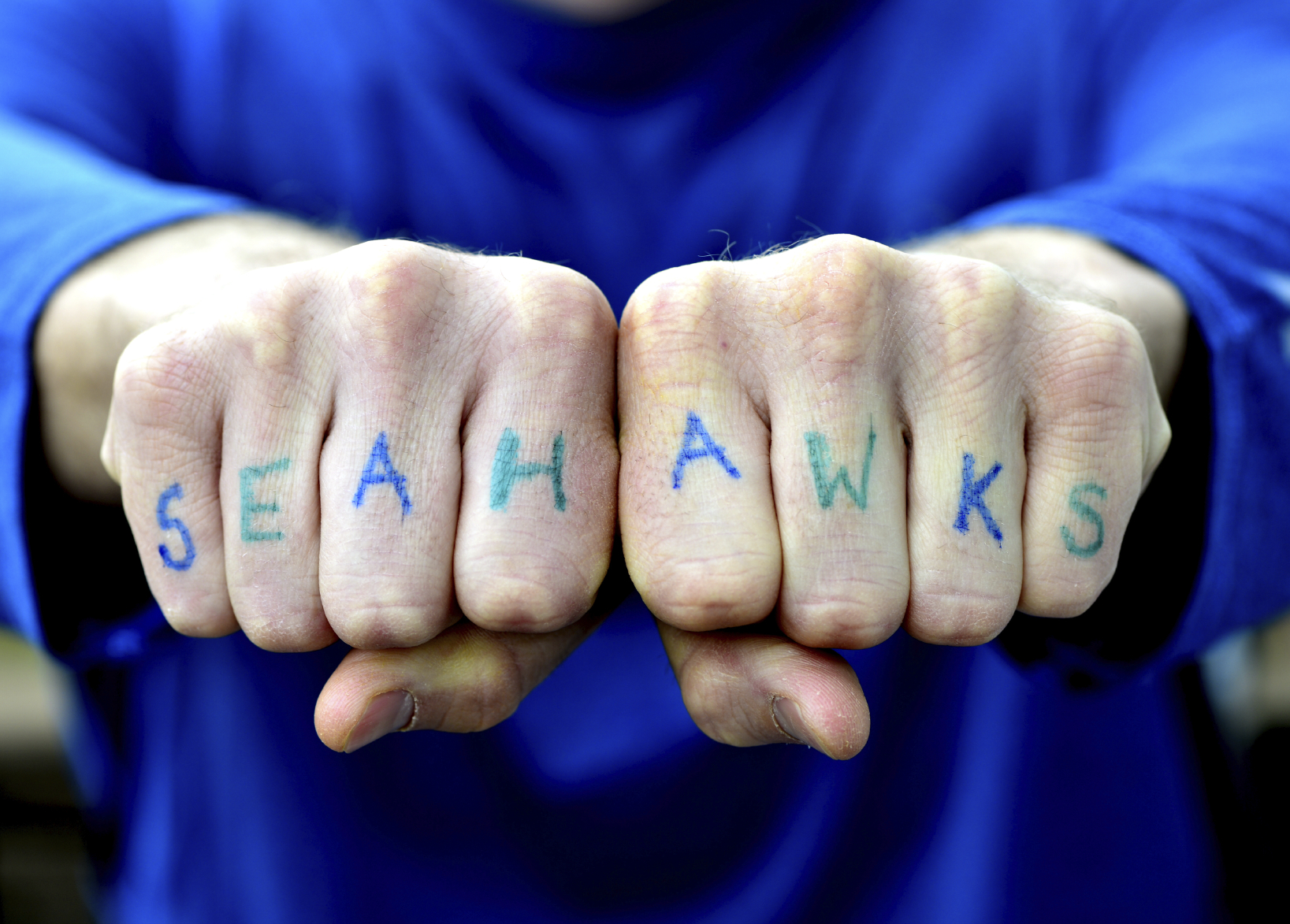
Viewers experienced quite the roller coaster Sunday, but despite the dramatic ups and downs, this game proved the Seahawks’ resilience in the direst times. Teamwork, fan support and a little bit of luck ushered the team to one of the most dramatic comebacks in playoff history, defeating the Packers 28-22 and making the Seahawks the first defending champion to return to the Super Bowl in ten years.
Seattle’s team has some unique qualities that allow teamwork to shine bright. While Russell Wilson has proven to be a talented quarterback since joining the Seahawks as a rookie in 2012, he had one of the worst games of his career – through three and a half quarters. Yet, despite this, he, his teammates and coaches kept a positive attitude and had “no doubt,” seemingly knowing that better things were in store.
In the past couple years, the Seahawks have been one of the NFL’s elite teams. While each player brings great talent and distinct skills, the Seahawks only become that well-oiled, unstoppable machine when the whole is greater than the sum of the parts. Seattle’s receiver corps are an unheralded collection of mostly undrafted players with mediocre stats, yet catches by Doug Baldwin (#42) and Jermain Kearse (#85) were key factors to the game’s turnaround. They contributed to the victory as much as Russell Wilson, Marshawn Lynch and Richard Sherman.
In addition, the team spirit pushed the great ones to rise to the occasion. Lynch hit “beast mode” in the fourth quarter, which seemed to ignite the comeback. Sherman, playing through a noticeably painful injury, surely inspired his teammates to dig deep. And Kearse, the target on all four of Seattle’s interceptions, saved his best for last, his one and only catch of the game being an impressive grab to win the game.
Professionals in the workplace can learn something from this great demonstration of teamwork. First, maintaining a balance is vital. One person cannot do everything. Therefore, it is important to utilize all your resources. Different people have different skills and strengths in a workplace — use this to your benefit. Finally, finding the right mix of professionals will ensure coworkers’ skills complement each other.
Coach Pete Carroll carefully crafted the Seahawks’ roster, with each teammate filling an integral role. Constant evaluation of your team is important. And the most important lesson from this great football game – even during the worst games, strategic teamwork and a positive, supportive and motivating attitude can bring your team to a win.
On Jan. 9 of this year, I posted a blog on “Best Practices for Online Surveys.” As I explained in that post, surveys can provide significant fodder for PR if handled correctly. I offered five helpful tips for anyone wanting to develop a survey.
This week I want to offer some additional wisdom from U.K.-based Stewart Rogers, the director of marketing technology at VB Insight, a leading and highly regarded source for news, analysis and reports on technology innovation. I queried him about his perspective on online surveys, and here’s what he had to say:
Is there an ideal survey length from your perspective?
Obviously, nobody wants to fill in a survey that has 50 questions and lasts 30 minutes, but there really isn’t an ideal survey length. As with most content, the key is to ensure the survey is interesting. The other aspect to keep in mind is variety; mixing up how you ask people questions and get their responses reduces fatigue. For example, I’ll use a dropdown menu for one question, a radio button for the next, and a slider for another.
How do you incent people to respond to your surveys?
At VB Insight we offer respondents the chance to see the data after we’ve finished the survey. Obviously, there is a big difference between raw data and the insights that we glean from that information, plus the additional data we use when creating studies and reports, but our respondents find the results of their survey interesting and useful. There are many ways to garner a response though—it really comes down to ensuring your target respondents are interested in the initial topic.
How do you go about pinpointing your demographic to participate in a survey?
It depends on the survey. Many of our studies are around marketing technology, so readers of VentureBeat are natural participants, but we also work with a range of data partners and surveying tools when needed. For example, in my Digital Pitchforks report—all about how people complain to brands on social media—we worked with Survata to poll over 11,000 U.S. consumers.
How do you figure out how many respondents you need to get a statistically valid sample?
You’d be surprised at the numbers required to generate a statistically valid sample. For a population of about 1 million people, you only need to survey 384 people to get a reliable answer. However, that’s for a single question. When you start asking for compound opinions, the requirements multiply accordingly. Of course, good studies don’t rely on a single survey to help generate useful insights, so we combine these results with other data to ensure we’re telling the whole story.
How do you determine when to distribute your sample?
We have a well-thought-out calendar of reports from VB Insight staff that will take us through to 2016, so we run our surveys based on a schedule that leads us to the publication date. This ensures we always have the freshest data to work from, which keeps our studies interesting and informative.
Hopefully Stewart’s insight, coupled with my original post, will provide a strong basis for planning your next survey. Keep us posted on your results!