
Insights for Leaders Navigating
Visibility, Credibility, and Growth.
From media strategy to reputation management, we explore the trends shaping public perception and share the approaches that drive measurable results for growing brands.
Since I began practicing yoga a year ago I have started to appreciate how the eight limbs of yoga can be applied outside the studio to all aspects of my life, including my career. The eight limbs act as guidelines around how to live a meaningful and purposeful life by offering advice for moral and ethical conduct as well as self-discipline. Although seemingly unrelated, there are several lessons that PR professionals can learn from these ancient teachings to be more purposeful as well. No headstands or downward dogs required.

Build a strong foundation
The limbs of yoga can be viewed as a progression, each one building on the next and preparing the yogi for the next stage of their practice. For example the third limb of yoga, which focuses on postures, is meant to develop discipline and the ability to concentrate in preparation for meditation.
PR professionals can apply the same approach when they start working with new clients. Before diving into media outreach it is important to clarify the client’s key audiences, nail down their messaging, and identify their goals. Once this foundation has been built, develop a long-term strategy outlining the steps that need to be taken to achieve those goals.
Focus your energy
Tapas, one of the 10 living principles of yoga, is about directing all of your energy toward the task at hand. Using your energy in a more disciplined way can help you stay focused and enthusiastic about your current project. PR professionals who work at an agency represent multiple clients and it can be difficult to focus on the task at hand when you’re being pulled in multiple directions. Applying the idea of tapas can help. It’s important to be able to switch gears quickly, but it’s just as important to focus all of your attention on your current task. Whether you’re writing a press release or participating in a conference call with your client, you’ll be more efficient and alert if you’re not multitasking.
Approach each project with a clean slate
Yoga is a liberation teaching, which means it seeks to abolish any notions of “why we are” or “what we know.” Liberating the mind leads to a mental clean slate and allows us to approach each situation without any pre-conceived notions.
Many of us have firmly established ideas around how we should communicate with our clients or what the best strategy for a certain type of announcement is. But just because an approach has been firmly established doesn’t mean it’s the most effective. Having a clean mental slate will allow you to consider suggestions for new approaches and create innovative new ideas yourself.
Breathe deeply
The fourth limb of yoga is about recognizing the connection between the breath, the mind, and the emotions. Although PR can be a lot of fun, it can also be very stressful. When you’re feeling overwhelmed, take a deep breath, let it out, and repeat. Namaste.
Throughout my time in college and now in the beginning stages of my career, friends, professors and colleagues have all stressed the importance of networking. While nothing will ever replace face-to-face networking events, there are continually new ways to network from the comforts of your own home. Specially, people now look to LinkedIn to make connections with other professionals.
While LinkedIn provides an easy solution for networking, it can also be an overwhelming tool due to a dizzying array of functionalities and opportunities. Users can upload their resumes, endorse skills, join groups, and soon everyone will have the ability to create long-form posts—see my past blog on LinkedIn long-form—just to name a few of the site’s capabilities.
With so many opportunities available, simply “being” on LinkedIn isn’t enough anymore, as Liz DeForest pointed out on the Bliss Integrated Communication blog. Networking is a complicated and time-consuming task, but is one that is worthwhile—and one that I definitely need to take some more time to master.
DeForest suggests engaging as much as possible in order to become a better networker and in return enhance your professional brand. So how exactly does one “engage” on LinkedIn?
- Share your thoughts and ideas. Post in groups, share articles you find inspiring, or write long-form posts on experiences in your industry. By actively posting, sharing, and writing, your profile exposure will increase. Be sure to utilize the space on your profile to highlight items that didn’t make your resume.
- Use your connections and use your connections’ connections. Utilizing these relationships can help in client pursuits, personal career growth, and/or recruiting. Strategically connect. Connecting with friends and colleagues is the easy part; the hard part is to remember to connect those who you had positive interactions with in your personal and professional life.
- Make yourself available and visible on LinkedIn so the right people get in contact with you. Maybe a reporter is looking for a resource for an article or maybe a recruiter is looking for the ideal candidate. Regardless of the query, make yourself available for all opportunities that may come your way.
One of my New Year’s resolutions is to better utilize this powerful tool. LinkedIn has proven to be a great resource for many professionals, enhancing their personal brand and extending their network. Professionals share great insight and offer advice from their experiences and expertise, and as the site gains more popularity and expands its capabilities, it will be increasingly important to be active on LinkedIn.
This past week we had the opportunity to help our client Point Inside, the provider of a mobile shopper engagement platform for Top 100 retailers, announce a partnership with major retailer Target. Point Inside now powers new in-store mobile app features for guests at all 1,801 Target stores nationwide, including store-specific product search and location, shopping list creation and interactive maps to help guests quickly find the items they need on store shelves.
The partnership is in line with the blurring between the digital and physical channels that is currently underway within the retail industry, with retailers exploring how to use mobile to connect with customers in stores and personalize the shopping experience. Point Inside is at the forefront of this mobile movement, having been digitizing the indoor retail space for more than five years. By year’s end, Point Inside’s platform will have received nearly 3 billion shopper interactions on more than 100 million devices through the mobile apps of its retail partners, which also include Lowe’s Home Improvement and Meijer, in addition to Target.
To support the announcement, we reached out to a number of highly relevant national business, tech, local and retail/mobile trade press to share the news, generate interest, and secure coverage. In collaboration with the Point Inside team, our efforts were tremendously successful, resulting in 66 original articles to-date and hundreds of article reposts. We also secured coverage in the Associated Press, which was syndicated out to more than 110 other influential outlets. Following is a sampling of the coverage around the news:
- The Associated Press: Tips on getting deals during Black Friday blitz
- This AP article was syndicated across more than 110 news outlets including The Washington Post, Bloomberg Businessweek, CNBC, ABC News, Fox Business, Yahoo! News, Seattle P-I and others.
- TechCrunch: Target’s Mobile App Gets Indoor Mapping, Interactive Black Friday Maps
- VentureBeat: Attention, shoppers: Now you can target anything inside a Target store
- AdWeek: Target’s New App Steers You to the Right Aisle For Black Friday
- The Seattle Times: Local company’s app for shoppers hits Target
- Puget Sound Business Journal: Target’s app maps everything in the store, thanks to Bellevue company
- GeekWire: Target adds in-store spin to iPhone app by adding interactive maps for all 1,800 U.S. stores
- The Drum: Target works with Point Inside to improve mobile app’s instore navigation features
- Retailing Today: Mobile mindset evident at Target
- FierceRetail: Target app introduces interactive maps, shopping lists
- Mobile Marketing Magazine: Target Readies In-Store Navigation for Black Friday Crowds
- Search Engine Land: Target App Now Features In-Store Product Search And Inventory Maps
- MediaPost: Target’s Mobile App Adds Interactive In-Store Maps In Time For Black Friday Specials
- Chain Store Age: Target adds in-store navigation features to app
- iMore: Target’s iPhone app will map out in-store Black Friday deals next week
- Android Authority: Target app updated with Black Friday deal location maps, making it easier to find stuff
- Retail DIVE: Target adds in-store features to shopping app
- Techno Buffalo: Target Updates Official App with Interactive Black Friday Maps
- Mobile Commerce Daily: Target streamlines in-store holiday shopping with app navigation features
- The Consumerist: Target App Now Tells You If Items Are Available In-Store And Where To Find Them
- Multichannel Merchant: Bullseye: Target Adds Mobile In-Store Features
- Next Power Up: Target App Updated With Black Friday Maps
- Street Fight: Target Flips the Switch on New In-Store Navigation Features
- The Drum: How are retail marketers adapting to online consumer trends for Black Friday and the Christmas holidays?
- PSFK: 7 Items You Need to Know Today
- AdExchanger: Time Inc. Picks Outbrain; Merkle Buys 500friends
- The Daily Dot: The apps you need to survive Black Friday
- ClickZ: Mobile 2015: 4 Trends to Watch
- Momentology: Retail Brands Hope Mobile In-Store Maps & Search Yield Treasure
- Integrated Solutions for Retailers: Target Adds In-Store Mapping To App
We want to congratulate Point Inside on all of its 2014 achievements, and are excited to see what the New Year will bring for Point Inside, its retail partners and the future of shopping! For more on Point Inside and how it is transforming the shopping experience, be sure to check out www.pointinside.com.
Contrary to what some may tell you, size does matter. The proof is published in a joint report released last month by IHS Inc., a global source of critical information and insight, and our client Mobidia Technology Inc., a mobile analytics provider with a mega-panel of global smartphone and tablet users.

The report, “Larger Smartphone Screens Drive Greater User Activity,” is based on an extensive set of data from smartphone users in the U.S., U.K., Germany, South Korea and Japan and analyzes the impact of smartphone screen size and resolution on popular mobile applications usage, including those in the social, chat, gaming and video genres. The research covered more than 25 different smartphone models with screen sizes ranging from 3.5 to 5.7 inches and model ages of one to four years from OEMs including Apple, HTC, Samsung and Sony.
The global research highlights the following trends:
- Larger smartphone screen sizes strongly correlate with increased app minutes of usage (see chart below). While the iPhone 6 has a screen of 4.7 inches, the study shows there is a tipping point for screens of around 5 inches.
- iPhone mobile app revenue generated per active iPhone is more than four times as much as Android, despite historically smaller iPhone screen sizes than Android flagship competitors. In Q2 2014, 80 percent of smartphone models launched had screens over 4.5 inches, larger than any iPhone then on sale.
- Higher resolution screen smartphones have higher data consumption, but resolution is less important than physical screen size as an indicator of higher data use.
- Streaming video and social networking apps have a stronger link between increased data consumption and screen size than do chat apps (e.g. WhatsApp, WeChat) or mobile games.
The report should be particularly important to mobile operators and media companies that aim to understand the impact of video delivery on the super high resolution HD screens.
“Analysis of the data clearly shows the positive impact larger screens are having on the industry,” said Chris Hill, senior vice president of marketing at Mobidia. “For instance, users spent significantly more time in streaming video apps like HBO GO, Netflix and YouTube when accessing them from phones with large screens.”
Further evidence that size matters is shown in the below list of articles that have been written about the report since it was released on October 29. For further proof, click here to download the complete report.

Size Matters Media Coverage
Canadians Spending up to Four Hours per Day on Internet, Sometimes Entirely on Mobile
Time Canadians spend online climbs as people shift to small screens
Size matters: Study shows bigger screens lead to greater app usage
Screen size and resolution have an impact on your Mobile Applications
Size does matters when it comes to smartphones
iPhone 6 Plus’ Large Display Spurs Higher App Engagement, New Study Suggests
News Scan: Lenovo closes $2.9B Motorola Mobility buy; Connected cars need more spectrum; more
iPhone 6 e 6 Plus: Schermo più grande, app più coinvolgenti?
iPhone 6 & 6 Plus: Größeres Retina Display fördert das App Engagement
Report: Large-Screen Smartphone Data Usage Higher than for Small Screens
Big Is Better : User Engagement Is Directly Proportional To Mobile Screen Size
If Smartphones are Content Consumption Devices, Screen Size Should Matter – and it Does
iPhone 6 Plus’s bigger screen leads to higher app engagement
Larger smartphone displays drive minutes of use in apps and more mobile data consumption, says IHS
App use grows with screen size
Larger screens means more time on apps – study
670,500 adults in Washington state have diabetes; that is nearly 10 percent of the population. This number is predicted to grow to nearly one million by 2025. When learning these staggering statistics, I was shocked. Of course, I was aware of diabetes and I have personally seen the hardships it creates because my cousin was diagnosed with Type I a few years ago, however, I had no idea how many people this disease affected.
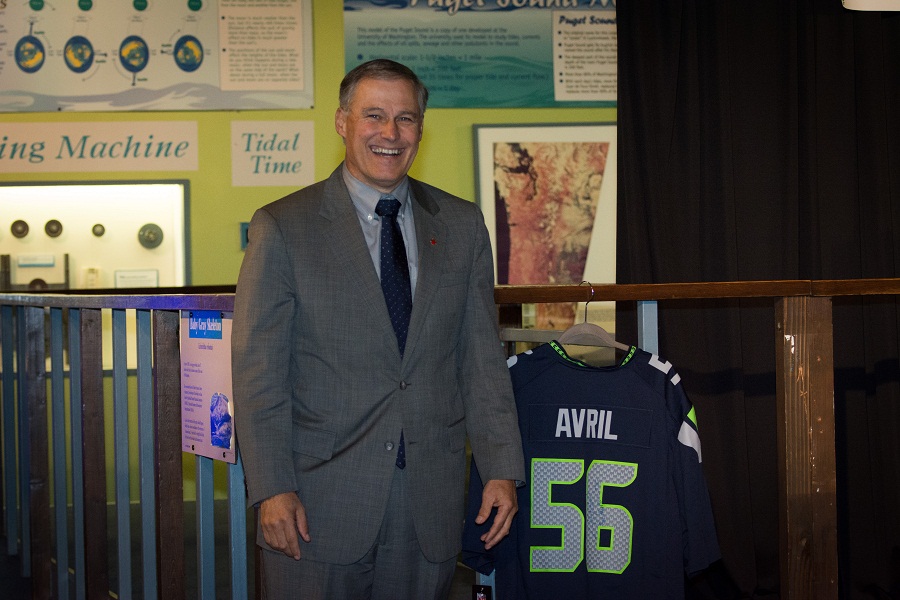
So, when Communiqué received an invitation to assist with promoting World Diabetes Day Seattle, I was thrilled to take part in such an important cause. World Diabetes Day is a worldwide campaign that occurs every year on November 14, during Diabetes Awareness Month. It focuses on raising awareness for the growing number of people with diabetes and those at risk. Cities all over the world partake in this campaign, including Seattle. While World Diabetes Day Seattle pursues the global goals previously mentioned, another very important aspect of the Seattle event is highlighting the astonishing strides made by our local research community.
We understood that our role of securing coverage would be an important aspect of inviting and educating the community. Communiqué decided the best way to promote the event to the community was to attain calendar listings in local publications and news sites, secure broadcast coverage and invite people through social media. We secured 16 calendar listings, tweeted 381 times, gained 295 Facebook likes, received mentions on King 5 and Q13 Fox and attained two segments on Evening Magazine (see below for an outline of the results).
Our efforts, combined with the hard work of the entire World Diabetes Day Seattle team, led us to attract a crowd of over 300 people on November 14. Not only was the attendance high, but the event itself was inspiring and lively! Governor Jay Inslee spoke about his personal connection to diabetes and his commitment to fighting the disease and award winners spoke with passion and conviction when describing their innovative ideas and research projects. Blitz the Seahawk and Blue Thunder, the Seahawks’ drum line, brought an infectious energy to the crowd as we marched through the Seattle Center to the Zumba flash mob at the EMP.

We had an incredible time working with the more than 20 partner organizations involved, the Seahawks, the local community and the rest of our event team! We are amazed by the outpour of support we saw and cannot wait to see what World Diabetes Day Seattle 2015 can do! We hope to see you there!

- King 5
- Q13 Fox
- Evening Magazine, Nov 17
- Evening Magazine, Nov 28
Facebook Page:
Twitter Handle:
Calendar Posts:
- The Seattle Times
- 425 Magazine
- Seattle P.I.
- Seattle Refined
- King 5 News
- Capitol Hill Seattle Blog
- Kent Reporter
- Kitsap Sun
- My Ballard
- Redmond Reporter
- Auburn Reporter
- Bellevue Reporter
- Courier-Herald Newspapers
- Marysville Globe/Arlington Times
- Peninsula Getaway
- Lake Stevens Journal
As fear of Ebola dominates news waves and this week’s elections, one of the most interesting—and polarizing—stories to hit is of quarantined American nurse Kaci Hickox. Testing negative for the disease after treating patients in West Africa, Hickox returned to her native Maine, where she has been forced by state politicians to undergo a 21-day quarantine. Outspoken in her rejection of the quarantine, Hickox has been decried by politicians and the public alike.

The story has hit a public nerve in part because it documents the collision between politics and public health. What is politically expedient may not be science-based, and everyone from governors to physicians has an opinion on where Hickox’s quarantine falls. More broadly, the public’s largely negative reaction against Hickox highlights the tension that erupts when the public’s perceived need for safety compromises another’s freedom. Situations that involve such a heightened sense of emotion beg to be treated carefully and strategically by all involved.
From a PR perspective, there are significant lessons to be learned from Hickox’s interactions with journalists and the media frenzy that followed. Here are our biggest takeaways from the media fiasco—lessons that can be applied to everything from a sticky situation with a journalist to full-on crisis communications.
Validate People’s Fears, Even if You Don’t Agree with Them
Even if Hickox’s point is justified and valid—it’s hard to argue that public health policies shouldn’t be science-based—validating others’ emotions can move mountains in terms of appearing more empathetic and getting more people to take your side.
Hickox’s lack of validation of people’s fears led to a portrayal of her as careless and reckless on Saturday Night Live, countless accusations from commentators that Hickox is selfish and cavalier and even the trending Twitter hashtag “me-bola.” A simple acknowledgement that people have a right to be afraid of Ebola would help assuage people’s concerns that she doesn’t care about them or their fears.
In every crisis situation, but especially ones where fear is a prominent emotion, people want to feel listened-to. After validating people’s fears about Ebola, Hickox’s could pivot to her strongest argument: Government and public health policies should be evidence-based, and this one simply isn’t.
State Your Most Salient Argument Early On—And Repeat It Often
While Hickox’s argument that her human rights are being violated may have validity, it is the weakest of her arguments because it is focused on her and can easily be refuted. Many have turned the argument back around swiftly, arguing that their human rights will be violated if Hickox chooses to “threaten” others with her physical proximity.
Hickox’s strongest, most irrefutable argument is that all health policies should be science-based and not driven solely by populist politics and fear. She could then pepper the argument with statistics and anecdotes to drive it home. This is her strongest proof point, and she should return it regularly.
If “This policy isn’t science-based” versus “My human rights are being violated” became the sound bite, the emphasis would shift to the policy itself, not her personal beliefs. This is a stronger, more convincing position to be in. Identifying and repeating the strongest, most irrefutable message first can help improve public perception and convince key audiences.
Help Key Parties Save Face and Look Competent
Lastly, the governors of Maine and New Jersey likely instated a quarantine for Hickox not solely out of concern for public safety but also to demonstrate to their citizens that they were taking action against Ebola. This move probably helped assuage some people’s fears, and in that respect, it was effective.
However, when Hickox went on an hour-long bike ride, publicly defying the quarantine, she, simply put, made the politicians who instated these policies look incompetent. Had she sought to work with the politicians and seek a compromise earlier on, they may have been more likely to work with her and help her achieve her goals of changing the quarantine policy.
Especially in a highly public situation, no one wants to look incompetent—and Hickox could have used this to her advantage. By agreeing with aspects of their policies and improving public perception of the politicians, she may have been able to change the quarantine policy with politicians’ help and gain more traction with the public perception of her argument.
The bottom line? Conciliation, validation, and on-point messaging can go far in any crisis situation.