
Insights for Leaders Navigating
Visibility, Credibility, and Growth.
From media strategy to reputation management, we explore the trends shaping public perception and share the approaches that drive measurable results for growing brands.
The new social media site Ello has exploded in popularity recently among people seeking a social network that doesn’t fill their feed with advertisements. AdWeek reported that the invitation-only site is receiving 45,000 hourly requests to join, which is far more than the fledgling site can handle. This leads brands to wonder – what is their role on the hottest new social media site?
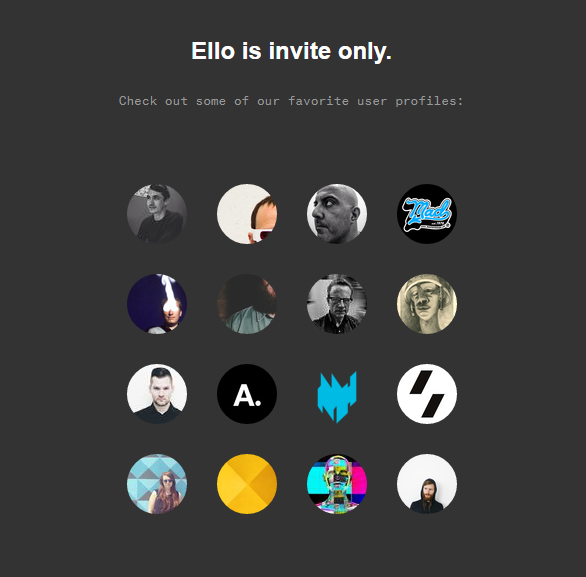
Ello is being called the “anti-Facebook” for its stark aesthetic and its promise not to allow advertisements, sell data, or require users to register under their real name. The site’s manifesto says that, “Collecting and selling your personal data, reading your posts to your friends, and mapping your social connections for profit is both creepy and unethical.”
Even though the site clearly states its rejection of social-media brand advertising, some brands have already jumped on the Ello bandwagon and created company pages. Among the early adopters are Netflix, Sonos, and the Wall Street Journal.
Many people think these brands are foolish. Ello’s manifesto makes it clear that the site is a gathering place for people who are sick of brand advertising infiltrating their social networks so obviously any brands who try to join the party will be shunned.
But Ello founder Paul Bidnitz’s bicycle shop has a brand page, which some argue sets the precedent that brands are welcome on the site, as long as they’re not trying to advertise. In addition, Ello users choose who they want to follow, so if they do not want to see a brand’s posts they never have to.
So should your brand join Ello? At this point, it would probably be wise to wait. Ello is still in its early stages and it is not clear whether its business model is sustainable. Since it could be a passing fad, it is not worth it to invest resources in it yet. In addition, brands that jump in too quickly without thoroughly evaluating the community dynamic run the risk of facing backlash from other users. For now, brands would be wise to monitor how the network develops in the upcoming weeks and months before creating a page.
What do you think? Should brands jump on Ello now or wait to see how it develops?
It’s impossible to ignore the ongoing coverage of the global Ebola crisis. Reading the latest on the outbreak—particularly in the hardest-hit areas—is at once fascinating and heart-wrenching. It’s deeply troubling. And lately, above all, it’s terrifying.

At the heart of many of the stories around Ebola is its growing danger and the pervasive fear that is rising among the public as a result. The media has even given this a name—“fear-bola”—and in many cases, its coverage of the crisis seems to perpetuate it. CNN has a whopping 16 articles related to Ebola on its home page as I write this, with headlines highlighting everything from false alarms to school closures and CDC failures. The Wall Street Journal is reporting the response as “unacceptable,” while CBS News is saying Dallas might declare a “disaster” over its recent Ebola cases. The negative media attention is so pervasive that the Dallas hospital at the center of the chaos felt the need to hire a PR agency to handle its crisis communications.
Through all of the coverage, one aspect that has particularly struck me is the profound effect of emotions on people’s behavior. Confidence—or its opposite, fear—among consumers is one of the biggest indicators of the state of our economy and of our everyday lives. If I’m scared I’m going to lose my job, I’m not going to go out and buy a house, simple as that. When we lose faith, it defines our mindset and actions.
The media plays an incredibly powerful role in creating this fear or confidence. We rely on the media to inform us, to offer us the facts we need to know and tell us what’s important right now, but we often forget just how powerful this influence can be. By selecting and focusing on certain issues and perspectives, the media impacts our worldview and directly shapes our behavior.
This can be good in some ways. Focusing on an issue, especially one as pressing as Ebola, makes us aware and vigilant. It prompts public support and encourages people to take action. But a fine line exists between reporting the news in a way that promotes a positive response and a way that promotes hysteria. With CNN running ridiculous statements like “Ebola: The ISIS of Biological Agents?” and “’Fear-bola’ hits epic proportions,” I cannot help but find myself asking: At what point does beneficial mass media attention cross the line into fear mongering and sensationalism?
We’ve seen it time and time again. From Y2K, to the anthrax scare following 9/11 and the more recent swine flu outbreak, the media has shown the ability to play a major role in not only establishing what’s top of mind among consumers, but also contributing to a culture of fear that affects the health of our society.
This negative effect was particularly striking last Wednesday when the Dow tanked more than 400 points, with worried shareholders unloading stocks (particularly airline stocks) due to public anxiety over Ebola. It was the worst day of trading in nearly three years—at the center of it all a disease that, although terrible, is terribly hard to contract. Add in the stories of Americans fearfully asking their doctors about Ebola symptoms and others preemptively buying up protective gear, and we get a clear picture of the direct effects of mass media coverage on our daily lives and behaviors.
Ebola is a very real, horrible issue, and I am not in a position to say whether the coverage is justified or the fear is warranted. What I would argue, however, is that it’s critical to be aware of what we are exposed to through the media, to ensure we examine issues from all perspectives, and to thoughtfully consider actual risks before allowing an issue to consume our thoughts. Letting our emotions outweigh reason will only cause panic that does nothing but create an entirely new issue and worsen the one already at hand. There are thousands affected by Ebola who direly need our help, and living in fear is not going to solve the crisis.
Are you ready to integrate business intelligence within your company to better understand organizational performance? This week, our client VoloMetrix announced that it has secured $12 million in Series B funding to help grow its business and aims to triple its headcount within the next 12 months.

While many companies currently use real-time, external customer analytics to inform business decisions, VoloMetrix’s technology applies its sophisticated analytics internally to company-gathered data on employee behaviors and the company’s social graph. The anonymous and aggregate data extracted from company emails and calendars illuminates organizational health issues and provides actionable insights for sales, customer satisfaction and employee attrition. Once companies know how time is spent, they can analyze trends and develop business objectives to help streamline and improve performance.
VoloMetrix was founded on concepts from the consulting world—inspired by time-and-motion studies that examine how time is used within businesses around the globe. Last month, the Seattle-based company filed a patent on its algorithms that assess organizational health and examine how internal communication trends tie to business outcomes like organizational alignment, employee engagement and sales performance. It has over two dozen enterprise customers, including Symantec, Genentech and Seagate.
Here is just some of the coverage our team at Communiqué helped to secure surrounding the news this week:
- Forbes: VoloMetrix Raises $12 Million Series B–Analytics For Organizational Performance
- Dow Jones Venture Wire/WSJ: Business-Analytics Company VoloMetrix Secures $12M in Series B Funding
- The Wall Street Journal: New Office Flashpoint: Who Gets the Conference Room?
- Fortune: Data Sheet—Monday, October 13, 2014
- Reuters PE HUB: Split Rock Partners leads $12 mln round for VoloMetrix
- The Seattle Times: “People analytics” startup VoloMetrix raises $12 million
- TechCrunch: VoloMetrix Raises $12M For Its People Analytics Service
- VentureBeat: VoloMetrix, pushing an app to track employee productivity, scores $12M
- VentureBeat: Funding Daily: Mixology and productivity
- Xconomy: VoloMetrix Raises $12M to Market ‘People Analytics’ Software
- GeekWire: Analytics startup VoloMetrix scores $12M to measure productivity of employees
- Puget Sound Business Journal: Seattle startup VoloMetrix raises $12M, plans to triple staff
- Silicon Angle: Startup VoloMetrix nets $12M for people-focused analytics
- Upstart Business Journal: The Pipeline: Bill Gates gets diagnostic, Steve Case spreads startup love
- FinSMEs: VOLOMETRIX SECURES $12M IN SERIES B FUNDING
- FinSMEs Executive Q&A: VOLOMETRIX, INTERVIEW WITH CEO RYAN FULLER
- Talkin Cloud: Volometrix Raises $12M in Series B Funding to Triple Headcount
- Next Power Up: VoloMetrix Brings In $12M In Funding
- Northwest Innovation: VoloMetrix Lands $12M
- Briefly Today: VOLOMETRIX RAISES $12M FOR ITS PEOPLE ANALYTICS SERVICE
- CrunchBase: Funding and Acquisition News from CrunchBase
- Tropical Post: VoloMetrix Raises $12M to Market ‘People Analytics’ Software
- Xconomy: Seattle Roundup: Costco, Sworl, GraphLab, AnswerDash, Tack, & More
This week, AnswerDash, a website customer service tool that allows visitors to find contextual answers anywhere on the page, announced its General Availability in tandem with a major national customer, the U.S. Green Building Council (USGBC). AnswerDash spun out of The University of Washington’s Information School, after years of research on human-computer interaction, and is the world’s leading contextual answer service technology for websites and web apps.

In his research at UW, CEO Jake Wobbrock unearthed a fascinating connection between language development and people’s experiences online that drove the company’s product design. When a child has a question, he/she typically points at the object in question rather than describing the item and then articulating his/her question about it. Forced to engage in the laborious and time-intensive process of description and articulation, most children would become irritated and abandon the question altogether.
It turns out, adults trying to ask questions online behave similarly if they’re forced to describe and articulate. Pointing is inherently more efficient, requires less output, and makes intuitive sense to both the question-asker and the person answering. And yet, typically, we aren’t able to ask questions online the way that we’d prefer to in person.
When we have a question on a website, we’re generally forced to engage in that very process of description and articulation via live chat, email, or the phone, if we’re particularly motivated. Alternatively, we visit an outdated FAQ page that’s divorced from the original content about which we had a question, and then we dig through a laundry list of questions to hopefully find ours.
None of these options is particularly intuitive or user-friendly, nor do they mirror how humans actually prefer to ask questions: in context and with fewer words rather than more.
That’s where AnswerDash comes in. Websites and apps powered with AnswerDash allow users to click or tap anywhere on the page to see commonly asked Q&As about the text or object. Visitors can also add new questions, and after a question is answered once it becomes part of the “answer layer,” without further involvement by the company. The “answer layer” grows with site visits, illuminating where and when customers have questions, providing quick answers, and deflecting commonly asked questions from escalation to live chat, email, or phone tickets.
A common refrain among briefings with journalists this week was, “[Exhale] That makes so much sense… I wish XYZ site had this. I was trying to accomplish something earlier today and couldn’t figure out how to do it but didn’t want to call and be placed on hold forever and a day.”
In response to the General Availability and customer announcement, Ashley Katz, director of marketing for USGBC said, “We chose to adopt AnswerDash’s technology to offer site users instant answers to their questions. We have estimated that the number of assisted support tickets has been drastically reduced, resulting in over $14,000 in support savings over the last 30 days.”
With AnswerDash’s help, commonly asked question about the USGBC’s LEED certification are answered quickly, efficiently, and contextually. No longer forced to describe and articulate their questions via live chat or phone, customers get their questions answered easily and can proceed with accomplishing their purposes in visiting the site.
Coverage garnered from the announcement includes:
- Xconomy—Seattle Roundup: Costco, Sworl, GraphLab, AnswerDash, Tack, & More—10/17
- Website Magazine—Q&A For Every Page of Your Site –10/14
- VentureBeat—U. of Washington-spinoff AnswerDash launches to make everything on a Web page questionable—10/8
- Reposts of the VentureBeat story also appeared on these websites:
- Viral News 365—U. of Washington-spinoff AnswerDash launches to make everything on a Web page questionable—10/8
- Atlanta Journal—U. of Washington-spinoff AnswerDash launches to make everything on a Web page questionable—10/8
- Software Industry Today—U. of Washington-spinoff AnswerDash launches to make everything on a Web page questionable—10/8
- Tech Investor News—U. of Washington-spinoff AnswerDash launches to make everything on a Web page questionable—10/8
- TMCNet—AnswerDash makes websites more helpful—10/8
Press release reposting’s included the following:
- GoInfraGreeen—U.S. Green Building Council Selects AnswerDash Contextual Website Help Technology to Power USGBC.org—10/8
- News.nom.co—U.S. Green Building Selects AnswerDash’s Contextual Website Help Technology to Power USGBC.org—10/8
In the past, AnswerDash has also received great coverage from the following outlets, including Wired, Entrepreneur, GeekWire, Seattle Business Magazine, and Xconomy:
- Changing Consumer Behaviors Make Self-Service Inevitable—Destination CRM—9/26
- Business 2 Community—How Millennials Require us to Design the Technologies of Tomorrow – 9/17
- Hospitality Technology – How Hotels Can Combine Self-Serve and Customer Service at the Website – 9/10
- LinkedIn – Customer Experience and Non-Verbal Communication – 9/5
- Wired Innovation Insights — How Millennials Require Us to Design the Technologies of Tomorrow – 9/5
- LinkedIn – Focus on What Your Customers Do—Not What They Say – 8/12
- LinkedIn – How Marketing Can Kill Your Website Conversion Rate – 8/5
- LinkedIn – 5 Ways to Improve Online Customer Experience with Website Self-Service -7/28
- Entrepreneur – Ivory Tower Research and Startup Innovation Are Two Sides of a Coin -7/19
- Xconomy – Q2 In Review: Fire, Fundings, Floating Wind, Biotech Ups and Downs – 7/2
- Seattle Times – UW research spawns 18 companies in past year – 7/2
- Xconomy – UW Breaks Last Year’s Record With 18 New Companies Formed – 7/2
- Geekwire – New record: University of Washington spun out 18 startups last year – 7/2
- Website Magazine – Power to the People: How to Make Self-Service a Priority for Your Website – 6/20
- Seattle Business Magazine – Bright Idea: UW-spawned Platform Makes Websites More Responsive – 6/1
- Xconomy – Stuck on Website ‘Help Island’? -5/23
- Geekwire – UW Spinout AnswerDash Launches, Name Change -5/20
- Northwest Innovation – Qazzow Becomes AnswerDash -5/20
With the recent addition of LinkedIn long-form publishing, all LinkedIn users will soon have the potential to reach thousands, if not millions, of viewers. While some LinkedIn users previously applied and then publishing capabilities, in the coming months all users will be granted access to long-form publishing. With such a robust opportunity to expand and enhance one’s personal and professional brand, I wanted to learn more about just how to get in front of the best and largest audience. Below are some tips and tricks to best position a long-form post.
1. What should your post contain?
The intention of LinkedIn is to help users grow their professional networks, so, with that in mind, posts should be professional. LinkedIn suggests sharing such insights as opportunities and or challenges that lead you to where you are today, trends that you foresee in your industry, or any knowledge or expertise you may have in your field.
As for the content of your post, keep it clear and concise, avoiding including many topics in one post. While there is no word-count restrictions, LinkedIn suggests that the best-received posts are ones that are at least three paragraphs or longer and ones that are not overly promotional. LinkedIn does not provide editors, so it is highly suggested that you find someone to edit your post before publishing.
For increased engagement, LinkedIn suggests posting earlier in the workday, as not many people will be reading LinkedIn article at 10 p.m. on the weekend, and including pictures, videos, presentations, or documents to further signify your expertise on the topic. A creative headline always helps too.
2. Where will the post go?
Long-form posts appear on the Posts section of your LinkedIn profile. Regardless of channel assignment, LinkedIn will share posts automatically with your connections and followers. Members not in your network can now follow your long-form posts to receive updates when you publish as well.
It is also important to note that anything you post to your long form is searchable on and off LinkedIn, meaning someone can Google your name and the content will appear.
3. How can I get my post on specific channels?
The variety of channels, and the large number of followers, is a draw for many people to post long-forms. So how exactly is a post assigned to a channel?
LinkedIn uses an algorithm to determine channel assignment, however, not all posts are assigned to a channel. The algorithm looks at the content of the post and not your profile information. LinkedIn reiterates that they “aim to match the right content with right professional, so that every member sees customized professional news and insights that inform and inspire them.”
While LinkedIn claims that a post on a channel does not necessarily mean increased views, it certainly seems that posts have a more limited reach when not assigned to a channel. Essentially, the goal is to get on a channel because it means instant reach to those channel followers in addition to your connections and followers.
We were unable to get specifics as to how exactly the algorithm operates, when it runs, etc., but making sure your content is relevant, high quality and professional will ensure better metrics and a larger reach. According to LinkedIn, this algorithm and process is evolving as the company explores options to find the best way to present content, where to present it, and to whom to present it.
Rest assured, though, that there is still potential for your post to reach those outside of your connections and followers even when there is no channel assignment. This reach can happen through interactions such as likes, comments, and shares, which will distribute your content beyond your immediate network.
Long-form posting is an exciting, new tool that all professionals should utilize. It presents a unique opportunity to continue building your personal and professional brand, share your expertise, and reach a large number of professionals.
You know a presentation is effective when you are still thinking about it days later. This morning I found myself reflecting on T-Mobile CEO John Legere’s 45-minute fireside chat at the GeekWire Summit with GeekWire co-founders John Cook and Todd Bishop. It got me thinking about why it was so penetrating. Here are my thoughts.
1. John Legere seems authentic and very comfortable in his skin with his colorful language and ability to make humorous, self-deprecating remarks.
Even in jest, it takes confidence to make self-deprecating remarks, which Legere did at several points in his presentation. As Forbes points out in one of its articles, “We love people who don’t take themselves too seriously. We applaud self-deprecation. And we like to use it ourselves—especially in the office.”
Legere‘s personal stories, in which he poked fun at himself, generated laughs, made it easier to relate to him, and were disarming. Just check out minute 15:01 of the video when he spoke about being home alone in the evening and, because he has no friends, is listening to T-Mobile customer calls via his observation number.
One word of caution, before attempting to emulate Legere: Be sure to read the full Forbes article entitled “When Self Deprecation Goes too Far” – it is a good reminder of how this practice can backfire.
2. Legere shared information that was inspiring, helpful, and relevant. He clearly knows his subject matter.
He offered some important reminders throughout the session. For instance, he spoke about the importance of listening to customers, finding the fun in everything, and the importance of being able to move quickly.
Specifically, Legere mentioned he learns everything he needs to know to run T-Mobile from the information and insight he gleans directly from customers on Twitter and by listening in to customer service calls. I also found it impressive that, as the head of a publicly traded company, Legere manages all his own Twitter and email messages.
His other advice for the GeekWire audience was to push the envelope. According to Legere, “The world is waiting for people to step out.” Whether it is leveraging Twitter or setting lofty goals, he thinks folks need to take it to the extreme.
Finally, he reminded us of the importance of both the “what” and the “how.” Most HR teams in the corporate world are looking at both “what” you have accomplished as well as “how” you accomplished it. Clearly, Legere – like all of us who are working – needs to deliver tangible results and he is doing so in the form of new customers, a robust network and strong brand, and rising share price, but he is doing it in a unique and bold manner that is refreshing to watch.
3. Legere seemed to relish the shock value but at the same time has a playful approach.
His language was colorful and profane, but he kept things light. For instance, he did not get defensive when John Cook pressed him about the launch of the Amazon Fire phone and how Legere was visibly upset at the time of its unveiling that Amazon announced an exclusive deal with AT&T Wireless. Legere did a fantastic job of diffusing John’s question with humor as well as explaining his perspective on Amazon’s decision to get into the phone business, and if T-Mobile will carry the Fire if Amazon offers the product to them.
With regard to the profane language, it seems to work for Legere. My take is that he uses expletives to show strong emotion, catch attention, sound cool, and relate to a younger, more informal workforce and customer base. I would encourage most executives to take the safe route and avoid this practice when speaking publicly. There are other ways beyond profane language to make your presentation exciting, and when you use profanity, you run a risk of alienating people. In fact, even Legere has run into issues with his choice of language.
4. He directly engaged the audience during the presentation.
Legere spoke to the audience with his body language and eye contact as well as by directly asking for audience input on things like his Twitter poem for National Poetry Day. He also asked for a show of hands of people on Twitter, as well as for the number of people who had run a marathon, and finally suggested that someone in the audience try to bend an iPhone 6. It is widely known that the practice of directly engaging your audience is a smart move and it is not that difficult to do. Surprisingly, many speakers at the GeekWire Summit did not do this and missed a tremendous opportunity to establish a deeper connection with attendees. More people should follow Legere’s lead around this as they work to improve their art of public speaking.
5. He stayed afterward and spoke with people
Unlike many of the CEOs I have heard speak, Legere posed for pictures and mingled with the crowd after his session. He made himself accessible in a warm and approachable manner that I have seldom seen with executives. People flocked to him and he seemed wholly comfortable chatting with them and engaging in small talk.
All and all, I thought Todd Bishop and John Cook staged an entertaining and informative GeekWire Summit, but John Legere was truly the highlight of the day and his presentation is one that I will remember for a long time.