
Insights for Leaders Navigating
Visibility, Credibility, and Growth.
From media strategy to reputation management, we explore the trends shaping public perception and share the approaches that drive measurable results for growing brands.
How long would it take for your organization to obtain 40 million customers for a new product? For Google+, it took less than six months. And while comparatively adoption of the Google+ brand pages for organizations is relatively slow, the potential for such a page to significantly impact your organization is considerably high. We’ve included some examples of how businesses are using it below.

If you’re like many people out there, you’re wondering how or why to use this new social networking tool. We have four insights that may help you make a sound business decision about adopting a Google+ brand page.
1. Your followers pick you. Customers have to seek you out and add you before you can add them to your “circles” on Google+. As a result, the people following your brand on Google+ are the right people – they want to engage with you.
2. It provides for targeted communication efforts. You can group your followers in “circles,” and can target your content to specific groups. If you have one message for employees, your customers don’t have to see it. If you have a product that crosses specific industries, you can tailor a message for customers in one segment, and have a completely different message for another group of customers. You can post written content, link to a video, share photos or “hang out” (see next tip).
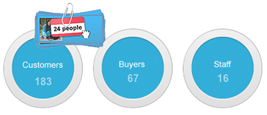
3. Hangouts provide for personalized communication. A “Hangout” is a group video chat feature included in Google+ that allows you to interact with your followers in a personalized video conference chat. You can hold business meetings, demo a product via the Share a Screen feature or brainstorm a new idea with the SketchUp feature. While only 10 people can actively participate in a hangout, there is no limit to the number of viewers.
Macy’s, for example, did a Hangout where it brought in fashion bloggers to give fashion advice to its followers on Google+.
Photographer Jim Davis recently used a Hangout to discuss specific techniques with other photographers. In this example, notice how he shares the screen.
In another example, a guitar studio used a Hangout to provide a group guitar lesson.
4. It perpetuates your brand. Do you want to be #1? Then you need to embrace the +1.Google’s +1 button is Google’s way of tracking who is endorsing and/or interacting with your brand on the web. For example, Mashable posts news content online. Readers may like a story and choose to click the +1 button to give it a positive review (similar to a “like” button on Facebook), and choose whether or not to post the recommendation from their own Google+ individual pages.

While Google is still smoothing out all the wrinkles in this new social network, soon you will be able to analyze data related to the +1 clicks to see what is interesting to your followers. It is recommended that you incorporate the +1 button onto blog sites and editorials posted from your organization’s website.
Google offers easy-to-use code and various G+ buttons so that you can link your organization’s site to Google+. To find your specific code and buttons, go to the “Get Started” option under your brand’s name and avatar on your Google+ home page, then click “Connect your website.”
In addition, by linking to your Google+ page from your organization’s website or other social media channels, your page becomes eligible for Google+ Direct Connect, a resource for users to find and follow brands on Google+ via Google Search. Just as search engine optimization weighs pages to determine placement in the results of a Google search, Google+ Direct Connect uses an algorithm to weigh Google+ pages and return results that are appropriate to the user.
Based on these insights, we think Google+ is worth your organization’s time. However, there are three additional things to consider when you move forward.
- Choose your “owner” carefully. At this point in time, only one individual can “own” the Google+ brand page. It is linked to a single individual’s Google+ profile. Google notes that multi-administrator support is coming before the beginning of 2012. Until then, identify a person who you feel will be with the organization for the long haul to create and manage the page as there is currently no way to transfer ownership, which is tied to an email address, to another person.
- Post with care. Because the organization brand page is linked to an individual’s Google+ page, there is the opportunity for the user to post personal content to the company’s page. When posting, take time to check which page you’re posting from. (We have tips for Tweeting on behalf of an organization that are also applicable to managing a company’s Google+ page.)
- Design capabilities are limited. To those who thrive on the creative adaptability of some social media channels, Google+ pages have limited design capabilities, much like Facebook. Designers can change the company logo and the header art, which is displayed in five small boxes at the top of the profile. While this may seem stifling, some organizations have creatively used the five boxes to create a visually stimulating space.
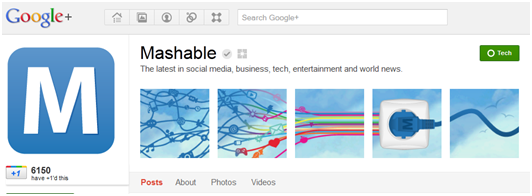
Overall, by targeting people who want to hear from you, allowing more ways to conduct business remotely and enhancing search engine optimization, Google+ brand pages have a lot of promise. Even if you are not ready to take the time to build the brand page, claiming your space now is a great idea. In fact, we give it a proverbial +1.
Share with us: Have you created a Google+ brand page for your organization? What are your experiences?
Joni Kirk
At the end of every year, media outlets and blogs around the world curate powerful image galleries or compose stories that cause us to pause and reflect back on the year’s top events and headlines. From turmoil in the global economy and tragic natural disasters that hit Japan and Missouri, to global uprisings like the “Arab Spring” and the Occupy Movement, 2011 has been another monumental year.

Recently, Ragan.com featured an article on the “Top 7 PR Disasters of 2011,” recalling the unfortunate missteps and actions of individuals and large corporations that have left reputations tarnished, and propelled PR teams into crisis management in an effort to repair the damage.
While no one ever knows when a crisis is going to happen, this should not delay the development of a crisis communication plan. When a crisis does occur, time is of the essence. It is the actions a company or an individual take within the first 24 hours that sets the tone for how the media and general public will react. By developing your plan now you will be able to react faster and make more effective decisions if and when you are in the midst of a crisis.
What information should you include? Below are some of the key elements, no matter the crisis.
- Identify Your Crisis Communication Team. First and foremost, it is important to identify the key individuals within your organization who will be part of this core team. These individuals will most likely include your CEO, senior executives across your public relations, legal and human resources departments, and other functionaries depending upon the crisis.
As you form the team, define what each of their roles and responsibilities will be during a crisis, and conduct formal training to practice the decision-making process. We also highly recommend conducting formal media training to ensure your spokespersons are well prepared to speak publically during the crisis.
- Develop the Response Action Plan. When a potential crisis situation arises, it is important to gather all of the facts as quickly as possible – who, what, when, where, why and how – and confirm the information with reliable sources. Consider developing a checklist of the essential questions you will need to ask to ensure you capture all of the information during a crisis. Next, determine how the core crisis team will be notified at the onset of a potential crisis, and come together quickly to assess the nature and scope of the issue.
During this stage the team must determine the impact the crisis has on the company and the perceptions it may create among your key influencers. Once identified, the crisis team should develop an action plan that will include the objectives and goals to achieve, what materials to develop, how to notify all of the key stakeholders, and the plan for providing ongoing staff support and communication.
- Developing Your Key Messages. During this stage the key facts you have gathered and confirmed will be critical. When developing your messaging, it is important that you share only indisputable facts and how your company is dealing with the issue. With proper media training, your spokesperson(s) should have the ability to effectively communicate these key messages, show and speak about them with concern, and respond to the toughest questions. An ill-worded response or speculation only creates more questions.
Since time is critical in a crisis, you should develop prepared statements and press materials in advance where you can quickly insert the key facts you have gathered, and share immediately when knowledge about the crisis becomes widely known. As the crisis evolves, you will need to change your messaging to continually keep your key audiences informed at all times.
- Leveraging Various Communication Channels. Depending on the crisis and your organization, you will need to determine what communication channels to utilize in order to accurately and swiftly communicate with your key influencers.
For your employees, you will most likely issue an urgent email to the entire company and if possible conduct an all-hands meeting for your spokesperson(s) to share the facts of the situation and how the company is managing it. When working with the media, you may consider issuing a press release or statement, conducting a news conference, facilitating interviews for media to speak with your key spokesperson(s), or any combination of these options. Another way to communicate to both your internal and external audiences is by creating a dedicated webpage on your company’s website to share the key facts and provide updates during and after the crisis.
If your company has a presence on social media, do not ignore this channel. It is important to immediately engage with your communities whether they are on Facebook, Twitter, YouTube or any other social media platform. By sharing the same messaging and key facts with them, your fans and friends can help to amplify your messaging during a crisis. Be sure to monitor conversations closely to identify and dispel any rumors or misinformation as quickly as possible.
These are just a few of the key elements to consider as you begin to develop your crisis communication plan. If you need additional information, there are a number of resources and books on this topic. The Institute for Public Relations provides some strong suggestions and guidance on how to develop a plan and manage a crisis.
If you already have a plan developed, what elements or processes did you consider to be the most important to include and implement?
For more information on crisis communication, please see other posts we have written on this topic:
- What Not To Do in Crisis Communication (Aug. 1, 2011)
- Crisis Communication Planning and the Impact of Social Media (May, 28, 2011)
- Crisis Communication Lessons Learned from Floyd Landis (Feb. 28, 2011)
Molly McWhinnie
Profanity is always a touchy subject. We’ve all seen examples of explicit and inappropriate remarks in society, but when is it actually considered suitable for writing? I recently read an article on Daily Writing Tips about using profanity in different types of writing, and took the question to my friend and literary agent, Kevan Lyon. Kevan is a founding partner of Marsal Lyon Literary Agency and has more than 20 years of experience in the publishing industry.
After reviewing the article on Daily Writing Tips, What the Hell do you do about Profanity?, as well as discussing the topic with Kevan, I gathered a few main insights, which include:
-
First and foremost, be mindful of the audience. Everyone reacts to profanity in different ways and you must consider how your writing will affect or impact your readers. Profanity, in many ways, has become commonplace in our society within everyday conversation, movies and blogs to name a few places where it appears, so most people will likely be prepared to handle some degree of vulgarity. There will, however, always be traditionalists and critics who scowl at any situation of profanity. In addition, some individuals will avoid sharing content (in hardcopy or on social networks) if it contains profanity. Therefore, be sure to determine who your readers are before you begin writing.
-
Find examples of profanity in different types of writing and analyze which seem successful and unsuccessful. I have come across a number of blogs, tweets and books that use profanity effectively and often hilariously. Many recent non-fictional publications have come out over the past few years such as Sh*t My Dad Says (developed from a series of tweets), Go the F*&# to Sleep and A**hole’s Guide to Handling Chicks. Such books have received praise as well as criticism, so become well versed with different uses of profanity and the reactions that might arise.

-
Tailor your language depending on the type of writing or genre. For example, profanity might be necessary in fictional writing if you are trying to realistically portray the true voice of a character. As Kevan states, “The key is making it sound ‘real.’ If it sounds forced or contrived, then it just doesn’t work and will stop the reader.” Again, keep your audience in mind as fiction targets different age groups, genders, and the like. In non-fiction, Kevan states that profanity, if used sparingly, can actually be effective at emphasizing a point. She remarks that the key in non-fiction, similar to fiction, is making the narrative voice feel real versus feeling like profanity is being used for its own sake. In terms of journalism and online publications, mainstream companies are unlikely to publish profanity with the fear of losing subscribers and advertisers. The Greenville News recently had a print crisis when the f-word was inadvertently inserted into one of its newspaper articles. This blip shows how strong sentiments tied to profanity can be if it seems out of place. For blogs and other personal online publications, the use of profanity is mainly personal attitude and choice. Keep in mind the previous statements about audience and topic in order to ensure the effective use of profanity. For an example of online writing that uses profanity sparingly and successfully, read a few posts by one of my favorite bloggers, The Man Repeller.
-
Lastly, know when to draw the line. Recognize when a certain word takes the use of profanity too far in writing and becomes excessive. There are different degrees of profanity and be aware of which terms fit appropriately into your writing depending on genre, topic, character and audience. A statement from the article What the Hell do you do About Profanity? provides a closing thought on which to reflect:
Why choose profanity over no profanity? Using profane and obscene words certainly communicates passion, but are you taking the low road, the easy way out, by dropping f-bombs instead of raising eloquent arguments? Are you debasing language, and culture, by pandering to provocation?
How do you normally react to profanity in writing? Have you ever come across successful or unsuccessful uses of profanity?
Katherine Turney
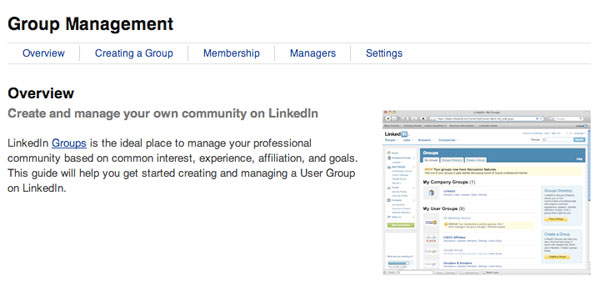
LinkedIn Groups offer businesses valuable networking opportunities by providing a channel to lead and engage in discussions with members of the LinkedIn network. You can leverage a group to build thought leadership, share expertise, market your brand and solicit feedback. If you’re considering starting a LinkedIn group or want to increase the effectiveness of your current group, a recent Mashable article titled, “8 Tips for Managing a LinkedIn Group” shares insight that can help, including:
• Use a personal touch. Like many social networks, LinkedIn allows you to stay connected to your group members in ways that feel personal. The template features allow you to provide automatic responses to new members and to those requesting to join your group. This helps you welcome members into your community.
• Lay some ground rules. It’s important to establish and clearly display posting guidelines so new members can get acquainted with your group. Ensuring that everyone is aware of the ground rules will help you handle difficult situations.
• Praise the good, deal with the bad. Promote member participation by praising and highlighting valuable contributions to the group. This encourages others to share their content and engage. If you encounter negative behavior from a member, issue a private warning. It’s also good practice to give members a warning or two before banning them from the group.
• Help your members promote themselves. One of the biggest complaints about LinkedIn Groups is the number of people who join simply to promote themselves or their business. They usually aren’t interested in engaging with others and can have a negative impact on your community. You can manage this by designating a subgroup, strictly for members to promote their service offerings.
• Add some news feeds. To keep a steady stream of content available for members to discuss, use the “Manage news feeds” feature to add the RSS feeds for relevant blogs. The posts will become automatically available to the members of your group for reading and discussion.
• Facilitate connections outside of LinkedIn. Don’t forget the human connection. It’s natural for members to want to make non-LinkedIn connections after being active in your group for awhile. You can offer a range of options to help your members engage elsewhere on the Internet or offline, such as during relevant industry events.
• Take a poll. Use LinkedIn’s polls application to get feedback from your members on group features and functionality. Create a free poll and then highlight it in your group, either by linking to it on the discussion boards or by submitting the poll’s URL to your News section.
• Promote your group. Some of the strategies you can use to promote your group include low-hanging fruit like inviting others in your network to join, encouraging members to invite their colleagues, and by highlighting your group to other, non-competing groups.
Do you leverage LinkedIn Groups to start conversations around your business and industry? What are your best practices? We want to hear from you!
Last month, an NFL player with the New York Jets made the headlines, but unfortunately it wasn’t in the sports section of the Sunday newspaper. Instead, Jets cornerback Darrelle Revis’ heated argument, and abrupt ending, to an interview with New York City radio host Mike Francesa made headlines on countless sports blogs and PR industry outlets.

During the interview, Francesa focused his attention and questions on a particular play Revis made during the game against the Miami Dolphins where he intercepted a pass and returned it 100 yards for a touchdown. Replays during and after the game showed that Revis may have interfered with the pass originally intended for a Miami Dolphins player. While the referees never called it during the game, Francesa was calling it during his interview, accusing Revis of the penalty and pressing the issue to the point where the interview was interrupted by a Jets PR person and ended abruptly. Per the advice of his PR representative, Revis hung up the phone to end the interview.
Ending an interview early is never a good idea. In an article on Ragan.com about this incident, Brad Philipps wrote that ending an interview “always makes the story bigger” and “gives credence to the charges made against you.” He also notes that the host will usually look better, while the guest and the PR representative will look unprofessional.
How could this situation have been prevented or possibly managed better? We have shared countless tips on how to “master the interview” and “how to give a good phone interview with media” on our blog. After reading about Revis’ story, we want to share a few additional tips that may be useful for you to consider when preparing for your next interview.
- Know the reporter before the interview. Do your research on the reporter and see how they have covered other stories or interviewed previous guests. This will give you an idea of the type of questions they may ask you during your interview.
- Prepare and practice your answers for the most difficult questions. When preparing for an interview, don’t focus solely on knowing the key messages to aid in your response for the obvious questions. Anticipate the more challenging or difficult questions that may arise during the discussion. A good reporter is likely to ask them if they have done their own research prior to the interview. Once you have identified those questions and know how you intend to respond, it will help you to stay calm during an interview.
- Stay on track using a “bridge.” Bridging is a technique that can help you to regain or retain control of an interview, and move away from an uncomfortable or controversial topic. Bridging is the use of phrases that when used appropriately, can steer a reporter back on track during an interview. A few examples: “Before we get off that topic, I’d like to add…” or “What’s most important here is…”
- Don’t evade a question. If you are unable to answer a question or choose not to, tell the reporter why. If the information is proprietary or confidential, state that you are not able to provide those due to a company policy or for legal reasons. Also, never speculate or guess at answers – state only the facts you do know. Nothing is off the record and any statement you make may end up in the final story. And at all times, avoid saying “no comment” as it implies you have something to hide and will only make a reporter even more curious.
- Don’t Become Defensive. If you become agitated or defensive during an interview, it can send a message that you may be hiding something or are in the wrong, but not willing to admit it. Instead, be relaxed and friendly, and if the reporter continues to push on a question to get a response, you can ask politely to move on to the next question. In the article on Ragan.com, Phillips suggested Revis “could have laughed off the charges or said: ‘Mike, we’ve covered that ground and disagree. What else do you want to talk about?’” Had Revis tried this early on in the interview, he may have had the opportunity to regain control of the interview to have an entirely different outcome.
The bottom line is that no matter the opportunity, it is important to be well prepared regardless if you are meeting a journalist in person or conducting an interview over the phone for a story that is to appear in print or broadcasted through radio or television. Through preparation and practice and knowing your key messages, you have the ability to take control of the interview to ensure success.
Molly McWhinnie
The New York Times Makes a Bold Move to Increase Reader Engagement
Last week, The New York Times announced that the publication was making a change to its reader comment policy. Perhaps the most significant change is that the new policy will give readers the ability to become a “trusted commenter,” by allowing them to bypass the moderating process and post comments on the website at will. According to The New York Times, the changes are designed to improve the community experience across nytimes.com.
In addition to providing some readers with a fast-track status that will exempt their comments from moderation, the new policy will keep all comments on the same page, give readers the ability to reply directly to other readers’ comments, and provide the option to share comments via Twitter and Facebook. The “trusted commentator” status is available by invitation only and will be offered to those who have an established record of regularly contributing valuable comments.
These changes are significant for an established media brand and a bold step in the growing trend of surrendering more control for an increased and more authentic form of engagement. However, The New York Times is receiving mixed reviews for its new policy and facing backlash from its commenting community. While most can agree that enabling and enhancing the comment function on online news sites is a step in the right direction to help foster valuable conversations, others are criticizing the changes. Many commenters are angry about the changes with some even claiming the invitation-only “trusted commenter” status is anti-democratic because it doesn’t give everyone a fair right to express their opinions.
Regardless of whether you’re for or against the new policy, or perhaps your reactions are somewhere in between, these changes signal broad recognition within the news community that audience participation and engagement play a critical role in enhancing reporting and coverage. Enabling comments is one of the most effective methods of building global, online communities and something that Communiqué PR practices in its blog.
What’s your take on the issue? Is The New York Times taking an innovative step toward maintaining control of its brand while amplifying the voices of its readers? Or does the new policy prohibit equal conversations and unfairly grant privileges to some and not others? We’d love to hear your thoughts!
Monica Rodriguez