
Insights for Leaders Navigating
Visibility, Credibility, and Growth.
From media strategy to reputation management, we explore the trends shaping public perception and share the approaches that drive measurable results for growing brands.
Cause marketing campaigns can be an effective way for companies to engage with customers and encourage them to feel emotionally connected to a particular product or service. The value of these types of campaigns can not only help win new customers and build customer loyalty, but also increase awareness and sales of product.

According to Wikipedia, “cause marketing or cause-related marketing refers to a type of marketing involving the cooperative efforts of a “for-profit” business and a nonprofit organization for mutual benefit.”
There have been countless (and memorable) examples of cause marketing campaigns including:
- Yoplait packaged specific products with pink lids as part of its “Save Lids to Save Lives” campaign in support of the Susan G. Komen for the Cure. For each lid that consumers turned in, the company donated 10 cents to the organization.
- Cheerios teamed up with the American Heart Association to secure its stamp of approval on its products to help promote the fact that Cheerios met the Associations’ low-fat, low-cholesterol standards.
- Product Red, one the largest cause-related marketing campaigns ever created included participation from some of the most well-known brands to support The Global Fund to Fight AIDS. Created by Bono to engage the private sector in raising awareness and funds to help eliminate AIDS in Africa, Product Red included a series of campaigns with companies such as Apple, Nike, Motorola, Starbucks and The Gap.
- Back in 1983 American Express launched a campaign to help raise money for the Statue of Liberty Restoration project. A penny for each use of the American Express card, and a dollar for each new card issued were given to the Statue of Liberty renovation program.
So how do you determine which cause or organization makes most sense to partner with to launch a mutually beneficial campaign? Consider the following tips by Kim Gordon, who recently wrote an article “How to Start a Cause Marketing Campaign,” for Entrepreneur:
- Designate a product and donate a portion of its sales to charity. Also known as passive customer participation, helping a nonprofit this way is possibly the easiest and fastest way to jump into cause-marketing. It’s essential to choose an organization your target audience will value and want to support. It can be a national nonprofit — such as one that funds cancer research or cleans up the environment — or a local charity.
- Create and sell a symbolic item. This strategy asks the customer to take an active role in the giving process, and requires a more aggressive public relations and advertising campaign. It involves creating and marketing an item that allows customers to physically demonstrate their support for a designated cause. This can be an item they wear or carry, such as a tote bag, T-shirt or bracelet emblazoned with a supportive and inspiring message.
- Sponsor a special event. If you’re looking for a high-profile way to support a cause, then creating a fundraising event could be the best strategy. Traditional events include everything from 10K runs and bike-a-thons to banquets. Keep in mind, the more creative you are with these events, the better your results are likely to be.
- Provide grassroots help. One tried-and-true strategy for lower-profile corporate giving is to donate staff time to make a difference in your community at the grassroots level. It’s smart to align your giving with your company’s primary business. This will not only aid the nonprofit you choose, but also help your customers remember what your company stands for. For example, each store in the Whole Foods Market chain donates food to local food banks and shelters and holds community giving days during which five percent of net sales are donated to a local nonprofit.
Once you have a cause marketing campaign in place, PR and social media can be a terrific way to get the word out and encourage engagement. This could include a combination of traditional and online media relations tactics such as a press release, buddy e-mail, and/or developing a calendar of tweets and Facebook posts.
Have you launched a successful cause marketing campaign? We want to hear about it! Leave a comment or send us an email.
In case you missed it, there was study released today by ROI Research, Inc. stating that users think it’s more important to have a LinkedIn account than any other type of network. The news got me thinking about my use of social media and what constitutes as value around social media.
I agree for professional use, LinkedIn is extremely valuable. We are currently recruiting for an account manager or account director, and I have spent significant time on LinkedIn perusing professional’s backgrounds, looking at the comments others have posted about them and examining individuals’ experience. We also have found LinkedIn to be a wonderful way to advertise positions.
Nonetheless, I would be hard pressed to say LinkedIn is more valuable than Facebook or Twitter. With Facebook, I have been able to connect with people on a more personal or social manner. I have re-connected with long-lost relatives and college friends who have moved half way around the world.
Twitter also serves a unique purpose in my personal and professional life. I use it to find out about breaking news, solicit information or opinions, or find out what is trending around the world.
Just like there are different TV networks or channels devoted to specific content such as drama, sports or news, the different social networks serve unique purposes in our lives and I don’t think you can say one is more important than another.
Last week, I came across an interesting question on Dave Fleet’s blog that his colleague at Edelman Rob Clark first raised, “Is Share of Voice a Useless PR Metric?” My initial reaction was that measuring a brand or company’s share of voice is still very much a valuable PR metric, especially given today’s competitive market place and the prominence of social media in driving awareness and shaping perceptions.

After further reading, Clark stresses that measuring a company’s share of voice is more than simply collecting and counting volume of clips or mentions, but rather a deeper analysis of understanding the “mindshare” or perception of a company in relation to its competitors, analyzing the tone, message pull through and quality of coverage. At Communiqué PR, we could not agree more with this philosophy.
When conducting research to measure our clients’ share of voice, we look beyond the metrics measuring the number of online mentions and total impressions to analyze the sentiment value not only for our clients, but that of their competitors as well. This insight enables us to modify components of a campaign or strategy to achieve a more advantageous outcome and match business goals.
We thought we would share some of our best practices when analyzing share of voice that may be helpful to you in your own analysis.
- Identify your top competitors. We recommend selecting two or three top competitors in the industry that closely matches your core business offerings. If you select more than this, or competitors who have a broader scope of services, your share of voice will be smaller as a result and much more difficult to monitor long-term.
- Identify the key messages. Presuming your company has developed effective key messages, measuring how often these messages percolate through your media coverage should be easy to quantify. If they are not being picked up, it is an indicator that either they are not resonating with media or perhaps the spokesperson may need a refresher on media training.
- Determine values for tone and types of coverage. Creating consistent values for measurement of tone are key to understanding sentiment. For instance, did the article position your company positively or negatively? It is also important to assign values to consistently rank the types of coverage. As an example, consider that a feature story will have more weight, especially if a third-party influencer is included in the coverage as compared to a re-posting of a press release. However, do not discount the value of re-posts of a press release as it can help to increase your search engine optimization.
- Determine your share of discussion. Finally, if the coverage features both you and a direct competitor, examine how much of the story focuses on your company and/or quotes from your company executive. If your competitor receives more air time, examine if it is because the piece is a sponsored post or perhaps a suggested topic your competitor presented to the reporter, a detail your PR partner may be able to identify when evaluating the media opportunity beforehand.
By establishing your parameters and metrics for evaluation at the onset, it will be easier to gather meaningful data to measure results for your company against your competitors, and also establish a consistent framework for the future. Be aware, however, that this analysis can be a time consuming task and depending upon your organization’s goals and budget, the analysis may only be needed at the onset and conclusion of a campaign, or perhaps in a long-term relationship with your agency to measure effectiveness.
Do you have any other tips or best practices to share? Leave us a comment.
Whenever a client has a photo-shoot for new headshots, we invariably are asked about attire and to provide counsel on what he or she should wear. It is a fair and smart question because what one wears conveys a lot about personality and individual brand. Given these questions from clients, I was eager to read Kate Betts’ book, Everyday Icon: Michelle Obama and the Power of Style.
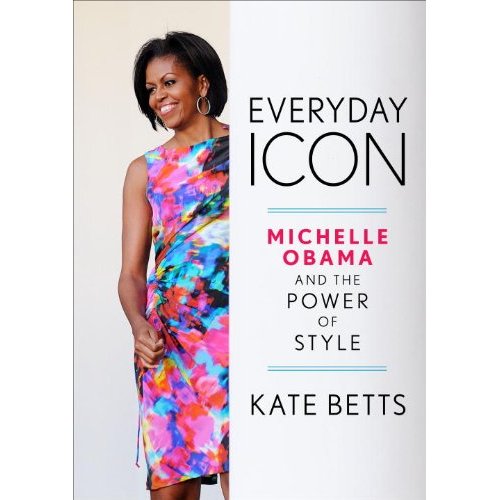
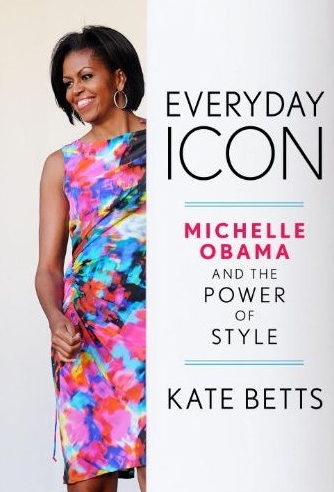
It is a wonderful book with excellent photos and is a quick read – focused on Michelle Obama’s style and how she is influencing women and their thoughts on dress. According to Betts, for some reason in our country women have felt that style and substance are mutually exclusive. Most women can live in one area or the other, but not both, asserts Betts.
She goes on to explain that some First Ladies seem to use style to enhance their husband’s administration, power and influence, while other First Ladies leverage politics. Michelle Obama seems to combine both style and substance seamlessly.
Ms. Obama is willing to stand out whereas most people dress to fit in or conform. She has been sleeveless in Congress, gone barefoot on the south lawn of the Whitehouse and touched the Queen. She is well-educated, substantial, and stylish, and it shows in her personal wardrobe choices.
The next time you’re getting dressed for an important event in your life, think about the power of your personal style. Are you willing to push boundaries or simply fit in? Do you exude confidence, playfulness, or strength? Find examples of people you admire and notice what they reveal about themselves, and their company or brand, by the way they dress or accessorize.
Finally, if you’re having a headshot taken, keep these tips in mind:
- Dress in a manner that is consistent with your personality and the spirit of your company.
- Remember that colors, textures and patterns will appear different in a photo than in real life. If you are not sure how an outfit will appear in an image, have someone take a test shot for you.
- Color often conveys power and can help you standout, but you do want to avoid any color or pattern that will distract from your face.
- Cameras will pick up wrinkles, so select a shirt or dress that is not prone to them.
- Finally, consider where you’ll stand. If a news outlet is sending a photographer to your office, scout a location or background that conveys the personality of your company.
You know the old adage, too much to do, too little time. Between driving the kids to school and activities, running errands and keeping up with a demanding workload, many Americans are running on fumes trying to keep up.

The rise of mobile phones has certainly helped make getting things done on the run easier, but what about simplifying common business tasks while on the go? Tablets such as the popular Apple iPad are becoming viable tools for small businesses to tackle common tasks. From classrooms to restaurants, the popular technology is quickly gaining notoriety beyond a content consumption device, and evolving into a full-fledged productivity tool being used by a variety of organizations.
While the iPad and other tablets have been traditionally used for consuming content on the web, watching videos, reading e-books and listening to music, selecting the right tools and apps can easily optimize the iPad for use as a mobile computing platform for business. Industry analysts forecast that 52 million tablets are estimated to be shipped in 2011, with the iPad comprising 75 percent of these shipments.
We recently helped our client, the Omni Group, a leading developer of productivity apps built exclusively for the Mac OSX and iOS platforms with the launch OmniOutliner for iPad, the company’s newest productivity app for the iPad. The iPad edition of the company’s popular note-taking and outlining program offers users the ability to create, collect and organize information in a multitude of ways including creating to-do lists and agendas, managing tasks and expenses, taking notes and planning events.
To create early buzz, the Omni Group developed and posted a teaser video to its corporate blog to let its users know the app was coming. In addition, they seeded an early version of the app with key influential media and reviewers. To help drive awareness and coverage of the new app, we developed and distributed a press release and buddy e-mail focusing on the rise of tablets being used within small businesses. As a result, more than 65 articles and reviews surrounding the app were published including Macworld, Mac Observer, Business Insider, TUAW and AppAdvice.
So whether you want to create a graph, develop a website wire frame, manage your task list or outline information, just remember, there’s an app for that.
Over the past several months, we have been working closely with one of our technology clients, Tecplot, Inc., to unveil its revolutionary new product, Chorus™, to analysts, media and consumers. You may recall reading our previous blog posts in which we shared the results of our strategy including briefings with key industry analysts and best practices for a successful media tour.


For those of you unfamiliar with this Bellevue-based company, Tecplot, Inc. delivers visualization software for engineers and scientists to analyze, discover, and communicate results. If you are not an engineer or scientist, you may be wondering how this new software impacts you directly. It’s simple – look at the world of staggering product innovation around you.
We are surrounded by a world filled with new feature-rich automobiles that can parallel-park themselves, larger and more supremely enabled commercial aircraft, GPS guidance systems, microwave ovens, high-definition televisions, smartphones and tablet PCs that hold your entire media collection of photos, music and videos in one handheld unit. With every nanosecond, the development of these devices grows more complex and data-rich. Leading-edge innovation and understanding new trends to meet consumer demands has become increasingly critical in a competitive marketplace, and time-to-market can absolutely make or break a product’s success.
Tecplot Chorus streamlines the design process for engineers thus decreasing the time to market for new products. This new tool is a parametric computational fluid dynamics (CFD) analysis solution designed to enable a tighter integration of metadata with the underlying physics of the CFD simulation results. That’s a fancy scientific way to say that this tool will allow researchers to more easily identify, explore and better understand design anomalies in an integrated fashion that will help promote better collaboration among teams of engineers.
After months of planning and preparation, we were excited to officially introduce Tecplot Chorus on Monday, May 16 and the journalists we met with on our press tour and briefed by phone in advance of launch were eager to share news about the company’s new innovative software solution. To date, Tecplot Chorus was featured in industry publications including:
- R&D Magazine, “CFD simulation analytics tool” (May 17, 2011)
- Desktop Engineering, “Tecplot, Inc. Announces CFD Simulation Analytics Tool”( May 18, 2011)
- MacNews.com, “Tecplot Chorus is Mac compatible CFD simulation analytics tool” (May 20, 2011)
- Another Fine Mesh, the Pointwise Blog, “This Week in CFD”(May 20, 2011)
- Product Design & Development, “Tecplot Announces First CFD Simulation Analytics Tool” (May 27, 2011)
While the software is currently in beta testing with a select group of Tecplot, Inc.’s customers, we anticipate additional coverage to appear throughout the year once the product is available for purchase in late summer 2011.