
Insights for Leaders Navigating
Visibility, Credibility, and Growth.
From media strategy to reputation management, we explore the trends shaping public perception and share the approaches that drive measurable results for growing brands.
Recently, Apple unveiled the latest version of its wildly popular mobile phone, the iPhone 3G S. The highly anticipated device boasts new features such as video and editing functionality, voice control, peer-to-peer networking and improved battery life. And of course as the “S” stands for speed, users can expect to download Web content and launch applications twice as fast.
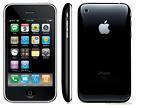
One thing is clear; the iPhone phenomenon is still going strong. Apple has reported it has already sold more than one million devices since its launch on June 19. In addition, the company said more than six million existing iPhone users have downloaded the new iPhone 3.0 software in the first five days following its release.
As a self-proclaimed Mac and iPhone fan, I have to say I’m disappointed in the new updates. The software upgrade process was painful, I lost all of my contacts and I’m finding that my phone is running slower than ever. And since I have an older device I can’t take advantage of some of the features such as the video recorder and compass. However, knowing Apple and its products, I know that these kinks will be worked out and only improved upon in future updates.
The fact of the matter is, Apple is still doing some of the most innovative things in the mobile device space (in my humble opinion), and I’m always up for seeing what they will come up with. They’ve taken mobile computing to the next level and have shown consumers (not just business professionals) how their mobile phones can impact and enhance their daily lives. The iPhone has opened up a new wave of innovation for mobile application developers as well, and we’re only just beginning to see the possibilities these new mobile applications will bring.

As a PR professional, I’ve followed this space closely for several years as many of my past and present clients play in various parts of the mobile industry. While the iPhone 3G S is a nice upgrade, we’re on the verge of seeing an interesting showdown in the market with increased competition from Google, Nokia and Research in Motion (RIM) – not just from a device perspective but the convergence of mobile applications and connected services as well. These companies are really going to give Apple a run for its money. Ultimately, PR and marketing will play heavily into the success of who comes out on top in this race.
Either way, it should be an interesting showdown. I’ll be following the action closely from the comfort of my beloved iPhone.
Do you have the new iPhone 3G S? Tell us what you think by leaving a comment below.
For the past 87 years, Reader’s Digest has been a prominent general-interest family magazine intended to appeal to the broad American public. In an effort to revamp and reorganize its image and survive the changing media landscape, Reader’s Digest announced it will shift to a more conservative focus and will increase its coverage of inspiring spiritual stories.

According to Tom Rosenstiel, director of the Pew Research Center’s Project for Excellence in Journalism, print and broadcast outlets are working hard to distinguish themselves as the Internet continues to play a key role in educating consumers on a variety of topics. “Magazines and cable channels are trying to figure out what they can add to the mix if people already have the basic facts from the Internet and elsewhere.”
As circulation numbers at print publications continue to decline, many magazines are looking for ways to differentiate their content in order to survive. Reader’s Digest’s circulation has decreased from 8 million to approximately 5.5 million over the past couple of years and the publication has decided to reduce its frequency to 10 times a year instead of 12. Mary Berner, president and chief executive of the publication told the New York Times it will focus on more conservative values to target a market that’s been largely ignored, but is incredibly powerful, and says it will also consider increasing the amount of spiritual content. By making these changes, the publication hopes to reach a more niche audience and ensure a thriving future for the magazine.
In addition, Reader’s Digest plans to partner with Rick Warren, an evangelical pastor, on a project called the Purpose Driven Connection. Subscribers will receive a quarterly magazine with religious workbooks and DVDs featuring Rick as well as a membership to a social networking Web site which will provide prayer tips each week.
This is an interesting shift and one we’ll likely continue to see given the current economic climate and shifting media landscape. More niche publications will certainly give way to new opportunities for organizations looking to reach specific niche audiences; however, the reduction of general interest media with large circulations will no doubt further influence where consumers go to get their information. Will consumers commit to reading several niche publications a day to get the information that’s most meaningful to them or will they still crave a catch-all outlet that gives them a little bit of everything?
“Hulu, an evil plot to destroy the world. . .”

While Hulu may not be destroying the world, it is undoubtedly impacting the broadcast media landscape with its customizable online video service that offers free TV shows, movies, clips and other online destination sites.
Hulu was founded in March 2007 and is co-owned by NBC Universal, News Corp. and Providence Equity Partners. In a move to extend its service, Hulu will now offer a new desktop application that according to AdAge will “encourage more consumers to flip on their computers rather than their TVs.” The application will mimic the TV experience; however as an added bonus it will allow viewers to watch the shows they want, when they want with fewer advertisements.”
Although Hulu is currently restricted to computers, nearly all computers have an output jack to plug it into a TV. Hulu’s new application has sparked concern with many of its network backers who worry that this application will threaten the livelihood of cable TV. To prevent this, many of them have restricted Hulu from pulling their content.
While Hulu executives argue it isn’t a replacement for traditional linear TV and cable, Michael Learmonth with AdAge says, “Don’t believe it. The battle is just getting started.”
New technology such as Hulu is changing the face of broadcast media in much the same way as the Internet changed the traditional print publication. Jonathan Miller, chief digital offer with News Corp., commented, “Cable is going to have to push to get their content where people want to consume it.”
As services such as Hulu continue to impact the broadcast media landscape and provide viewers more control over what they watch and when they watch it, the company has the potential to change how PR and broadcast media interact. For example, we anticipate it will become more challenging to place stories as network coverage may become more limited. As networks strive to keep their shows on top, producers will be looking for stories that resonate with a local or niche audience and also provide information that is truly valuable to their viewers.
For tips on how to pitch to broadcast media, visit our past blog entitled, “What you Should Know before Pitching Broadcast.” We offer advice on what to research before developing a broadcast pitch and also provide some great resources that can help you effectively prepare for a broadcast pitch.
“Information wants to be free.” According to Simon Dumenco with Advertising Age, this statement is a truism that is destroying traditional media models. He opines not only does information want to be free, technology itself – computers and software – also want to be free.

There is still a lot of discussion about the future of the media industry with many questioning its ability to survive. Simon correlates the media industry to the technology industry and cites his experience with the Eee PC, a mini laptop (netbook), to explain this correlation.
Last year, Simon wrote a column about his experience with the Eee PC, a Microsoft software-free mini-netbook, and predicted it would bring an end to Microsoft. The netbook was designed to run on free Web-based services such as Gmail, Google Docs, Facebook, etc., instead of Microsoft’s complex operating system and high-cost applications.
The Eee PC was a huge success selling approximately four million units and virtually every hardware maker has since adopted the netbook model. Simon argues companies should start bundling the hardware experience with a media experience saying,” hardware makers may have no choice but to turn their Internet devices into multi-tier-subscription-based media machines. And the more we get used to the idea of essentially subscribing to media as a way to pay for hardware . . . well, the more hope there is for media.”
An example of this would be if a hardware company required consumers to pay a monthly subscription fee for a tiered level of media access to Hulu Premium or the New York Times – in order to get a better deal on the netbook or computer.
Simon makes an interesting argument, and one that could prove to be a win-win solution for hardware makers, media and media content providers. As the media landscape continues to evolve, we’re already seeing publications evaluating alternative models to stay afloat. For example, many of them are implementing a subscription-based plan, switching to a niche format to reach a target audience or developing digital portfolios. Simon presents yet another model that may help the media industry survive.
While consumers may not be fond of the idea of paying for a monthly subscription to a magazine, newspaper or exclusive online content, they may be willing to pay for that subscription in order to get a better deal on a netbook or computer.
No matter what models media outlets consider, PR professionals will no doubt need to once again re-evaluate their strategies and approach to align with new media formats. As the media industry experiments with different models, opportunities will continue to shrink or become very niche focused.
We’d love to hear your perspective. How do you think these different models will impact your business or PR strategies? Will this force us to rely more heavily on other mediums such as social networks? Leave us a comment.
We’ve been blogging a lot lately about how organizations can leverage the juggernaut that is Twitter, but according to a recent article on CNNMoney.com, more and more professionals are using social networking sites to find new job opportunities.

Reporter Jessica Dickler says, “In the worst job market in 25 years, building an online presence is crucial to getting a job. Who you connect to, “follow” and “friend” can be just as important as conventional tools like résumés.”
Twitter and Facebook have made is easy for people to let their professional and social networks know that they’re looking for a job. Whether it’s a tweet or a status update, the information is out in the universe instantaneously, as opposed to the traditional e-mail or phone call.
Dickler goes on to mention that job seekers don’t necessarily need to send out a tweet and wait for leads to come back to them. “There are several services associated with social networking sites to such as TweetMyJobs, which sends out automatic updates of new openings in a specific field and region sent to your cell phone or by Twitter.”
The classified ads may be a thing of the past, but when it comes to uncovering new business leads or job opportunities, it’s still all about relationship building. The rise of social networks such as LinkedIn and Twitter are merely new tools to help build those relationships and shouldn’t be ignored by those looking for a job or new business prospects.
As a PR professional, I use Twitter, Facebook and LinkedIn on a daily basis to gather a variety of different information including my clients’ competitors, trends in a particular industry as well as journalists, new companies and potential business prospects. I’ve found social networks to be an invaluable tool to help me quickly find the information I’m looking for and I suspect, I’ll be finding new ways to use these networks as they continue to evolve.
Gender-focused public relations and marketing campaigns can be effective – if executed properly. However, some companies have found that targeting specific genders can cause controversy and negative consumer feedback.
Just recently, Dell launched a new Web site targeted towards women called Della. The site, which soft launched on April 30, is being criticized for “pandering to female stereotypes” with its overwhelmingly pink color scheme and content that some argue “paints women as having little tech savoir faire.”
Nicole Zerillo with PRWeek recently wrote two articles about gender-stereotype traps and discussed the controversy surrounding Della as well as the marketing campaign for Mars Snackfood’s new candy bar Fling, which referred to the candy as “fingers” and featured ads that suggested women “pleasure yourself” with the chocolate bars.

Dell has been following online conversations and making revisions to the Della Web site based on the feedback it is receiving. On May 15, a company spokesperson published a blog post about the mixed feedback and the changes being made, which include incorporating more business-oriented products and information on the site and omitting some of the pink.
Reggie Bradford, CEO of social media company Virtue, tells PRWeek the incident with Della shows how a “small group of dissenters can be magnified through social media.” Reggie also references the Motrin Moms’ campaign and comments, “If you have consumers passionate enough to stand up and be heard . . . [marketers] should use it to develop a more proactive dialogue.” This is also true for public relations campaigns.
As companies look to implement campaigns that resonate with women or a niche audience, it’s important to engage with them and target their needs and values rather than only looking at one aspect of their interests. Some of the most successful campaigns to date, such as Dove’s “Campaign for Real Beauty”, are powerful because women relate to the values and the messages that are being communicated.
In order to ensure you implement a successful PR campaign, it’s important to really understand who your target audience is and what motivates them. Consider the following tips:
Research and plan. Determine what your goals are for the PR campaign and outline the target audience you want to reach. Once you’ve determined who your target audience is, find out what types of messages, themes and values will resonate with that audience. If your goal is to communicate messages that resonate with women, evaluate what values will spark their interest and avoid making generalizations or stereotyping.
Choose the right PR tools. You need to choose the right PR tools to communicate your message. Depending on the audience and message, it might make sense to develop and distribute a press release or plan an event, write a contributed article, implement a social media campaign, participate in a conference, discussion panel or trade show, etc.
Integrate with other functional areas. In order to implement a successful PR campaign the messages and tools must align with your business objectives. Integrate your PR efforts into your sales and marketing efforts and invite different groups (marketing, executives, etc) to participate in the efforts. This will help to establish cohesiveness and build consensus for your PR plan.
Whether your PR campaign is geared towards a gender specific group, or you are targeting a niche audience, make sure to evaluate your messages clearly and remember to monitor online conversations about your company and brand.