
Insights for Leaders Navigating
Visibility, Credibility, and Growth.
From media strategy to reputation management, we explore the trends shaping public perception and share the approaches that drive measurable results for growing brands.
The Wall Street Journal Editor Robert Thomson recently told the Financial Times that the publication plans to introduce a micro-payment system for individual articles and premium subscriptions to the Web site this fall.

The WSJ‘s premium plan will target readers interested in niche industries including energy, commodities, wealth management, and more. It will place more focus on urban areas and take advantage of weakness among outlets in metropolitan areas like San Francisco and Detroit, where local publications are struggling.
As the fee structure is implemented, many anticipate that the Web site’s audience will also change. Bill Zucker with Burson-Marsteller tells PRWeek, “Readers who pay on the spot for specific articles will be more invested in the topic and not just casual readers.”
So what does this mean for public relations professionals and companies who want to pitch a story to the WSJ?
Pitches will need to be more focused and creative to fit into a niche story.
Pitches will need to be tailored to include not only national angels but also local angles, depending on the focus of the story.
PR professionals will need to take a strategic and creative approach to demonstrate why their story would inspire readers to pay.
This will provide a unique opportunity for companies to track and analyze what kinds of information and stories are resonating well with their target audience.
As the media landscape continues to change, many online publications will look to implement a fee structure in order to stay afloat. According to the Financial Times, several newspapers are following the footsteps of business newspapers by looking for ways to charge for Web content.
As this trend continues, make sure to stay updated on which publications charge for content and what kinds of stories reporters are interested in.
In order to ensure your pitches are reaching the right editors or journalists and sparking their interest, consider these tips from our past blog entry about How to Pitch a Reporter.
With the onslaught of new social media technologies, many marketers are trying to look ahead and prepare for what’s next. But given its rapid growth, how can we predict the future of social media?
According to Forrester’s Jeremiah Owyang, the first step is to look at the problems inherent in today’s social mediums. By noting what’s wrong today, we can imagine tomorrow’s solutions and anticipate what’s next.

What is wrong with social media today?
Says Owyang, “Today’s social experience is disjointed because consumers have separate identities in each social network they visit.” He goes on to suggest that the future holds simple technologies that enable people to carry the same identity with them across all social mediums – whether its Twitter, Facebook or Digg.
People also will turn to others online and rely on their advice when making purchasing decisions. This trend is already evident in online product review forums such as those on Amazon and CNET, but Owyang suggests it will continue, “whether or not brands choose to participate.” By making their voices heard online, consumers will continue to influence the direction of future products and services.
In the future, content will be even more personalized than it is now. And while this could be a marketer’s dream, brands must tread carefully. After all, consumers will have the power to make or break online campaigns, and they will likely voice their frustrations en masse in real time. It will be important for both marketers and PR professionals to have a crisis strategy in place, or to update their existing crisis strategy to integrate social media tools, in order to quickly and effectively respond should this happen.
The recent anti-Starbucks Twitter campaign is an excellent example of how customers can turn against a company’s online campaign. A documentary about Starbucks union-busting practices debuted the same day as the new Starbucks-sponsored Twitter campaign. The Starbucks-sponsored campaign involved placement of advertising posters in major cities, and sought to use social networking by challenging people to hunt for the posters and be the first to post a photo of one on Twitter.

Filmmaker Robert Greenwald hijacked the campaign to spread information about Starbucks’ labor practices. Greenwald encouraged customers to upload photos of themselves protesting in front of the Starbucks advertisements onto Twitpic and tweet them using the hashtags #top3percent and #starbucks – the official hashtags designated by Starbucks for its contest. Within hours, dozens of Twitpics had been uploaded essentially upstaging Starbuck’s efforts.
The campaign may have contributed to a phase-out of the Starbucks promotion. Says Greenwald, “I don’t know if it’s connected or not, but a few hours later after we sent in pictures of people with suggestions for [Starbucks CEO] Howard Schultz to be more fair to his workers, I think the rules were changed and at least that phase of the contest was ended.”
So how can you prepare?
Don’t hold back. As we wrote in a post about Twitter, companies cannot afford to sit back and watch social media mature before participating. Social media is ever changing, but the connections you forge now with consumers and peers are likely to hold no matter what new tools and platforms materialize down the road.
Consider current perceptions of your company before launching a campaign. Perhaps if Starbucks had taken the time to determine public sentiment around their brand on Twitter, they would not have been in this situation.
It is also important to understand where your company is in its lifecycle because this impacts perceptions. People tend to view startup companies very differently than global Fortune 500s such as Starbucks and Microsoft. Corporate giants must tread carefully to establish credibility with customers.
We also advocate transparency online, especially when blogging or commenting on other blogs. As the Web becomes more personal and transparent, honesty becomes one of the most important traits a brand can possess when interacting in social mediums. By connecting with consumers in a transparent way to forge relationships and create evangelists for your brand, you’ll be set up for success not matter what the future of social media brings.
What are your thoughts on the direction social media will take in the coming years?
Recently we have been helping the Seattle Children’s PlayGarden with a Twitter fundraising campaign to complete the construction of various projects, such as Mount Jordan, a volcano-themed climber that is even accessible to children in wheelchairs. The PlayGarden is a nonprofit organization dedicated to providing a place for both mentally and/or physically disabled children and their normally developing peers to share a safe, stimulating and fun playground environment. You can read more about the campaign here.
On Friday, June 5, King 5 News aired a segment about the PlayGarden and its campaign. Reporter Carolyn Douglas interviewed Eli Stitchin, an autistic child, and his family about the park. This piece does a terrific job of highlighting why the PlayGarden is so important to Seattle families – directly from kids like Eli. His favorite playground toy is the “spinning seat,” because “I always feel like I’m somewhere else when I’m in there.”
See more of Eli’s interview and some footage of the PlayGarden by clicking here.
With summer vacation fast approaching, the many kids will benefit from the new PlayGarden construction. We hope you’ll take a few minutes to watch this segment and consider making a donation to the PlayGarden. You can donate by clicking here.
In yet another example of how businesses are engaging Twitter, Threadless T-shirts has partnered with Twitter to crowdsource designs for a new line of “Twitter Tees.” Twitter users submit and vote on tweets to appear on Threadless Tees. Says Cam Balzer, vice president of marketing at Threadless parent company Skinny Corp, “The beauty of crowdsourcing is the audience really markets the products themselves.”
Threadless has set up a Web site specifically for the campaign, where anyone with a Twitter account can vote on which tweets should appear on the Tees. So far, the campaign has been a success. PR Week reports that within the first few hours, Threadless already had more than 200,000 votes.
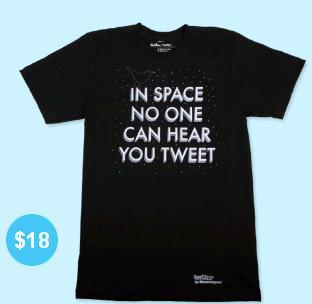
As companies like Threadless are quickly discovering, Twitter provides an excellent avenue for crowdsourcing. For the uninitiated, crowdsourcing means asking an undefined, large group of people to complete a task that might have traditionally been performed by an employee. The iPhone App Store phenomenon is a perfect example of how crowdsourcing can lead to great results for companies, developers and consumers.
For businesses looking to secure feedback or input from customers, crowdsourcing can be an invaluable tool. And with the advent of Web 2.0, barriers to entry are extremely low.
Should your company crowdsource to achieve business objectives? Consider these benefits of crowdsourcing and whether they align with your goals:
Speed. Problems can be solved quickly, and often at a comparatively low cost.
Payment. Businesses pay the “crowd” by results – if they pay them at all. For many contributors to crowdsourcing projects, the simple kudos of having contributed to something important is reward enough.
Talent. A company has access to a wider pool of talent than their employees or contractors.
Insight. Businesses secure immediate feedback from customers.
Kinship. The crowd develops a personal relationship with the brand.
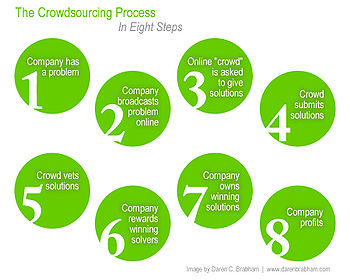
So how does crowdsourcing work? Check out this flowchart compliments of Wikipedia:
We will be interested to see whether other companies follow the lead of Threadless and crowdsource via Twitter.
In a recent article for Advertising Age, Avi Dan shares his predictions for consumer behavior and what it will mean for marketers. Says Dan, “Unemployment will remain high, consumer confidence low and consumption depressed.” According to Dan, this is a recipe for a new consumer behavior: frugality.
Dan explains, “The economy is shrinking to levels that reflect […] a vastly more frugal consumer.” His prescription for marketers? “Rethink everything.”

Marketing and PR go hand-in-hand, so as marketers rethink their products, promotions and prices, PR strategies must morph to match. As PR professionals, what can we do to keep up? Here are a few tips.
Highlight value. Many journalists are writing about ways to save money and get the most out of each purchase. When pitching a story about a client’s product or service, highlight affordability and value. Avoid pitching more expensive offerings.
Stay positive. The deluge of dismal news these days is enough to get anyone down. When pitching stories and writing materials for your client, focus on the positives. Share success stories and be optimistic.
Be green. Customers will shy away from products they perceive as wasteful or harmful to the environment. Focus on sustainability and demonstrate how products will remain valuable for years to come without damaging the planet – or their wallets.
Get personal. If we’ve learned anything from the explosive growth of social networking, it’s that consumers want dialogue and personalization. Forget targeting a broad audience and focus on specific customers. What media do they engage? What are their needs? Think about niche shows, publications and blogs.
Secure third-party support. Customers are carefully considering each purchase and looking to experts for advice. Make sure you have analysts, bloggers and other influentials on your side. Brief them in advance of announcements, send samples and secure testimonials. But beware – the savvy buyer can smell a sponsored endorsement from a mile away.
Successful PR pros will think creatively and reach consumers in new ways. After all, PR is a cost-effective way to connect with key audiences and maintain visibility during tough economic times.
Awards are a superb way to reinforce perceptions about an organization, establish thought leadership and create creditability for a product or service. Winning awards can also help generate new business for an organization and can be leveraged as a marketing tool when speaking with media, partners and customers.
In some instances, awards can also spark the interest of prominent business leaders and media, and lead to a stream of publicity. Consider this example: In 2007 and 2008, Communiqué submitted award nominations on behalf of Big Fish Games for the Inc. 500/5,000 – a prestigious business award that annually ranks the 500 fastest-growing private companies in the U.S.
Both years, Big Fish Games earned top placements. In the weeks and months after Inc. magazine published its Inc. 500/5,000 feature issue, we received a number of media calls from journalists interested in speaking with Big Fish Games – many of whom heard about them from Inc.’s award.

Examples such as Big Fish Games’ Inc. award demonstrate the positive impact awards can have on organizations and executives; but developing a nomination can be a lengthy and expensive process, and some awards have hefty submission fees. For this reason, it is important to be selective and only pursue awards that will help your organization achieve its business and communications objectives. Here are a few tips to help you develop a winning nomination:
Qualify the opportunity. It is critical for organizations to first qualify the award opportunity and determine if the award is appropriate and worth the time. Will news of the award reach your target audiences? How will winning this award help your organization reach its business objectives? Be prepared to answer these questions before investing your resources.
Determine criteria. Take a hard look at what it will take to win the award. Do you have the credentials? Who are you up against? Being ambitious and reaching high is important, but be realistic. If an award requires that an executive has engaged in extensive community service and charity and you haven’t volunteered since high school, it’s probably not worth pursuing.
Understand the judging process. How will winners be selected? Will a committee look at nominations and if so, who will be on it? For example, if you know that several judges place a high value on leadership experience, make sure to highlight this in your submission.
Reach out to the award organizer. Developing a relationship with the award organizer can be helpful as you gather information about the award and the selection process. The organizer can even provide you with information about last year’s winners and sometimes, what components of the award will stand out most to judges.
Follow the rules. Too many organizations submit nominations that, although great, are disqualified because they did not follow guidelines. Before creating the nomination, read the fine print. Is there a word count limit? Will your organization need to submit a revenue verification letter? Do you need to provide customer references?
Be creative and tell your story in a narrative form. In our experience, award nominations have a greater impact if you can tell your company’s story in a creative and narrative format. To help accomplish this, nominees should consider going above and beyond the requirements and include personal anecdotes, volunteer activity and supporting documentation that will help your nomination stand out in a creative way.
Complete your nomination early and confirm your submission. After submitting your nomination, confirm with the award organizer that he or she received it. This helps avoid any confusion and ensures your documentation has been received ahead of the award deadline.
We welcome your tips and experiences completing winning award nominations. E-mail us your thoughts at [email protected] or leave a comment.