
Insights for Leaders Navigating
Visibility, Credibility, and Growth.
From media strategy to reputation management, we explore the trends shaping public perception and share the approaches that drive measurable results for growing brands.
Back in April, we blogged about Apple’s move to eliminate the “one price fits all” model for its iTunes digital media store, opting to shift to a three-tiered pricing model. While this news was met with some trepidation by media, music labels and consumers, a new article from Billboard‘s Antony Bruno and Glenn Peoples suggests that Apple’s variable pricing approach may just be working.
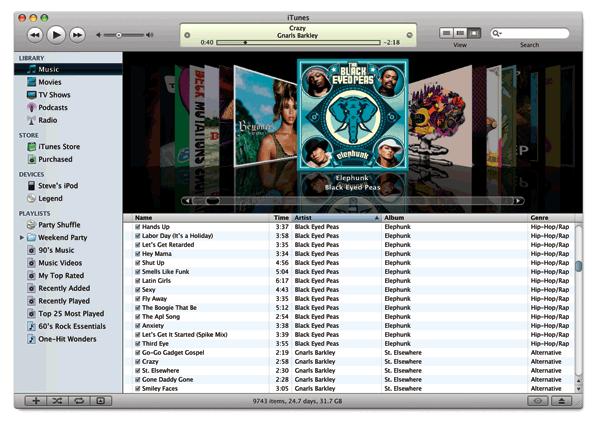
An analysis of Nielsen SoundScan data conducted by Billboard found that while Apple’s variable pricing model may have caused overall sales volumes to decline, tracks that were priced higher compensated for the decline and actually generated more revenue.
Bruno and Peoples note, “Playing with pricing won’t solve the music industry’s biggest problem: Digital revenue is increasing too slowly to compensate for the decline of CD sales. But variable pricing will help labels bring in more money from online downloads, according to the results so far.”
One of our clients, Digonex (on behalf of which we secured this piece), a provider of real-time, demand-driven automated pricing solutions, knows first-hand the impact that variable pricing can have not only on the digital music industry, but on other industries such as event ticketing and e-commerce. The company’s Digital Online Exchange (DOE) platform is an innovative dynamic pricing solution that systematically changes prices based upon behavioral and econometric principles. In a nutshell, it finds the optimal price for every item in a given product catalog and updates those prices in real-time.
Some industry analysts think it’s still early to tell if these new pricing models will truly impact the digital music industry. Forrester Analyst, Mike McGuire says, “For the first year or so the labels are looking at this to see how the market reacts.” “It’s real-time research, in effect. They need as much data as they can to try to understand where they go from here.”
Clearly, this is an evolving landscape. From a PR perspective, it’s important for organizations in emerging markets to establish thought leadership early on to drive awareness and adoption of products and services. We’ve been working closely with Digonex to build relationships with key media and analysts who are covering this space to build awareness around the company and the category.
Aside of the Billboard/Reuters piece above, in the short time we’ve been working with Digonex we’ve secured key coverage on behalf of the company in Red Herring, Reuters, and Billboard.biz. We’ve also set-up introductory briefings with several key industry analysts to ensure they’re grounded in Digonex’s vision and the benefits dynamic pricing. Laying the groundwork early has helped Digonex gain early awareness in this market and establish itself as a credible thought leader in the category.
It’s unlikely that the founders of Twitter ever imagined their social media site would become the vehicle for a political uprising. Or that it would have the capacity to replace traditional journalism and media resources. But that’s exactly what Twitter has done.
Within the last three weeks, Iranian protestors have used Twitter, YouTube and personal testimonies to provide a window into this theocratic state’s rioting and rebellion. Because the government has banned all major reporting from inside the state, the world has had to depend on 140 character tweets about the current status of Iran.
Crowd sourcing and social media have already changed the face of traditional journalism and are likely to continue to redefine it. Instead of turning on the TV and listening to Bill O’Reilly for breaking news and information on Iran’s protests and riots, political followers have instead looked to unfiltered, firsthand experiences available instantly on Twitter and YouTube.
For example, one of the most powerful stories from Iran’s political uprising is the tragic story of Neda, a young woman who was killed during riots. A video of her death was posted on YouTube and quickly became one of the most popular hashtags on Twitter. Neda’s story and the public’s use of social media is an example of the movement to a more unconventional way of reporting – anyone with a Twitter or blog can be considered a journalist or a legitimate source of information.
So what does this mean for the future of journalism and broadcasting? More personalized reporting may give media the breath of fresh air it needs. CNN, for example, has created iReport which is a Web site for citizen journalism. CNN encourages people to upload photos, videos and information, which are then instantly updated on iReport, with some even making it to their newscasts.
The producers acknowledge that although they cannot confirm authenticity of news being disseminated, special circumstances in Iran have left the network with no choice but to depend on citizen journalists. That may not be a bad idea, as tweets and YouTube videos are offering followers instant updates on Iran, well before major networks break the news. Matthew Weaver, a blogger for The Guardian relies on these untraditional sources because, “when rallies and conflicts occur first the tweets come, then the pictures, then the YouTube videos, then the wires. It’s extraordinary.”
Clearly, traditional journalism is changing dramatically with the rise of citizen journalism vis-‡-vis mediums such as Twitter and YouTube. Instead of fighting this trend, media outlets should look for ways to incorporate Twitter into their reporting strategies as a way personalize their stories and connect with their audience while staying current and providing breaking news.
It’s unlikely that the founders of Twitter ever imagined their social media site would become the vehicle for a political uprising. Or that it would have the capacity to replace traditional journalism and media resources. But that’s exactly what Twitter has done.
Within the last three weeks, Iranian protestors have used Twitter, YouTube and personal testimonies to provide a window into this theocratic state’s rioting and rebellion. Because the government has banned all major reporting from inside the state, the world has had to depend on 140 character tweets about the current status of Iran.
Crowd sourcing and social media have already changed the face of traditional journalism and are likely to continue to redefine it. Instead of turning on the TV and listening to Bill O’Reilly for breaking news and information on Iran’s protests and riots, political followers have instead looked to unfiltered, firsthand experiences available instantly on Twitter and YouTube.
For example, one of the most powerful stories from Iran’s political uprising is the tragic story of Neda, a young woman who was killed during riots. A video of her death was posted on YouTube and quickly became one of the most popular hashtags on Twitter. Neda’s story and the public’s use of social media is an example of the movement to a more unconventional way of reporting – anyone with a Twitter or blog can be considered a journalist or a legitimate source of information.
So what does this mean for the future of journalism and broadcasting? More personalized reporting may give media the breath of fresh air it needs. CNN, for example, has created iReport which is a Web site for citizen journalism. CNN encourages people to upload photos, videos and information, which are then instantly updated on iReport, with some even making it to their newscasts.
The producers acknowledge that although they cannot confirm authenticity of news being disseminated, special circumstances in Iran have left the network with no choice but to depend on citizen journalists. That may not be a bad idea, as tweets and YouTube videos are offering followers instant updates on Iran, well before major networks break the news. Matthew Weaver, a blogger for The Guardian relies on these untraditional sources because, “when rallies and conflicts occur first the tweets come, then the pictures, then the YouTube videos, then the wires. It’s extraordinary.”
Clearly, traditional journalism is changing dramatically with the rise of citizen journalism vis-‡-vis mediums such as Twitter and YouTube. Instead of fighting this trend, media outlets should look for ways to incorporate Twitter into their reporting strategies as a way personalize their stories and connect with their audience while staying current and providing breaking news.
Microsoft’s new search engine Bing has been grabbing headlines since its official launch on June 3. Expected to rival search engine giant Google, Bing is gaining popularity and, according to recent comScore Networks data, is boosting Microsoft’s market position.
So what makes Bing the new search engine darling? Is it the friendly user interface or the new Explorer Panel that lets you refine searches? Or is it the Quick Previews feature? Perhaps Bing simply offers a better search engine experience than Google?
According to a study by BlindSearch, a Web site that tests search engines, Google’s search results were favored more among voters. However, similar trials and user feedback show Bing is gaining popularity with Internet users for its friendly user interface and design.
Other users say the two search engines are not that different from each other. For instance, after several days of testing Google and Bing, Rob Pegoraro, columnist with the Washington Post stated, “I started not noticing which site I was typing my query into, since they both seemed to do about as well.”
With all the varying opinions, it’s hard to decipher who is winning the search engine race, Bing or Google? One thing is clear; this debate is dominating the news and continues to be a popular topic with media more than a month after Bing’s release. From a PR perspective, the controversy between the two search engines provides a compelling story for media. Bing is proving itself a worthy contender for reporters to pit against Google – and will no doubt once again prove that that healthy competition between brand-name companies can make great news.
Prominent news outlets, such as CNN, Forbes, Reuters, Wall Street Journal and the Washington Post, have all covered the news as well as industry publications including CNET, eWeek and ZDNET. PC World wrote a search engine round-up titled, “Bing vs. Google vs. Yahoo: Feature Smackdown,” with a wrestling match play-on-words.
It will be interesting to watch the debate continue as hype surrounding Bing’s release begins to slow down. While the current attention on Bing and Google remains high, the media is already shifting the focus from Bing’s benefits to Google’s reaction to Bing. Examples of this shift can be seen in articles in outlets such as the New York Post, Reuters and Media Post.
With the demise of print publications, magazines and newspapers are becoming increasingly dependent on outside content such as contributed articles from industry experts and public relations professionals. Contributed articles offer organizations a great way to establish thought leadership, discuss a topic it’s passionate about and retain ownership of key messages.
Jennifer Gehrt, co-founder of Communiqué, recently wrote a contributed article for Today’s Parent and provided tips on how parents can make the transition to school easier. While summer vacation is just getting under way, some parents are already thinking about preparing their kids for the transition back to school.
Today’s Parent is a bi-monthly publication which provides insightful and entertaining features on a variety of topics such as family vacations, parenting and tuition for school. It is distributed to more than 2,000 schools, camps, libraries, restaurants, doctors and professional offices and hospitals in South Florida.

The contributed article entitled, “Off to a Smart Start: Strategies for Preparing Your Kids to Head Back to School” discusses the importance of establishing a routine prior to the first day of school to help kids return rested and ready to learn. This includes establishing a regular sleep routine, creating an encouraging homework environment, fostering healthy eating habits and discussing new social situations that may arise.
Given the target audience for Today’s Parent, which is primarily parents and grandparents, this was a great way to provide insightful content and information from experts including Dr. Stacey Radin, a psychologist specializing in children; Pat Hoge, with Connections Academy; and Vicki Folds, with Children of America.
Contributed articles can be a highly effective tool for establishing credibility with a target audience as it showcases you as a thought leader in your field. Additionally, they can be used to draw attention to issues and trends that are important to an organization, which in turn showcases the strength of your company and helps differentiate it from competitors.
We encourage parents and grandparents to read the article, which will be published in the July/August print issue of Today’s Parent. To learn more about placing byline articles and establishing though leadership through byline articles, contact us at [email protected].
You can also visit our past blog which provides “Tips for Writing a Byline Article” by clicking here.
For the first time ever, PR agencies from around the globe were invited to participate in this year’s annual Cannes Lions Advertising Festival to demonstrate their ability to successfully convey a brand message through their campaigns. While the most prized award, the “Lion” award, went to an advertising campaign, it was a PR campaign that broke the record for winning the most Grand Prix in a single festival.

Tourism Queensland’s “Best Job in the World” PR campaign wowed judges at the 56th annual festival. Described as a classic, very simple, single-minded campaign, the purpose of the campaign was to promote the islands of the Great Barrier Reef. The campaign, organized by CumminsNitro, leveraged different mediums including YouTube, microblogs and Twitter.

According to AdAge, the winning campaigns this year strived to “engage consumers and deeply involve them in brands, or a movement, rather than whack them over the head with canned message time and again.”
In today’s highly competitive market, improving consumers’ loyalty to brands allows companies to maintain a positive position in the marketplace and also enables them to take market share from competitors.
Done well, PR campaigns can garner the type of coverage most media buyers would charge millions to secure. These campaigns can provide more successful results than traditional marketing efforts. However, as we enter into a new era of communications dominated by digital media and social mediums, some experts predict we will see an increasing number of campaigns that leverage and combine advertising, PR and marketing efforts. This year’s Cannes Festival could be seen as early proof of the convergence between marketing, PR and advertising. The shifting media landscape coupled with the current economic climate, are causing organizations to consider integrating their advertising and PR activities.
An increased PR presence at the Cannes Lions Festival could offer agencies the opportunity to start leading the creative process and win more business. To view the complete list of PR Cannes Lions winners, click here.