
Insights for Leaders Navigating
Visibility, Credibility, and Growth.
From media strategy to reputation management, we explore the trends shaping public perception and share the approaches that drive measurable results for growing brands.
This economic downturn has hit the newspaper industry hard, and free papers have taken the biggest blow.
In a June 7, 2009 New York Times article on the subject, Eric Pfanner describes the plight of the free newspaper. He writes, “They rely entirely on advertising, which is more volatile than revenue from newsstand sales and subscriptions.”
Unlike their paid counterparts, free newspapers are fairly new. While the first free daily paper is believed to have started in 1940, free dailies did not become popular until 1995. The business model seemed promising, and soon free papers popped up in cities across the U.S. By 2008, free newspapers were available in 58 countries.

Free papers, such as the Seattle Weekly, are read by a younger demographic, and their content caters to this audience. They generally have short news tidbits, with a bigger focus on lifestyle, technology, media and entertainment.
But today, analysts say ad revenue of free dailies has fallen by more than a third compared to last year. To cope, free papers are cutting costs and consolidating. Companies like Metro International, which has papers in more than 100 cities around the world, sold several of its newspapers last month – including those in Philadelphia and New York.
Competition is fierce for the coveted title of the top two most popular free papers in each city, as these generate the most ad revenue. Says Anders Kronborg, CFO of Metro International, “If you’re not No. 1 or 2, get out.”
Fewer papers also means more competition for articles. From a PR perspective, it may be more difficult to place articles in the few remaining papers. Pitches should have a strong local angle and appeal to a younger demographic. As papers cut staff, there may also be an increased opportunity for contributed articles.
Just as other media are consolidating, in coming months we expect to see papers that are not in the top two slots falter – or close altogether. After all, how many free dailies does each city need?
If you have a Google Gmail account, you may notice the word, ëbeta’ tagged below the logo. Or perhaps you were able to experience Bing, Microsoft’s new decision engine and consumer brand, in advance of the company’s worldwide deployment on June 3. Both Bing and Gmail represent products that were launched in beta form.
So, exactly what does beta mean? According to WikiAnswers.com, a beta version is the first version released outside the organization or community that develops the software for the purpose of evaluation or real-world testing. The process of delivering a beta version is called the beta release.
From a PR perspective, launching a product in beta can be an effective way for an organization to not only receive user feedback, troubleshoot bugs and finalize a product, but also build buzz and excitement. Based on our experiences working with beta versions of a variety of software and solutions, we recommend keeping the following tips in mind when planning for a beta release.
- Make sure your product is user-ready. Although new users may have some leniency with your beta version and its minor bugs, it still needs to operate well. The purpose of the beta launch is to solicit feedback and iron out small kinks. For the most part, your beta version should provide a smooth experience for users. Creating frustration early on will only distance users from returning for the official release.
- Establish a timeline and make a plan. A plan and timeline will help ensure your activity aligns with your organization’s objectives and that your beta version has a set release date for the final product. It will also allow you to ensure you have enough time align marketing and PR activities such as securing reviews and editorial coverage to hit at the time of the launch.
- Get the word out. In order to ensure beta users experience your new product, you’ll need to get the word out. To help accomplish this, have a solid PR strategy to inform key audiences and generate excitement and buzz. For example, organizations may want to consider sharing the news with relevant bloggers under embargo in advance of the launch so they can post blogs about your beta release.
- Make a good first impression. It is critical to provide a great user experience during the beta release to capture the attention of your customers. A first impression is a lasting impression and organizations must retain customers.
- Secure customer feedback and evolve. One of the great things about launching a beta version is the feedback you receive from customers. Make it easy for users to leave comments and send feedback. Provide easy directions on your beta Web site as well as provide a feedback@ e-mail address. Organization should also consider designating someone internally that can not only monitor feedback on blogs, Twitter and other social networks, but also engage with users to build relationships. This individual could establish an online chat or Twitter account to increase accessibility.
Have you or your organization recently launched a beta product? Tell us about your experiences and leave a comment.
MySpace, the one-time leading social networking site owned by News Corporation, announced earlier this week it will lay off approximately 400 employees, or nearly 30 percent of its staff, in an effort to return to a “start-up culture.”
Owen Van Natta, CEO of MySpace and former Facebook executive, said in a statement that MySpace would cut its “bloated” staff levels and return to an “environment of innovation that is centered on our user and our product.”

This move comes at an interesting time when Facebook, once the second most popular social networking platform, is now leading MySpace with more than 200 million users worldwide. In May, we wrote a blog post entitled, “Facebook vs. MySpace” and discussed the changing media landscape and the competition between social networks including Facebook, MySpace and Twitter.
Results from a March 2009 comScore survey revealed MySpace had more than 70 million total unique users in the U.S. However, statistics now show Facebook has surpassed MySpace in terms of active memberships worldwide and matches MySpace’s U.S. numbers with approximately 70 million users.
While MySpace is still a top social network for celebrities and music, Facebook has become the social networking destination for those who want to connect with old friends, network with people in similar industries and share photos and status updates with family and friends. Analyst Josh Bernoff with Forrester Research comments, “If MySpace is about your entertainment life, Facebook is about your whole life.”
As social networking continues to gain traction, we anticipate the competition will continue to increase. However, the success of each of these platforms will depend on each company’s ability to innovate and provide users with tools to connect them to what matters most in their lives.
Perhaps MySpace’s layoffs will help the company re-focus and reinvigorate its site to take social networking to the next level. It will be interesting to see what’s next for the company and you can bet we’ll be following this closely.

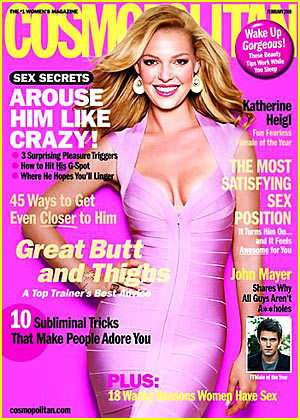
While many magazines are feeling the pinch of the recession, Hearst Magazines is growing. The Hearst family of magazines – Good Housekeeping, Cosmopolitan, Food Network Magazine and Oprah Magazine, to name a few – have almost all held steady in circulation, according to a New York Times article by Richard Pérez-PeÒa. And their combined advertising pages dropped by only 6.7 percent last year, compared with the 11.7 industry average.
To what does Hearst owe this success? According to Samir Husni, chairman of the University of Mississippi journalism department, it’s Hearst’s contrarian strategy. While other magazines are shrinking and cutting newsstand prices, Hearst is doing just the opposite. Hearst is increasing the physical size of many of its magazines – by up to an inch in most cases – and upping the price by more than 25 percent in the past two years. Despite these increases, sales have remained steady. Evidently, customers are loyal to their favorite magazines and willing to pay the price.
From a PR perspective, one of Hearst’s most interesting strategies is keeping its articles offline. The company’s magazines have Web sites, but they offer only a few select articles and features. Says Pérez-PeÒa, “Their sites try to tantalize readers with what they can see only in print – and drive them to buy subscriptions.”
In an age when consumers expect all print news to be available for free online, this tactic seems counterintuitive. But according to Hearst Magazines President Cathy Black, it’s working. Says Black, “I want 1.6 million women to go to the newsstand every month to buy Cosmo, and they do.” She continues, “I don’t have any interest in challenging that economic model.”
Black and other Hearst executives may be on to something, and they certainly have the industry clout to start a trend. But if this “print-only” movement takes off, what will it mean for PR? Here are a few of my initial thoughts:
Circulation – When an article appears both in print and online, it reaches a vastly larger audience. And online articles are often reposted on other news sites and blogs, resulting in higher circulation. Should articles shift from online to print? The key to client satisfaction will be setting expectations. If you know an article will only reach print subscribers, make sure to mention this to the client at the outset.
Pitching – Pitching a story to a print-only outlet is different because pitches do not include multimedia, such as videos, and the audience is much more specific. Pitches should be more narrowly focused for the publication’s target audience instead of for a broader online audience.
Web sites – We often advise our clients to hyperlink articles in which they are mentioned. Should an article appear in print only, it will be important to scan and provide the client with a PDF so they can link it from their site. Our client OnRequest Images does an excellent job of this in their newsroom.
As Hearst moves forward to change the size of its magazines, increase prices and keep materials offline, we will continue to monitor the industry to see whether other magazines follow suit.
Many of our clients are in the technology industry, so we often work with tech bloggers. These bloggers have become increasingly influential as customers look online for advice before making big purchases. And while there are many important tech bloggers, a few stand out as the most influential. So without further ado, here is our list of the top 10 most influential tech bloggers (in no particular order):
1. Duncan Riley, The Inquisitr – Duncan launched several of his own blogs before joining TechCrunch and eventually started his own site called The Inquisitr. This site offers a daily mix of tech, pop and fun stories from around the world.
2. Erick Schonfeld, TechCrunch.com – Erick is co-editor of the popular TechCrunch blog and appears regularly on CNN and CNBC.
3. Henry Blodget, BusinessInsider.com – Henry is CEO and editor and chief of the Silicon Alley Business Insider, a blog that covers – you guessed it – business in tech mecca Silicon Valley.
4. Marshall Kirkpatrick, ReadWriteWeb – Marshall is the vice president of content development and lead writer at ReadWriteWeb, a popular tech blog.
5. Michael Arrington, TechCrunch.com – Michael is the founder of TechCrunch.com and has written over 200 blogs for the site. He writes about breaking technology news and Silicon Valley startups. He is one of the most well respected and followed tech bloggers.
6. Mike Masnick, Techdirt.com – Mike is the editor of Techdirt, and blogs daily on his opinions about trends and technology.
7. Om Malik, Gigaom.com – Om founded Gigaom, which reaches 1.75 million people per month. He has received numerous awards for his blog and often writes about emerging technology.
8. Robert Scoble, Scobelizer.com – Robert founded top technology blog Scobelizer and posts opinion pieces about the industry. He has worked for Microsoft and Fast Company in the past.
9. Thomas Ricker, Engadget.com – Thomas blogs frequently about opinion, news and new products on this top tech blog.
10. Walt Mossberg, All Things Digital, WSJ – Walt is both an influential blogger and journalist for the Wall Street Journal. He created and has been writing the Weekly Personal Technology column in WSJ for more than 20 years.
Seattle blogger John Cook also deserves an honorable mention. A former writer for the Seattle Post Intelligencer, John is co-founder and editor of TechFlash.com. His site covers technology, startups, venture capital and other Seattle tech news.
The Web changes at a rapid pace, so this list will probably change over time. Do you follow any of these bloggers? Are there any you would add? Please let us know.
Dedicated journalists across the nation are refusing to quit – even when they’ve been laid off. In a New York Times article, David Carr reports on a new journalism trend spurred by this economy: newsrooms owned and operated by journalists.
These newsrooms have a few marked differences from those run by top daily newspapers. There are no editors or administrative staff, no printed editions or deep pockets. And no money. These journalists are so dedicated to their work that they’re writing for free.
NewJerseyNewsroom is one such outlet started by journalists who had been laid off from The Star-Ledger in Newark, New Jersey. A group of 40 journalists came together at a public library in January 2009 and created the site without any financial support. Says the site’s “About Us” section,
“We have won every award and distinction from the Pulitzer Prize to the New Jersey Press Association Journalist of the Year. Our contributing writers, driven by passion and purpose, contribute as volunteers who believe in the cause.”
The site went live in mid-April and has since received more than 51,000 page views – a number that surely increased after the New York Times piece ran. It boasts a few ads, but journalists are not paid for their work. The site is incorporated, and should it someday become profitable the founding members will receive a share of the company.
I found the site to be professional, clear, relevant and insightful. At first glance, there doesn’t appear to be much difference between NewJerseyNewsroom and the sites operated by major daily newspapers.
Carr reports that there are several similar sites in San Diego, Minneapolis, Denver and Chicago – perhaps evidence of a growing trend, especially as the newspaper industry continues to suffer.
But without editors and resources like photographers and fact-checkers, will quality suffer? Perhaps, but these journalists are devoted to their craft and are invested in creating a reputable news source. It is in their interest to maintain credibility by continuing a tradition of honest reporting.
Public relations is closely tied to journalism and seismic shifts in the media landscape directly impact our work. On a high level, new sites such as the NewJerseyNewsroom aren’t likely to make a big difference in PR. We will still pitch the same reporters and topics – only the publication name will change.
But it will be important to remember that journalist-run newsrooms have limited resources, so expecting a journalist to fly across the country for an interview or send a photographer to your offices may be out of the question. For the same reason, they will likely focus on local news. Pitches should therefore have a strong local angle.
There may also be increased opportunities for byline articles. As we wrote in a previous post, byline articles can be an excellent way for companies to establish thought leadership and retain ownership of their messages. Thoughtful, relevant and non-self-promotional byline articles written by knowledgeable executives could make a great addition to journalist-operated newsrooms.
We commend the devoted journalists who start their own newsrooms, and will keep close tabs on this trend and its impact on PR.