
Insights for Leaders Navigating
Visibility, Credibility, and Growth.
From media strategy to reputation management, we explore the trends shaping public perception and share the approaches that drive measurable results for growing brands.
Twitter continues to see explosive growth – according to comScore, Web site traffic to Twitter.com accelerated 131 percent in March while the Wall Street Journal (Twitter handle @wsj) reported on May 26 that Twitter now has more than 32 million users. Corporate brands, celebrities and political leaders are all using Twitter to communicate with one another and share information.
Many organizations and philanthropists are even using Twitter to inspire and motivate their followers to take action by donating and volunteering their time. A May 19 article on TechCrunch (@techcrunch) reveals how Queen Rania of Jordan (@queenrania) leverages Twitter to inspire and encourage social change.
Queen Rania tells TechCrunch, “Twitter’s a great way to tell people across the world what I care about and, hopefully, motivate them to join me in furthering my causes. It’s also a fantastic medium to hear the ideas and opinions of people I might not otherwise get to meet.”
The Bill and Melinda Gates Foundation (@gatesfoundation) also tweets frequently to build awareness of issues such as global healthcare and education. For example, in the days leading up to World Malaria Day on April 25, the Bill and Melinda Gates Foundation posted tweets focusing on the world progress against this disease. The organization also posted tweets encouraging followers to join in the World Malaria Day discussion on Facebook which offered information on Malaria Day activities.
Actor Ashton Kutcher (@aplusk) furthered support for World Malaria Day when he challenged CNN’s Ted Turner in a race to secure one million followers on Twitter. Kutcher agreed to donate 10,000 mosquito nets to Malaria No More, a charity he asked followers to support. True to his word, Kutcher donated the mosquito nets after winning the race in on April. He now has close to two million followers.
Another example of how Twitter has been used for social causes is GlobalGiving (@globalgiving), an online marketplace that connects individuals to causes and countries. GlobalGiving tweets daily to encourage donations and action for worthy causes. Tweets direct followers to the GlobalGiving Web site where people can donate to a variety of causes ranging from women’s domestic violence, education, healthcare and relief efforts for displaced families in Pakistan.
Communiqué PR (@communiquepr) client Seattle Children’s PlayGarden (@playgarden) is also using Twitter and Facebook for its fundraising. Click here to read how Seattle Children’s PlayGarden is leveraging social media to raise funds for children with special needs.
These are just a few examples of how Twitter can be an instrument for social change. In the coming year, I suspect more organizations will turn to Twitter to raise awareness for unique causes, programs and fundraising campaigns.
Chevron recently faced one of the largest class-action lawsuits in history, filed by Ecuadoreans who accuse Texaco (a company acquired by Chevron) of poisoning the rain forests. This lawsuit and an upcoming negative broadcast story on ë60 Minutes prompted Chevron to take an offensive approach to combat negative allegations.
The company hired former CNN national correspondent Gene Randall to tell its side of the story in a video about the lawsuit. In the video, Chevron defends its position and claims it was a victim of a massive misinformation campaign.

Chevron’s video which appeared on YouTube and the company Web site, has received a mixed response as many journalists and PR professionals debate whether it crossed the line in its defense. AdAge reporter Michael Bush wrote an article titled, “PR Pros Weigh in on Chevron’s ’60 Minutes’ Offensive,” which takes a look at PR professional’s reaction to Chevron’s move to hire a former CNN reporter and produce its own in-house “news” story.
In his article, Bush asserts that Chevron’s video may be a strong indicator of the direction future marketing activities could take, and how companies will look to shape public perceptions. Changes with social media allow corporations to compete with traditional media outlets and reach the consumer directly in a more controlled manner.
Mark Hass, CEO of MH Group Communications, said, “It may…even provide jobs for all those reporters watching their newsroom spots disappear.”
Nonetheless, as companies leverage social media, transparency and full disclosure is critical. For example, instead of using ëGene Randall Reporting’ in its video introduction, Chevron should have been clear they produced the content by using, ëGene Randall Reporting for Chevron.’ This would make it clear to viewers that the video segment was produced by Chevron and not an independent news outlet.
At a time when journalists are being laid off left and right, PepsiCo has a very compelling offer: chronicle the Internet Week conference using social media and receive $750.
Internet Week is June 1-8 in New York City, and PepsiCo is calling journalists, students, social media experts and anyone else to capture the week’s events using social media tools. These so-called “social communicators” will receive press passes and are expected to create content including photos, videos and blog posts. Says PepsiCo’s director of digital and social media, “What we’re looking for are storytellers or journalists or professionals that are at work in this space.”

PepsiCo’s goal is to generate 100 pieces of content over the course of the week with the hopes that other sites will repost them. In addition to reposts, their reports will appear on the PepsiCo Content Network. If it works, this will be an inexpensive and very effective way to generate viral buzz.
As social mediums grow in popularity, corporations such as PepsiCo are scrambling to hop on the bandwagon. But successfully generating buzz via social mediums is no easy task for corporate behemoths like PepsiCo or Coca-Cola. We previously wrote about Coca-Cola’s successful Facebook fan page as an example of how to engage social media the right way.
What are other companies doing to creatively engage social media? Here are some great examples:
Comcast – The company uses Twitter as a form of customer service. Frank Eliason, Comcast’s customer service manager, responds instantly to customer inquiries on Twitter and has become a face of the brand. At customers’ request, he even uses his own photo as his Twitter icon instead of the company logo.
Blendtec – George Write, marketing director of Blendtec, created a brilliant campaign that has since become an internet sensation. Blendtec CEO Tom Dickson attempts to blend objects from iPhones to golf balls in a Blendtec blender in YouTube videos. According to a Mashable.com article, this simple idea has led to a “five-fold increase in sales.”

Sun Microsystems – Jonathan Schwartz, CEO of Sun Microsystems, started a company blog that received about 400,000 hits a month in 2006. One of the reasons for its success was transparency. Schwartz allowed both positive and negative comments on his blog – a move that built trust with customers.
Each of these companies took a unique approach to launch successful social media campaigns. For those of you looking to follow suit, here are a few key takeaways:
Make sure you choose a social medium that is popular with your target audience. In other words, follow your audience.
Consider what interests your target audience.
Think creatively.
Create content that people can easily repost on other social networking sites – this creates customer evangelists for your company.
We will be interested to see whether PepsiCo’s campaign takes off following the June conference. Stay tuned for our analysis of this campaign next month.
– Jessica Luhrs
It’s no secret that the newspaper industry is in serious trouble. The changing media landscape coupled with the economic downturn has forced the recent closure of longtime newspapers such as The Rocky Mountain News and Seattle Post-Intelligencer. Even TIME offered its predictions on the top 10 major newspapers that will fold or go digital this year including the Miami Herald and the Boston Globe.
With so many of our nation’s newspapers fighting to stay alive, many are evaluating strategies to update their medium and make it relevant for today’s consumer.

According to an article in Advertising Age, “The nation’s print media may be on life support, but some are quietly building digital portfolios again – albeit on a smaller scale – and some are starting to bear fruit. We’re not talking about the digital editions of papers themselves, but startups that take old media in new directions.” For instance, Gannett Co. Inc., a leading international news and information company which publishes 85 daily newspapers, including USA TODAY, has been busy building strategic relationships with startup companies to shift its business model and become a leader in the digital media market.
One of Gannett’s portfolio companies includes Pointroll, which powers innovative rich-media display ads on the web. Pointroll’s CEO Jason Tafler said, “The ultimate goal is to transform Gannett into a real digital leader by leveraging the strength of content and the audience that it has and extending that into the digital world.”
Gannett is not the only newspaper company to invest in startups. Hearst Interactive, Tribune, Washington Post Co., and the New York Time Co. have all dipped their toes into the water hoping to revive struggling print publications.
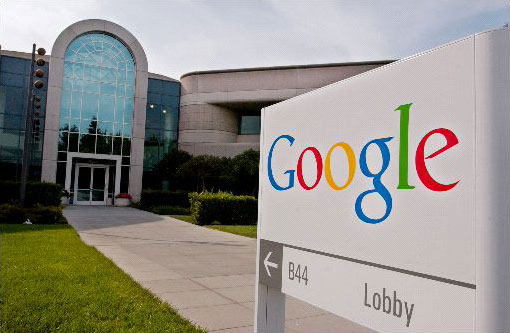
Interestingly, Google – who has often been blamed for contributing to the downfall of newspapers – has been on the radar in recent months revealing it considered buying a newspaper but decided against it, “to avoid crossing the line between infrastructure, technology and content.”
Either way, this move by Gannett and other newspaper companies signals the dawn of a new era in the media industry. It will be interesting to see how this plays out not only for consumers of news, but also journalists, advertisers and PR professionals. PR practitioners have already begun to shift how they disseminate news and I anticipate this will continue to evolve as media companies’ digital portfolios grow.
Once you’ve created a blog for yourself or your company, how can you ensure your content is interesting and valuable to readers? Here are a few simple tips to create a great blog:
1. Create compelling content. Don’t just rephrase articles or blog posts you read elsewhere. Write about your area of expertise or personal experiences. Your writing will come alive and engage readers when you are passionate about the topic.
2. Title – Think about the keywords people might use to find your blog, and include them in your blog title. For example, if your blog post is about how to train for a marathon, make sure your title includes the keywords train and marathon. Also consider how your title will appear in tweets and whether it can easily be retweeted. Titles should be less than 140 characters so there is room for hyperlinks and “RT @username.”
3. Use images and videos – Use images and videos in your blog posts to make them more interesting and enjoyable to read. Images draw in readers and can reinforce your post in a creative way. A post about the Amazon Kindle just wouldn’t be the same without a picture.
4. Comment – Make sure to comment on other blogs you find interesting. Chances are good that both the blog author and other readers will click through to your site after reading your comment. Always be transparent and identify yourself and your company when commenting.
5. Post often – Readers will come back to blogs that regularly post interesting content. If you know you have a busy week coming up, write a few posts ahead of time and schedule them to automatically post on your blog the following week.
6. Link your blog to e-mail, Twitter and Facebook. Whenever we post a new entry on the Communiqué PR blog, an update automatically goes out over e-mail to our subscribers, and via Twitter and Facebook. We have clear, bold icons on our blog so readers can easily follow us via e-mail or Twitter.
Have other questions about optimizing your blog? Leave a comment or send us a note at [email protected] and we’ll get back to you.
With more than 25 million users worldwide Twitter has become a powerful medium for both businesses and consumers to connect. Similarly, Facebook, with more than 200 million users, has redefined the way we communicate. Communiqué PR recognizes the major potential these two social mediums possess and has decided to launch its first campaign centered around raising $230,000 – through both Facebook and Twitter – for Seattle Children’s PlayGarden.
The PlayGarden is a nonprofit organization dedicated to providing a place for both mentally and/or physically disabled children and their normally developing peers to share a safe, stimulating and fun playground environment. Located at the south end of Colman Playfield in Seattle, the PlayGarden needs this money to complete the construction of various projects such as Mount Jordan, a volcano-themed climber that is even accessible to children in wheelchairs. With the goal of getting a large number of people to donate money to complete these projects, PlayGarden Executive Liz Bullard approached Communiqué PR.
After our discussions with Liz, we felt strongly that the use of Twitter and Facebook to garner funds would be both time and cost effective. At the same time, by leveraging Twitter and Facebook we have the opportunity to create broad awareness of the PlayGarden with new audiences who may not be aware of the park and what a valuable resource it will be to our community.

Bullard adds “Communique’s idea of using Facebook and Twitter to attract donations is simply a great way to keep our fundraising costs to a minimum. We are also impressed with the team’s work getting the local media to write about our campaign.”
To date, the following articles were published about the campaign:
Puget Sound Business Journal
Nonetheless, the real question remains as to whether or not people trust these social networking sites enough to click through to the PlayGarden’s Web site to donate and support its cause. We are excited to see what will happen with this campaign.
To donate, please click here.