
Insights for Leaders Navigating
Visibility, Credibility, and Growth.
From media strategy to reputation management, we explore the trends shaping public perception and share the approaches that drive measurable results for growing brands.
In a recent Advertising Age article, authors Marissa Miley and Michael Bush offered readers marketing tips for surviving the recession. They aimed to answer the question, “How are you (marketing executives) supposed to discern what is right for your brand?”
With a focus on providing tips from in-the-field professionals, Marissa and Michael garnered the perspectives of marketing executives at companies and organizations including Wunderman, Behance.net, Initiative, Barkley U.S. and McGarrybowen.
Here are a few high-level marketing tips we took away from the article that can also be applied to PR:
Connect with customers in a relevant and important way. The worst thing to do is completely go dark. – David Sable, vice chairman and chief operating officer, Wunderman
Evaluate your priorities and strategies. Ask questions such as: Is my current marketing mix really the best use of my resources? Should I focus on maximizing the profitability of my existing base or should I go out in search of new markets? – Stewart Owen, chief strategic officer, McGarrybowen.
Re-engage your rolodex. Now is a great opportunity to reconnect and strengthen your network. – Scott Belsky, founder and CEO, Behance.net.
Focus on your core customers and demonstrate your commitment to them. – Janet Fitzpatrick, worldwide director of communication and planning, Initiative.
Reward innovation. Dream of something people want that nobody else offers and then invest in that dream. – Brian Brooker, CEO and chief creative officer, Barkley U.S.
We thought these tips were spot on and wanted to hear more ideas, so we reached out to marketing executives across the country. Here are some additional guidelines that may help marketing executives weather the recession:
Make your Web site work harder. Now more than ever, businesses need to optimize the marketing potential their Web site holds, primarily through leveraging critical search terms that drive traffic – and new customers -to their doorstep. – Robert Oltnanns, president, Skutski & Oltmanns.
Market smarter, not harder with efficiency being key. Devoting dollars to areas such as social media is one great way to do this. It allows organizations to build visibility and brand awareness online without having to do a “buy” on a site or in a magazine. – Holly Matson, online marketing manager, Risdall Online Marketing Group.
Be creative and bold. The bolder (and smarter) you are, the more response you will get for less money. – John Follis, president and founder, Follis Advertising.
It is easy to see how these tips can be specifically applied to PR. For example, while it is important for marketing executives to be creative and bold in their ideas, PR professionals are also looking to approach media in fresh and creative ways. The changing landscape in traditional media and the rise of social networking are forcing PR professionals more than ever to be creative, bold and present relevant ideas.
Another one of the marketing tips that transcends to PR is the need to work smarter, not harder. Budgets are strained and organizations are looking for ways to tighten belts. From a PR perspective, we are working smarter, not harder, to provide organizations with the greatest return on their PR investment.
No matter if you are working in marketing, or specifically in PR, it’s probable that you are seeing the impact of the recession. We would love to hear from you and know what tips you have found most helpful. Write to us at [email protected] or post a comment below.
The power of Twitter is evident. For the first time an individual can broadcast a message to millions of people in an instant. But how companies will leverage that power to achieve their business objectives is not yet as evident.
I recently participated in a panel hosted by Perkins Coie and Madrona Venture Group focused on how businesses can leverage Twitter. The panel was moderated by Paul Goodrich and Ayush Agarwal from Madrona Venture Group. It was fascinating to hear from legal experts Tom Bell and Susan Lyon from Perkins Coie, and discuss the business implications with Avelle CEO Michael Smith, and Alaska Airlines’ Navin Mithel.

While there were numerous points of interest from this event, I want to highlight a few key points I believe companies need to understand when they engage Twitter.
1) Authenticity and Transparency – Be open and honest about who is twittering. If you claim the Twitter account is maintained by the CEO, be sure the CEO is the one tweeting. Social media is about relationships and honesty is fundamental to strong relationships. The Twitter profile should specify the organization or individual who is tweeting and what type of information they plan to include in their tweets.
2) Know your audience – Leveraging social media effectively requires clarity of who you are trying to reach, their needs and wants and how you can add value. Increasing your followers and ensuring they align with your communication goals and business objectives is dependent on understanding what information is valuable to your audience and how often they want to hear from you.
3) Compelling Content – Twitter is still evolving. The amount of information exchanged is daunting and clearly not all content is of interest. Those users that provide relevant and compelling information will attract followers, supporters and a large audience. Users who do not provide value or don’t communicate clearly will lose followers.
Business leaders also need to understand that expectations are changing. Consumers are starting to demand immediate responses to their tweets. Companies will need to change to adapt to the new level of expectations to compete. Those organizations that are perceived as accessible and responsive will build a loyal following that may become the front lines in deflecting negative tweets and promoting positive experiences.
I anticipate the Perkins Madrona Twitter Conference ë09 will be the first of many events as businesses look to learn how to leverage Twitter to help execute on their key strategies and accomplish their toughest business objectives.
Recently I presented at the 2009 Communicators Conference in Portland, Ore. My discussion focused on the changing media landscape and its effect on communication.
It was fun and interesting to talk about the changes I am seeing. With so much transition occurring in our industry, I think it pushes each and every one of us as communicators to be more resourceful as we look to tell our stories or our clients’ stories.
Clearly change can be frightening, and disruptive. However, with the right attitude and actions, I believe we can continue to find great opportunities.
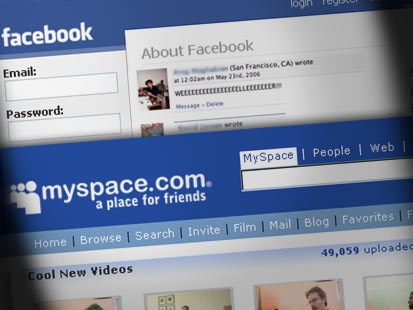
I began my presentation by noting the changes in traditional media and then juxtaposed this with information about social networking sites, hyper-local news sites and consumer generated content. As part of this discussion I honed in on the stats surrounding Facebook and MySpace.
Clearly Facebook has come a long way from being a site for college kids. In early April, the social networking giant announced it surpassed 200 millions users world wide. Facebook also reports it has five million new people joining each week.
Twitter, the social media darling, is also very interesting. As an open network, it provides companies with an easy way to monitor public sentiment and engage with customers in a non-obtrusive manner. In 2008, Twitter grew an astounding 752 percent.
But what about MySpace? No one in my network uses it and I began to wonder about MySpace’s future. To get the most current stats for my presentation, I reached out to MySpace’s PR manager to request the latest user statistics. Here is the data about MySpace she shared with me:
- MySpace has more than 130 million monthly active users around the globe. (March 2009 comScore)
- MySpace has more than 70 million total unique users in the U.S. (March 2009 comScore)
- MySpace is the country’s most viewed site on the Internet. (March 2009 comScore)
- 89 percent of MySpace users are of voting age (18 or older). (March 2009 comScore)
- 40 percent of online Americans are on MySpace. In the UK, it’s as common to have a MySpace account as it is to own a dog.
- 70 percent of people visiting mobile social networks are visiting MySpace. (ABI Research)
- Internationally, MySpace hit 60 million unique visitors, beating September’s record of 54 million. (February 2009 comScore)
- Europe MySpace users surpassed the 29 million user mark, up 0.8 million unique users from August 2008.
- Latin America MySpace users are up 16 percent over the past seven months, reaching 6.8 million users in November 2008.
ENGAGEMENT
MySpace is the top social network in all engagement categories according to comScore. In March 09, users
- spent 16 billion total minutes on the site
- viewed 35 billion total pages
- spent an average of 226.2 minutes on the site
The company has localized versions in 30 regions across 15 languages, including:United States, U.K., Argentina, Brazil, Canada, Latin America (EspaÒol), Mexico, Austria, Denmark, Finland, France, Germany, Ireland, Italy, Netherlands, Norway, Poland, Portugal, Russia, Spain, Sweden, Switzerland, Turkey, Australia, China, India, Japan, and New Zealand.
MySpace is one of the fastest growing Web sites of all time:
- 827 Billion rows of data
- 27 Billion comments on the site
- 34.2 Billion mails on the site total
- 41 Million mails per day
- Eight Billion friend relationships
- 6.8 Billion images
- 18 Million images uploaded daily
- 62,507 new videos uploaded to MySpace Video daily
- More than five million artists and bands are on MySpace Music
- Acts including Lily Allen, Sean Kingston, Arctic Monkeys, Colby Caillat, Dane Cook discovered on the site by users
The stats are impressive, but still there are a number of industry luminaries who believe MySpace’s future is limited. To better understand their perspective I recommend reading a New York Times article from May 3, 2009 entitled, “Losing Popularity Contest, MySpace Tries a Makeover.”
If you have a point of view on the future of MySpace, we would love to hear from you. Let us know what you think. Is the bloom off the flower? We welcome your perspective and/or examples of how you use MySpace.
While reading about Amazon’s recent launch of the Kindle DX, the large screen addition to the Kindle family, I was surprised to learn textbooks are a $9.8 billion dollar industry. In a bold move to become a major player in this market, Amazon introduced the Kindle DX in hopes of “spearheading a paperless revolution,” as described by Brian Chen with Wired.com in his recent article, about the launch of the DX.
Although Amazon’s cause to move towards a paperless revolution may be noble, its entry has been met with some initial skepticism. According to Chen, several of the students polled by Wired.com via Twitter expressed concerns regarding the DX’s expensive $500 price tag as well as its difficulty for studying. One polled student said, “I’d need five Kindles just to hold a single thought while writing essays. Books work just fine”

Regardless of this sentiment, Amazon is moving forward and announced partnerships with several universities and publishers. According to an earlier article written by Chen, the DX will be made available to students to use in place of textbooks.
From a PR perspective, I believe Amazon’s move to partner with universities is a smart one. It will allow the company to:
1. Secure feedback from students about their experience using the DX versus textbooks.
2. Begin building the DX customer base which may translate to lifelong Kindle users and advocates for the product.
3. Track and publicize the positive benefits to universities and students of going paperless – a topic that is close to the heart for a generation of young adults growing up in more environmentally aware society.
For example, Princeton, one of the participants in the program, is hoping the Kindle DX will decrease the amount of paper used on its campus. If the program is successful, Amazon should develop a case study to make the argument for other why universities should adopt the DX.
I had a few other ideas on how Amazon might leverage and publicize its partnerships with the universities.
– Hold Focus Groups & Publicize the Findings. Amazon could identify students to participate in focus groups. Several of the students could use the DX while others would rely on textbooks. This would allow Amazon to directly compare changes in behavior, attitudes around costs, impact on studying habits, etc. with students using the DX versus text books. Focus groups are an invaluable tool for acquiring feedback and the potential market acceptance of a product.
– Leverage Social Media. Create a Twitter page to share best practices for the DX and motivate users to tweet about their experiences online. I believe there is a huge opportunity to share tidbits about DX features so students derive maximum benefit from their readers and libraries.
– Reward Good Behavior. Hold a contest to identify and publicize the top environmentally-friendly universities across the nation. Share best practices for going green and the DX’s role in reducing paper use.
These are just a few of our preliminary ideas on how Amazon can leverage student experience to demonstrate the benefits of the DX versus traditional textbooks.
It is clear Amazon is seizing the opportunity to create a compelling PR campaign around one of the most talked about gadgets of the year. It will be interesting to see if it can deliver on driving the paperless revolution.
A recent post in the New York Times “After Deadline” blog – an online section devoted to examining questions of grammar, usage and style – examined the words writers love to overuse. Since we’re increasingly called upon to create more written content on behalf of our clients, we find this blog helpful to improve our writing. Some of the words writer Philip Corbett highlighted in his post include the following:
Icon/Iconic: Times editors have waged a long battle against the trite overuse of these terms. Ask yourself whether a person or thing is truly worthy of these descriptions before using them.
Arguably: A sneaky way to say something without having to take full responsibility for saying it.
Famously: If it’s so famous, do we have to say so?
[Blank]gate: Troopergate was the latest. This is an overdone play on the name of a well-known historic event.
Toxic: As in “toxic assets.” This has become ubiquitous as the standard term to describe the troubled investments at the heart of the fiscal crisis. Avoid it if you can.
I found this post to be particularly interesting because as a writer and PR professional, we often struggle with developing content that is straight-forward, easy-to-read and when possible, devoid of marketing language.
From a PR perspective, there are thousands of overused words and phrases I’m sure journalists would like to see banned from press and marketing materials. A few that come to mind include:
Revolutionize
Leverage
Cost-effective
Unveiled
Best-of-breed
Turnkey
Robust
Flexible
Next generation
Mission critical
I admit that in my 10 years in PR I’ve used all of these words hundreds of times. But in the interest of continuous improvement, it may be time to chuck these old phrases and get back to simplify our writing.
What other words or phrases do you think should be banned from PR and marketing materials? We’d love to hear your opinion. Leave us a comment!
Communiqué PR recently completed a project with Dashwire, an independent connected services platform provider. Dashwire offers an industry-leading connected services platform solution that delivers mobile-to-Web consumer services. This means mobile users can sync and manage their personal contacts, text messages, calls, photos, videos and settings from their phone to the Web.
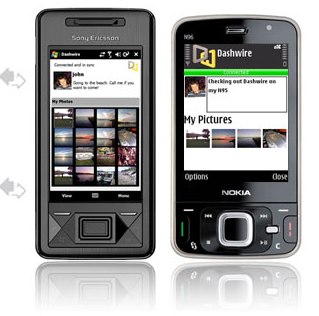
The connected services market is heating up, and Microsoft’s recent entry into the game with its MyPhone service validates what Apple, Nokia and Google are already betting on. Competition is no longer from device maker to device maker (i.e., Nokia vs. Motorola phones). Now, software services are competing to deliver value-added services to consumers on top of phone platforms.
According to a December 2008 press release from IDC, mobile phone shipments in 2009 are expected to decline, however, converged mobile devices (smartphones) are expected to grow 8.9 percent worldwide in 2009. The report states:
“Users have come to realize what these devices can do beyond voice telephony, especially when it comes to running applications. Take a look at how gaming, mapping and location, entertainment, news, and social networking applications for converged mobile devices have taken off, allowing users to do much more than just make phone calls. In response, handset vendors have been building their product and applications portfolios to catch this wave of opportunity.”
Ford Davidson, founder and CEO of Dashwire, has been an active voice in the connected services market. Ford carefully watches market trends, actively blogs about news and trends within and provides the media with a clear point of view on which players are well positioned to emerge as the market leader. As an independent vendor, Ford is well positioned to offer his perspective and expertise to help educate media, consumers and industry influencers.
From a PR perspective, providing media and analysts with a strong point of view on market trends is a great way to help build thought leadership and increase awareness for an organization. Just recently, Ford was quoted in a Reuters’ article about how Nokia’s OVI store stacks up against Apple’s App Store. This placement resulted from our proactive outreach offering Ford’s point of view on the connected services market on the heels of Microsoft’s MyPhone announcement earlier this year.
Ford commented on the increasing competition in the space, saying, “These companies are really entering the arms race.” Reporter Tarmo Virki included the quote in the title of his article, “Nokia takes on Apple in online software arms race.”
The Reuters piece has been picked up by more than 39 publications and blogs, including CNBC, MSNBC, Forbes, Condé Nast Portfolio, International Business Times, the Guardian, eWeek and PC Magazine. The piece also helped Dashwire meet one of their key business objectives and it positioned the company as an emerging leader in the connected services market alongside larger companies such as Nokia, Apple and Microsoft.
For more information about Dashwire, please visit www.dashwire.com, or visit http://blog.dashwire.com/ to read more about Ford’s thoughts on the connected services industry.