Insights for Leaders Navigating
Visibility, Credibility, and Growth.

From media strategy to reputation management, we explore the trends shaping public perception and share the approaches that drive measurable results for growing brands.

Spaceflight Made History With Record-Breaking Launch

At the end of last year, our client Spaceflight, the leading mission management and launch service provider, launched the largest number of satellites ever from a U.S.-based launch vehicle – a historic achievement that was years in the making.

The first-of-its-kind mission, named SSO-A for the orbit it was launching to, was dedicated to smallsats. Onboard were 64 smallsats from 34 organizations with varying missions representing 17 different countries. It included satellites from commercial organizations tasked to take images of the Earth, spacecraft from universities conducting research on orbit, payloads serving as art displays, and even a satellite built by middle-school students designed to test bacteria in the conditions of space. (Spaceflight shared more about their customers here.)

Successfully launching 64 satellites is no easy task. Not only did the team need to meticulously address each satellite’s needs, they also had to orchestrate a complex integration process and develop a deployment sequence that would enable each satellite to deploy on orbit. On Dec. 3, 2018, Spaceflight executed its historic mission successfully.

In order to promote this incredible accomplishment, Communiqué PR and Spaceflight’s marketing team began building momentum around the launch in August 2018, distributing a press release that provided facts and stats about the mission and customers onboard. This helped set the stage and provide the media foundational information about the launch.

As the mission approached, we scheduled and hosted a press tour to meet with prominent reporters who we believed would be interested in learning more about this mission. We viewed the in-person meetings as an opportunity to brief the reporters on how Spaceflight makes space more accessible, as well as explain how what this mission meant to the industry. We stopped in Washington D.C., New York and San Francisco to meet with reporters from The New York Times, CNN, CNBC, Quartz and more. Additionally, we hosted phone calls with many reporters who were unavailable during the times we were in town.

Finally, we distributed a press release following the launch confirming its success and emphasizing Spaceflight’s role in the mission. Not surprisingly, due to the mission’s impact on the industry and its significance, there was substantial coverage about its success. Below, we’ve included a handful of articles that resulted from the mission and its promotion.

Spaceflight SSO-A Coverage

Congratulations to the entire Spaceflight team!
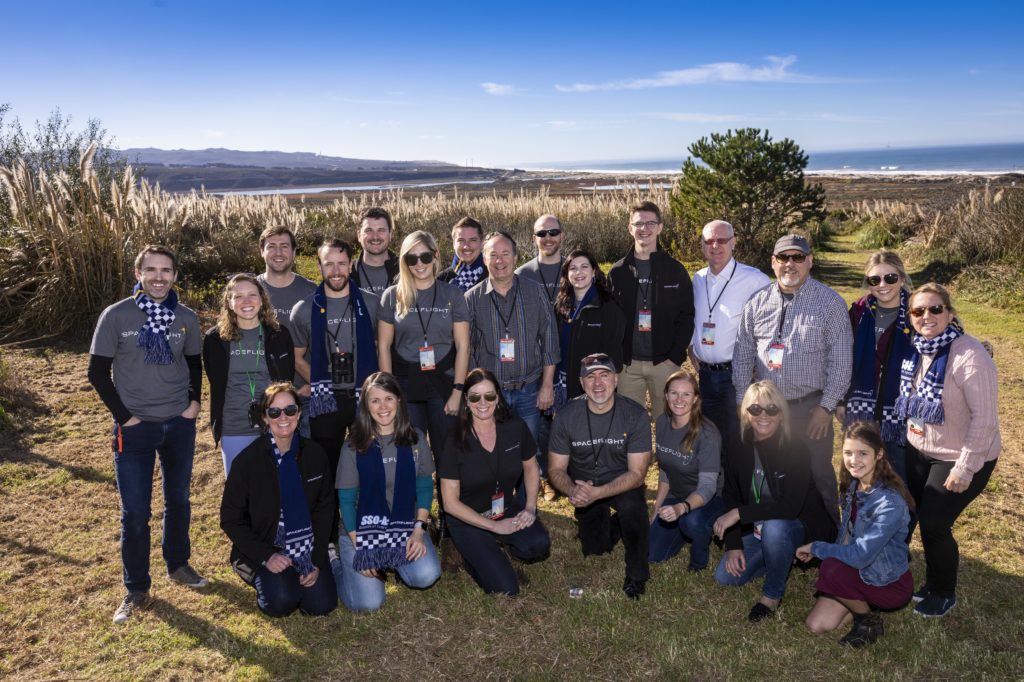
Image by: Spaceflight Industries

Media Q&A: Rob Smith, Seattle Business Magazine

The Communiqué PR staff recently had the opportunity to sit down with Seattle Business Magazine’s new Editor-in-Chief, Rob Smith, to discuss his vision for the magazine. Smith has overseen several prominent business publications in the Pacific Northwest. We look forward to what his dynamic leadership style, and his depth of regional business knowledge, will bring to the magazine.

1) What is your vision for Seattle Business magazine?
While I want to honor the stronghold Seattle Business Magazine has in the community, I am also looking forward to the future. I think there is an opportunity to emphasize the factors that are influencing growth in our region. For example, magazine coverage of Seattle Center Arena’s development, and its influence on lower Queen Anne, can demonstrate the business community’s impact on real estate growth.

2) What do you look for in a story?
I think the most interesting part of business reporting is the “why.” For me, it’s all about the impacts of the “why?”

3) What is your favorite thing about your job?
I have the license to meet and talk to interesting people. I get paid to be nosy. It is that simple.

4) What are your go-to news outlets?
CNN and Quartz. I also love how the Wall Street Journal breaks down a story; there’s a definite philosophy and pattern to the writing and reporting. Forbes is also one of my favorite business publications.

5) Number of unread emails right now?
6,000+

Bonus tip: pithy subject lines that are specific, relevant and regional help break through the noise.

6) Are there any work rituals that are critical to your success?
In my experience, it’s key to establish a balance between daily tasks and long-term goals. One way I do this is by writing down what I must accomplish daily while also keeping a list of bigger-picture goals handy. It keeps me focused on day-to-day activities and provides the structure to carve out time for more complex projects that advance our overarching business strategy.

7) What’s the best advice you’ve ever received?
My father was a banking executive and passed on some sage advice that I try to embody: “Instead of worrying about all the things you could worry about during the week, write down what is bothering you right now and stick it in a drawer. On Friday afternoon take a look, and you’ll see that most of the things you worried about on Monday don’t even matter by the end of the week.”

Dealing With Data in Public Relations

If you’re willing to use a data-driven PR strategy, the payoff can be immense. After all, the most important currency in today’s world is data. But for most business clients, raw data can be confusing, and almost impossible to understand out of proper context. With the development of modern technology, data is becoming easier to gather; it can be harnessed, represented and analyzed in new and innovative ways.

As a PR firm, much of our business focuses on capturing and dissecting data for our clients – then putting it to good use.
For example, when assessing a client’s strengths and weaknesses, we discover their most popular products versus least popular products – and why. We map out and analyze the company’s web traffic. We seek patterns in their consumers’ purchases.

In today’s digitally oriented world, the interaction between the consumer and the business is changing – yet consumers provide key data that a business can use to improve themselves and learn more about their market.

Simultaneously, data can be used to examine a company’s internal workings. For example, how much time does an employee spend on workstreams? Are employees satisfied, and, on average, how long do employees remain with a company? Do satisfaction results vary depending on departments?

For many companies, raw data is often a massive, confusing batch of information, incorporating dozens of different questions. But we examine patterns in collected data, to better understand the business today, as well as predictive analytics, which offers answers for questions about the business’s future. We can also use data to give the business clear, actionable tasks to take that further their goal.

Interacting with your client on this very detailed level is extraordinarily useful in the realm of PR. If you can examine a business and determine patterns, you likely have a deep understanding of the client’s needs and challenges. Data gives us the information to clearly determine what is and isn’t working for our clients’ businesses. When properly utilized, that data can make business models more relevant to those within the company and their consumers.

Data can be the ingredients for a menu of heat maps, interactives, infographics, and videos—making information easily understandable, and fun to interact with for clients and consumers. Qualitatively, you don’t have to stick to raw numbers—data can be used to track survey responses, interviews and more. You’ll be able to effectively market their company with numbers, charts and anecdotal evidence backing up pitches and press releases—which journalists love when being pitched.

New developments in technology make data collection and presentation extremely versatile, and easily accessible to an analyst on the go. As cloud migrations increase in popularity, data storage is more accessible and cost effective. Storing data in the cloud frees up computer and office-space storage, as well as a less expensive alternative to in-house servers.

At Communique PR, data drives everything we do. Every single one of our actions can be broken down into a piece of data, which means we are a walking wealth of information and the best growth tool a business could have.

By analyzing and incorporating data into public relations practices, you can improve the effectiveness of your clients’ businesses, happiness of their employees and much more – the options only dependent on the data sets you pursue.

We think of data as an extensive resource that develops more opportunities, allowing us to put clients at the forefront of trends—and keep them there.

Integrating PR With Affiliate Marketing Campaigns

Any avid Instagram user is likely familiar with hearing, “Swipe up here, don’t forget to enter my code,” as they tap through their Instagram Stories.

In fact, in 2017, Instagram updated its settings to allow all business accounts with 10,000 or more followers to add links to Instagram Stories. By adding the link feature, businesses can now link to its products, company announcements, and really any call to action on the internet. Prior to this update, the feature was only available to verified Instagram accounts. (Here is a great resource for using Instagram Stories for business.)

Instagram and other social media platforms constantly update their settings and improve features to better serve their users. This update is no different and was likely a direct response to increases in number of affiliate marketing and brand partnerships.

A recent Forrester study covered by MediaKix examined affiliate marketing in the U.S., predicting the total affiliate marketing spend will continue to grow at a rate of 10 percent each year until 2020. The report also noted that in 2017, the spend on affiliate programs was around $5 billion, and projects that by 2020, affiliate marketing spending will reach more than $6 billion.

With more than 80 percent of brands utilizing affiliate marketing programs, and no signs of slowing down, it’s important for marketing departments to assess whether affiliate strategies make sense for their company and its objectives.

For background, affiliate marketing, although not a new practice, has seen a second wind through social media and the popularity of blogging. Through these affiliate programs, entrepreneurs can partner with brands and established companies to market their products and obtain a portion of the profits. In 2018, we’ve see brands team with lifestyle, fashion and food bloggers to raise awareness and increase sales of new products.

The blogger then directs the user to the website, often providing a discount or promo code. On the back end, the blogger not only receives a profit for facilitating this sale (when the consumer buys the product), but they also receive a percentage of a purchase if the user decides to purchase something else but still accessed the website from the affiliate’s link.

Influencer marketing, another powerful marketing strategy, can help brands achieve online marketing and sales objectives by connecting prominent industry figures with the brand – as a way to verify products, services commonly through social media, or contributed articles, etc.

Both influencer and affiliate programs can be effective. However, the key difference lies in the profitability for the third-party individuals. For example, affiliate marketing is a business model using a third-party’s marketing as an approach to make revenue, and influencer marketing is a technique utilizing the third-party resource for social media relationship building and content development. (More on differentiating the two strategies can be found here.)

So how can affiliate programs align with PR efforts, which prioritize earned efforts?  

Often, PR pros recommend influencer programs because they connect brands with industry leaders that can help build credibility and trust among target audiences. This strategy is typically free of costs, and a great practice for smaller companies or startups.

For larger (B2C and B2B) companies and brands with flexible budgets, affiliate programs are a great way to interact with target audiences who associate with these affiliates (i.e., William Sonoma targeting food bloggers, who are followed by William Sonoma’s target demographic).

Integrating PR with affiliate and blogger outreach increases conversion and brand awareness. Below are a few high-level steps PR teams can take when approaching affiliates:

  • Define the target audience of the launch or announcement. As with all properly executed PR campaigns and announcements, it’s important to outline who the company is targeting with a pitch, launch or announcement. Completing this step will help narrow the pool of affiliates to consider.
  • Segment affiliate lists and conduct outreach to secure or refine affiliate partners. With the target audience defined, PR and marketing teams can work together to tap existing affiliates, or identify new affiliates who have a strong following consisting of the target demographic.
  • Educate affiliates about the brand and objectives for the campaign or product launch. After you secure a group of affiliates who have strong connections in your target audience, share relevant announcement materials and the key messages with the affiliate’s so they have a clear understanding of the objects and what you want them to share with followers.
  • Develop content for affiliates to share that promotes the product or solution. For example, affiliate bloggers could share previously developed content or articles showcasing the product, such as, “My 10 favorite apps or kitchen supplies, etc.” The article would include links to download the app or access the website and view/purchase the product.
  • Work with the affiliate and brand to track and share results. Following the campaign, PR teams and affiliates can track and showcase coverage with one another. For example, if the affiliate was mentioned in an article, sharing the article on social media or again on the affiliate’s platform will help maximize these efforts, raise awareness of the product, and increase conversions.

Although affiliates help raise awareness of products and increase sales – similar objectives of PR teams –  it’s important to facilitate partnerships rather than protect strategies or be afraid of losing value from the other.

Marketing coordinators can eliminate these concerns by training and talking with their affiliate and PR teams to ensure campaigns have an active and effective role for each party. 

The Blackbox of Pitching Media

As PR professionals (PR pros) we are often tasked with trying to maximize exposure for our clients across multiple forms of media, while actively listening to audience feedback and mining for emerging trends and conversations that we can leverage to keep our clients top of mind.

While standard reporting is important, how you report on your progress and wins is often as important as what you are reporting on. Let’s face it, no update from one’s PR team likely means there is no coverage to report. Worse, it might appear to clients and other stakeholders that PR has done nothing to secure coverage. As PR pros we know this is rarely the case, but it can appear to be so to outsiders.

One way to reduce potential concerns is for PR pros to maintain a consistent reporting cadence. This applies to specific pitching efforts as well as the firm’s ongoing activity at large. For diligent PR pros this should be relatively straightforward and often takes the form of a weekly update. This provides clients with the ability to quickly determine where activity stands and easily keep track of the moving parts.

The weekly updates also can be a good way to provide line of site toward progress to larger goals. For instance, maybe you secured 65 articles for a client last year and have a goal to increase year-over-year coverage by 20 percent in the current year. The weekly reporting can be a good place to provide updates that show whether you’re on track to meet or exceed your annual goal.

To initiate this process, it’s helpful to clearly outline your plan at the outset so you can manage the client’s reporting expectations in advance. This may seem like PR 101, but all too often this simply isn’t the case. Be explicit so clients know when they’ll get updates from you: weekly, monthly, quarterly and annually.

Additionally, a basic tracking document that can be shared with the client for real-time visibility can work wonders to bolster the client relationship. This level of access provides the client with the ability to monitor activity in between regular reports and further reinforces a collaborative approach.

Aside from maintaining a strong client relationship to enable successful PR efforts, reviewing coverage with a critical eye will help determine the success of the strategy and identify lessons learned to inform future efforts. When doing a deeper dive, consider the following questions:

  • How much of the coverage comes from news items generated from press release distributions? How many are features that began with your pitch to a journalist?
  • Have your executives been quoted from interviews?
  • Are you securing enough thought-leadership articles with bylines from your executives?
  • If pitching goals are geographically oriented, are you measuring them? Likewise, if a campaign is targeting certain vertical markets, then PR pros need to have an idea of the weighting of coverage across each one. This allows for corrections and strategy changes to make sure they reflect business objectives.

As PR pros we know transparency is often the key to collaboration and productive business relationships. As we’ve seen, it can be useful during the pitching process, too.

Keywords, Personas and SEO: Ensuring Your Content is Valuable, Findable and Measurable

Much like the age-old question that asks, “If a tree falls in a forest and no one is around to hear it, does it make a sound?” there is the content marketer’s version, “If you develop terrific content but no one finds or reads it, does it help your business?” I can’t answer for the trees, but I know the answer for content marketers is “definitely not.”

For PR, marketing and communications professionals, content development is often a key priority. However, writing the content is really only half the battle – the other element to a successful content campaign is to make sure that that content reaches the right people at the right time.

Search Engine Optimization (SEO) can be a critical strategy that allows potential customers and other target audiences to find your content more easily, and also for organizations to reach people that might not have found it otherwise.

However, if you’re using random keywords and publishing blogs and other content assets without much knowledge of your readers, then you might be setting yourself up for failure. Julia McCoy, in an article for Search Engine Journal, advises that “You can’t create content randomly and expect to see results. That’s like throwing a dart at a bullseye…blindfolded.”

For quality inbound leads and profitable traffic, it’s imperative to develop content strategically that’s based on solid SEO principles. Every piece of online content – whitepapers, blog posts, product datasheets and the like –  must be written not only to provide useful information, but to also achieve placement in search engine rankings.

Below are some suggestions for how content developers can leverage SEO to make their content easier to find:

  • Keywords are key. Remember your target audience is human (we hope), so you should write your content the way that actual humans speak and read, rather than for search engine algorithms. Reusing a keyword or phrase in 20 different ways through a blog post, for example, is both irritating and off-putting; readers will see through it and likely not search for your content a second time.

Likewise, consider the phrases and words that your target audience might use when searching for your company or product. Those terms are often conversational and contextual. As Forbes’ contributor AJ Agrawal suggests, “Try brainstorming what kinds of language potential customers might use to ask questions or describe problems associated with your product or service.” You can also use keyword research tools like the Google AdWords Keyword Planner to come up with your keyword lists.

  • Also, think beyond keywords. McCoy points out that “Keyword research alone does not an SEO strategy make. Instead, we want to begin by defining your brand’s purpose and expertise.” Identifying topics and areas where your organization has unique expertise and thought leadership can help guide audience and keyword research.
  • Consider who’s in the audience. This seems simple enough, but before creating any type of content it’s essential to really understand who the audience is. What are their challenges? What motivates them? Evaluate your current (and future) customers, as well as the competition. Consider creating target personas for the “ideal” customer you’re aiming to reach and tailor your content to address their challenges….and then lead them to seek out your solution.
  • Think globally. If your business spans to different countries, then localizing content can make a huge impact on search results. Often this can be a simple spelling change (realize to realise, for example), or it may require translating copy into local languages. Don’t forget too to include local contact information such as phone numbers and domain names (.com versus .co.uk, for example).
  • Track the ROI of SEO. Measurement is key with SEO, and with any content development initiative. Begin by benchmarking where your company ranked for certain keywords before optimization efforts, and then track changes in keywork rankings ta various intervals to see how efforts are paying off.

I hope these tips are helpful as you continue building your content development and SEO strategies. Are there other tips you would include that have helped your business with search engine rankings? We’d love to hear about them!