
Insights for Leaders Navigating
Visibility, Credibility, and Growth.
From media strategy to reputation management, we explore the trends shaping public perception and share the approaches that drive measurable results for growing brands.
This past April in Boston, Radian 6 hosted its Social 2011 User Conference. Designed for those who oversee and implement social media programs, the conference welcomed several distinguished keynote speakers, including Mitch Joel, the current president of Twist Image and New York Times’ bestselling author of the book Six Pixels of Separation. Joel delivered a stirring speech (see video below) on the shifting paradigm taking place within the realm of technology and social media, providing tips on how to apply these changes to business strategies.
Because of the constant evolution of technology and culture, Joel reminded the audience that it is important to continually evaluate consumer behavior and how they connect, specifically online. Joel pointed out that today’s consumer is able to purchase items at the click of a mobile device, easily reaching massive amounts of powerful content from their tablets, smartphones, or computers. Joel also made several useful points that every business should consider when implementing a marketing strategy relating to current changes and trends within consumer behavior:
- Social media is not necessarily congruous with youth. With more grandparents than high school students on Facebook, it is pertinent to remember that hiring someone young to head a social media program does not ensure success. A 24-year-old cannot represent everyone who is connected, Joel reminded us. It is more important to make sure your marketing department and strategists are well versed in current technological and social practices, rather than relying on a youth-based social media program that may not adequately address your consumer base.
- Power lies in consumer reviews. Approximately 75-80 percent of customers read consumer reviews. While Joel maintains that no PR or marketing program can save ineffective products or services, he does strongly believe in the power of product reviews. Allowing your product to be reviewed, especially on your own site, gives you the power to address specific customer concerns and provide more finely tuned customer service. Joel recommends that companies pay close attention to reviews, and consider providing the option to review a product or service on the company’s website. He points out that your website may be perceived as ineffective without them, and if you don’t host reviews, someone else will.
- Customer service should always be a top priority. Word-of-mouth is still pertinent, Joel offered, but it takes a more technologically advanced form. Customer service remains paramount on the road to obtaining marketing objectives. With consumers able to broadcast their opinions quickly and easily, engaging with them can provide you with authentic and useful feedback, as well as a positive review that will be paid forward (if not about your product, then about your customer service).
- Focus on “who”, not “how many.” The major paradigm shift in the world of marketing is the shift from “how many” to “who.” Traditionally, marketing strategies position themselves to reach as many people as possible, with the idea that a percentage of those reached will respond to effective advertising. Today, however, the power is no longer in how many you reach, but who you reach. Consumers are constantly bombarded with different marketing schemes. However, social media platforms provide the opportunity to specify marketing campaigns, making them more efficient for both the business and the consumer. Consumers voluntarily self identify via today’s social platforms, and thus you are able to cater and specify your message to those who are receiving it. Furthermore, you can find out which of your current customer base has the potential to endorse or promote your product.
Joel offered the additional tips to “not write checks with social media that your website can’t cash” and to embrace the transparency and authenticity of relationships with customers that are available with growing platforms of engagement. He advises to think of marketing strategy as similar to publishing, and to go forth with the subsequent mindset that content, frequency, authenticity, quality, and context are elements of material that are essential for success.
Joel’s most significant and applicable point is to re-evaluate your strategy frequently to ensure it is keeping up with the changing cultural and technological trends. This evolution allows classic and emerging PR and marketing tactics to be implemented in new, more effective ways. Joel has showcased in the preceding points how some of these changes look in application, and gives us an insight on how tweaking your PR and marketing approach, in his recommended fashion, can be useful.
As you move forward with your PR and business strategies, consider Joel’s recommendations, as well as the core concept of continually re-evaluating and strategically managing business tactics to fit the current business and cultural atmospheres. Technology continues to transform every aspect of our world; ensure that your business strategy aligns with these changes.
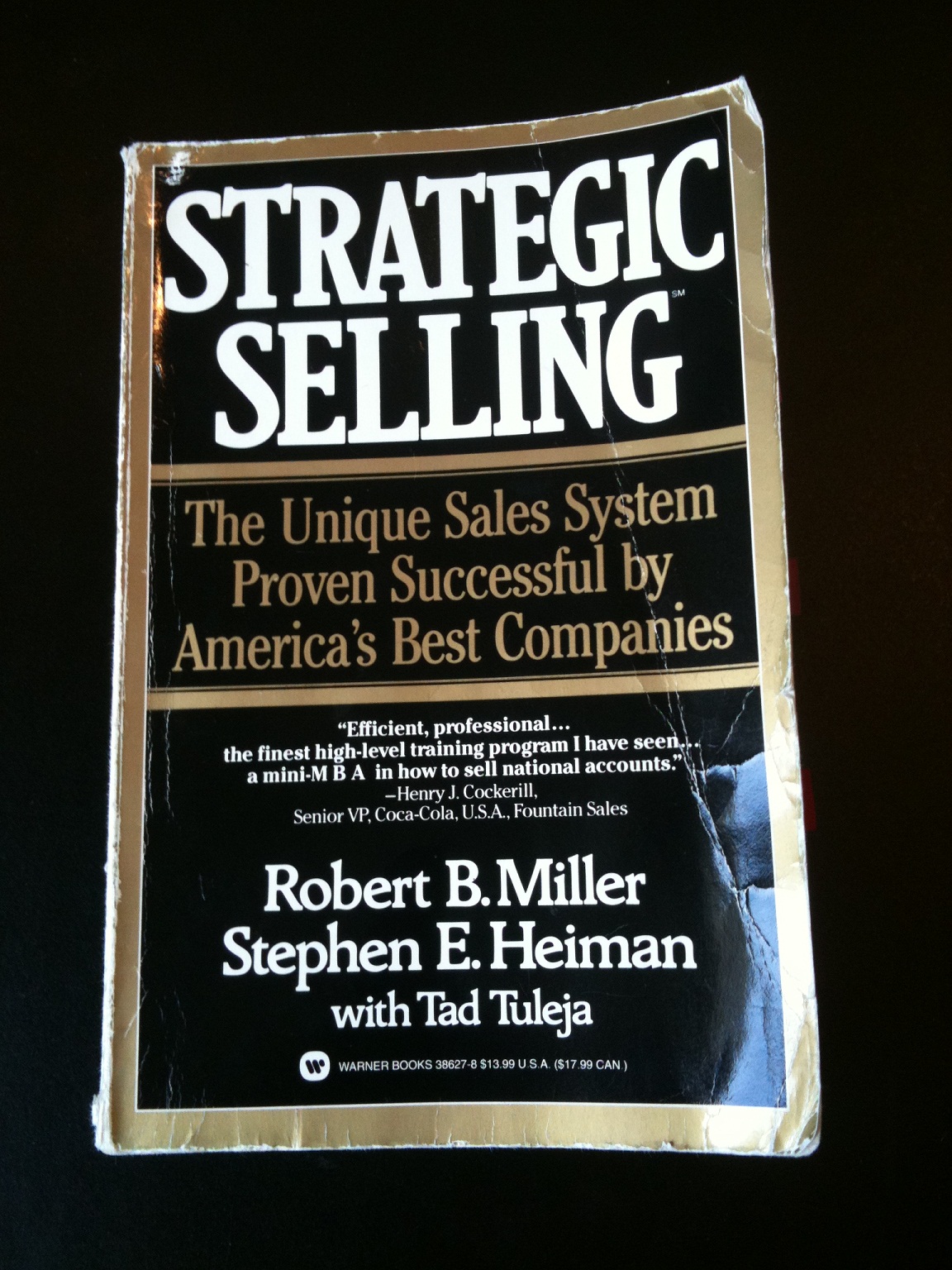
If you work in public relations or marketing then you are likely to be playing an indirect role on driving sales for your organization. Or perhaps you’re a PR person trying to motivate your company to engage in more activities. In either case you may want to have a better understanding of the sales process.
I recently have been re-reading The New Strategic Selling, by Stephen E. Hieman, Tad Tuleja, and J.W. Marriott. The methodology outlined in the book for selling has not only helped me in discussions with prospective clients for Communiqué PR’s services, but also has been helpful as I work to better understand the unique situations that our clients confront as they work to sell their products and services.
The book focuses on helping get a better handle on the complex sales cycle, which the authors define as “one in which several people must give their approval before the sale can take place.”
Clearly, when a person or team decides to hire a public relations firm, it is often the case that multiple people – such as the CEO, vice president of marketing, and PR managers – are required to give their approval before the business is awarded to a specific agency. And many of our technology or business-to-business clients face similar situations when selling their software solutions or products. They may need to have approval from the CEO, CTO or a variety of IT managers.
Given this situation, it makes sense that one of the first things one needs to know about complex sales is how to identify and know everyone involved in the decision to buy your service, solution or product. The authors help you do this by identifying four key roles that exist in every complex sale situation. They assert that in each complex sale there is 1) the economic buyer, 2) the user buyer, 3) the technical buyer, and 4) the coach.
The book goes into much more detail about why these roles exist and provide readers with an understanding of each person’s underlying interest depending on their role. But for example, the economic buyer cares about return on investment, while the user buyer cares about performance.
For me, having a better understanding of roles and the individual’s focus in the role has been one of the most helpful elements of the book. I have found it has implications not only for sales and business development, but also for public relations.
For instance, imagine as a PR professional you’re helping a manufacturer of wholesale spa equipment with key message development. The owner of the spa is going to play a different role and have very different interests than the technician using the product when giving a customer a manicure or pedicure. You’d therefore want to develop one set of messages for the owner and different messages for the technician. The owner might care more about the cost of the product, while the technician might want to know how its features would make their life easier.
If you’re looking to get a better understanding of complicated sales or even how to more artfully impact the sales process, I highly recommend this book. It is a classic.
Earlier this year, NBC debuted a new singing competition, The Voice, which at first glance seemed similar to FOX’s American Idol. Talented young performers all looking for their big break in the music industry by performing in front of celebrity judges or “coaches,” as The Voice coins them, including Christina Aguilera, Cee Lo Green, Adam Levine and Blake Shelton with host Carson Daly. While the competition took a slightly different approach to the selection of singers and judging process, it took a radical new approach to the use of social media to create an engaging, new viewing experience that propelled The Voice to become the top-rated show this spring and dominated the Twitter-sphere.
How did they do it? NBC producers designed the show to integrate social media into every aspect to engage the coaches, contestants and viewers. Nicolle Yaron, supervising producer of The Voice, was quoted in an article on Mashable stating how, “In this day and age, digital and social media for a success television show can’t be an afterthought – it has to be established in pre-production and developed throughout the show.” This is solid advice for anyone utilizing social media as part of your marketing and PR efforts.
The social media tactics that The Voice employed would work for a variety of companies as a part of their strategies. Here are several tactics they incorporated:
1. The Use of Hashtags. Throughout the season, producers would promote the use of #TheVoice hashtag on screen when they felt the audience would be compelled to talk about what was currently happening, rather than reserving it solely for use during voting. Yaron reported in her interview with Mashable that “70 percent of the tweets about The Voice [during the show’s first live episode] included the hashtag #TheVoice, a ‘phenomenal’ rate that a Twitter spokesperson says is an ‘industry high.’” When promoted properly, the signature hashtag was quickly adopted by coaches, contestants and viewers alike and used consistently both during and between broadcast segments. This helped producers track conversations and feedback to include as part of the show’s format. If you’re looking for tips on how to create your own hashtag, be sure to check out a blog post we have written about this topic.
2. Active Listening and Engagement. The Voice brought on G4’s Alison Haislip as the show’s “in-show and online correspondent” and the “direct digital connection to everything that’s going on with the show.” Not only would she interview the contestants and judges, she encouraged fans to post comments or questions on Facebook, Twitter, NBC Live and NBC.com for her to ask artists during the segment. In addition, she would also interact with fans via Twitter along with other members of the show, while the show was on air. Social media is more than broadcasting your own news, it is about engagement and The Voice fully embraces this principle.
3. Creating ambassadors. When selecting the coaches, NBC encouraged each to fully embrace social media and become active spokespeople for the show. When Christina Aguilera joined the crew, she was entirely new to Twitter, while Cee Lo Green and Adam Levine were moderate users, and Blake Shelton was the most active. Regardless of their past experience, all four were committed to live-tweeting during the show and on their own time, sharing their personal interactions with the contestants and responding to fans through Twitter.
NBC also saw an opportunity for the contestants to continue the “storytelling” online. As the artists were selected, they were given training on how to blog and use their Facebook and Twitter accounts, as an integrated as part of the official site for The Voice. They were also given new tablets and cameras to document everything behind the scenes to provide viewers the opportunity to follow the artist’s journey.
In social media, creating a personal connection with your fans on Facebook and/or followers on Twitter is the name of the game, and The Voice really drove this home. If your company has a presence on social media, consider training a few of your own employees on best practices and have them engage them in your social media efforts. By doing so, they will be able to share a variety of information and points of view that fans and/or followers may find interesting, while also spreading out the responsibility of maintaining your social media presence to other stakeholders.
While I only watched a few episodes of The Voice this season, I was particularly impressed with how it created an ongoing conversation that has continuously built momentum each week – even between the segments. In addition, to know that the artists, coaches and hosts actually interact with viewers created a shared experience for all involved, which made viewers feel a personal connection to the show and drove them to continue watching each week. It will be interesting to see how other television shows – or even other forms of entertainment – follow suit in this level of engagement.
What are your thoughts on how The Voice implemented social media? What methods do you use to engage with your fans and followers?
As a PR professional, I consider transparency to be one of the most important principles of my job. As a rule of thumb, I tell myself and my clients that if you wouldn’t want your statement or actions popping up in an Internet search result, then you probably shouldn’t be saying or doing it. We’ve seen what a lack of transparency can do to a brand. Take Toyota’s 2010 PR crisis around the mechanical defects and recalls on its most popular vehicles. While still a well-respected brand with best-selling cars, Toyota took a big hit to its image when executives were slow to respond and hesitant to take full responsibility for the multiple vehicle recalls and federal safety investigations.

Every company is susceptible to a crisis situation and in these instances, I believe practicing the values of openness, communication and accountability are key to instilling confidence back into your brand. But is there such a thing as too much transparency?
Ever since the infamous 2009 viral video of Domino’s Pizza employees breaking several health codes while preparing customer orders, the company has embarked on an aggressive communication campaign to clean up its reputation. Recently, the company took transparency to another level by unveiling a huge digital billboard in the middle of Times Square that shares customer feedback from those using the Domino’s Pizza tracker app. For better or worse, Domino’s is giving thousands of Manhattan passersby a candid peek at customer comments to show consumers it’s serious about upping its game. While some may think this is a risky move for Domino’s (and it is, in my opinion), the approach has paid off. Same-store sales growth increased 10.4 percent between 2009 and 2010, and during the first quarter of 2011, same-store earnings were up 2.3 percent.
Locally, the Seattle Police Department also recently took a new and aggressive approach to transparency by initiating a 12-hour experiment where it posted all of its emergency calls on Twitter. The goal was to show people a day in the life of the department and how citizens play an integral role in helping Seattle police fight crime. While within a few hours, hundreds of people stopped following the department and scolded it for bad Twitter etiquette (the experiment translated into an average of 40 Twitter messages an hour, for a total of 478 by the end of the day), others praised the department for its transparency and for pushing the envelope with social media.
Whether it’s in response to a crisis, an effort to prevent one, or simply a strategy to increase visibility, social media has provided companies and organizations with the means and motivation to be more transparent. While we may not need (or want) to know every detail about a company or have full access into someone’s daily behavior, the public wants to know that organizations are acting as good citizens, with consumers’ best interests in mind.
I think Domino’s Pizza and the Seattle Police Department should be praised for their creativity and dedication to keeping their customers and constituents informed. What’s your take on transparency? Are companies taking it too far or not far enough? Please share!
By now, everyone is aware of the News Corporation hacking scandal unfolding in England. Amidst the coverage, I came across an article from Forbes’ writer Robert Wynne who posted an interesting take on the scandal from a “what not to do” PR scenario. The article titled, “News Corp Hacks Public Relations Efforts,” outlined several PR blunders made by News Corp. that I thought were particularly useful for companies, of any size or industry, that find themselves in a crisis communication mode.
Wynne begins by noting that News Corp. did the right thing by coming out immediately and apologizing for the mistakes made by its newspaper, News of the World. However, Wynne notes that the company’s PR efforts slid downhill from that point forward, as they broke what he (and I) considers to be the top three things of what not to do in PR. The effect this had on the entire situation was negative amplification, which gave people more to latch on to and complain about.
Here are the things that Wynne notes that News Corp. PR botched:
- “Blame the Media.” It’s well-known that PR and media have a love/hate relationship. It’s the media’s job to cover stories, good or bad, and to cover them from an unbiased position. Therefore, when PR points a finger at the media effectively accusing them of making the situation worse by writing about it, you’re just asking for negative attention. If your company makes a mistake, own that mistake and work to help the media write as balanced and accurate story as possible.
- “Downplay the Crimes.” Wynne notes that the Wall Street Journal (a News Corp.-owned newspaper) wrote an article that claimed the phone hacking tactics were “business-as-usual.” Since News Corp. already apologized for the mistakes and several arrests have already been made, downplaying the idea that this is normal and the outrage is overblown, only serves to aggravate those who are hurt.
- “Defend the Tainted.” Wynne condemns News Corp.’s behavior of using the reporters at FOX and Wall Street Journal to downplay the illegal actions of News of the World’s employees. Since these reporters likely had nothing to do with the scandal nor the people involved, News Corp. is risking tainting the reporters by association. Typically in PR, you don’t want to instigate the “snowball effect” and get otherwise innocent parties involved in the situation.
Wynne goes on to note that sometimes the best defense isn’t a good offense, as the old adage goes. In this case, and as is often the case in crisis communication, the best defense is often a good defense. If News Corp. had come out, apologized for the major lapse in judgment, and quietly participated and accepted the consequences, the media and the rest of the world would quickly lose interest and move on. However, by continuously finger-pointing and firing up the media, News Corp. has guaranteed themselves several more weeks, possibly even months, of scandal coverage.
Here at Communiqué PR, we always recommend that our clients have a crisis communication plan firmly in place, even if being a part of a crisis is hard to imagine. It’s always better to be over-prepared in these situations than to be caught off-guard, which normally leads to hasty decision-making.
If you need more information about what constitutes a good crisis communication plan, visit our recent blog posts “Crisis Communication Planning and the Impact of Social Media” and “Crisis Communication Lessons from Floyd Landis.”
Have you found yourself in a crisis situation? Any additional tips you’d like to add? Please leave your suggestions in our comments below.
With the recent launch of Google+, everyone is speculating how this new social media “project” will fit within the overall landscape dominated by well-established players such as Facebook and Twitter. Are we really ready to adopt yet another new platform? And what is this new platform exactly? One answer currently prevails: Only time will tell.
As a PR professional, it has been exciting to watch the buzz continue to manifest since the platform debuted in late June. While this could be easily attributed to the strength of Google’s brand among consumers and media, it is clear the company had a thorough strategic PR, social media and reactive communication plan in place.
Let us take a moment to examine how each strategy played a role to support the company’s launch of Google+.
- Diverting Rumors. Buzz of what is known today as Google+ emerged long before its official launch. Since December 2010, stories appeared across a variety of media outlets such as TechCrunch, Search Engine Land and Read/Write Web about a mysterious “social media project” at Google speculated to be named, “Emerald Sea.” While TechCrunch was able to confirm the project name from a handful of sources, Google managed all leaks diligently and swiftly. Within hours of media breaking that Google would launch Google+ at SXSW in March 2011, the company issued a statement that this was not the plan causing media to retract their stories. Was this part of the reactive communication plan to keep everyone guessing? Regardless, it is clear they had a plan to contain any leaks about this new platform, and kept it well-under wraps while it was in development.
- A Clear Launch Plan: When reading the initial coverage of Google+, it is clear the company pre-briefed key journalists and provided demos of the platform’s functionality to highly influential media. As TechCrunch’s MG Siegler reported, he had the opportunity to sit down with Google’s Vic Gundorta and Bradley Horowitz the week before the official launch. The result of this activity led to several in-depth articles like Siegler’s story on Google+ that captured the key messages accurately while creating a positive review of the platform, its existing features and functionality.
- Use of Social Media: Google rolled out its new platform with invites that quickly became highly coveted. Whether it was on Facebook or Twitter, I saw countless friends talking about how fun and easy it was to organize their “circles” while others were begging for anyone to share a Google+ invite.
Seeing this chatter intrigued me to learn more. Naturally, I Googled “Google+ Circles,” which brought up a YouTube video created by Google demonstrating how it works. After reading the positive media coverage and seeing my friends talk about it, I wanted in — and so did everyone else.
However, when conversations quickly moved to complaints about the lack of access, Google kicked in again with a proactive statement using social media. Google’s Vic Gundotra wrote in a Google post they had “shut down the invite mechanism for the night. Insane demand. We need to do this carefully, and in a controlled way. Thank you for all your interest!”
When you look at the unveiling of Google+ over the past year, it is evident they had a clear PR plan in place that examined all possible scenarios with a strategy on how to respond. While many today are questioning the adoption rate among users and how it will compete against Facebook, in the end Google has received an overall positive response from media and users.
From my personal experience, Google+ has been pretty easy to set up and become familiar with, considering it seamlessly integrates with my activity on other Google platforms like Gmail, Picasa and my Android phone. Plus, Mashable shared some great tips & tricks on how to get started on Google+, which we will highlight in another blog post here soon.
What are your thoughts on Google’s PR efforts to support the launch of Google+? Do you think it has the potential to be a game-changer in today’s social media landscape? We would love to hear your thoughts on it.