
Insights for Leaders Navigating
Visibility, Credibility, and Growth.
From media strategy to reputation management, we explore the trends shaping public perception and share the approaches that drive measurable results for growing brands.
It is hard to predict which videos will become an internet hit. Many marketers try to develop videos they think will go viral – and focus a lot of time on the quality of the video. However, oftentimes the videos that go viral are not those with the slickest production quality, but the ones with the most compelling content. Possibly in reaction, some companies are creating video with less than perfect video quality – to appear less marketing driven and more as guerrilla content.
GeekWire recently highlighted a video from Microsoft, “Microsoft’s Windows 8 demo video is a low-budget hit,” where product value was not a priority. The video provides an early look at Windows 8. While the quality is not the polished advertising videos we have come to expect from Microsoft, it is clearly not a guerrilla behind-the-scenes video either. Feeding pent up interest in learning about Windows 8, the video comes across as more authentic (less marketing driven) due to the lower production quality. The video has been viewed more than four million times on YouTube alone.
As PR professionals we want to provide media with a variety of elements to complement a story idea. Video can be extremely helpful in helping to tell the story. That said, the quality of the video can be a factor – especially if we are working with broadcast media. Therefore it is important to consider your objectives, your target audience and the target media for the specific story as you outline development of video content. While a tech blogger may be willing to include a video with lower quality audio, a television producer will evaluate the quality through a different lens.
A study last year from Rice University’s Department of Psychology illustrates that if viewers like what they are watching, they are “less likely to notice the difference in video quality of the TV show, Internet video or mobile movie clip.” ReelSEO’s Jeremy Scott provides additional guidance based on the research results, “It doesn’t mean you can abandon your pursuit of good quality in your videos. Not for a second. If the audio is poor enough that the audience can’t understand your actors, then the content doesn’t matter in the least. You’ve got to pay attention to both the creative and technical side of video production if you want to succeed. But the only one of the two you simply cannot live without is good content.”
Guerrilla video content can be a great way to share information and appeal to an audience hungry for authentic content, but ultimately the content needs to be compelling for your target audience and the production quality needs to align with your intended distribution platform (i.e. viral sharing, broadcast media, bloggers etc.). Always be clear on your objective – is it to drive sales, change brand perceptions, or build connection with consumers.
For more guidance on videos, check out our previous post “How to Leverage Video Blogging.”
Announcing the eBook Release of Strategic Public Relations: 10 Principles to Harness the Power of PR
We are excited to announce the arrival of our popular book, Strategic Public Relations: 10 Principles to Harness the Power of PR, into eBook format for several major providers. The book, co-authored by Colleen Moffitt and Jennifer Gehrt, co-founders of Communiqué PR, is currently available thru Amazon and Barnes & Noble priced at $4.99 and will be available via iBooks in the coming days.
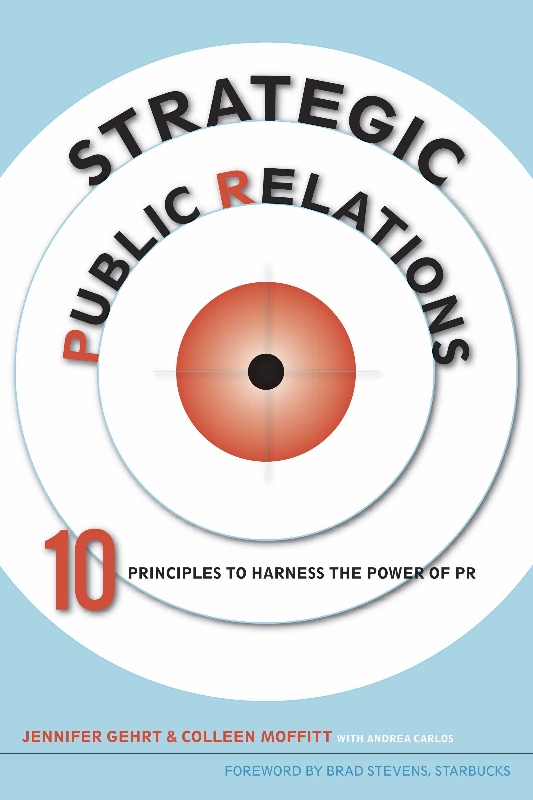
We strongly believe in the power of PR to positively influence business, drive sales, and build buzz. However, oftentimes people get overly focused on the tactics and lose sight of their larger strategy and desired outcomes. We wrote Strategic Public Relations: 10 Principles to Harness the Power of PR as a resource to remind managers why strategy is important and provide them with practical guidance on how they can be more effective in their communication activities.
With the rapid expansion of the eBook market and its enthusiastic adoption by readers, an eBook version of Strategic Public Relations is a natural next-step for us. eBooks are terrific because they allow people to access the information they need instantly, they are easily searchable and portable.
In January 2011, eBook sales at Amazon for their popular Kindle surpassed both paperback and hardcover sales. Last year alone, a growing 8.5 percent of the publishing market was represented by eBooks.
We are excited about the advancement in this technology. Easy to download and extremely portable, eBooks are the ultimate in convenience, a necessity for today’s business person, especially those on the go. We hope by offering Strategic Public Relations as an eBook via Amazon, Barnes & Noble, and iBooks, we make access to this resource easier for you.
About the book
Communication is increasingly important to organizations given the saturation and fragmentation of media, which make it more difficult to reach large numbers of consumers through traditional advertising. Furthermore, ads are often seen as less credible by consumers who are looking to their social networks or third-party, independent news sources for brand and product recommendations.
In Strategic Public Relations, Gehrt and Moffitt help the reader make sense of the current media landscape by providing 10 guiding principles for an effective strategic approach to integrated communications.
Taking a strategic approach does not have to be difficult or expensive. The principles in the book are straightforward and simple, and can be applied to any business.
Using real-world examples, case studies and contributions from business experts, Gehrt and Moffitt demonstrate how the reader can use the 10 principles outlined to effectively leverage PR.
In a guest review for PR Week, Jeffrey Ory, vice president of Deveney Communication wrote, “Each of the guiding principles is presented in a straightforward way. ‘Strategic Public Relations’ is a simple, but important, read for anyone in PR at any level of their career. Gehrt and Moffitt have written a book that is important for those entering the field all the way through to those who have been in the industry for a number of years.”
If you’ve read Strategic Public Relations, we’d love to hear from you. Post a review on Amazon.com, share comments here on our blog post, or post on our Facebook fan page.

In case you missed the buzz around town earlier this month, more than 15,000 members of Lions Clubs International (LCI) convened in Seattle for its 94th International Convention, one of the world’s largest annual conventions of its kind. It was the first time the annual convention was held in the Pacific Northwest, and specific to Seattle, it was one of the largest conventions the city has hosted in more than 20 years, providing a significant economic boost to the city and region.
Lions Clubs International (LCI) selected Communiqué PR to help drive awareness of this high profile event among local and regional media. While the convention presented an opportunity to highlight its impact on the economy (while mitigating the traffic woes), it was also an opportunity to educate the broader community about LCI and change perceptions of it being a “good ol’ boys club.”
Lions Clubs International is the world’s largest service club organization, with a network of 1.35 million men and women in more than 206 countries and geographical locations. Though well known for its successful initiatives in vision health, Lions service is as diverse as its members. Lions Clubs is no longer just for the older, male demographic anymore. Women continue to be the single fastest growing segment of Lions, in addition to providing youth with an opportunity for personal development through volunteering as part of its Leo Program.
Together, they collectively work toward their unified mission: to do whatever is needed to help their local and global communities. And they are making a genuine difference through unique programs that range from caring for the environment and providing aid to natural disaster victims, to feeding the hungry and aiding seniors and the disabled.
In the weeks leading up to the convention, we collaborated closely with LCI and Seattle’s Convention and Visitors Bureau to identify the key messages and facts about the International Convention and Parade of Nations to weave throughout our media materials, and to ensure our outreach strategies were aligned to maximize media opportunities to the fullest potential. We also contacted several local LCI district governors to learn more about their initiatives in the Pacific Northwest, and uncovered some great programs such as Project New Hope.
As a result of our efforts, LCI garnered more than 50 media placements across all major television, radio, print and online media outlets in the greater Seattle market. While many outlets initially ran alerts about the convention and parade’s impact on downtown traffic in the days leading up to the event, coverage shifted to in-depth, feature stories highlighting LCI’s mission, their volunteer efforts and impact on our community, along with highlights of the International Convention and “the largest parade ever in Seattle.” Below are a few of the highlights:
- The Seattle Times, “‘Not your grandfather’s Lions Club,’ says president in Seattle for convention” – July 2, 2011
- KIRO FM/MYNorthwest.com, “Lions Club Looking to Attract New Members with Seattle Parade” – July 5, 2011
- KOMO News, “Thousands pack downtown for one of Seattle’s largest parades”- July 5, 2011
- The Seattle Times, “Lions Take to the Streets as Convention Starts” – July 6, 2011
Here is a video highlighting the Seattle Convention:
It was a pleasure working with Lions Clubs International to support them in their PR activities surrounding the convention, and to have had the opportunity to collaborate with David Blandford and his team at Seattle’s Convention and Visitors Bureau. We hope to have the opportunity to do so again in the future.
For many businesses today, creating a Twitter account is an imperative. According to Media Bistro.com, there are more than 300 million user accounts, so it’s not surprising that Twitter is an increasingly critical communication platform to drive sales, manage customer service and directly engage with consumers while presenting an open, authentic form of communication with your target audience.
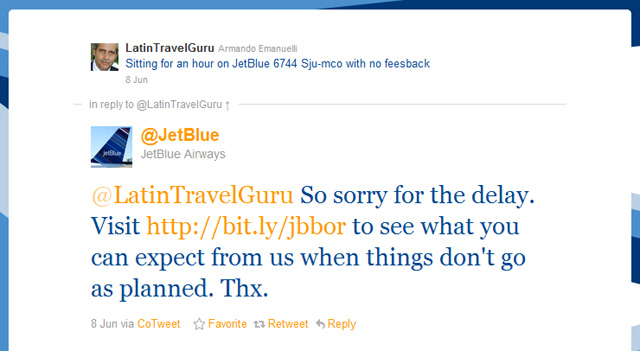
However, establishing your brand and building an effective presence on Twitter takes more than setting up an account and posting a tweet here and there. Tweeting as a brand to build influence and create a community of followers requires strategy.
To help get brands on the right track, PRNewsire shares ten tips for tweeting as a brand.
- Find a Twitter mentor. If you follow people or businesses who you think get it right, learn from them. What do they tweet about? How often do they tweet or re-tweet? When and how do they reply to negative tweets?
- Keep it positive. As tempting as it might be, avoid being negative, sarcastic or snarky. No matter how funny you think it might be, always remember that you’re tweeting as your brand, not as you. (Even on a personal level, there is risk that you’ll offend someone and increasingly our personal and professional lives are blending.)
- Respond to negative feedback. If someone says something negative about your brand and you don’t respond, the tweet that lingers is the negative one. Given this, communicate back. However, there are two caveats: 1) Be thoughtful in your response. You don’t have to respond immediately. It’s better to take time to think your response through than fire off a tweet that you’ll later regret. 2) Beware of attempts to bait you. Weigh the pros and cons of responding as well as the credibility of the author. If you decide not to respond publicly, consider a direct message instead.
- Steer away from controversy. Controversial topics such as politics or religion are controversial for a reason – there are people who are vehemently on one side or the other. Why alienate either? Again, you’re tweeting as a brand, not as you.
- Humor is subjective. There will always be someone who thinks your joke is in poor taste or inappropriate, so while you shouldn’t censor yourself, stay away from topics or language that can be taken the wrong way.
- Get a second opinion. If there’s something you want to tweet but you aren’t sure whether it’s appropriate, ask for someone else’s opinion. And if you’re still not sure, follow the next rule.
- When in doubt, leave it out. This golden rule of writing also applies to tweets. If you have any doubts, don’t tweet it.
- Don’t get too personal. People are following the brand because they have an affinity with the company and its products and offerings. They don’t want to know about your personal life or what you’re doing later.
- Follow your followers. If you want to promote conversation with your followers, you have to follow them back. When people see someone whose following/follower ratio is pretty even, they find them to be more open, which makes them more likely interact with them.
- It’s not about @you. It’s the mother of all rules, the one from which all the other rules grow. Every tweet represents your company – whether it’s in a positive or negative way is up to you.
Need help identifying a Twitter mentor? Mashable shares 9 Lessons From Successful Brands on Twitter to help us learn from companies who seem to have mastered the Twittersphere and provides tips to help us emulate their success.
Have you found other useful tips and tricks to tweeting as a brand? Please comment and share your successes and lessons learned.
When was the last time you gave thought to your email signature? The other day I was searching for a specific email from a colleague to find an attached document. After sorting my emails by attachments, I quickly realized that every email from that individual showed as one with an attachment as he included an image in his email signature. As a result it was challenging for me to find the specific email I was looking for. While this was frustrating for me, the impact was fairly minor. However an email signature can have a more significant effect.
One’s email signature can also impact the delivery of his or her message. For instance, one of my colleagues discovered her emails were not reaching editors. After significant investigation and delay, she determined the organization’s firewall was blocking her emails because her signature included a hyperlink. While ultimately she was able to get the issue resolved, her email signature could have impacted her ability to communicate with these journalists in a timely manner.
Does that mean your email signature shouldn’t include a link to your company site? Not necessarily, but it does mean you should follow up with a phone call if you do not receive an expected response to an important email.
So, what does the ideal signature contain? The answer will vary depending on a variety of factors including industry and geographic location. Here are some other tips for your consideration:
- Identify yourself. Make sure email recipients can clearly identify who you are and how to contact you. Provide your full name, your company affiliation and possibly your title. It is helpful to include your organization’s website address so recipients can quickly and easily access more information.
- Provide contact details. Contact information listed in an email signature used to be very straightforward – a phone number and email address. Today, however, people include mobile numbers as well as a variety of social media handles. It is important to be concise, and direct people to alternate ways of connecting with you. Although, listing each and every contact method is typically not warranted. we suggest listing your email address, key phone numbers – typically office and mobile – and the most relevant social media profile (i.e. professional profiles, not personal).
- Keep it simple. Most email applications have restrictions on the character length of an email signature. Smashing Magazine’s article, “The Art And Science Of The Email Signature” provides general guidance, tips on what not to do – such as including images – and options for offering a v-card effectively.
- Follow the law. As noted in the Smashing Magazine article, be aware of the regional laws in your area. In the U.K., for example, you may need to include your organization’s registered address and VAT number.
- Know your brand. Consider developing a standardized email signature for company uniformity. Creating consistency across your brand can help build and reinforce key impressions about your organization. To learn more about the benefits of a consistent signature across the company consider the recent article on Technorati, “How Uniform E-mail Signatures Can Help Brand and Promote Your Organization.”
If you haven’t given much thought to your email signature, it might be time to revisit what information it contains. Small changes can ensure your signature is up to date, accurate and effective.
Measurement is one of the most important activities in PR. If you can’t measure success, then how do you prove the value that PR can add? Measuring the reach and impact of traditional media can be tricky all on its own. While you may land a story in the front page of The New York Times or place an advertisement on a highly trafficked website, how do you prove these placements are driving real value for businesses and propelling the people who come across them to action? And how, in this day and age, do you then quantify the impact and reach of social media, which presents a whole new challenge in measuring effectiveness?
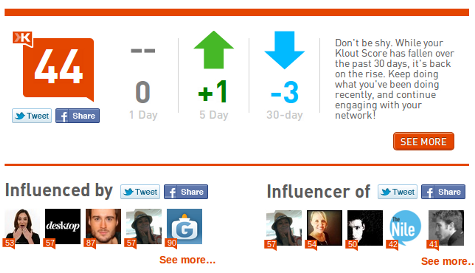
Today, businesses increasingly leverage social media as a platform to announce news, bolster their brands and engage with target audiences. In fact, many organizations are beginning to invest in social media departments, hiring staff solely dedicated to supporting the company’s Twitter, Facebook and blogging engagements. If used correctly and strategically, social media can be an effective tool to increase your company’s visibility and thought leadership. But how do you really know you’re making an impact, influencing your audience and achieving results?
While it’s not a perfect science, fortunately, there are several tools to help measure your return on investment. About a year ago, we shared our thoughts on some of these tools in a blog called, “Becoming Proficient in Measuring Social Media.” However, as the infusion of social media continues and technology and features used to measure influence grow in sophistication and usability, we felt it was time to revisit the subject.
Social Media Examiner shares five free tools that offer easy ways to keep track of your influence on Twitter and beyond.
- Klout is perhaps one of the more well-known resources for measuring social media influence. Using data from your Twitter, Facebook, and more recently your LinkedIn and Foursquare accounts, Klout evaluates users’ behavior with complex ranking algorithms and semantic analysis of content to measure the influence of individuals on social networks. Klout’s influence score is based on a user’s ability to drive action through tweets, mentions, and more, as well as friends and followers.
- TwentyFeet is another tool that pulls data from Facebook and Twitter and presents results in easy-to-read graphs. Its statistics are fairly similar to Klout’s, factoring in friends and followers, retweets and status comments as a method of measuring influence. TwentyFeet is a great way to get a quick overview of your activity and influence over a period of time. It’s also a great tool to get in-depth information about your followers.
- Crowdbooster uses your existing data to determine when your posts will receive the most interaction, and have the most influence on your audience. It then recommends the best times for you to tweet the following day. The dashboard also includes a graphic overview of your account, which shows the number of replies, retweets, likes and comments received and the number of people reached.
- TweetStats is incredibly easy to use and is a tool that allows you to enter any Twitter handle, so you can check multiple accounts or compare other user accounts to your own. TweetStats focuses on your own Twitter activity and delivers a page of graphs detailing the different ways you interact with Twitter and the topics where you’re most influential.
- My Web Career analyzes data from Twitter, Facebook, LinkedIn, Quora and web search results to determine your “Career Score.” The score is based on the size of your network, your overall social media presence and the strength and reliability of your connections. It also provides insight into exploring your network and discovering the best way to take advantage of your connections.
What’s my personal favorite? I think Klout provides the most comprehensive value, while still being user friendly. Have you tried any of these tools? Are there any others you’d recommend? Please share!